Hailey WONG
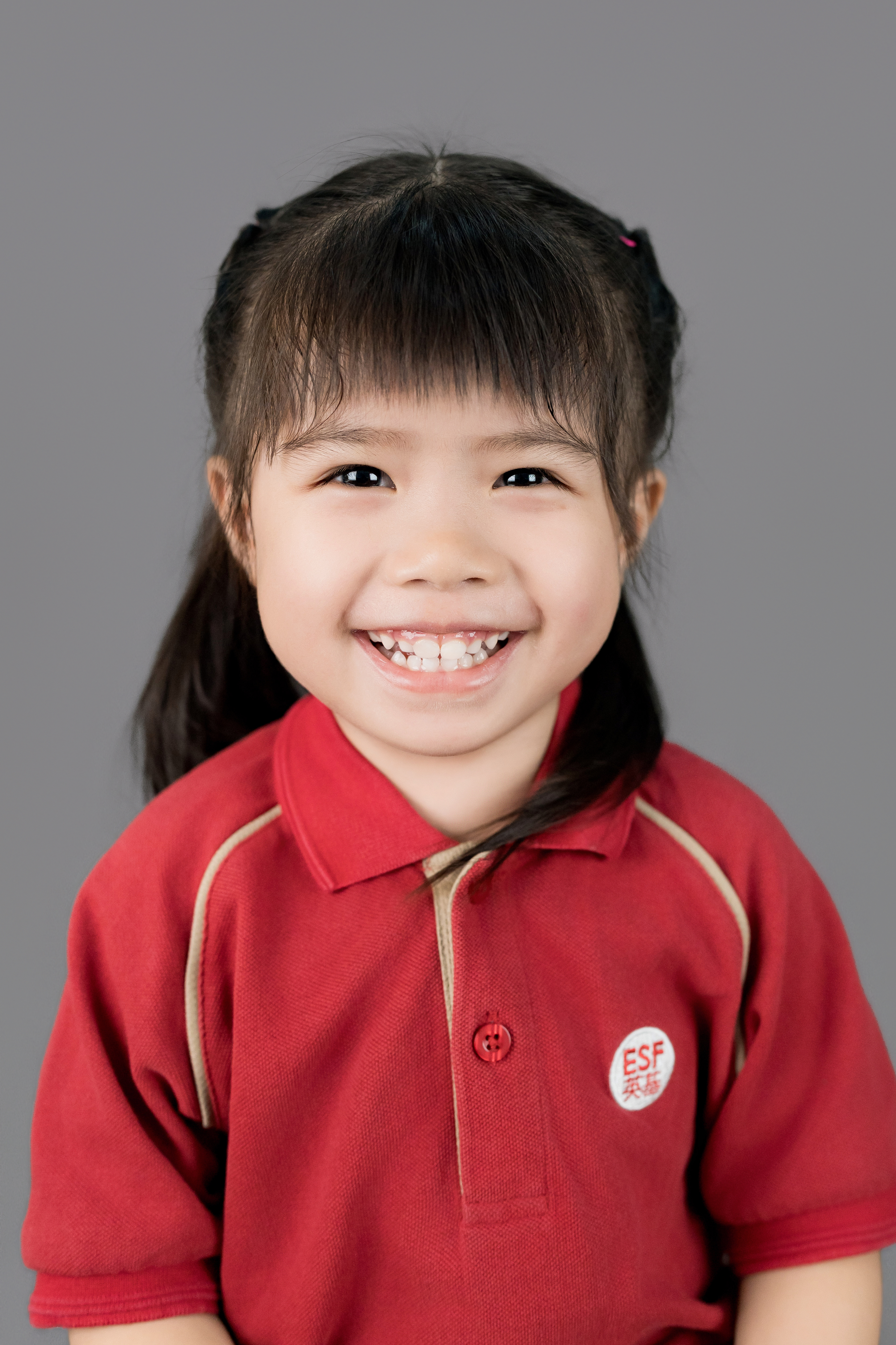
Hailey WONG
ESF Abacus International Kindergarten
Posted by:
Ms Irene Ma, 25/06/2026 09:53:44
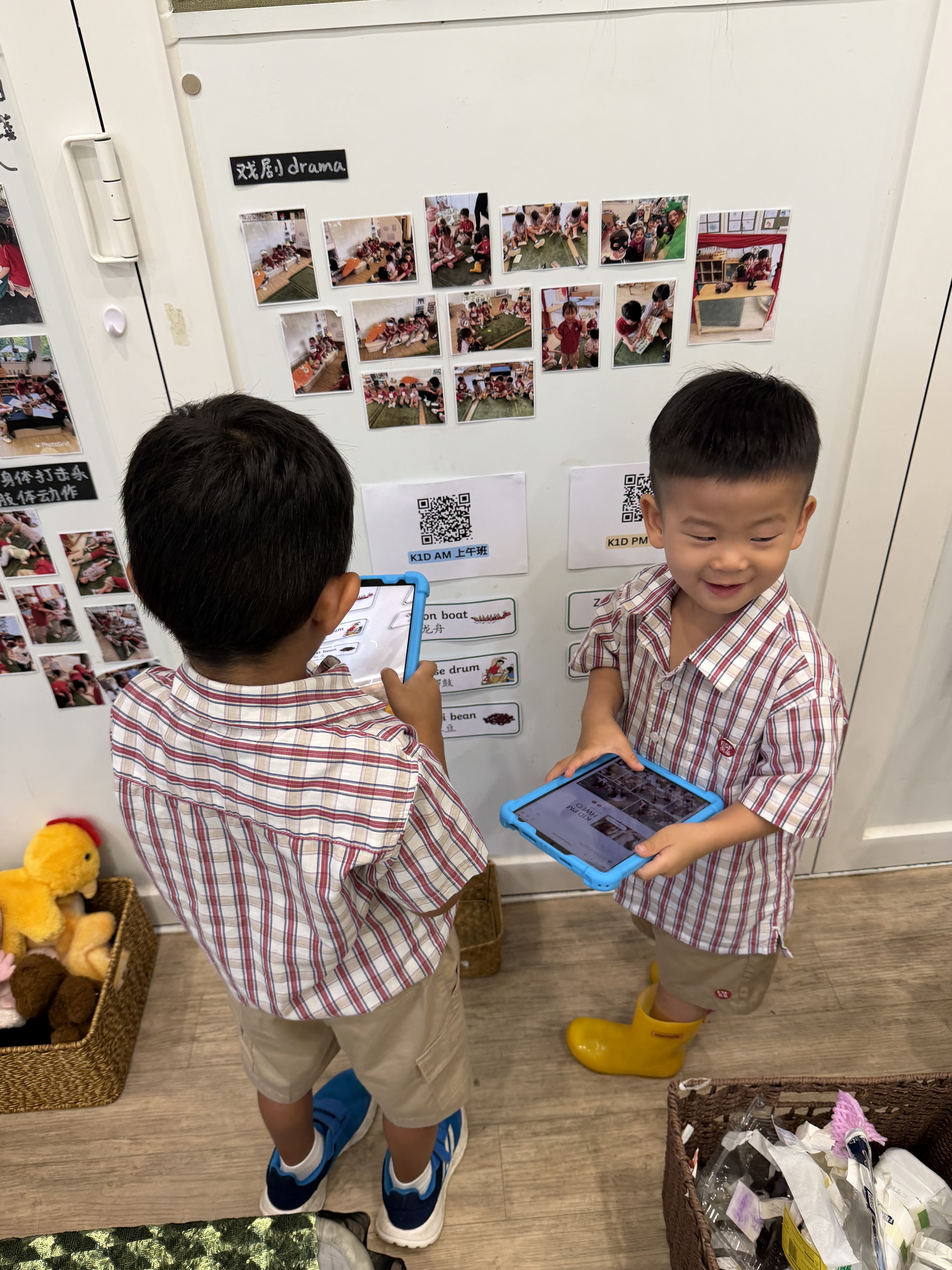
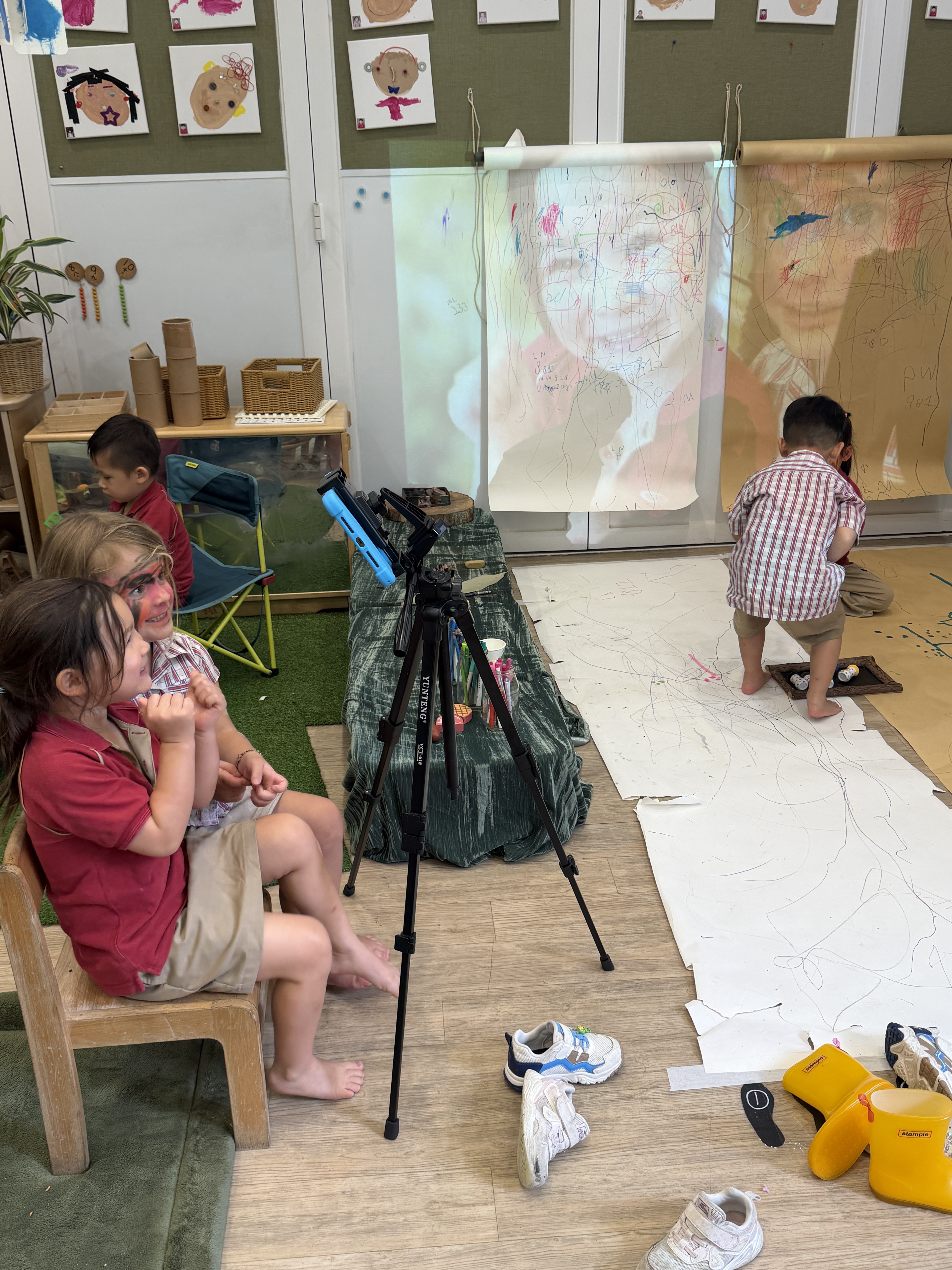
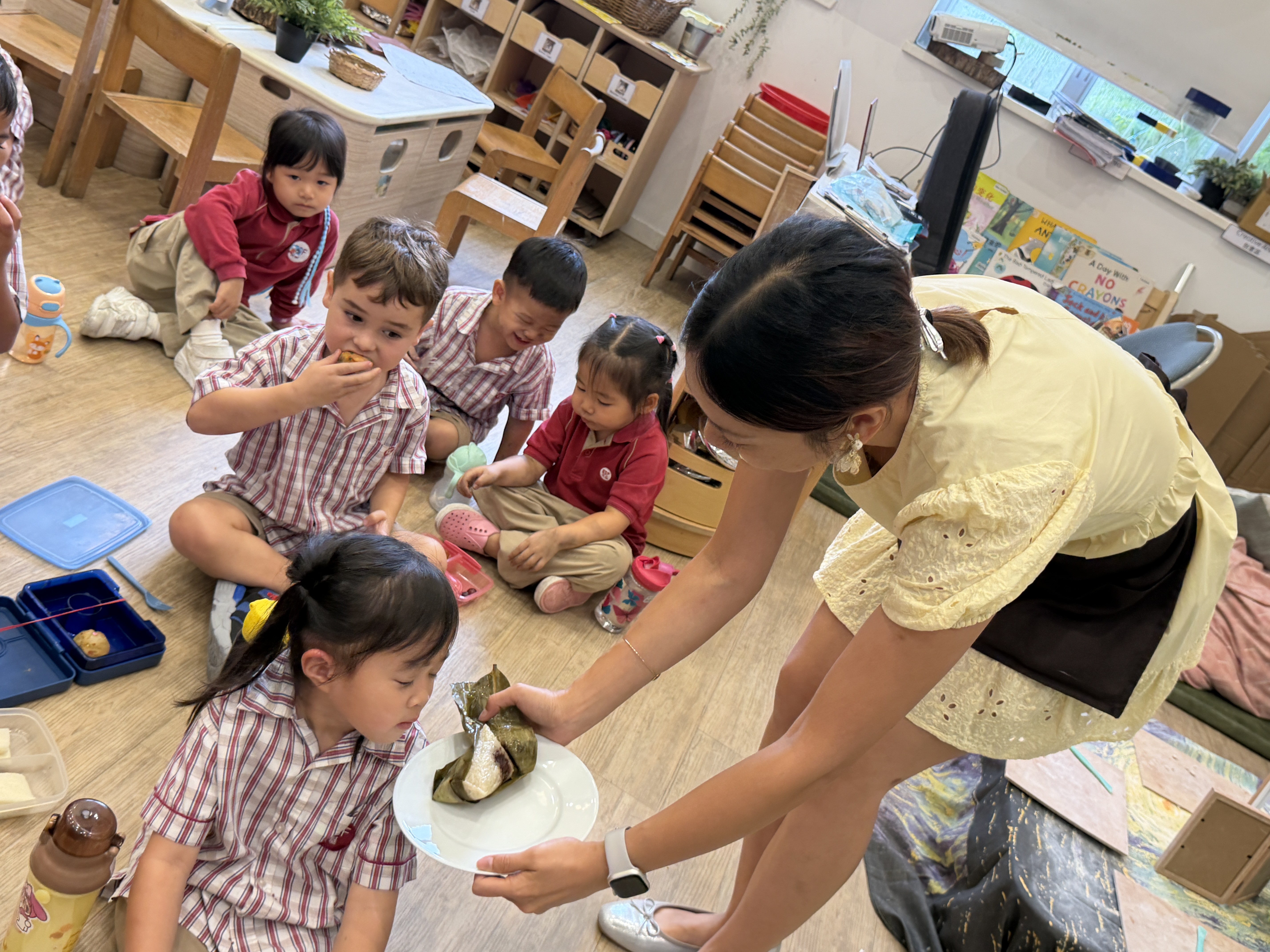
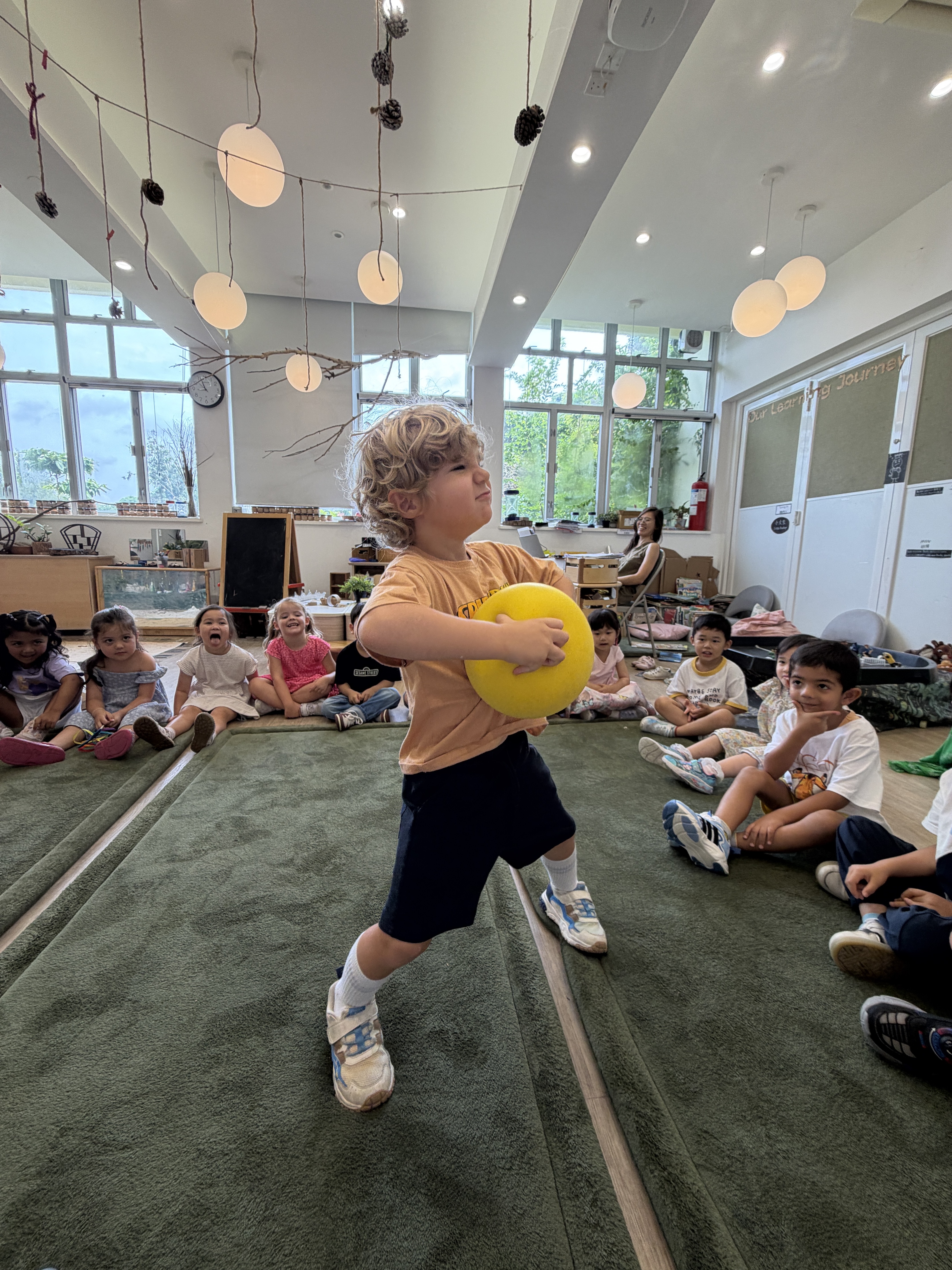
Posted by:
Nicole Pattison, 05/06/2026 12:45:54
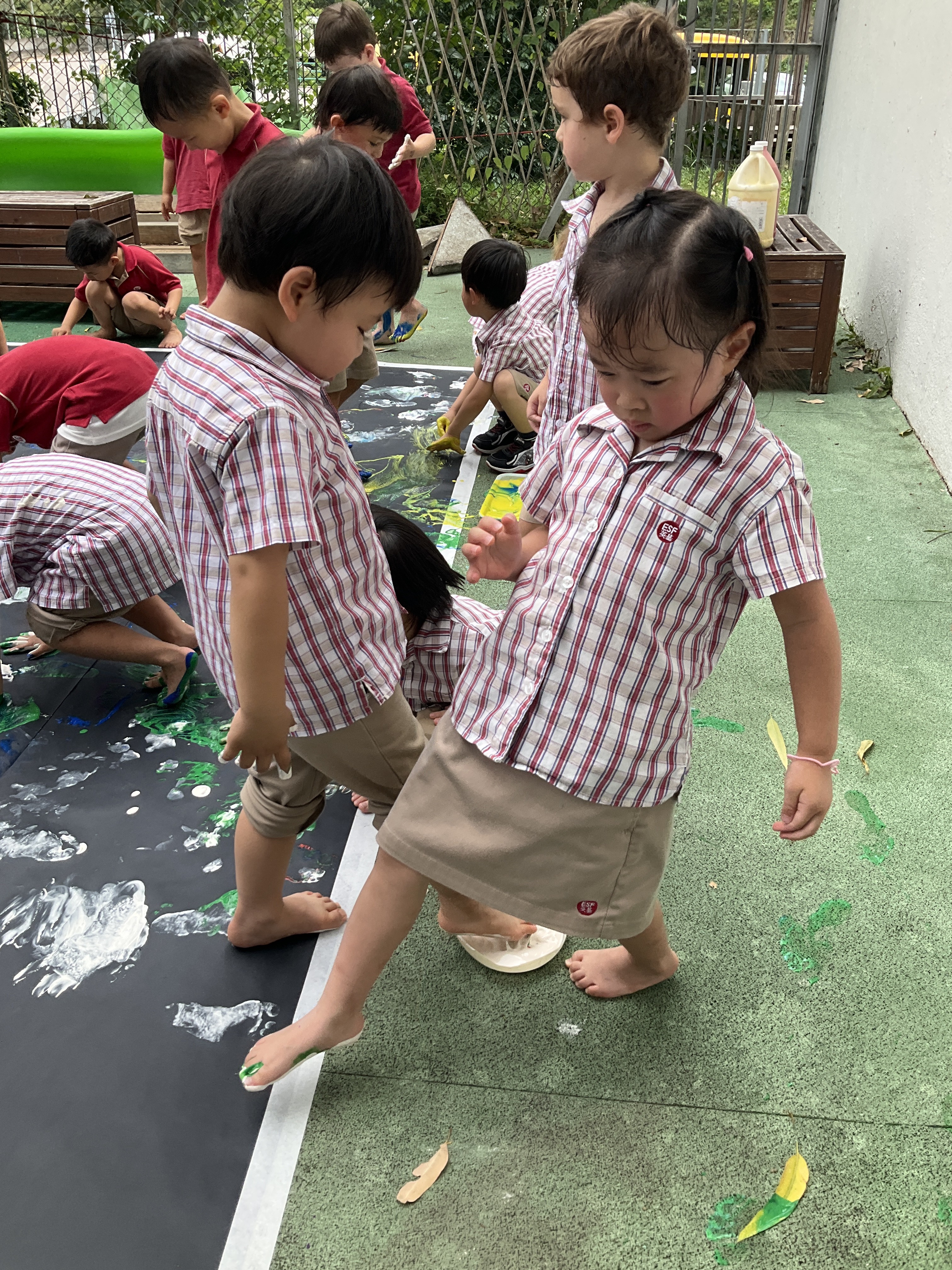
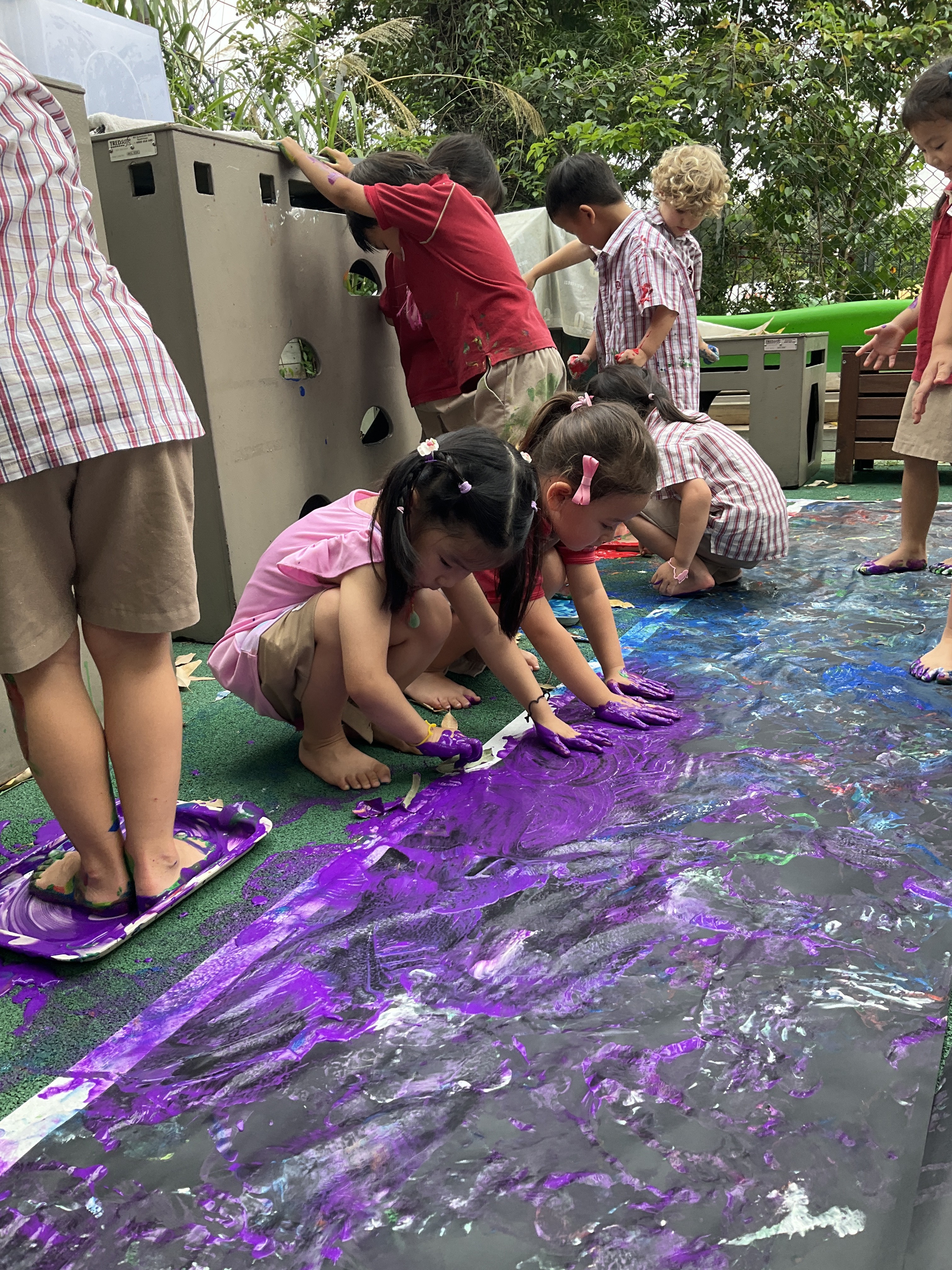
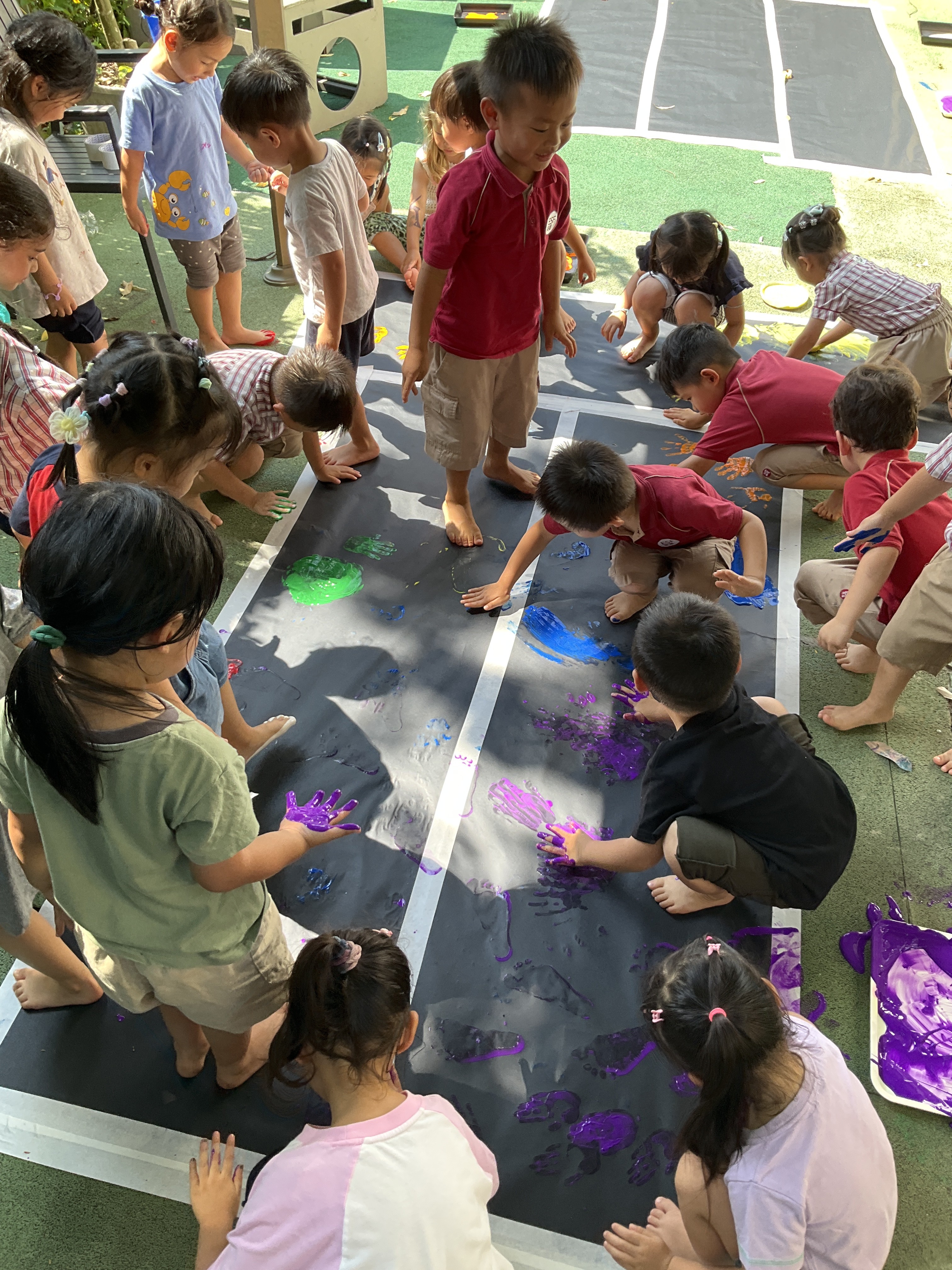
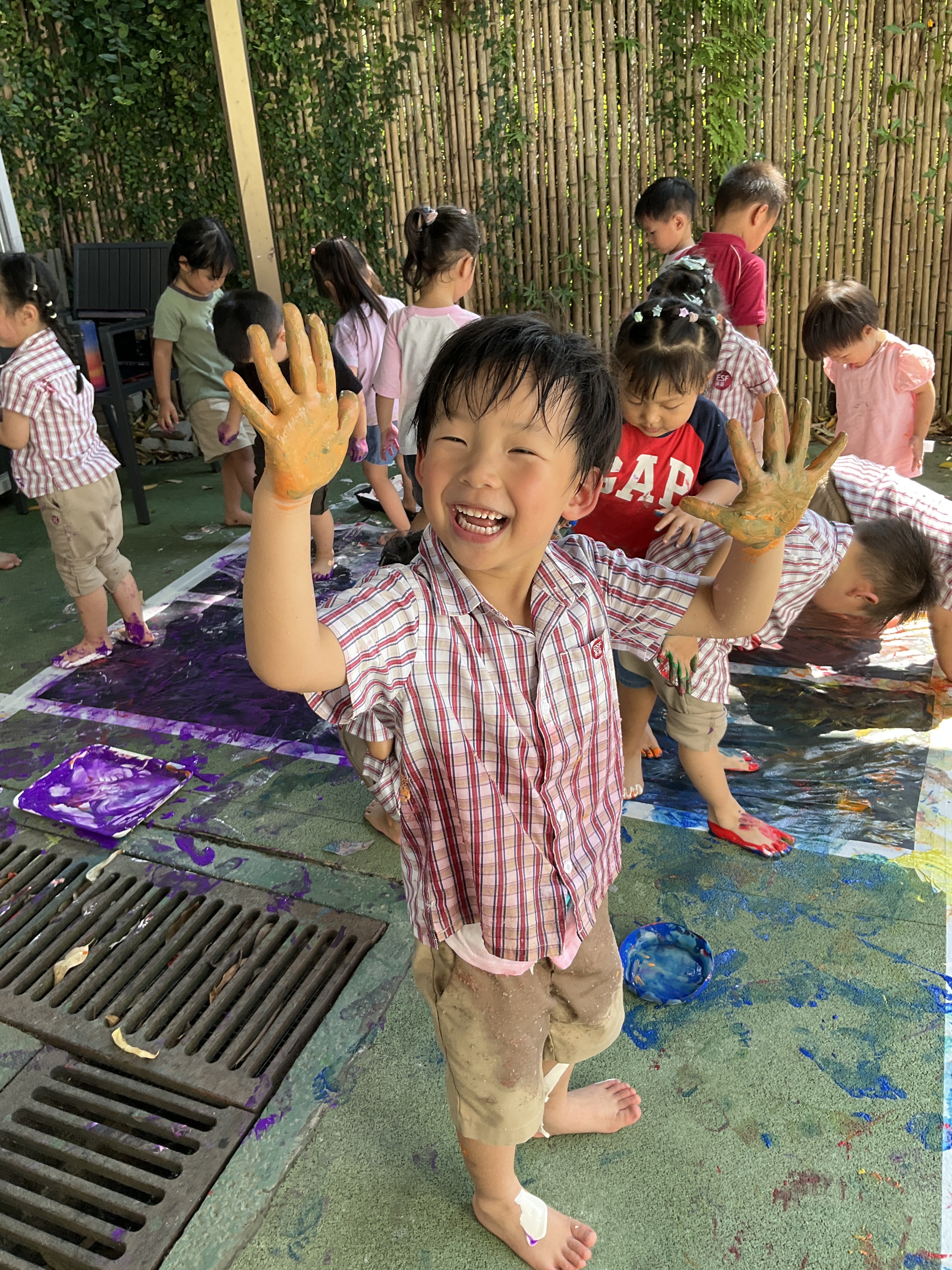
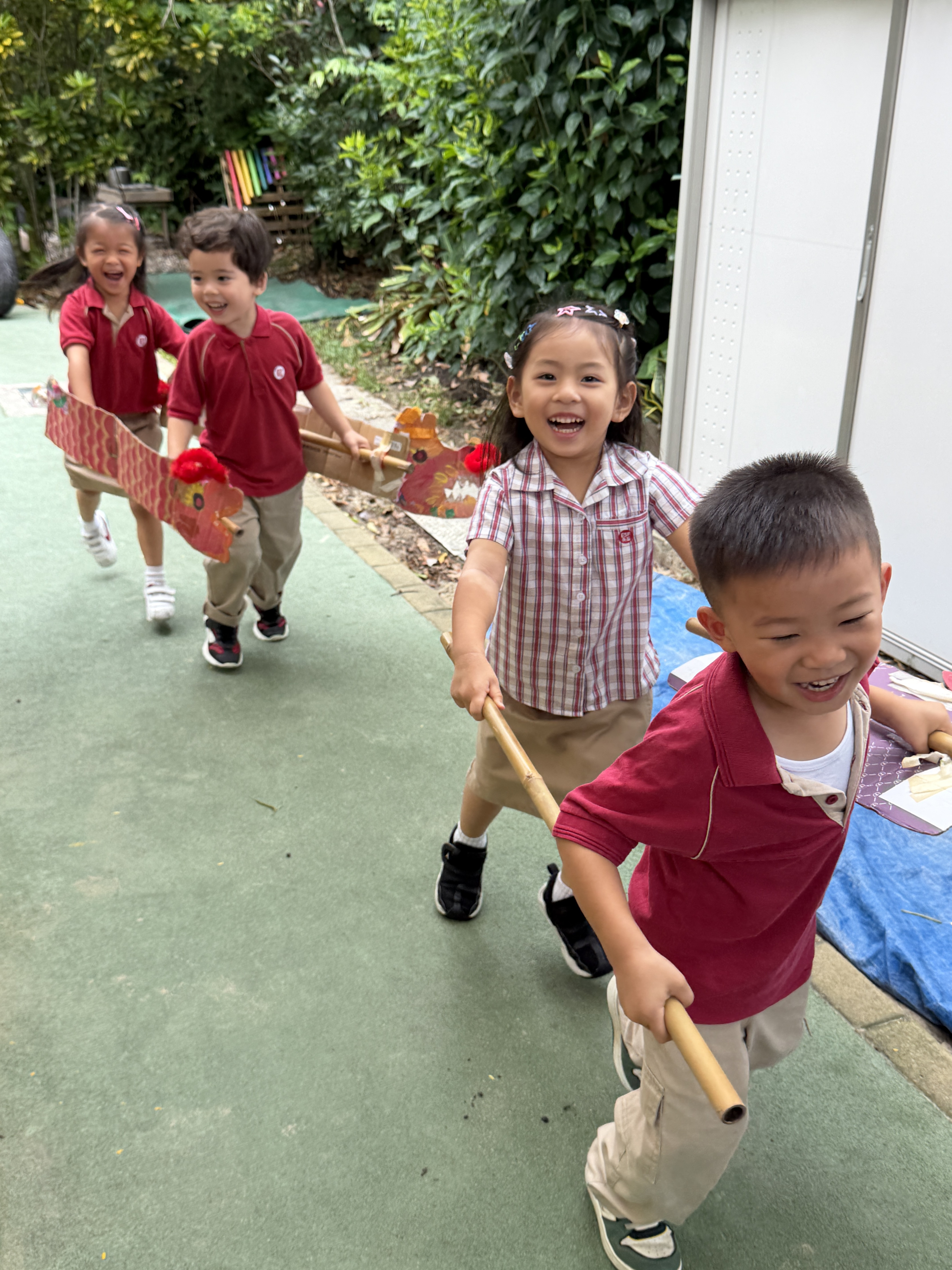
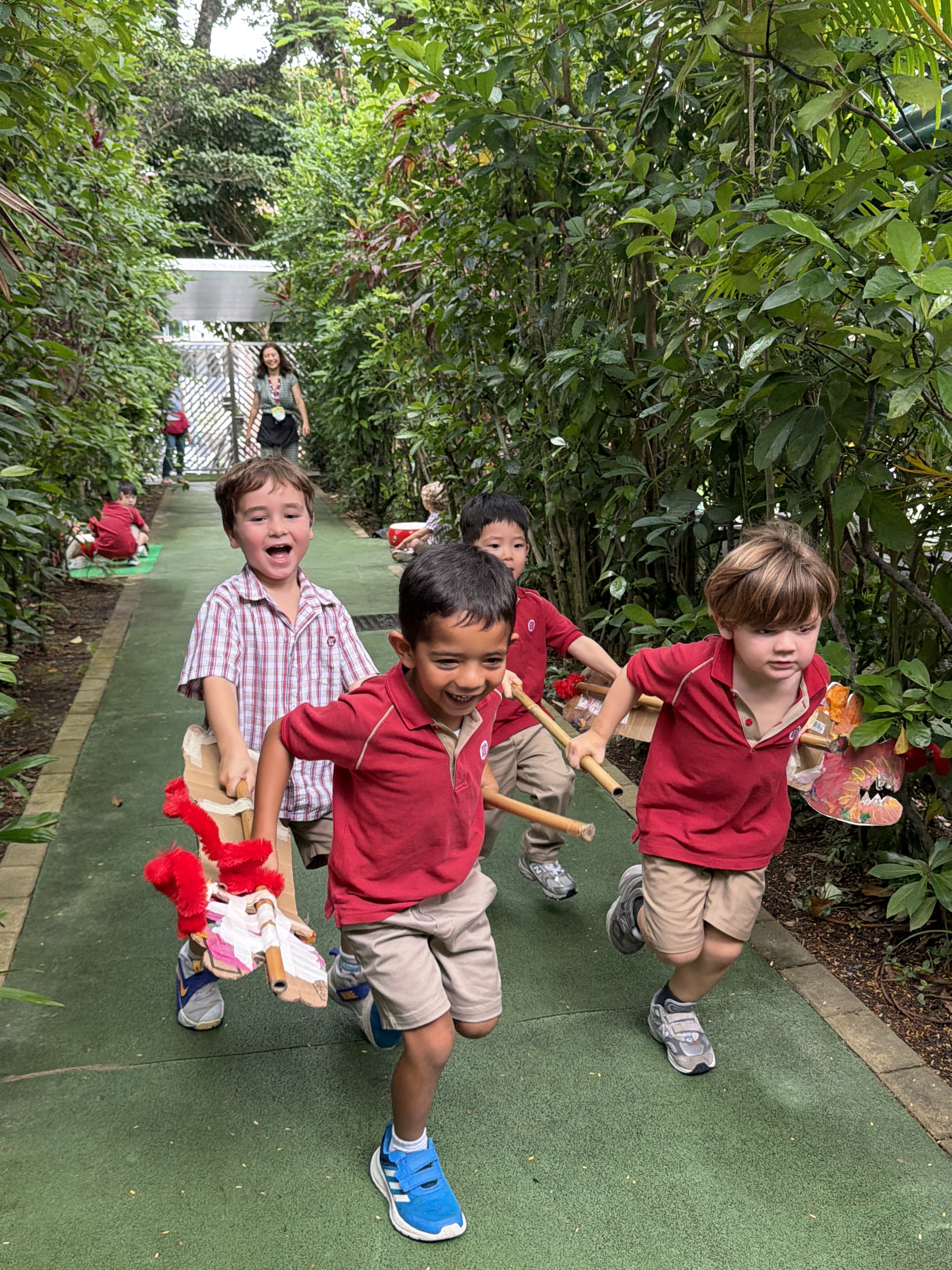
5th June 2026 WHOLE CLASS LEARNING JOURNEY
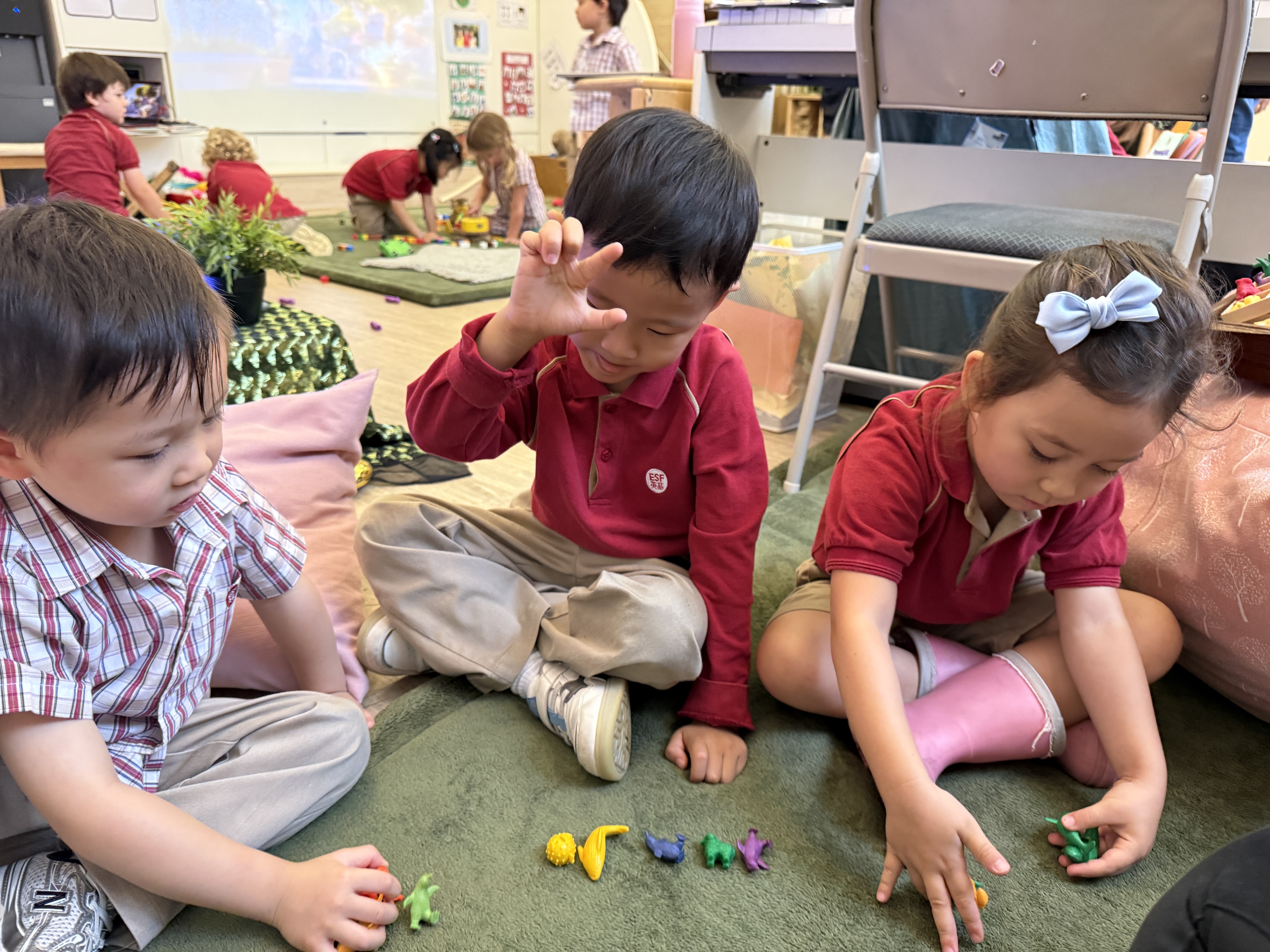
In our Unit of Inquiry, How We Express Ourselves, we have continued to explore our central idea: People create as a response to imagination, ideas, and experiences.
We looked at how real-world experiences can inspire art when our principal, Ms. Frances, brought her dog, Chewie, to meet the classes. This visit inspired the children to create in different ways. We sang songs and discussed different ways we can create, including making clay animals, painting, and dancing.
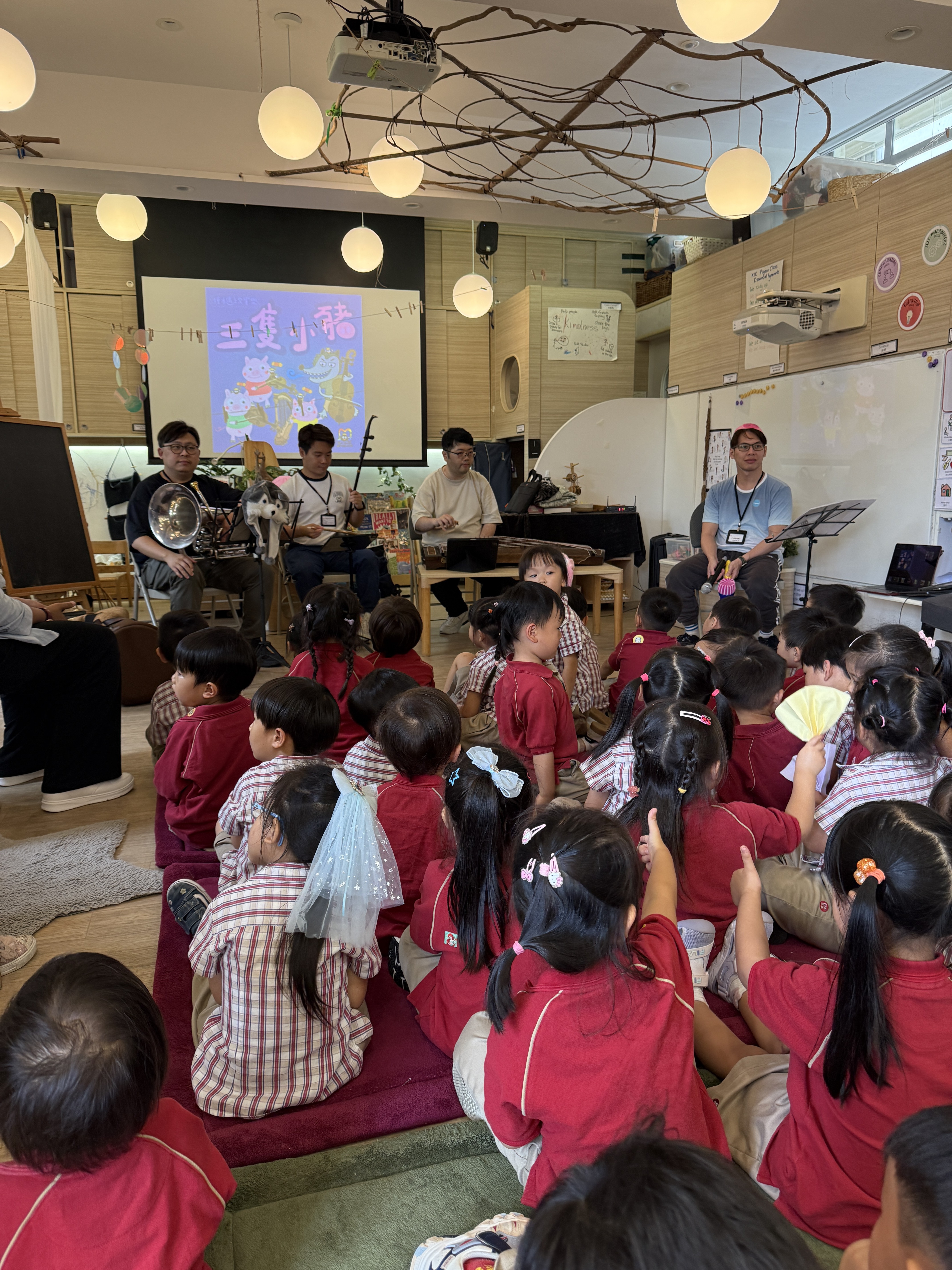
We also had a lively visit from the musicians of Our Music Wonderland, who retold the story of the "Three Little Pigs" using instruments and melodies. The children loved trying out the instruments themselves and experimenting with sounds to see how music can tell a story.
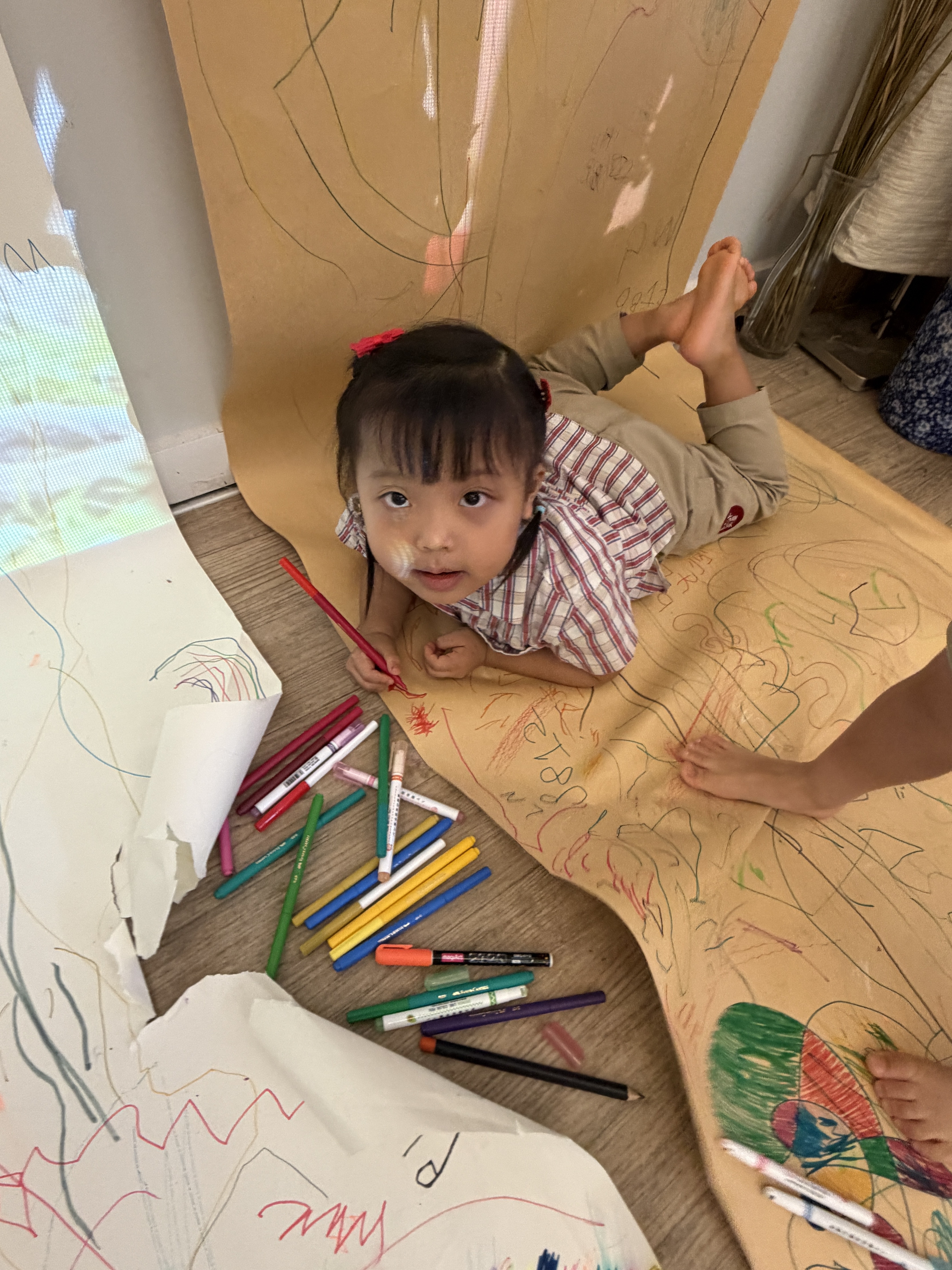
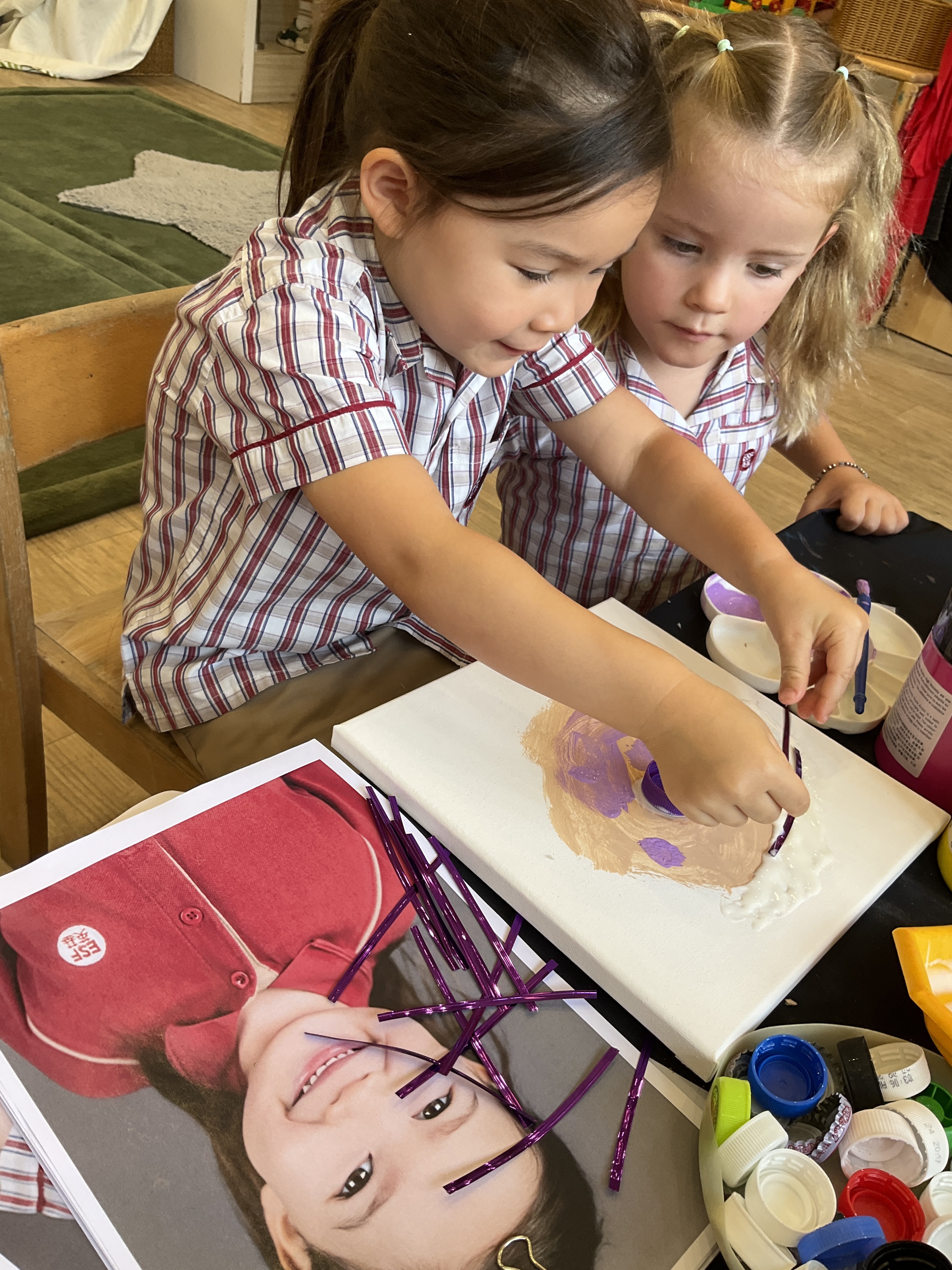
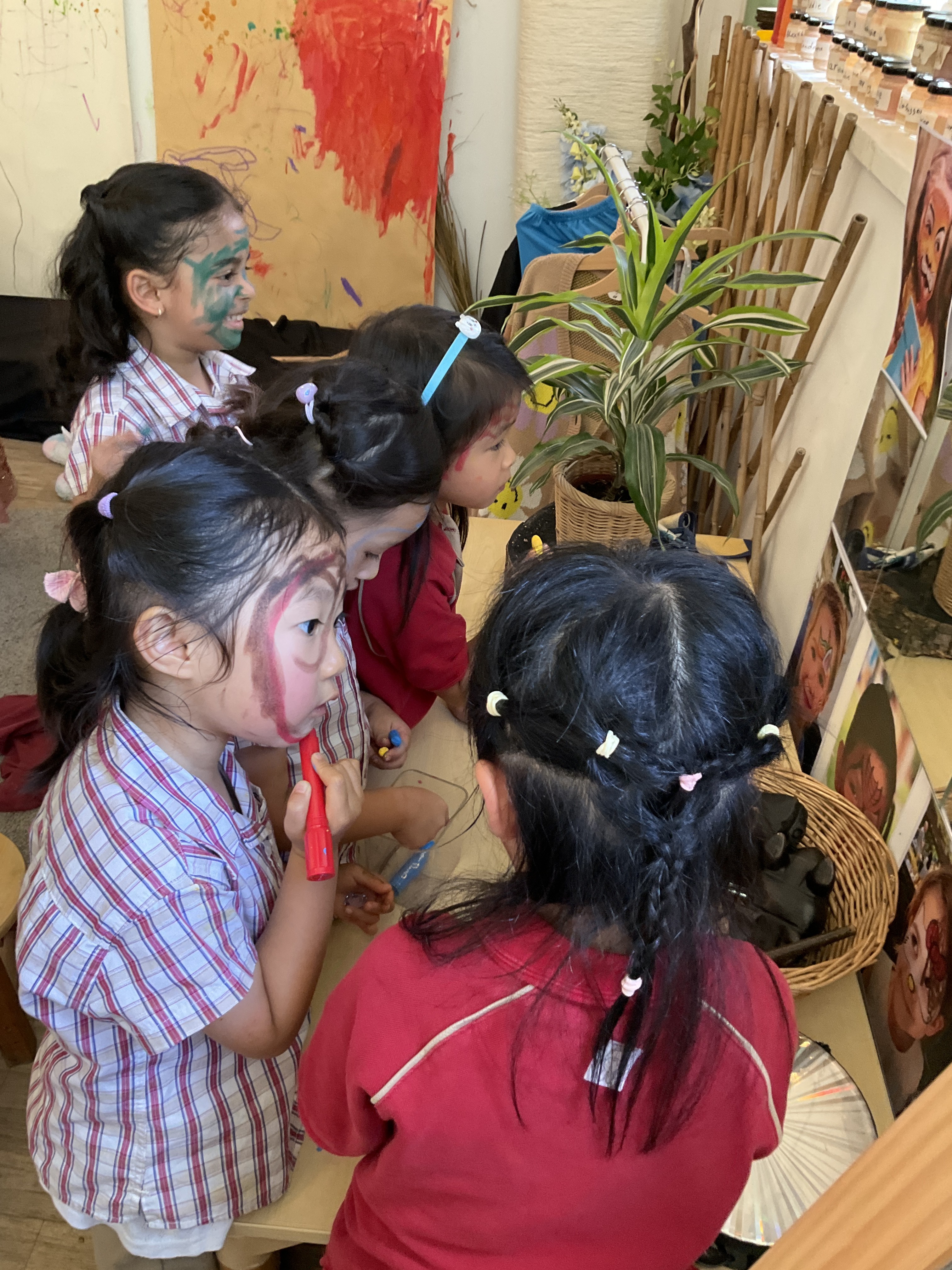
The children have also started making self-portraits to express who they are. Using the skin-coloured paint they mixed earlier in the year, they have been thoughtfully choosing loose parts to decorate their unique features.
Finally, we have been revisiting how we express our feelings. The children are learning that emotions don't have to stay inside—we can paint them, draw them, and dance them out!
Language
In our language learning, stories have been a wonderful way to explore expression and communication. Through the book "Tanka Tanka Skunk", the children used rhythm and patterns to clap out the syllables they heard in different words. We also read "The Skin You Live In", which led to meaningful discussions about how we are all beautifully unique and different. Alongside this, the story "Beautiful Oops" helped us explore the idea that making mistakes is completely okay, and that our mistakes actually help us grow and learn.
Maths
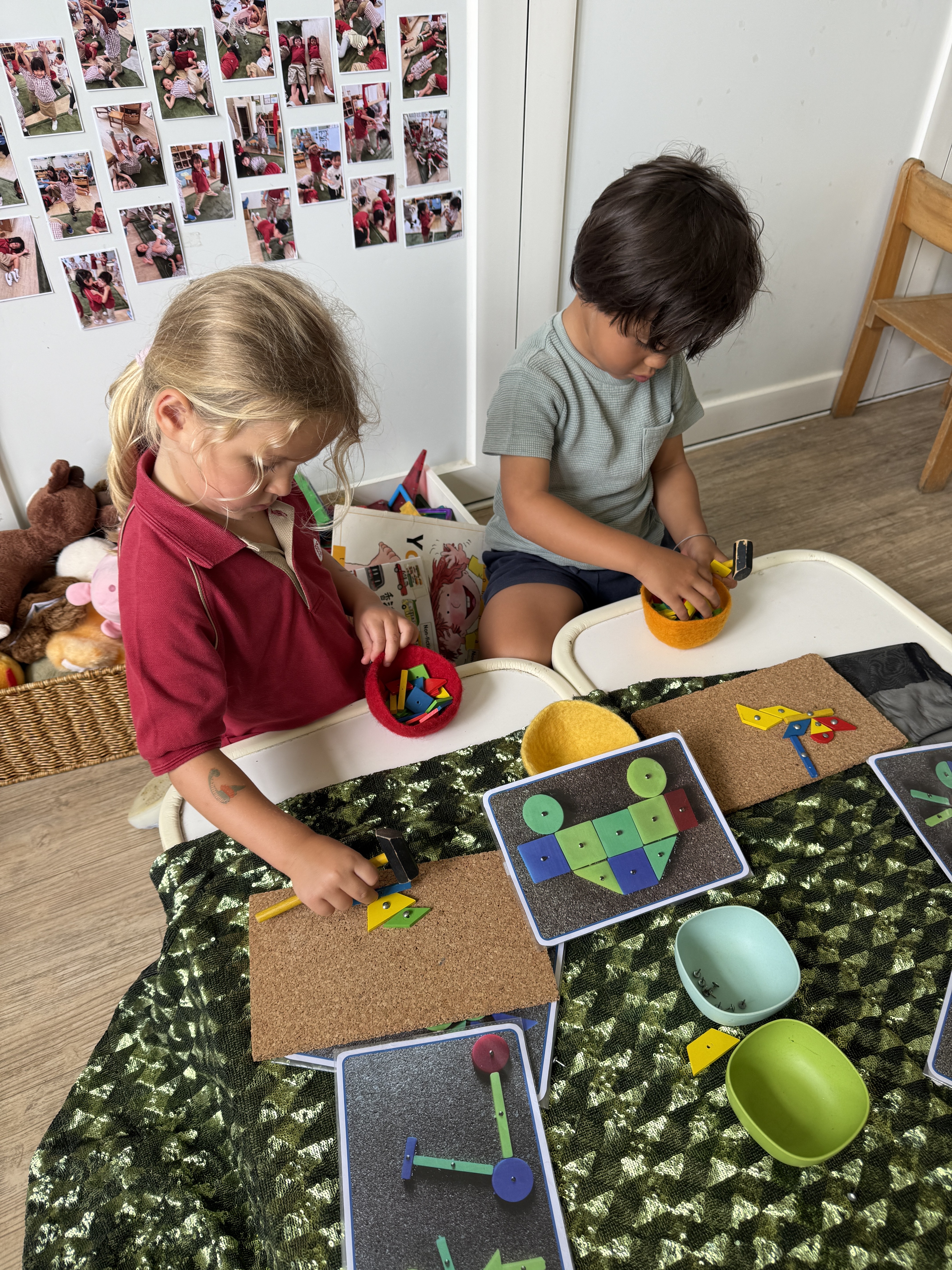
In maths, we have continued to explore patterns and simple addition. The children are learning that a pattern is something that repeats. We explored this through rhythm and movement, creating active patterns like "reach high, touch low" or "stomp, stomp, clap," while enjoying the song 'Banana Banana Meatball'. We also looked at shape patterns through songs. Alongside patterns, the children have been identifying common shapes, such as squares, rectangles, circles, and triangles—by looking at their sides and corners, as well as continuing our simple addition up to 10 by creating our own number stories.
Chinese
In our Chinese whole class learning, the children read the stories ‘My Emotions’ 我的大情绪 and ‘I Am Amazing’我觉得自己很棒. These books helped them explore their varied feelings and celebrate the unique qualities that make each person special. We extended this exploration into creative arts, using dance, music, and painting to express these emotions. The children also practised using the sentence structure “我喜欢...” (I like…)to share their favourite ways to express themselves. We enjoyed interactive games that allowed us to review Chinese numbers up to 10, basic 2D shapes, and AB patterns.
Chinese vocabulary
singing 唱歌 (chàng gǔ)
dancing 跳舞 (tiào wǔ)
drawing/painting 画画 (huà huà)
cooking 做饭 (zuò fàn)
building blocks 搭积木 (dā jī mù)
happy 开心 (kāi xīn)
sad 伤心 (shāng xīn)
angry 生气 (shēng qì)
silly 傻傻的 (shǎ shǎ de)
calm 平静的 (píng jìng de)
triangle 三角形 (sān jiǎo xíng)
rectangle 长方形 (cháng fāng xíng)
square 正方形 (zhèng fāng xíng)
circle 圆形 (yuán xíng)
I like 我喜欢 (wǒ xǐ huan)
I feel 我感到 (wǒ gǎn dào)
Chinese songs
Counting in Chinese up to 10
https://www.youtube.com/watch?v=ejOXzbvsYK8
Jasmine Flower 茉莉花
https://www.youtube.com/watch?v=frcKDw9IVgY
Emotions 心情
https://www.youtube.com/watch?v=SawSzZN6oHo
I’m a happy star 我是快乐的小星星
https://www.youtube.com/watch?v=sTY-3wki6e4
In our Unit of Inquiry, How We Express Ourselves, we have continued to explore our central idea: People create as a response to imagination, ideas, and experiences.
We looked at how real-world experiences can inspire art when our principal, Ms. Frances, brought her dog, Chewie, to meet the classes. This visit inspired the children to create in different ways. We sang songs and discussed different ways we can create, including making clay animals, painting, and dancing.
We also had a lively visit from the musicians of Our Music Wonderland, who retold the story of the "Three Little Pigs" using instruments and melodies. The children loved trying out the instruments themselves and experimenting with sounds to see how music can tell a story.
The children have also started making self-portraits to express who they are. Using the skin-coloured paint they mixed earlier in the year, they have been thoughtfully choosing loose parts to decorate their unique features.
Finally, we have been revisiting how we express our feelings. The children are learning that emotions don't have to stay inside—we can paint them, draw them, and dance them out!
Language
In our language learning, stories have been a wonderful way to explore expression and communication. Through the book "Tanka Tanka Skunk", the children used rhythm and patterns to clap out the syllables they heard in different words. We also read "The Skin You Live In", which led to meaningful discussions about how we are all beautifully unique and different. Alongside this, the story "Beautiful Oops" helped us explore the idea that making mistakes is completely okay, and that our mistakes actually help us grow and learn.
Maths
In maths, we have continued to explore patterns and simple addition. The children are learning that a pattern is something that repeats. We explored this through rhythm and movement, creating active patterns like "reach high, touch low" or "stomp, stomp, clap," while enjoying the song 'Banana Banana Meatball'. We also looked at shape patterns through songs. Alongside patterns, the children have been identifying common shapes, such as squares, rectangles, circles, and triangles—by looking at their sides and corners, as well as continuing our simple addition up to 10 by creating our own number stories.
Chinese
In our Chinese whole class learning, the children read the stories ‘My Emotions’ 我的大情绪 and ‘I Am Amazing’我觉得自己很棒. These books helped them explore their varied feelings and celebrate the unique qualities that make each person special. We extended this exploration into creative arts, using dance, music, and painting to express these emotions. The children also practised using the sentence structure “我喜欢...” (I like…)to share their favourite ways to express themselves. We enjoyed interactive games that allowed us to review Chinese numbers up to 10, basic 2D shapes, and AB patterns.
Chinese vocabulary
singing 唱歌 (chàng gǔ)
dancing 跳舞 (tiào wǔ)
drawing/painting 画画 (huà huà)
cooking 做饭 (zuò fàn)
building blocks 搭积木 (dā jī mù)
happy 开心 (kāi xīn)
sad 伤心 (shāng xīn)
angry 生气 (shēng qì)
silly 傻傻的 (shǎ shǎ de)
calm 平静的 (píng jìng de)
triangle 三角形 (sān jiǎo xíng)
rectangle 长方形 (cháng fāng xíng)
square 正方形 (zhèng fāng xíng)
circle 圆形 (yuán xíng)
I like 我喜欢 (wǒ xǐ huan)
I feel 我感到 (wǒ gǎn dào)
Chinese songs
Counting in Chinese up to 10
https://www.youtube.com/watch?v=ejOXzbvsYK8
Jasmine Flower 茉莉花
https://www.youtube.com/watch?v=frcKDw9IVgY
Emotions 心情
https://www.youtube.com/watch?v=SawSzZN6oHo
I’m a happy star 我是快乐的小星星
https://www.youtube.com/watch?v=sTY-3wki6e4
Posted by:
Ms Irene Ma, 26/05/2026 16:15:32
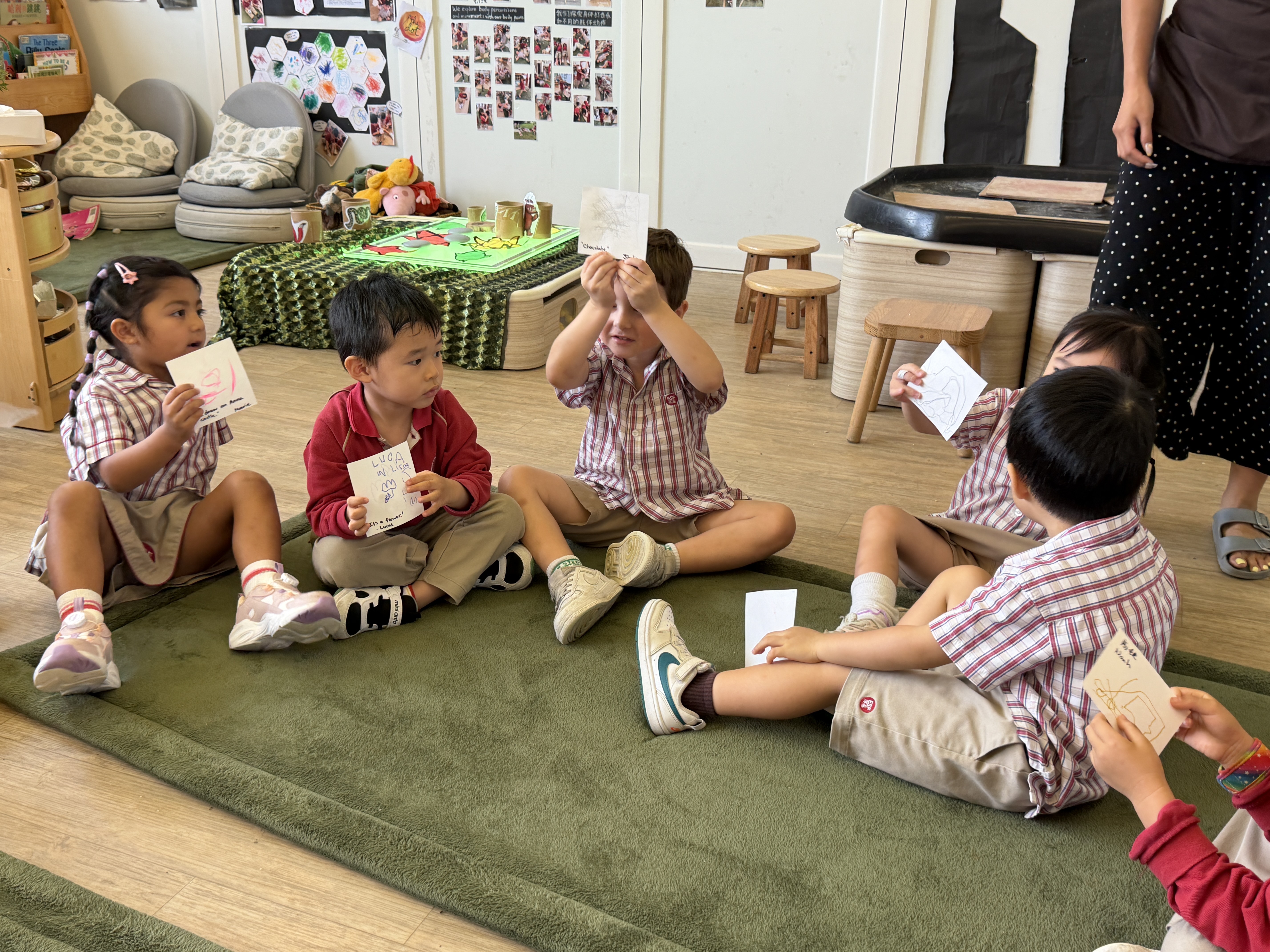
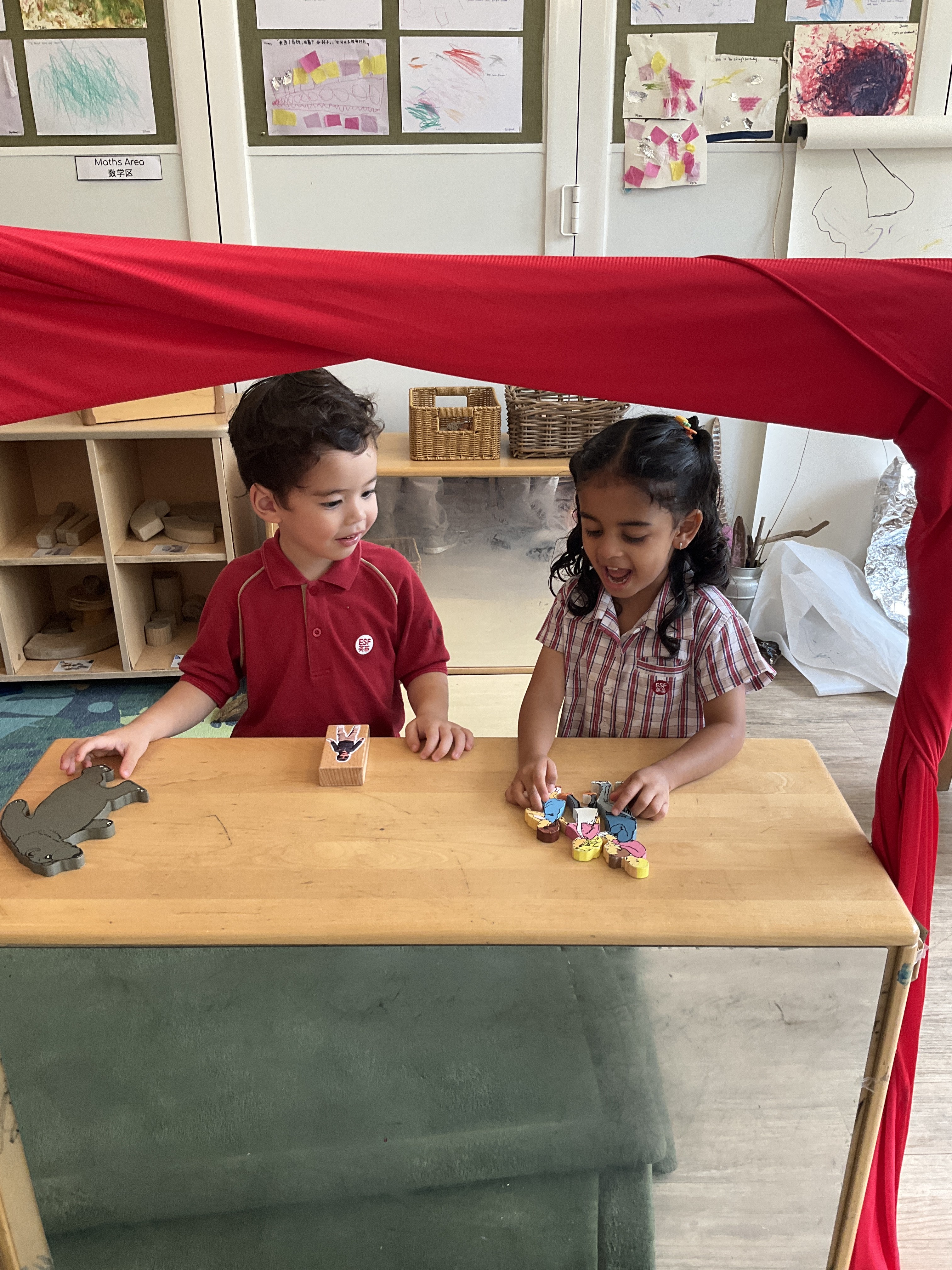
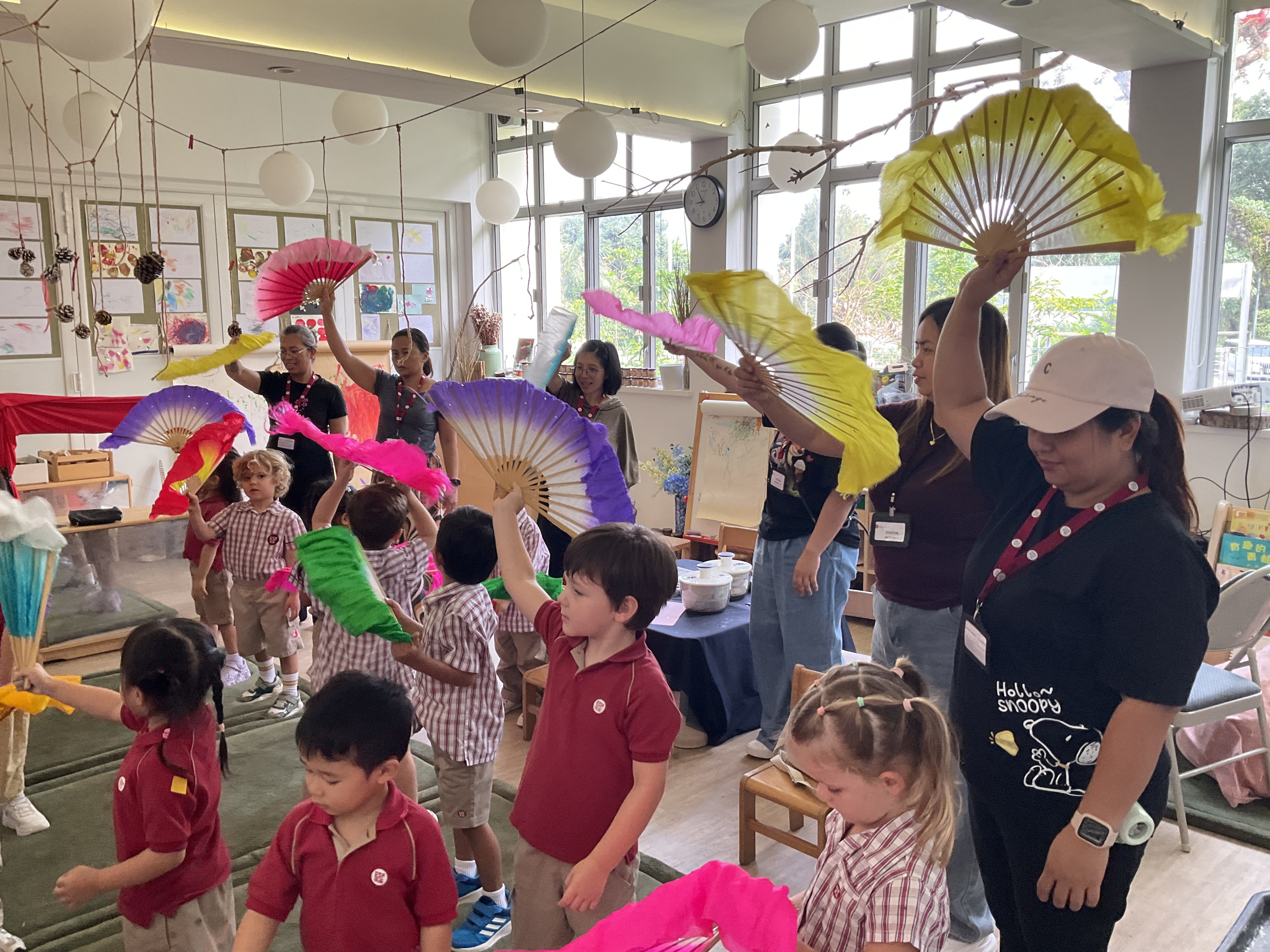
22th May 2026 WHOLE CLASS LEARNING JOURNEY
UOI and Chinese
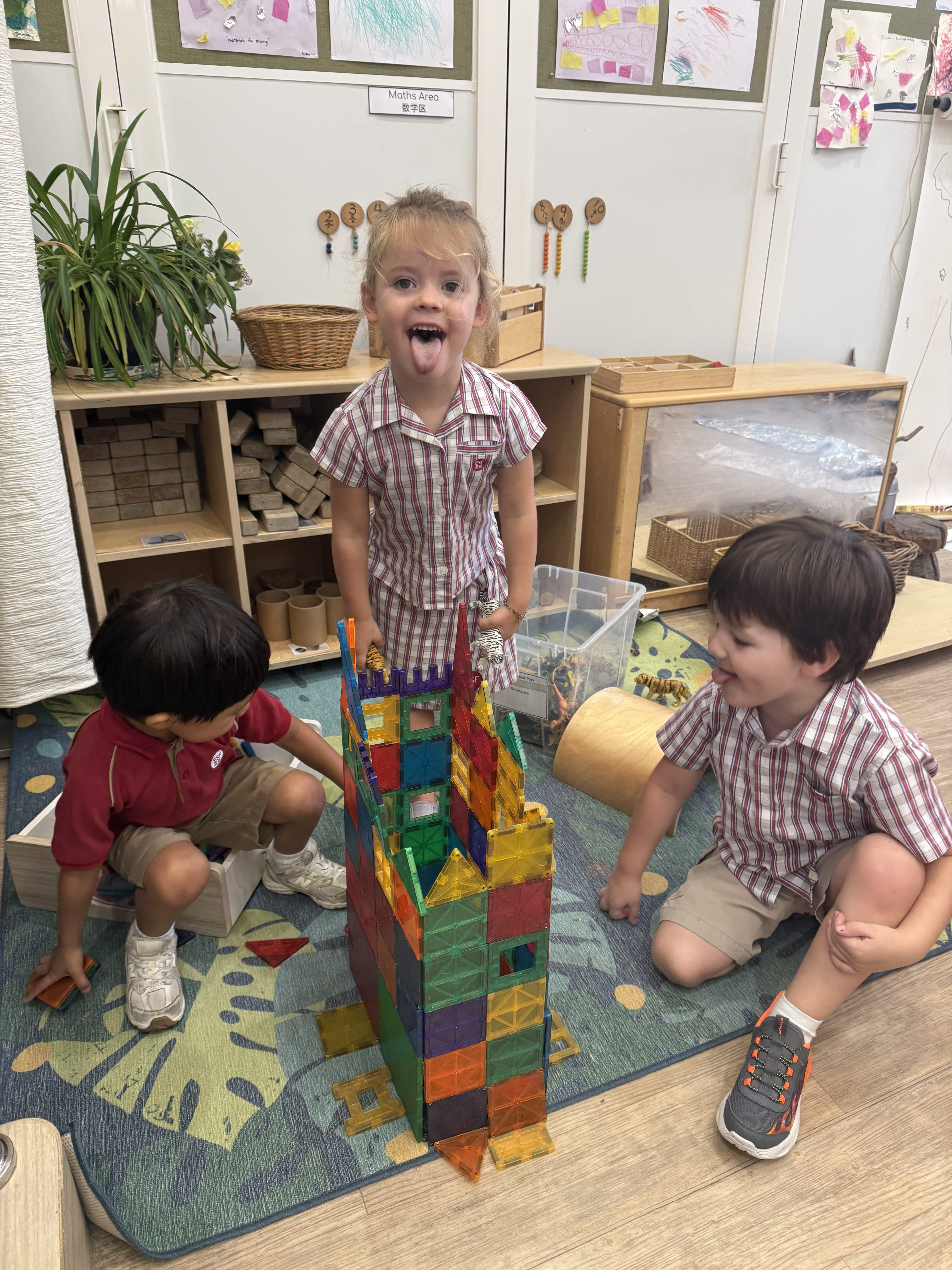
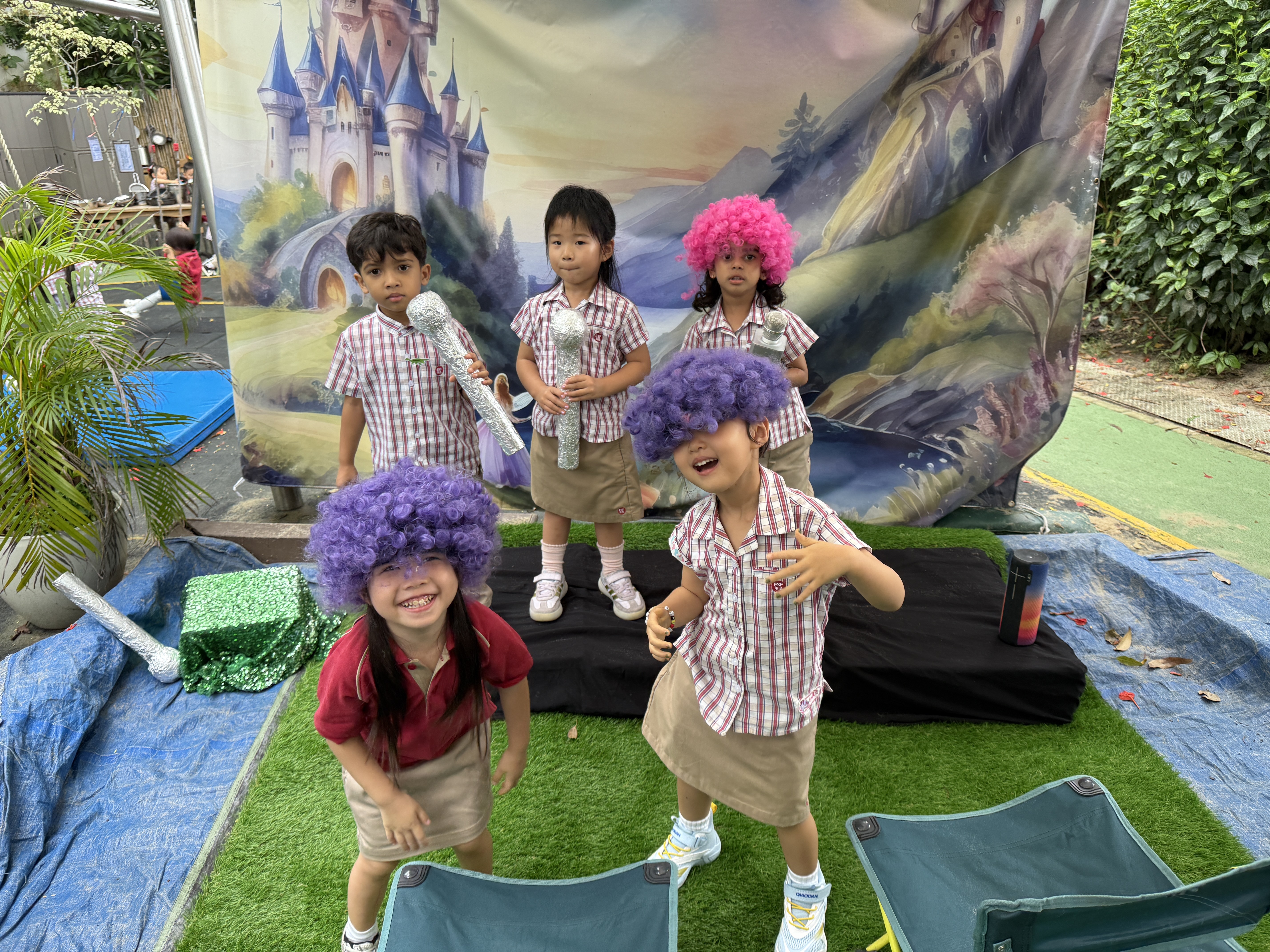
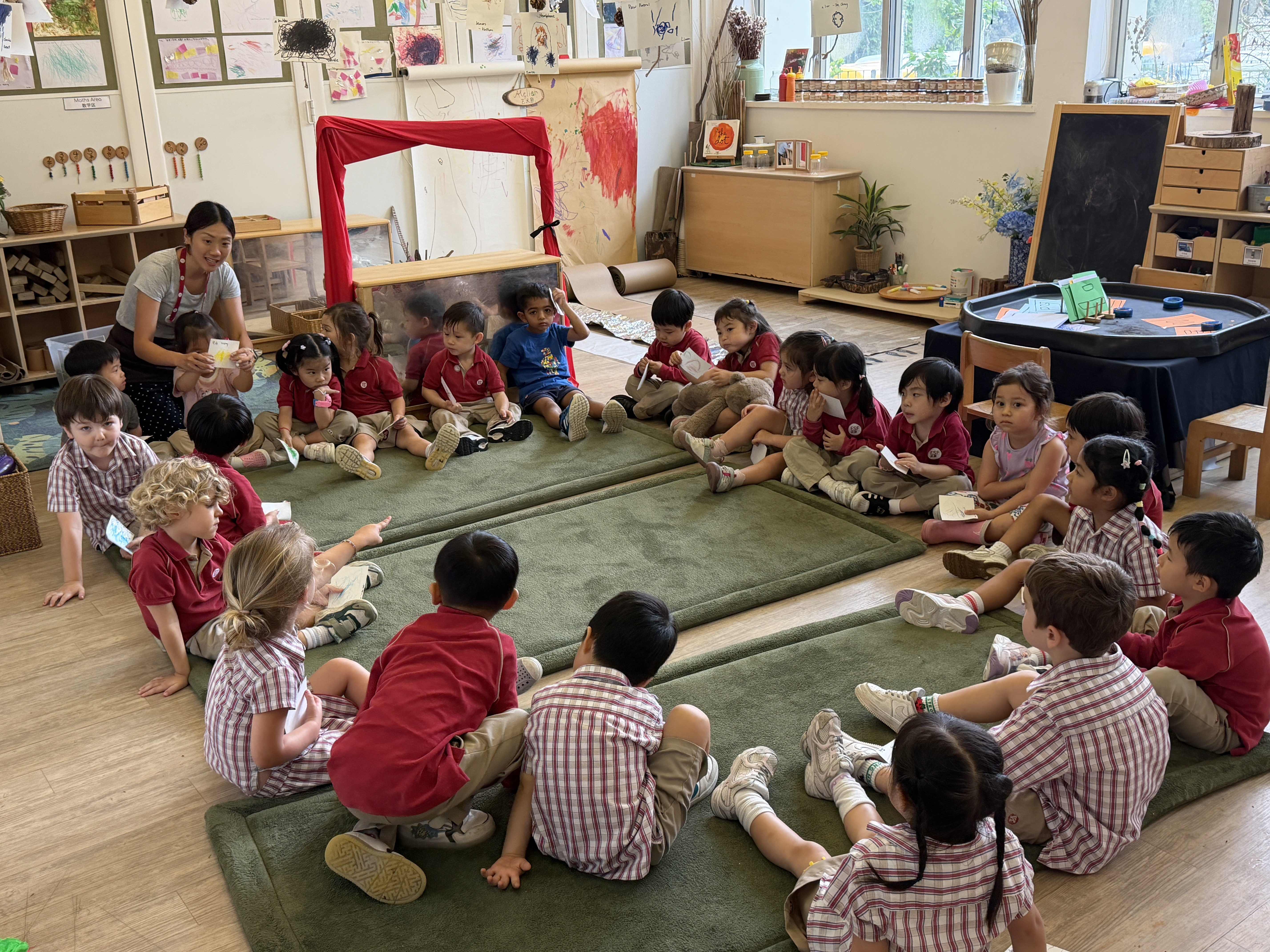
In our Unit of Inquiry, How We Express Ourselves, the children discovered that imagination has no limitations and they are learning to appreciate everyone’s unique ideas. Through construction play with blocks and clay, they expressed their creativity and shared their thoughts. This exploration of creativity continued in Chinese whole-class learning through the story ‘The Magical Leaves’ (神奇的树叶), where the children selected melodies, created their own lyrics for a ‘leaf song’, and danced to different music by imitating the movements of drifting leaves. They also recapped their understanding of shapes through the book ‘The Shapes In The Structures’ (我的建筑形状书) and explored a wider range of feelings through interactive songs and games.
We were excited to welcome our school aunties into the classroom to join in our activities. This experience allowed the children to show their appreciation for the aunties, who are such important and valued members of our school community.
Language
This week, our stories supported our exploration of how people create as a response to imagination, ideas, and experiences. Through the classic tale of The Three Little Pigs, the children shared their own ideas about building and design. This connected wonderfully with Rosie Revere, Engineer and When I Build with Blocks, inspiring the children to express their imaginations through construction and storytelling. We also have enjoyed “Going on a Bear Hunt”, drawing on our own experiences to act out the journey. The children used their hands to make body percussion and sounds, dramatically getting stuck in the mud, tiptoeing quietly, and experimenting with soft and loud, fast and slow movements to creatively express the sounds and actions of the environment.
Maths
In maths, we have been exploring simple addition using concrete objects to make the concepts visual and tangible. We introduced a "Bus Stop" activity. Using toy buses and people figurines, the children solved problems, such as: "If three passengers get on the bus to school and two more get on, how many do we have altogether?" During small group indoor learning, we challenged the children to follow addition stories using animals, for example, "If I have four animals and one more comes to play, how many do I have altogether?" And encouraging them to start creating and sharing their very own number stories.
Chinese vocabulary
happy 快乐 (kuài lè)
sad 伤心 (shāng xīn)
angry 生气 (shēng qì)
silly 傻傻的 (shǎ shǎ de)
calm 平静的 (píng jìng de)
triangle 三角形 (sān jiǎo xíng)
rectangle 长方形 (cháng fāng xíng)
square 正方形 (zhèng fāng xíng)
circle 圆形 (yuán xíng)
Chinese songs
Counting in Chinese up to 10
https://www.youtube.com/watch?v=ejOXzbvsYK8
Jasmine Flower 茉莉花
https://www.youtube.com/watch?v=frcKDw9IVgY
Emotions 心情
https://www.youtube.com/watch?v=SawSzZN6oHo
UOI and Chinese
In our Unit of Inquiry, How We Express Ourselves, the children discovered that imagination has no limitations and they are learning to appreciate everyone’s unique ideas. Through construction play with blocks and clay, they expressed their creativity and shared their thoughts. This exploration of creativity continued in Chinese whole-class learning through the story ‘The Magical Leaves’ (神奇的树叶), where the children selected melodies, created their own lyrics for a ‘leaf song’, and danced to different music by imitating the movements of drifting leaves. They also recapped their understanding of shapes through the book ‘The Shapes In The Structures’ (我的建筑形状书) and explored a wider range of feelings through interactive songs and games.
We were excited to welcome our school aunties into the classroom to join in our activities. This experience allowed the children to show their appreciation for the aunties, who are such important and valued members of our school community.
Language
This week, our stories supported our exploration of how people create as a response to imagination, ideas, and experiences. Through the classic tale of The Three Little Pigs, the children shared their own ideas about building and design. This connected wonderfully with Rosie Revere, Engineer and When I Build with Blocks, inspiring the children to express their imaginations through construction and storytelling. We also have enjoyed “Going on a Bear Hunt”, drawing on our own experiences to act out the journey. The children used their hands to make body percussion and sounds, dramatically getting stuck in the mud, tiptoeing quietly, and experimenting with soft and loud, fast and slow movements to creatively express the sounds and actions of the environment.
Maths
In maths, we have been exploring simple addition using concrete objects to make the concepts visual and tangible. We introduced a "Bus Stop" activity. Using toy buses and people figurines, the children solved problems, such as: "If three passengers get on the bus to school and two more get on, how many do we have altogether?" During small group indoor learning, we challenged the children to follow addition stories using animals, for example, "If I have four animals and one more comes to play, how many do I have altogether?" And encouraging them to start creating and sharing their very own number stories.
Chinese vocabulary
happy 快乐 (kuài lè)
sad 伤心 (shāng xīn)
angry 生气 (shēng qì)
silly 傻傻的 (shǎ shǎ de)
calm 平静的 (píng jìng de)
triangle 三角形 (sān jiǎo xíng)
rectangle 长方形 (cháng fāng xíng)
square 正方形 (zhèng fāng xíng)
circle 圆形 (yuán xíng)
Chinese songs
Counting in Chinese up to 10
https://www.youtube.com/watch?v=ejOXzbvsYK8
Jasmine Flower 茉莉花
https://www.youtube.com/watch?v=frcKDw9IVgY
Emotions 心情
https://www.youtube.com/watch?v=SawSzZN6oHo
Posted by:
Nicole Pattison, 26/05/2026 14:56:42
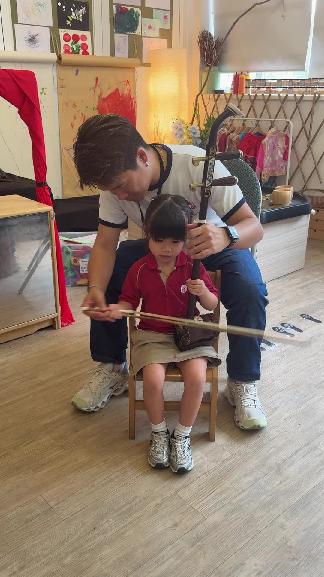
Today, musicians from Our Music Wonderland visited us to perform an interactive musical story of The 3 Little Pigs. After the story, Hailey enjoyed the hands-on experience of discovering how unique instruments worked, enthusiastically exploring their different sounds!
Posted by:
Nicole Pattison, 08/05/2026 07:54:20
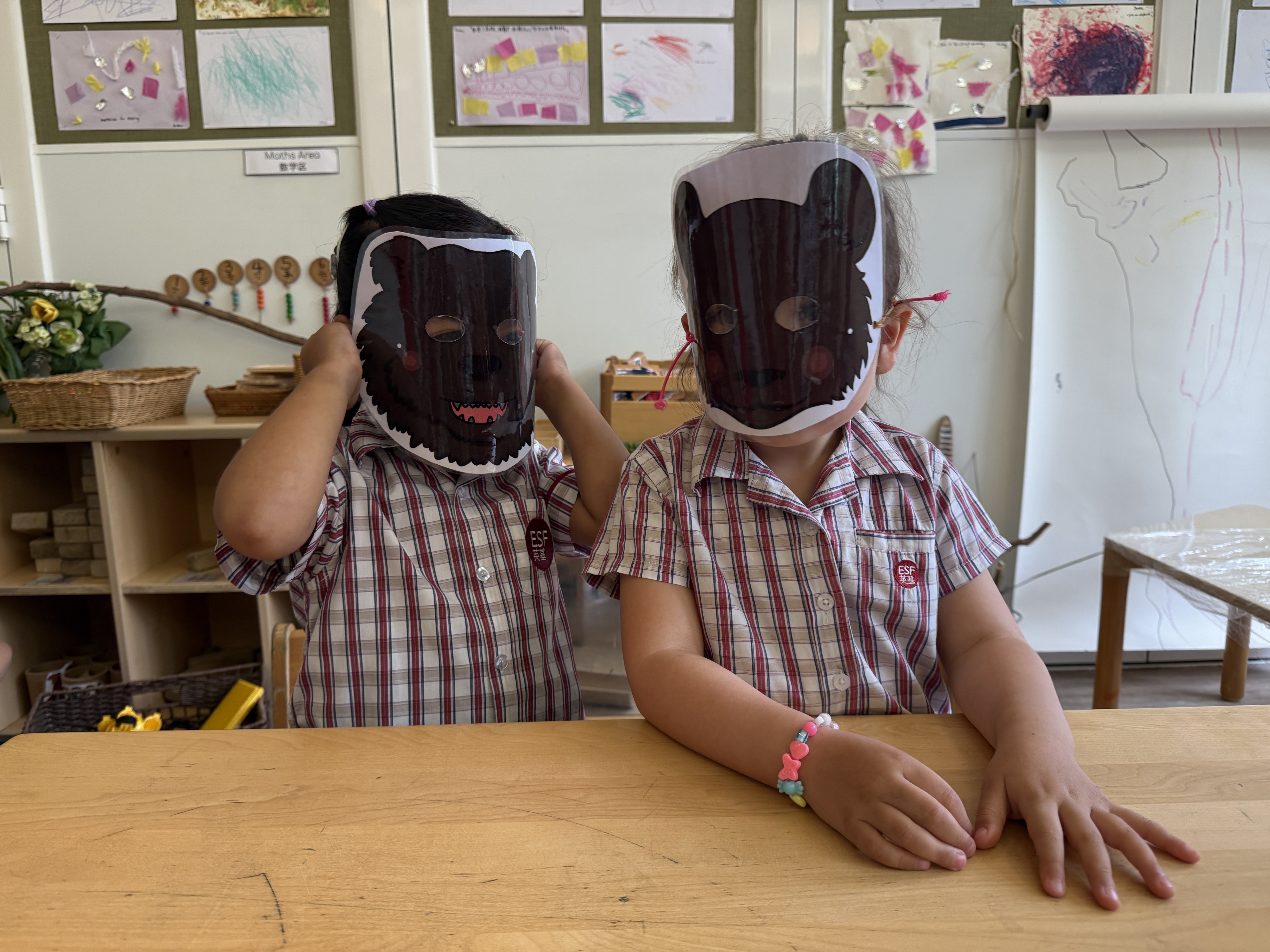
Learning Journey May 8th, 2026
Unit of Inquiry
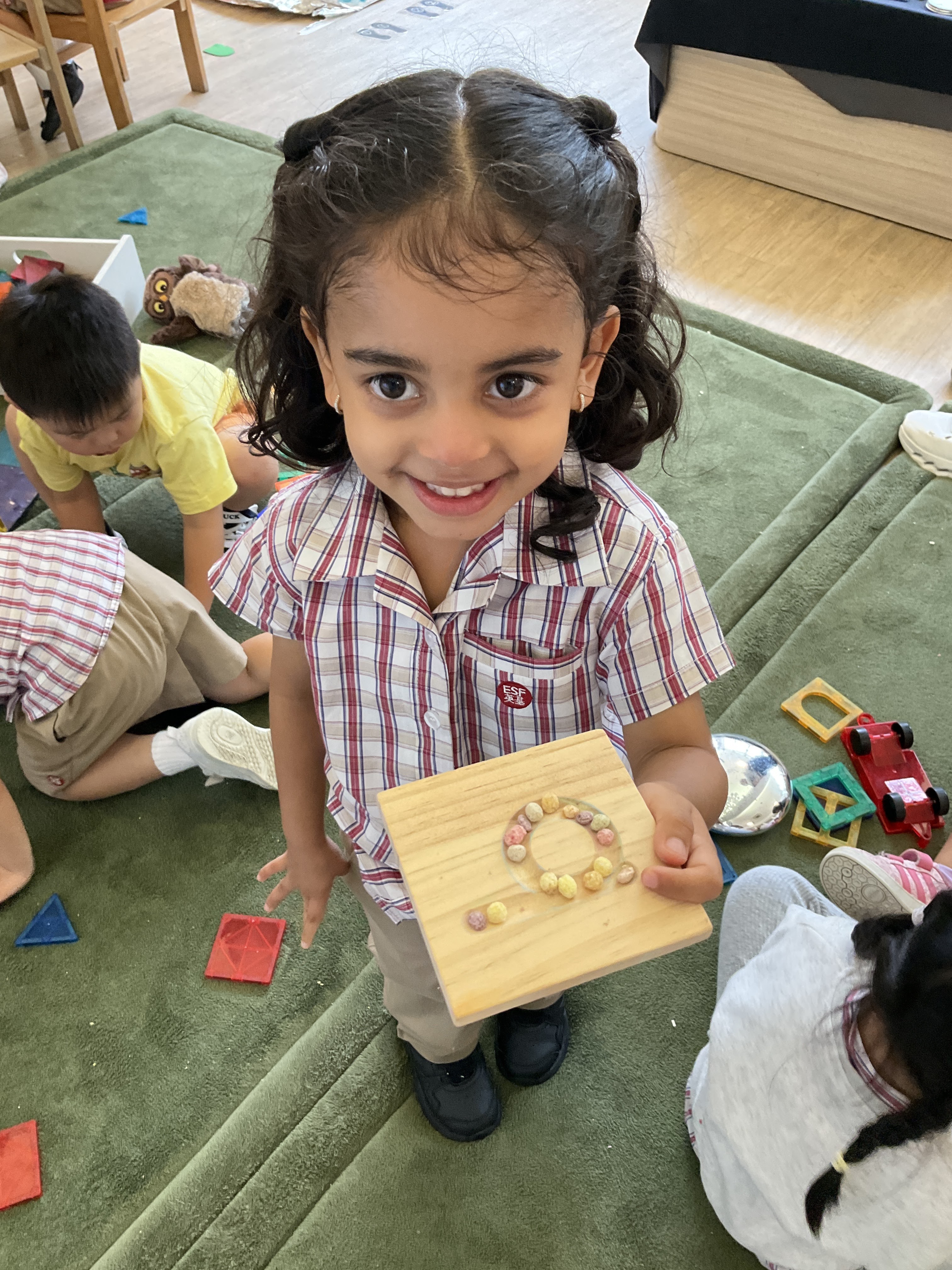
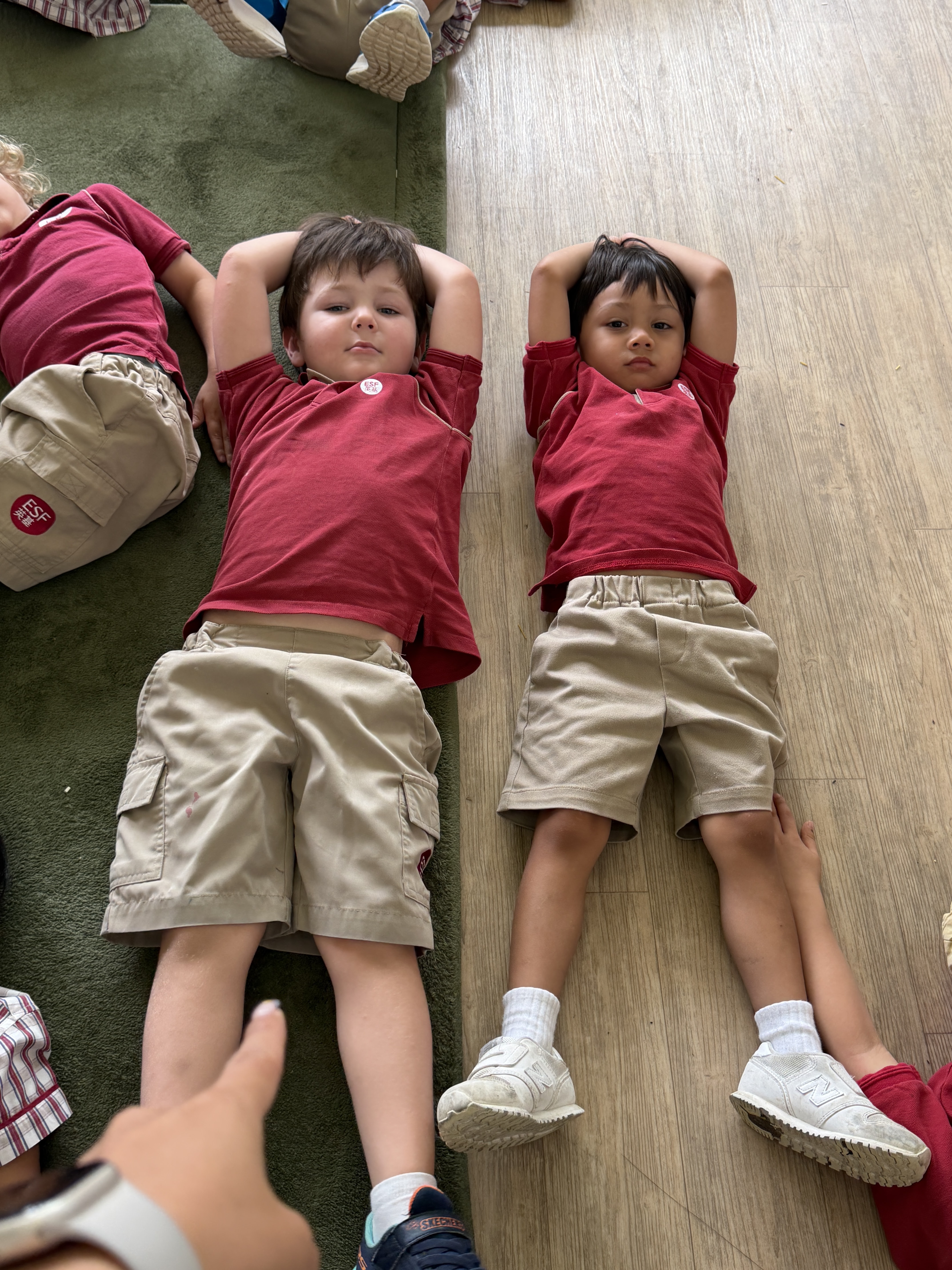
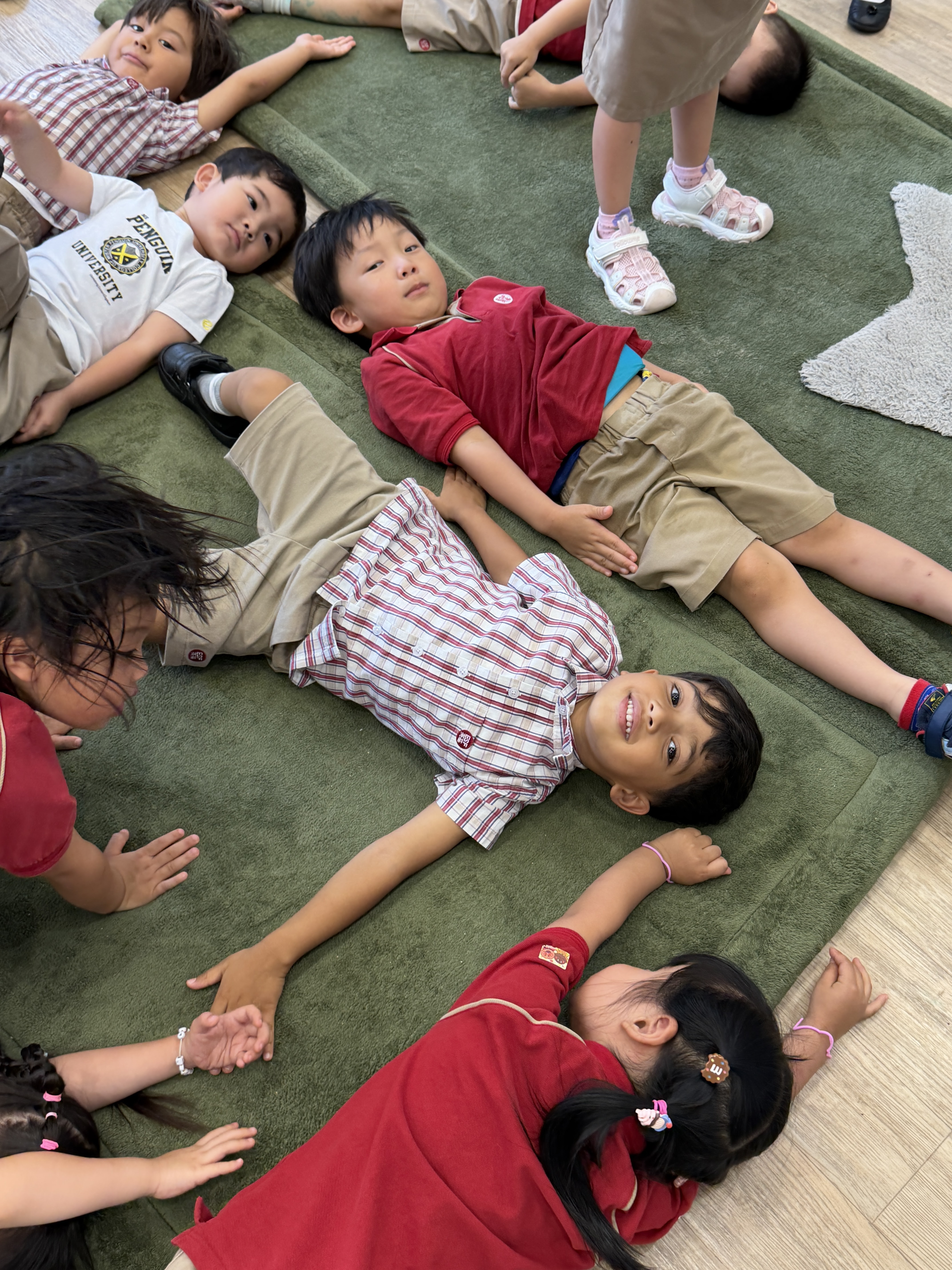
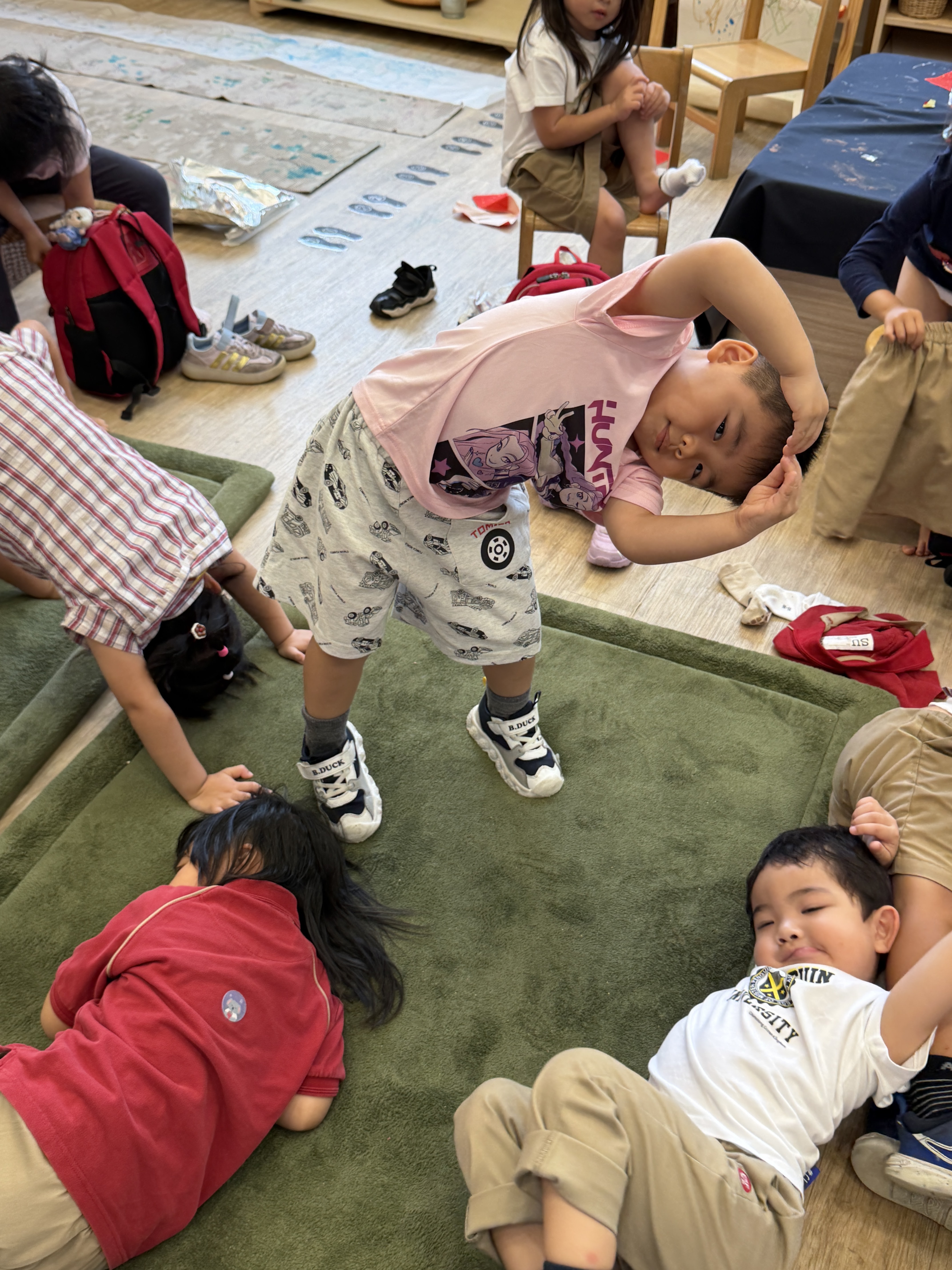
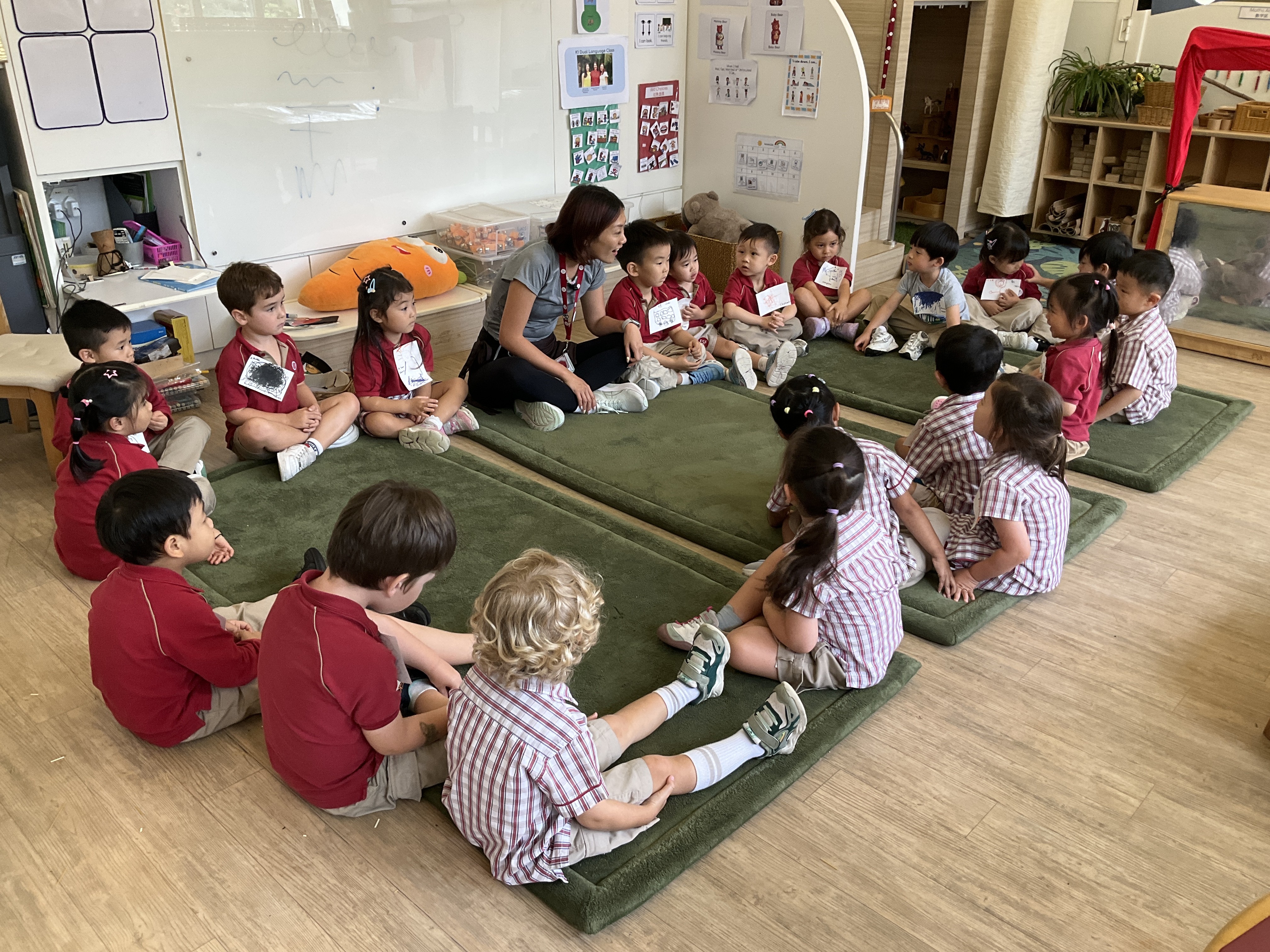
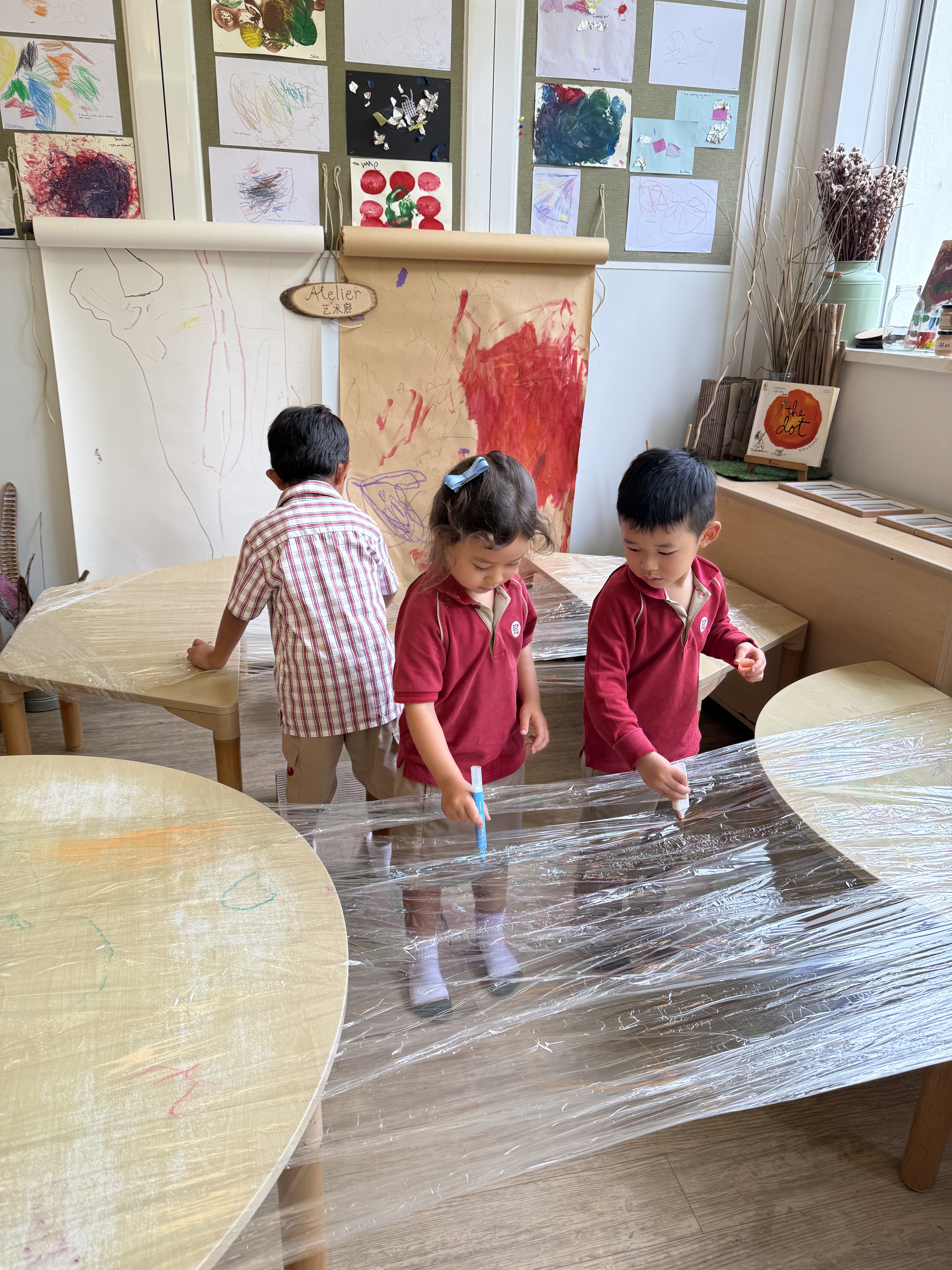
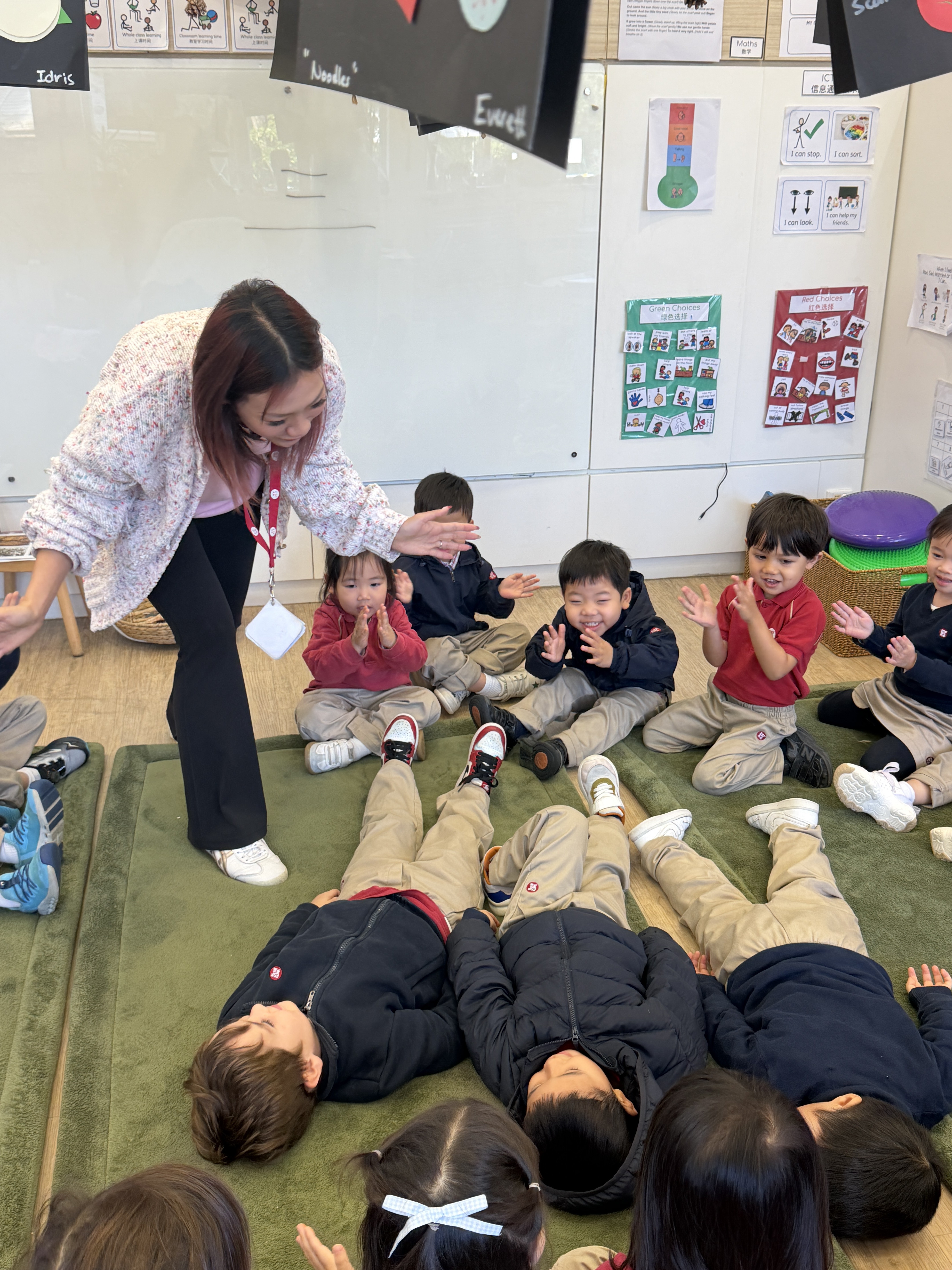
Over the last two weeks, our inquiry has moved from making marks on paper to expressing ourselves through creative movement. We have been exploring how our bodies can communicate feelings and ideas by connecting our physical actions to different sounds and rhythms.
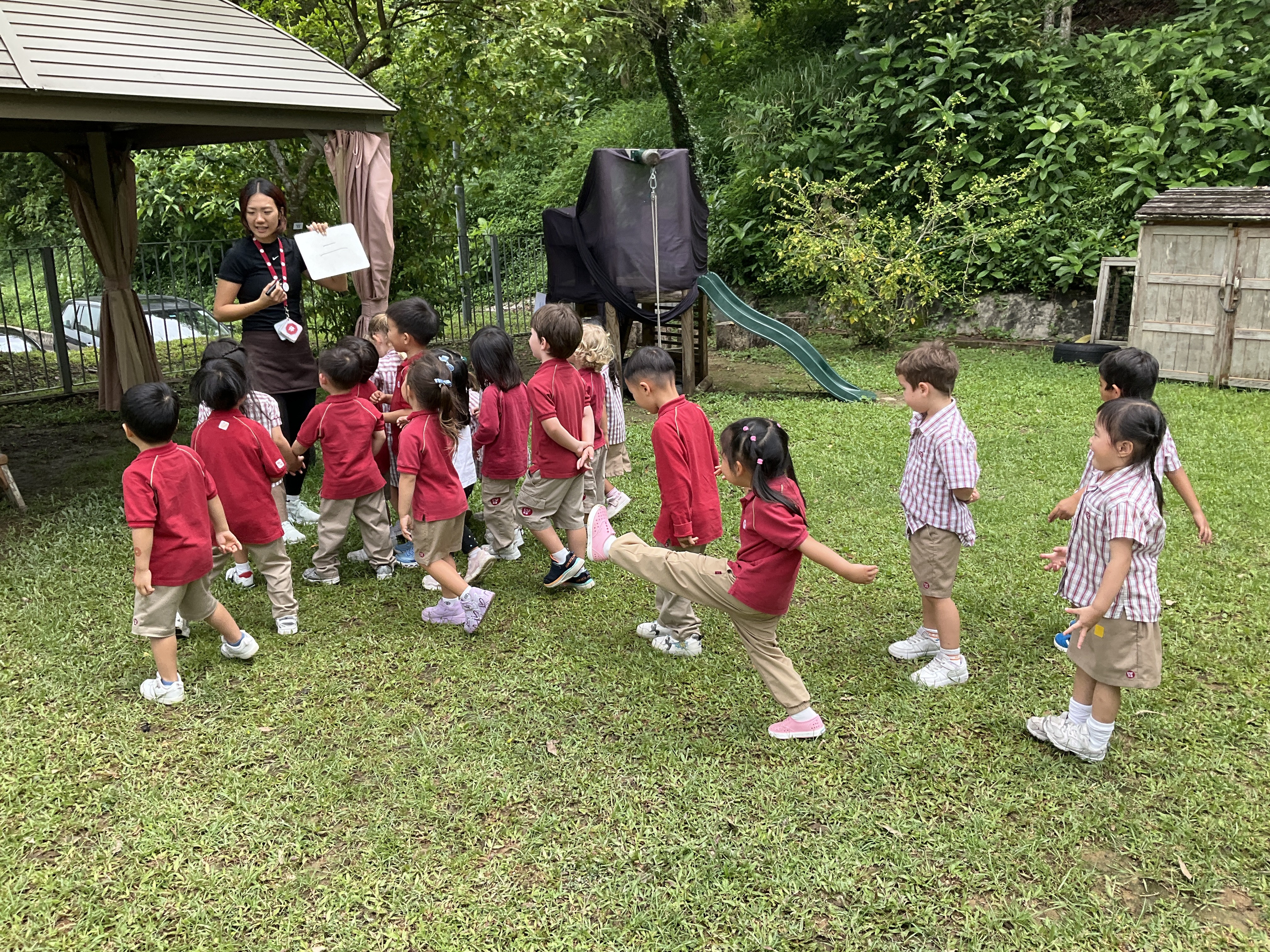
The children enjoyed "Would You Rather" challenges where they chose an animal and moved to music, practicing their self-regulation by "freezing" in character the moment the sound stopped. We also focused on body awareness, discovering how much we can express using just our heads, shoulders, and smaller gestures.
Our exploration became even more magical with the use of colorful scarves. Inspired by the Waltz of the Flowers, the children participated in a "Magic Seed" warm-up, growing from tiny seeds into tall blooms. They used the scarves to visualise the music, moving high and low or shifting between light, windy motions and heavy, slow movements. To finish our sessions, we gathered in a circle to form a "big bouquet," practicing mindful breathing to reflect on how to calm our bodies after movement.
Language
We retold Goldilocks and the Three Bears by matching instruments to the characters. The children explored pitch and volume, identifying loud drums for Daddy Bear and high-pitched bells for Goldilocks. We developed our sense of rhythm through the book Tanka Tanka Skunk, clapping out the syllables of names and words. Finally, we read Lollipop and Grandpa’s Back Garden Safari to encourage imaginative storytelling and continued to build phonological awareness through rhyming name songs.
Maths
In maths, we have been exploring patterns. After reading The Pattern Fish, the children identified visual patterns on the fish and repeating structures in the text. We then built our own AB sequences using objects like unifix cubes and wooden blocks, asking "What comes next?" We also created physical patterns using body percussion, such as patting knees then clapping hands, or jumping then freezing, to reinforce the concept through rhythm.
Chinese
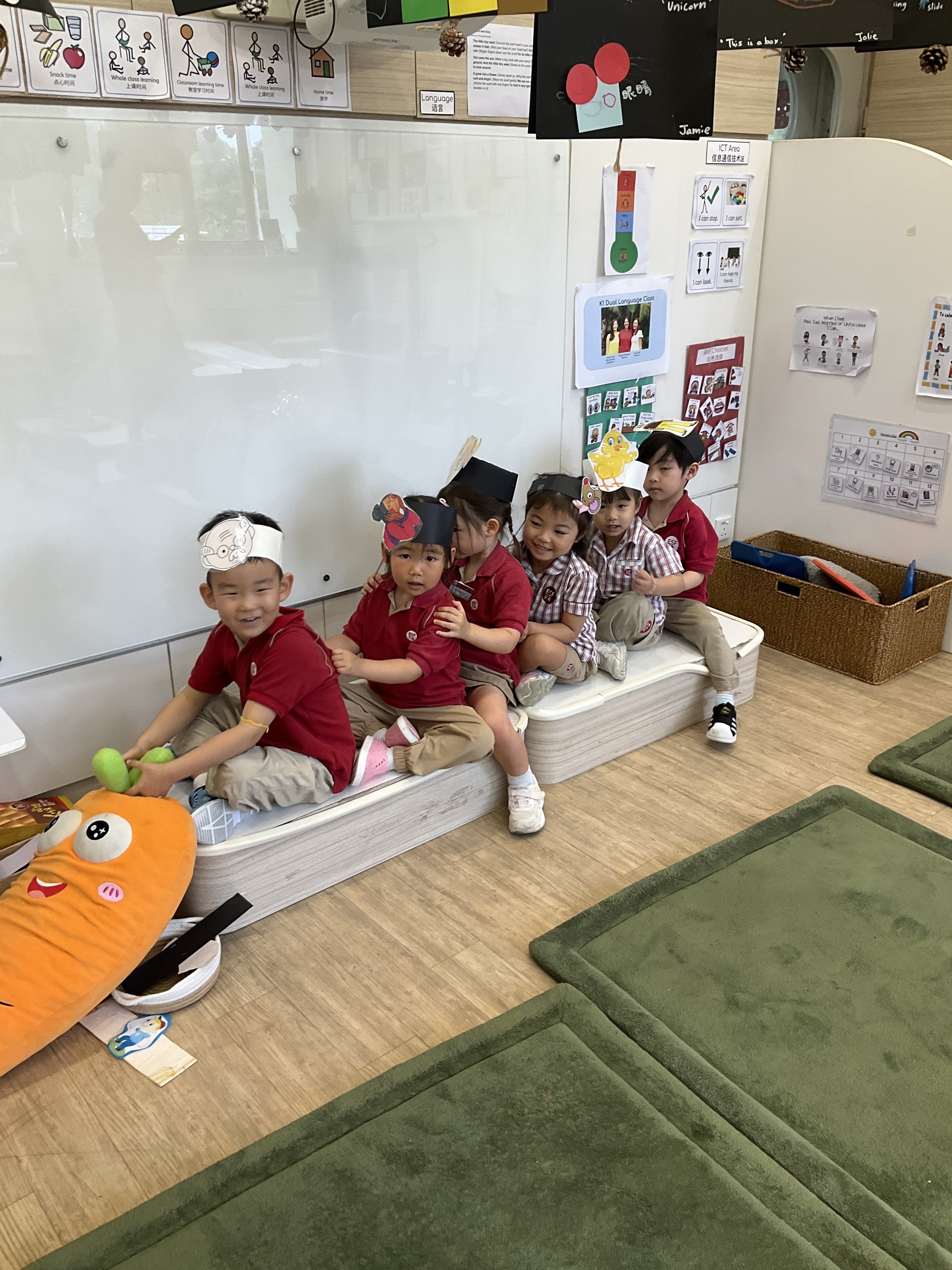
Over the past two weeks, the children have explored the Chinese language through drama and music. After reading the story The Enormous Carrot (拔萝卜), they created characters and collaborated to act out the narrative. This led to an exploration of body language, where they used their heads, shoulders, arms, and legs to express feelings and thoughts.
In preparation for Mother’s Day, we read My Mummy (我妈妈) and learned the song Mummy, I Love You (媽媽我愛你), focusing on vocabulary related to family and affection. Additionally, the children have been practicing their numeracy skills through interactive games and songs, building their ability to recognise Chinese numbers from 1 to 10.
Chinese Vocabulary
Mother’s day 母亲节 (mǔ qīn jié)
Happy mother's day 母亲节快乐 (mǔ qīn jié kuài lè)
I love you 我爱你 (wǒ ài nǐ)
Thank you 谢谢你 (xiè xiè nǐ)
curved line 曲线 (qū xiàn)
straight line 直线 (zhí xiàn)
head 头 (tóu)
shoulder 肩膀 (jiān bǎng)
elbow 手肘 (shǒu zhǒu)
arm 手臂 (shǒu bì)
knee 膝盖 (xī gài)
legs 脚 (jiǎo)
triangle 三角形 (sān jiǎo xíng)
rectangle 长方形 (cháng fāng xíng)
square 正方形 (zhèng fāng xíng)
circle 圆形 (yuán xíng)
Chinese songs
跟着形状跳舞 Follow the shapes and dance
https://www.youtube.com/watch?v=7EwQDQVZiL4
Counting in Chinese up to 10
https://www.youtube.com/watch?v=ejOXzbvsYK8
媽媽我愛你
https://www.youtube.com/watch?v=72UeGJBP51Q
Unit of Inquiry
Over the last two weeks, our inquiry has moved from making marks on paper to expressing ourselves through creative movement. We have been exploring how our bodies can communicate feelings and ideas by connecting our physical actions to different sounds and rhythms.
The children enjoyed "Would You Rather" challenges where they chose an animal and moved to music, practicing their self-regulation by "freezing" in character the moment the sound stopped. We also focused on body awareness, discovering how much we can express using just our heads, shoulders, and smaller gestures.
Our exploration became even more magical with the use of colorful scarves. Inspired by the Waltz of the Flowers, the children participated in a "Magic Seed" warm-up, growing from tiny seeds into tall blooms. They used the scarves to visualise the music, moving high and low or shifting between light, windy motions and heavy, slow movements. To finish our sessions, we gathered in a circle to form a "big bouquet," practicing mindful breathing to reflect on how to calm our bodies after movement.
Language
We retold Goldilocks and the Three Bears by matching instruments to the characters. The children explored pitch and volume, identifying loud drums for Daddy Bear and high-pitched bells for Goldilocks. We developed our sense of rhythm through the book Tanka Tanka Skunk, clapping out the syllables of names and words. Finally, we read Lollipop and Grandpa’s Back Garden Safari to encourage imaginative storytelling and continued to build phonological awareness through rhyming name songs.
Maths
In maths, we have been exploring patterns. After reading The Pattern Fish, the children identified visual patterns on the fish and repeating structures in the text. We then built our own AB sequences using objects like unifix cubes and wooden blocks, asking "What comes next?" We also created physical patterns using body percussion, such as patting knees then clapping hands, or jumping then freezing, to reinforce the concept through rhythm.
Chinese
Over the past two weeks, the children have explored the Chinese language through drama and music. After reading the story The Enormous Carrot (拔萝卜), they created characters and collaborated to act out the narrative. This led to an exploration of body language, where they used their heads, shoulders, arms, and legs to express feelings and thoughts.
In preparation for Mother’s Day, we read My Mummy (我妈妈) and learned the song Mummy, I Love You (媽媽我愛你), focusing on vocabulary related to family and affection. Additionally, the children have been practicing their numeracy skills through interactive games and songs, building their ability to recognise Chinese numbers from 1 to 10.
Chinese Vocabulary
Mother’s day 母亲节 (mǔ qīn jié)
Happy mother's day 母亲节快乐 (mǔ qīn jié kuài lè)
I love you 我爱你 (wǒ ài nǐ)
Thank you 谢谢你 (xiè xiè nǐ)
curved line 曲线 (qū xiàn)
straight line 直线 (zhí xiàn)
head 头 (tóu)
shoulder 肩膀 (jiān bǎng)
elbow 手肘 (shǒu zhǒu)
arm 手臂 (shǒu bì)
knee 膝盖 (xī gài)
legs 脚 (jiǎo)
triangle 三角形 (sān jiǎo xíng)
rectangle 长方形 (cháng fāng xíng)
square 正方形 (zhèng fāng xíng)
circle 圆形 (yuán xíng)
Chinese songs
跟着形状跳舞 Follow the shapes and dance
https://www.youtube.com/watch?v=7EwQDQVZiL4
Counting in Chinese up to 10
https://www.youtube.com/watch?v=ejOXzbvsYK8
媽媽我愛你
https://www.youtube.com/watch?v=72UeGJBP51Q
Posted by:
Nicole Pattison, 04/05/2026 12:45:02
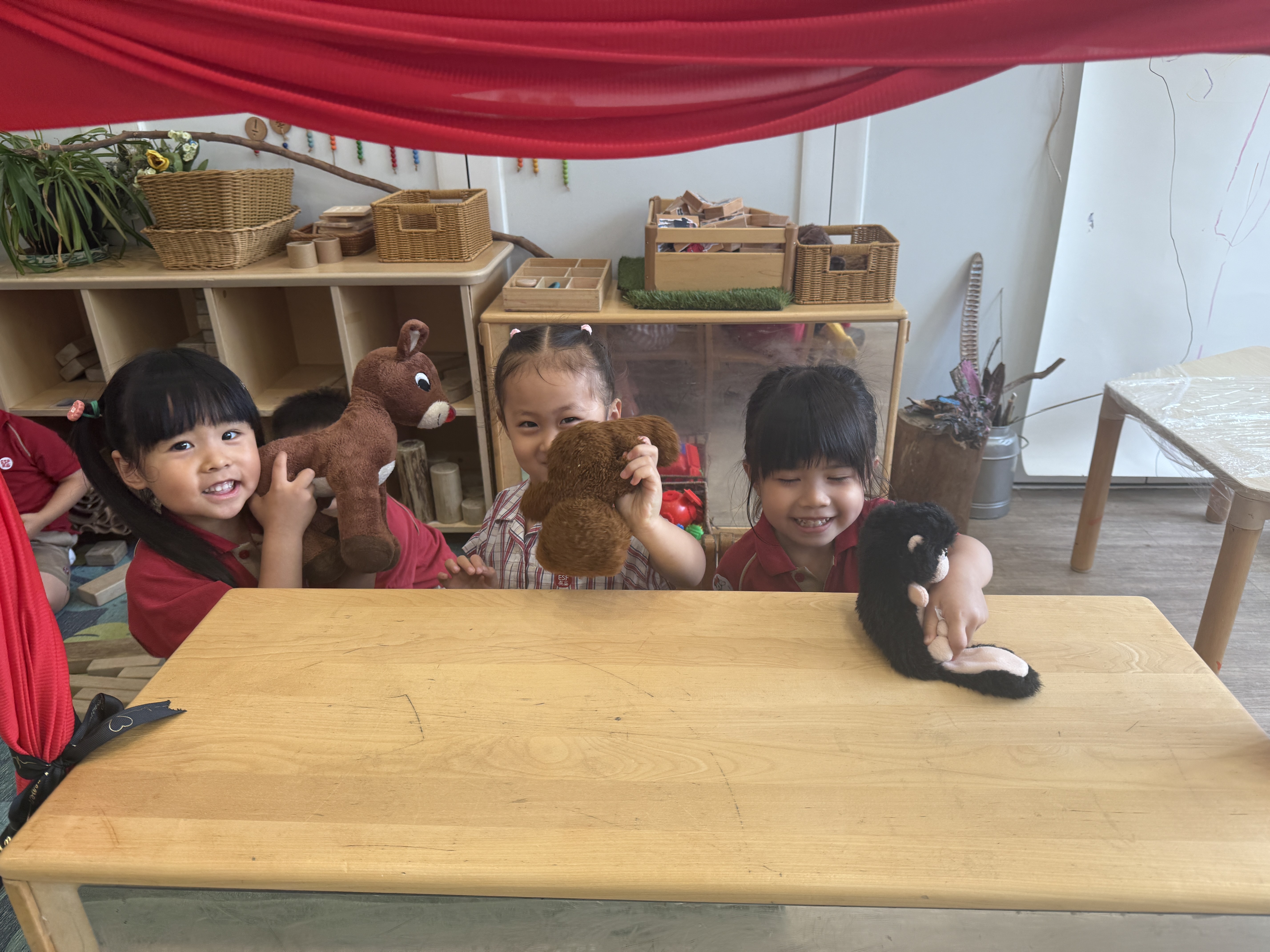
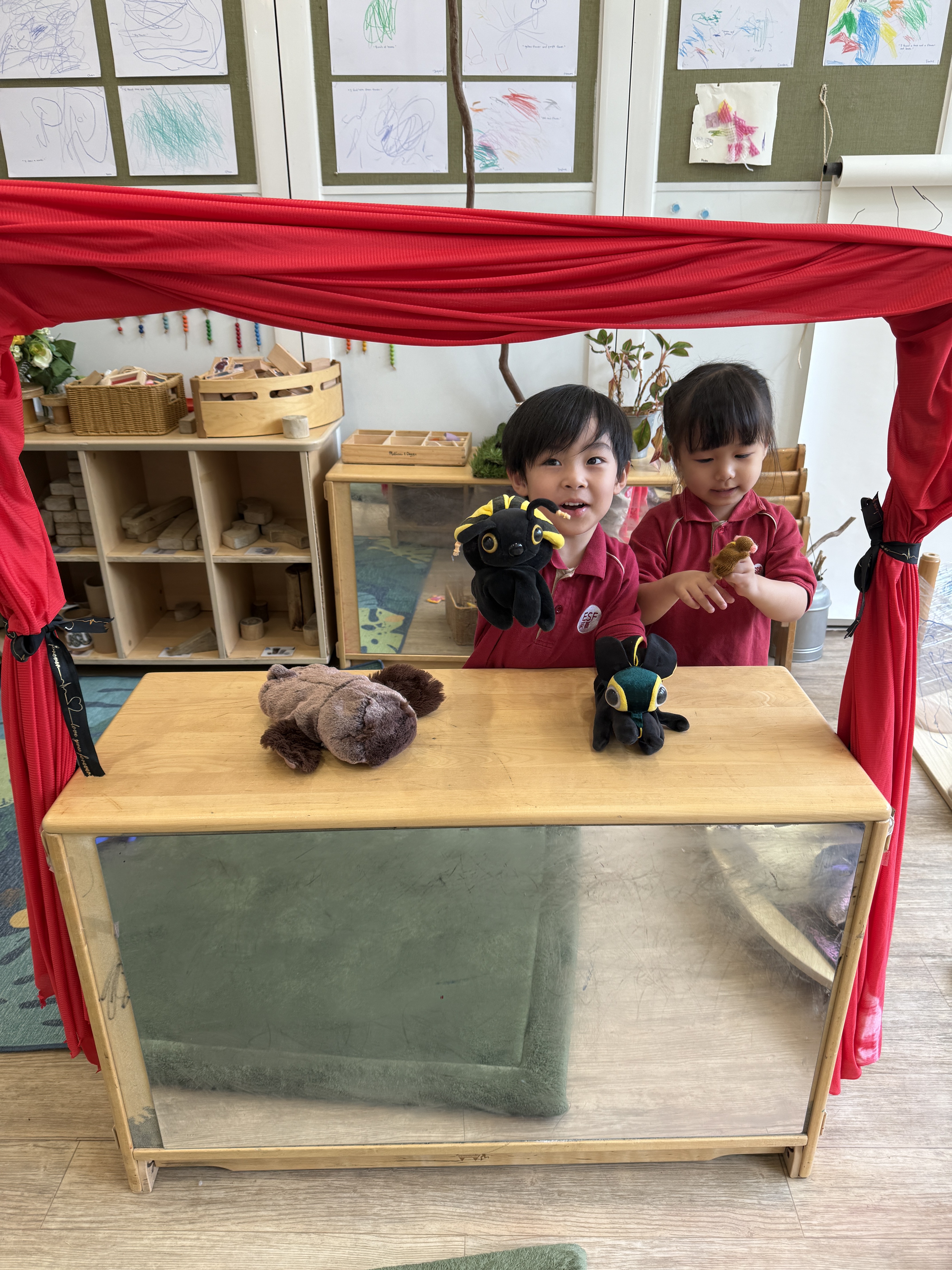
Hailey is exploring narrative play in the dramatic play area. She has been experimenting with a variety of puppets, using her own words and actions to develop characters and act out different scenarios.
Posted by:
Ms Maria Lee, 03/05/2026 15:34:09
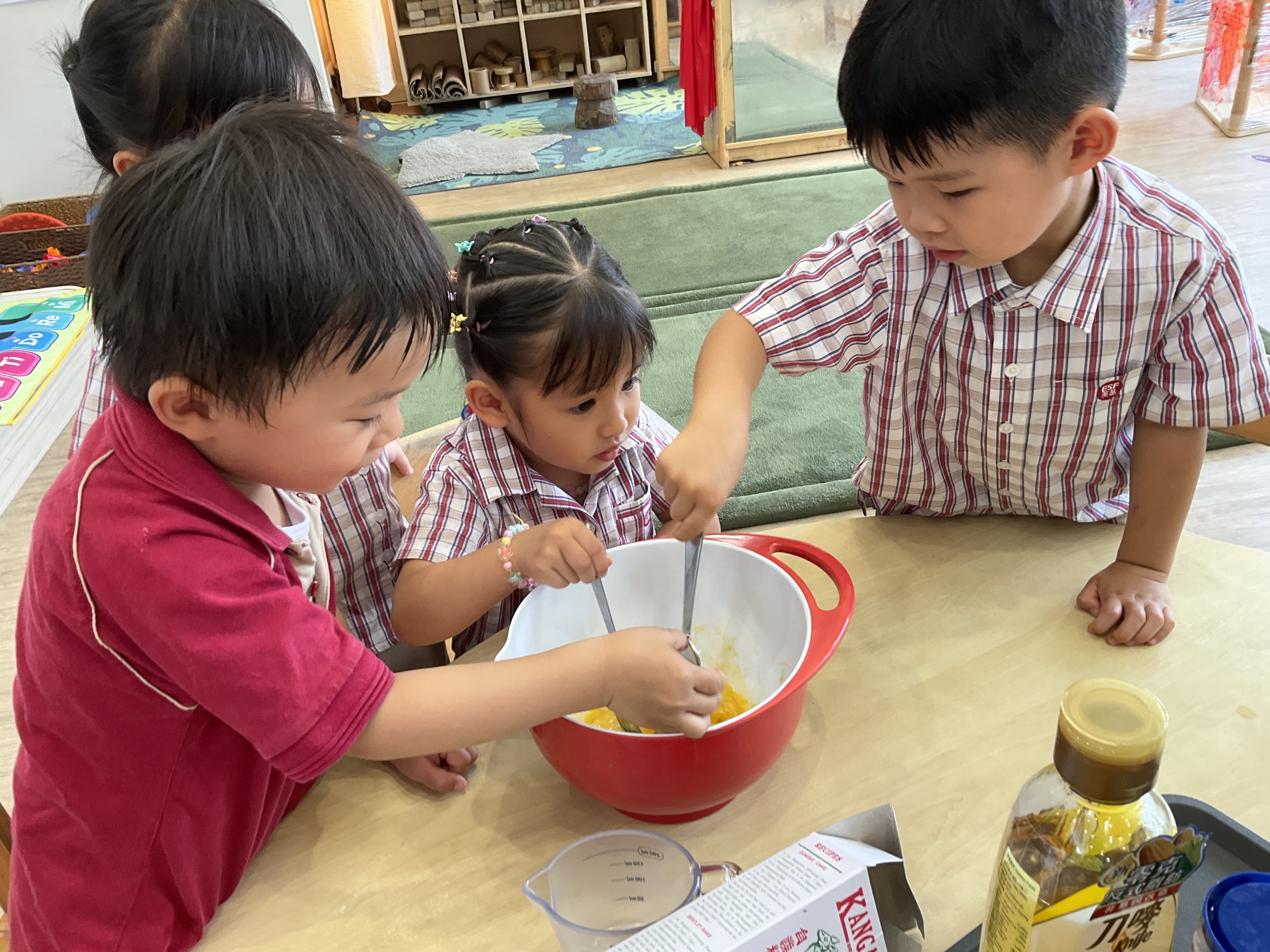
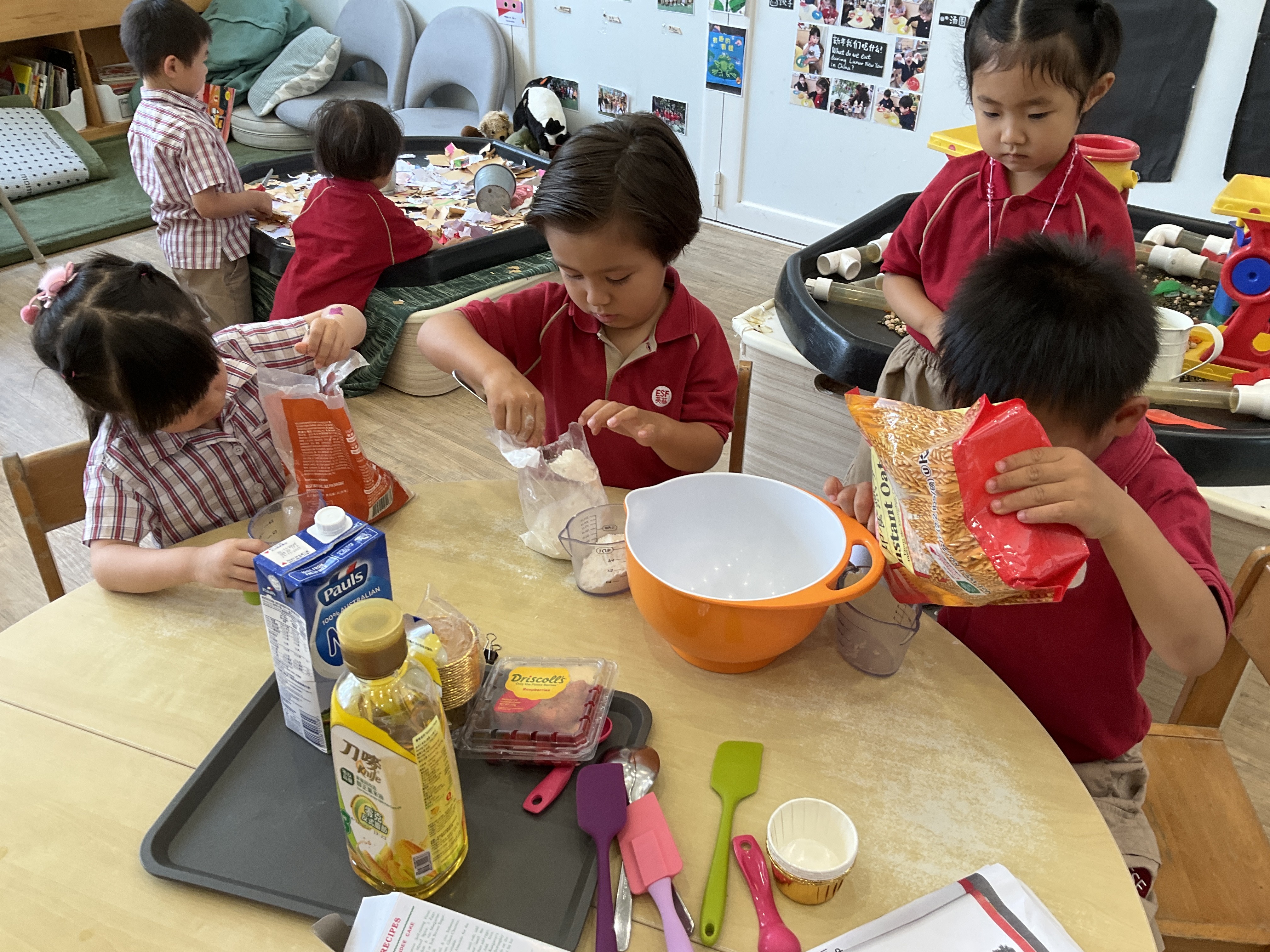
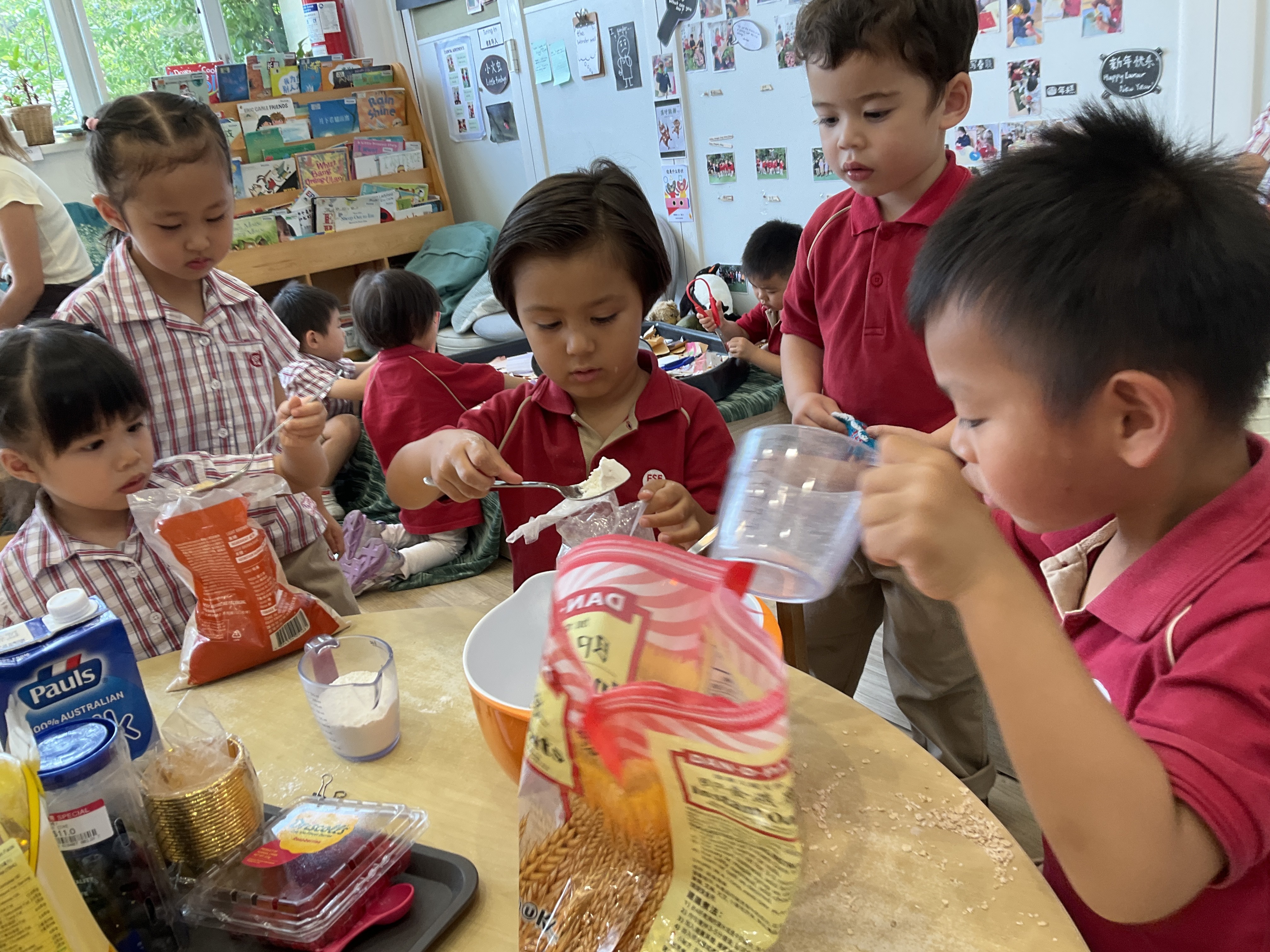
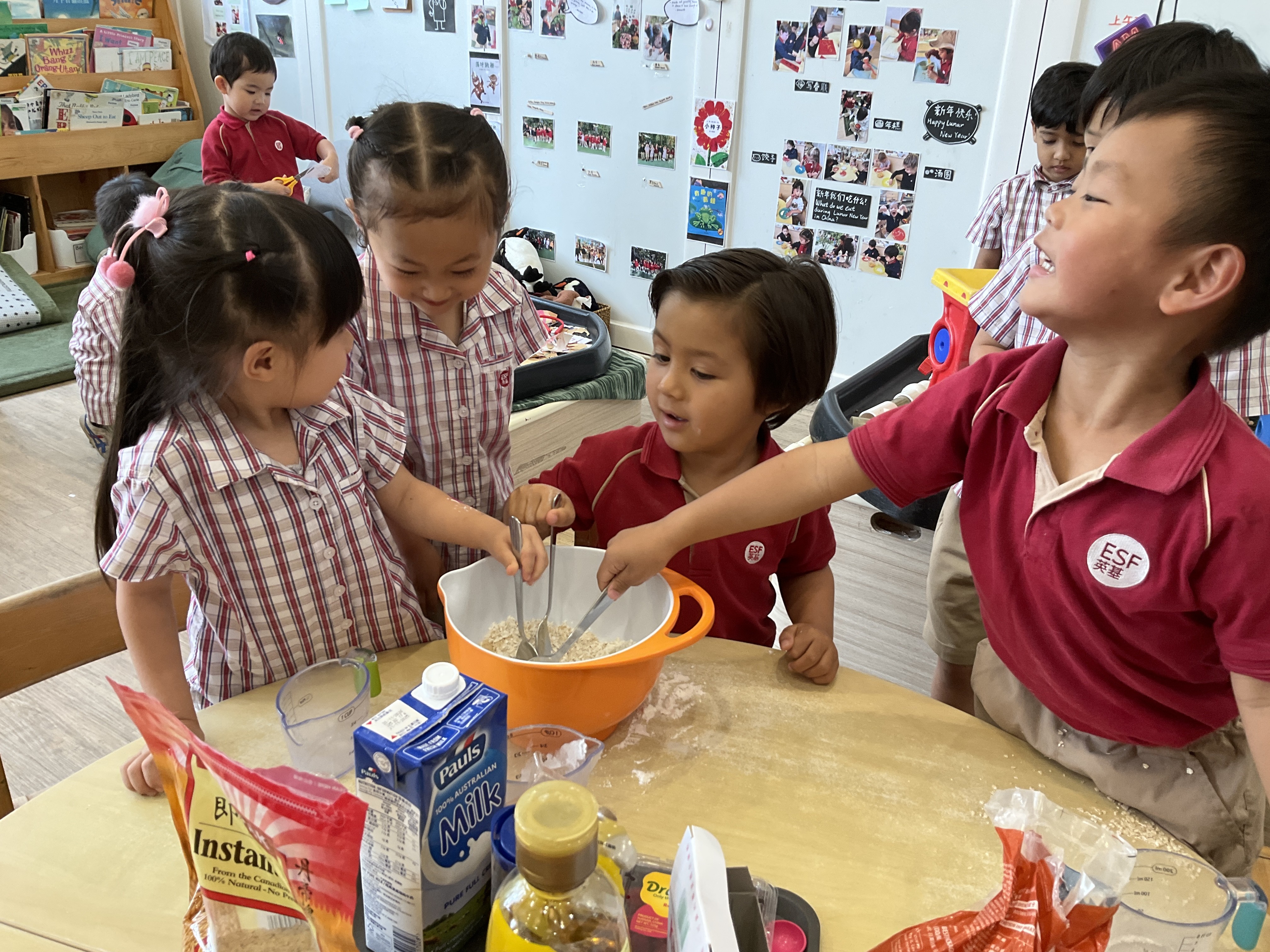
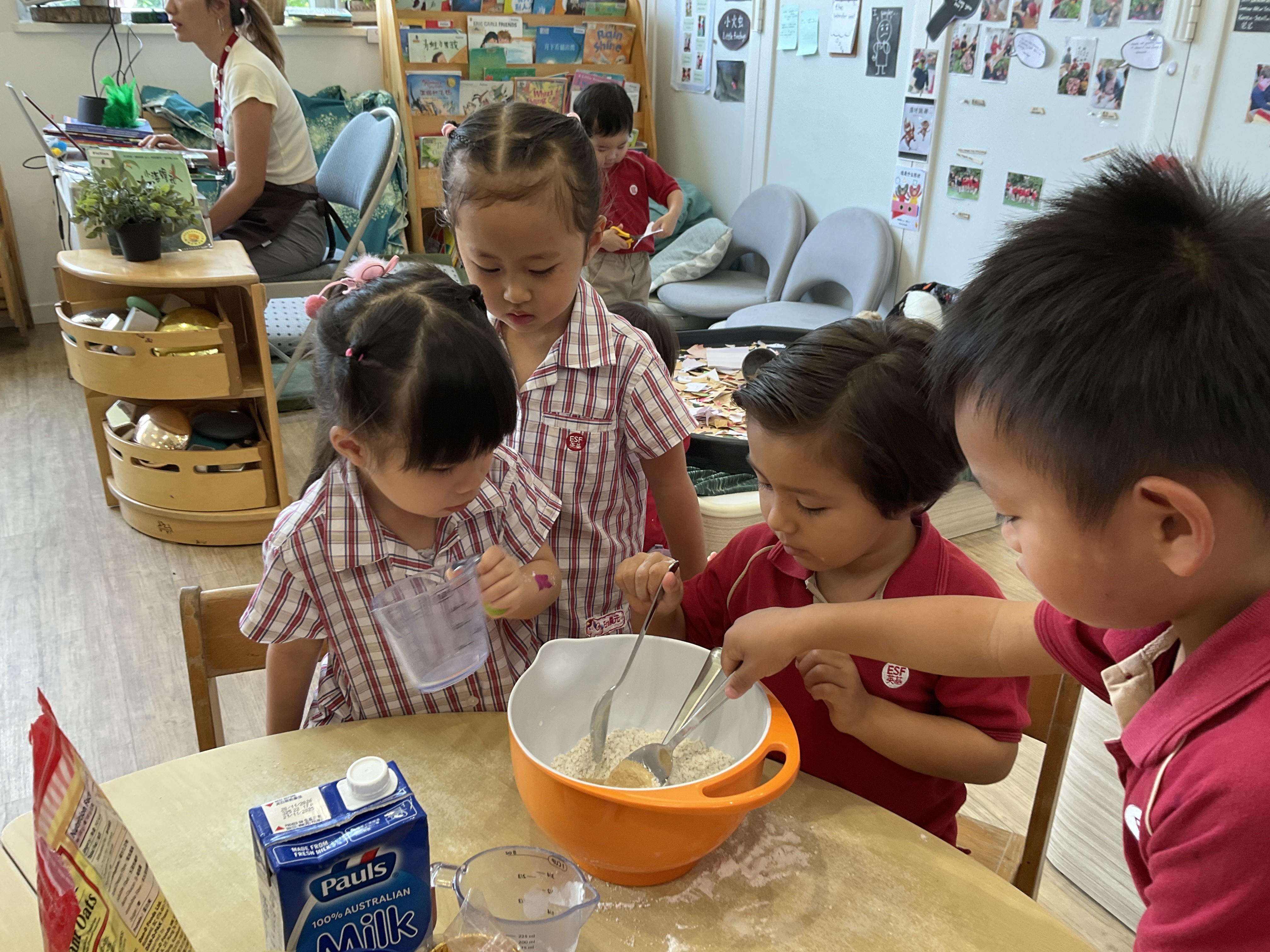
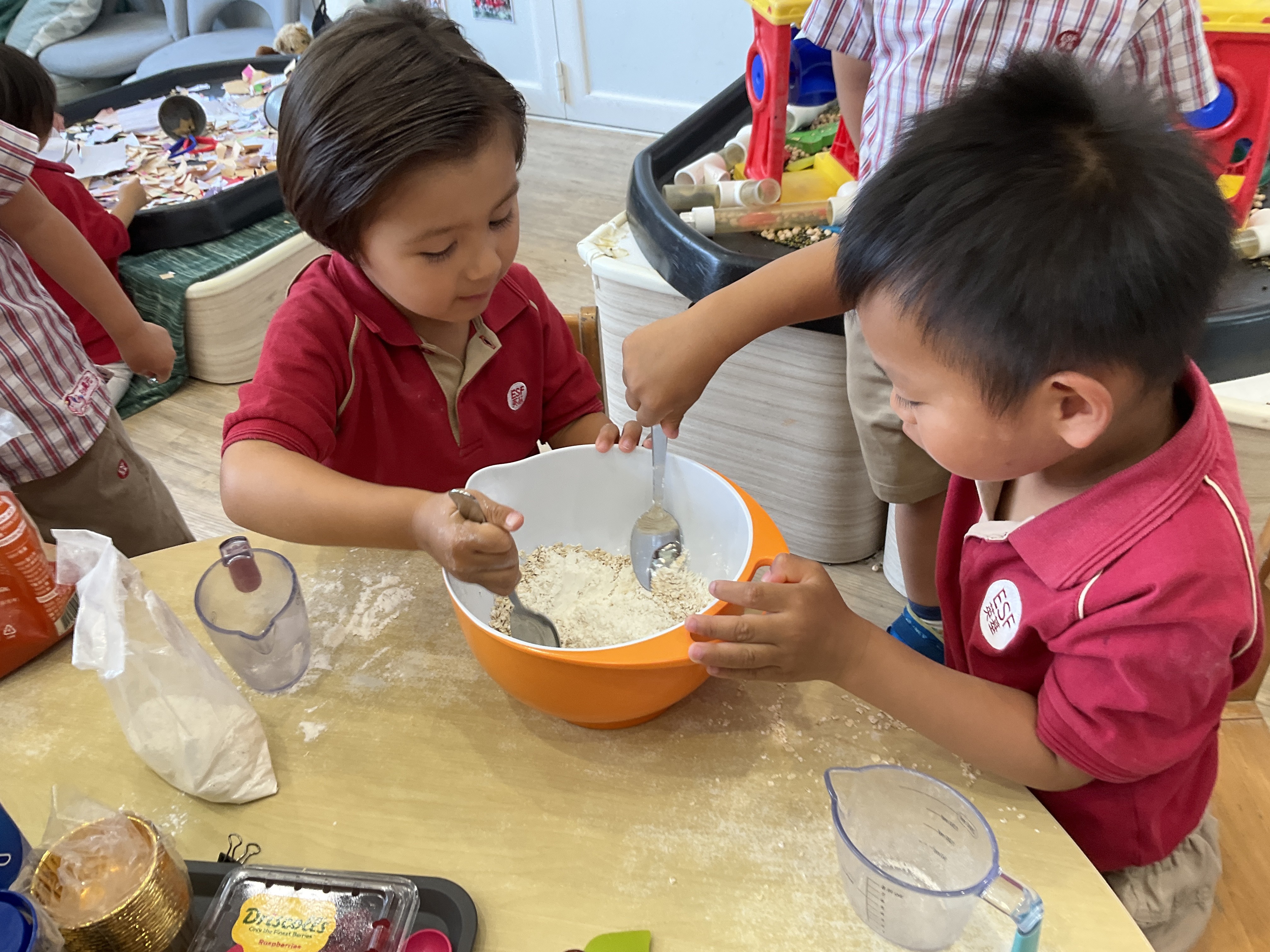
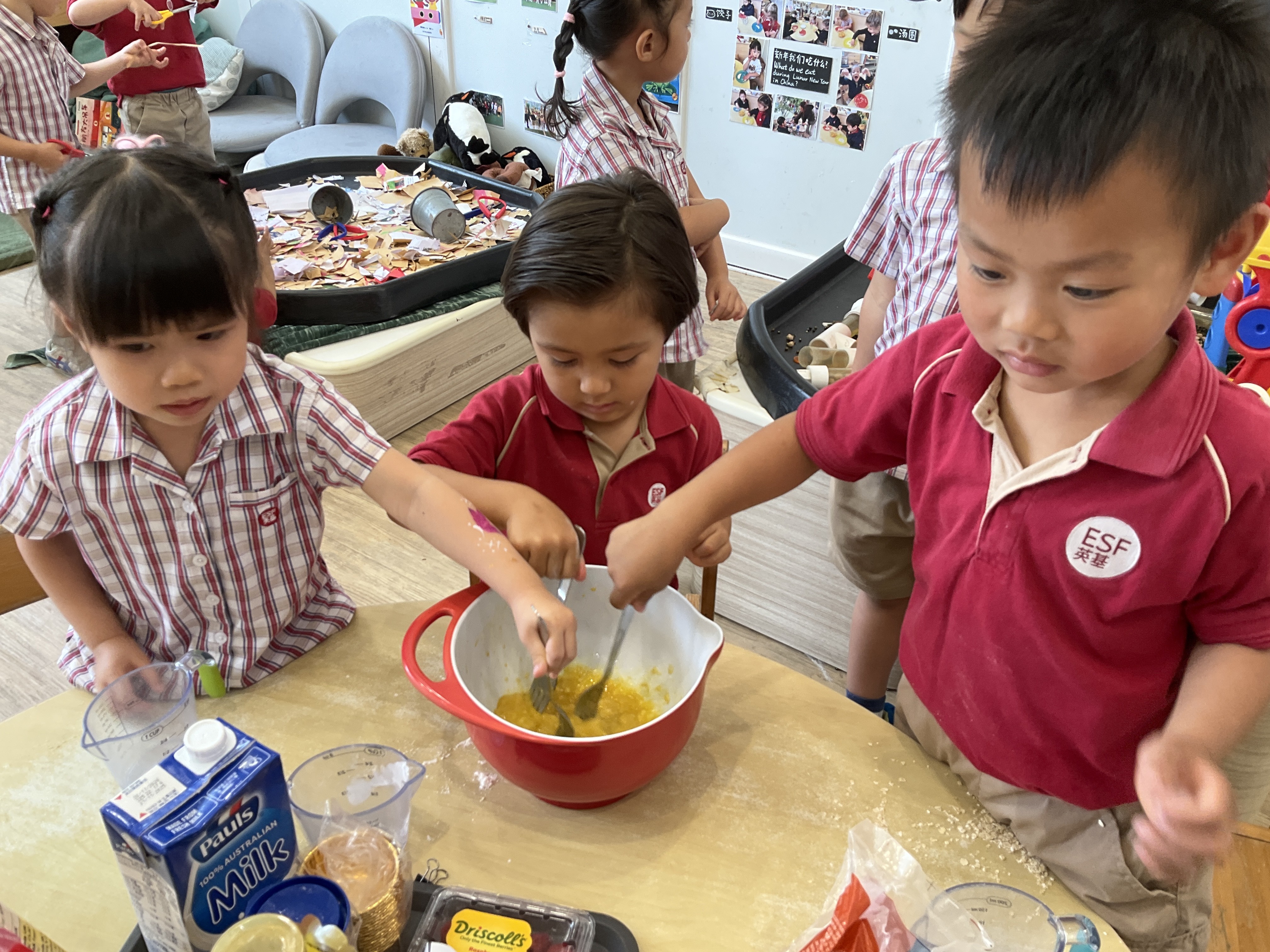
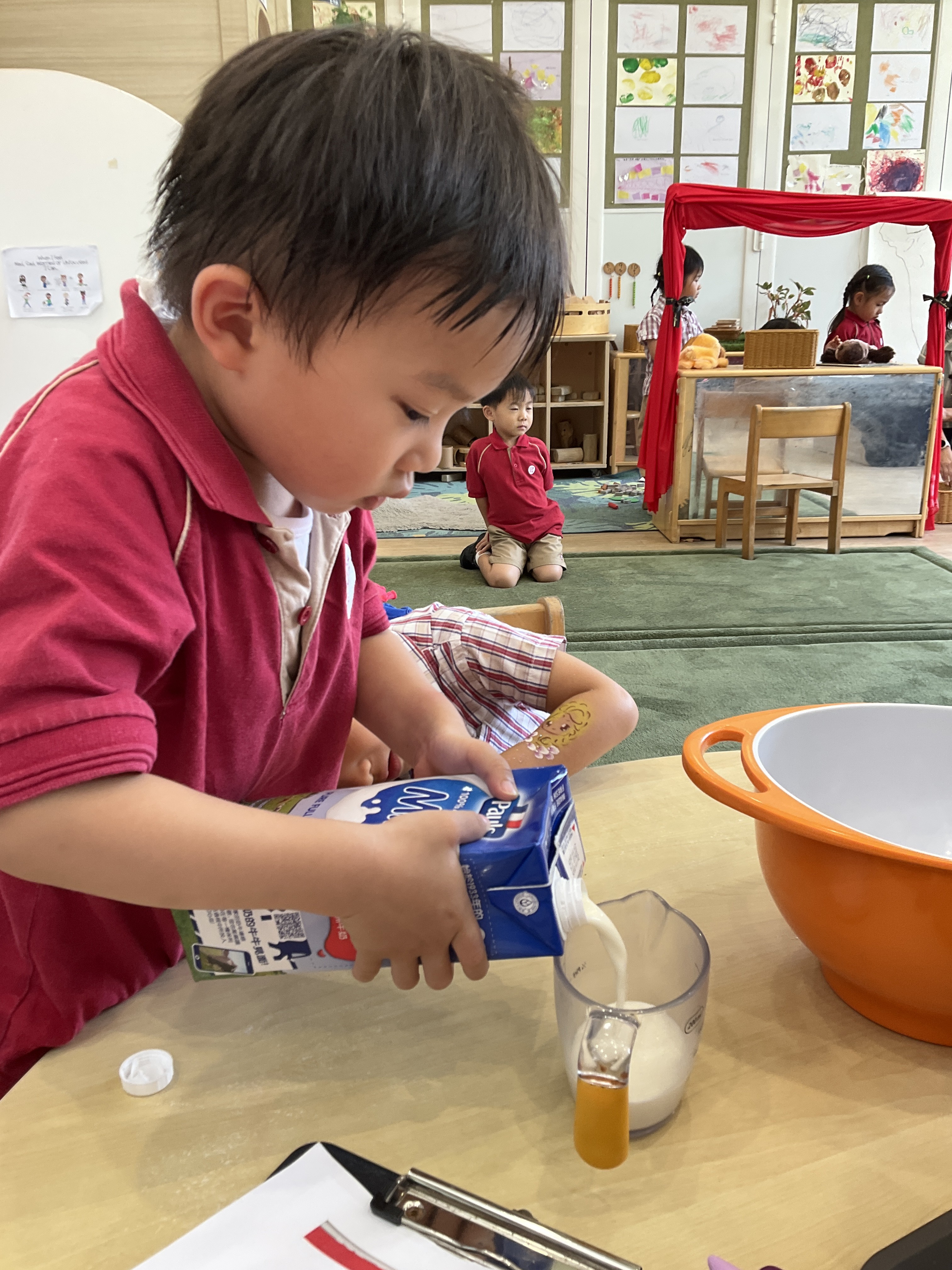
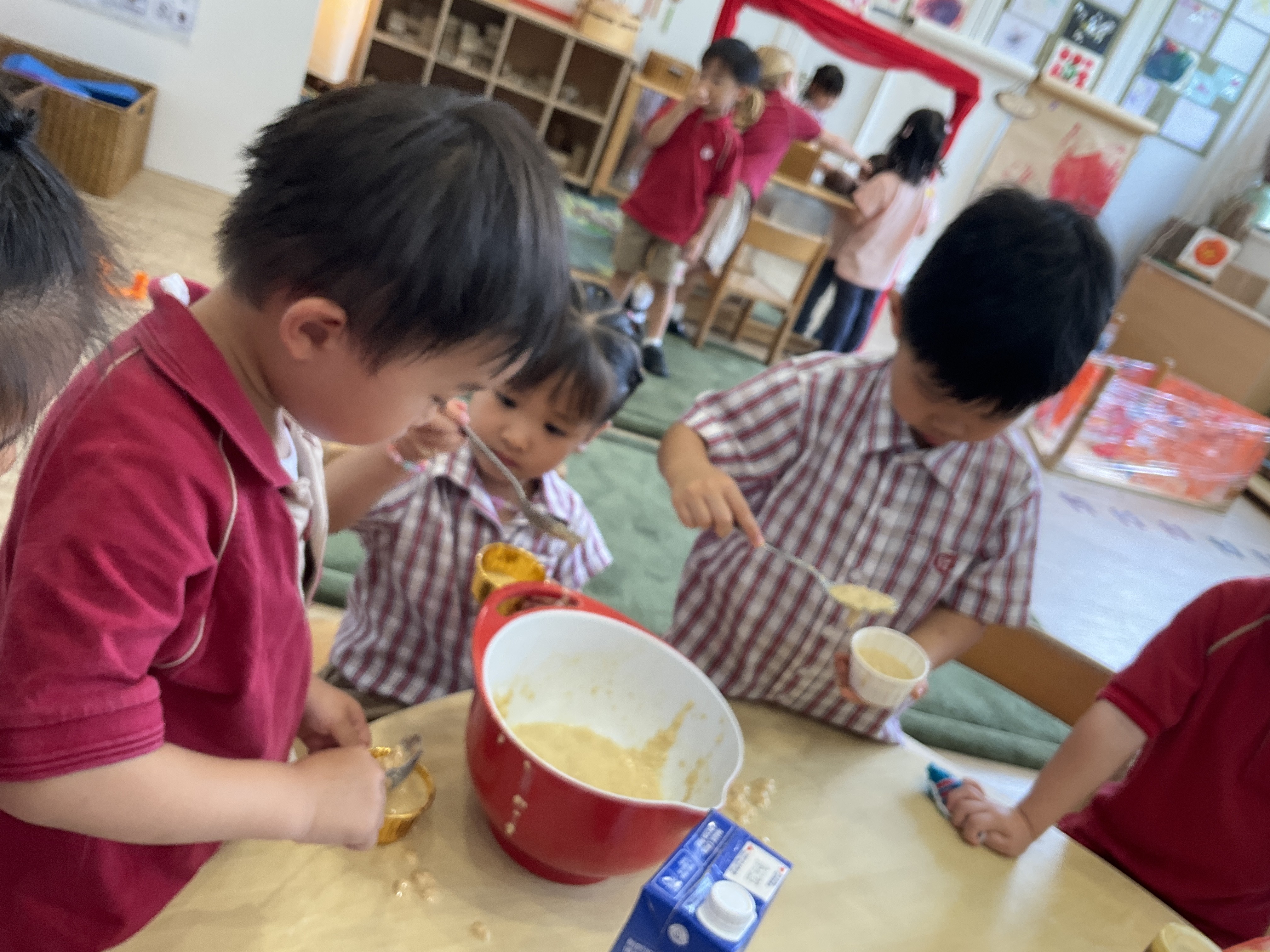
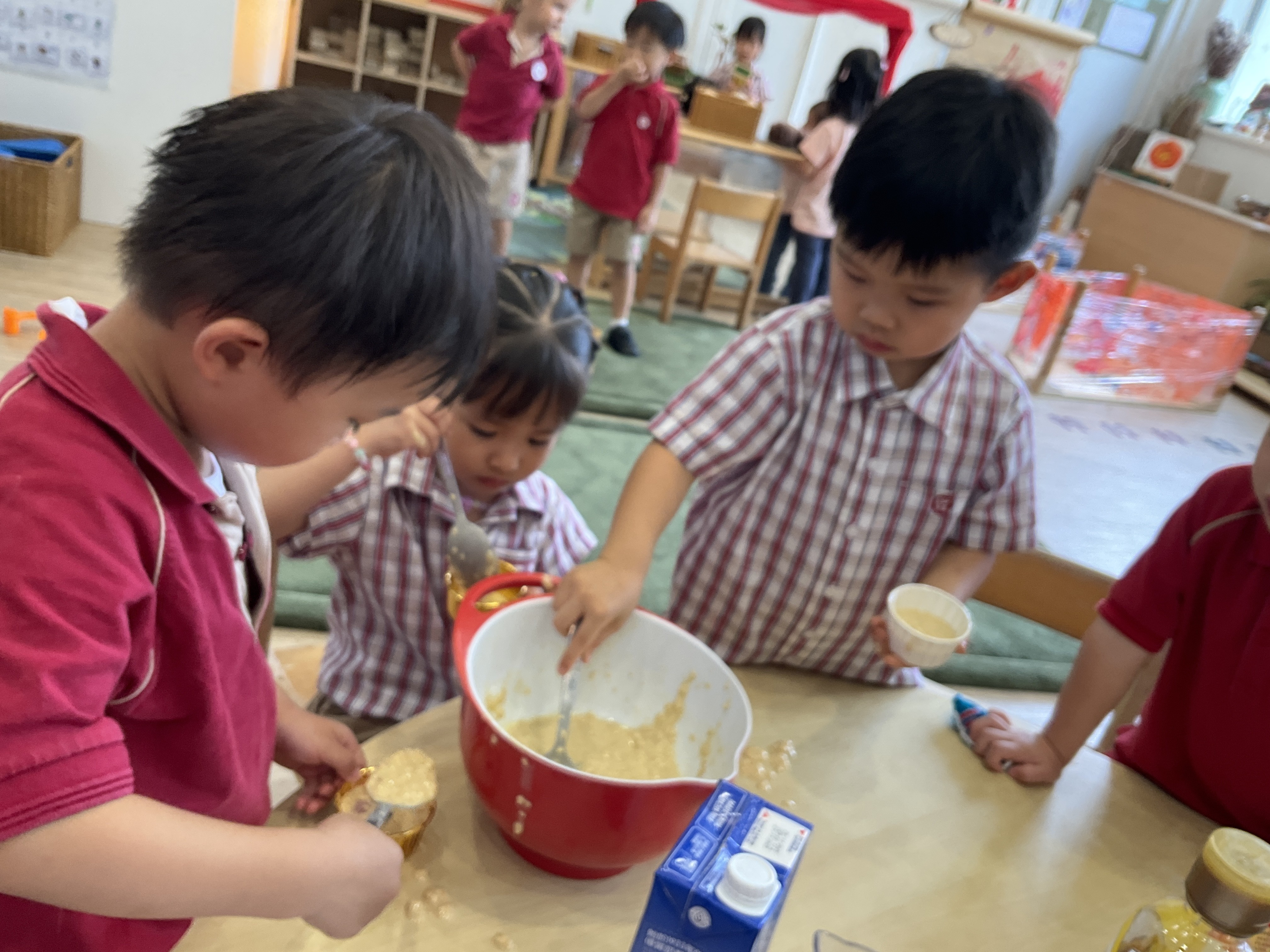
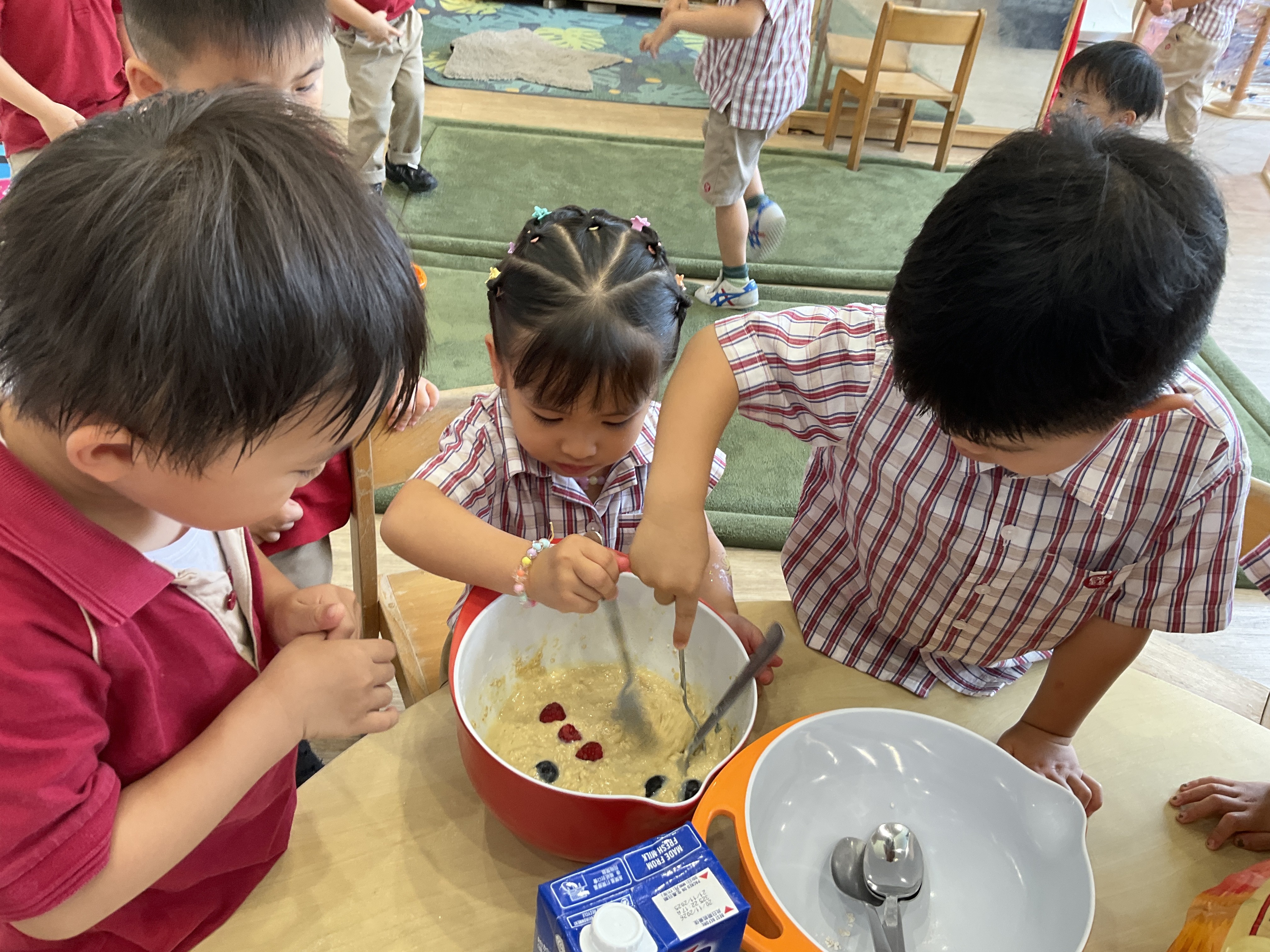
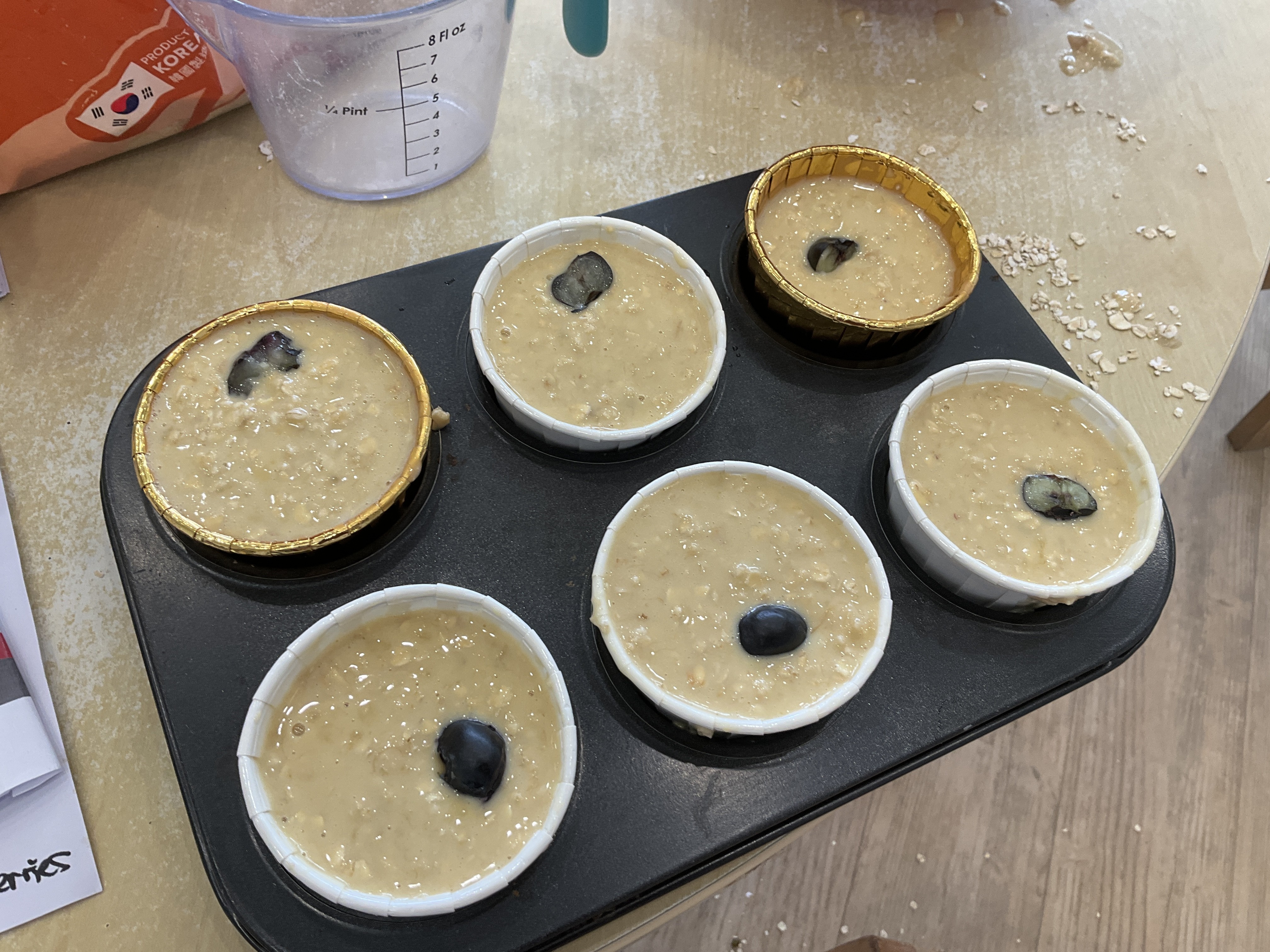
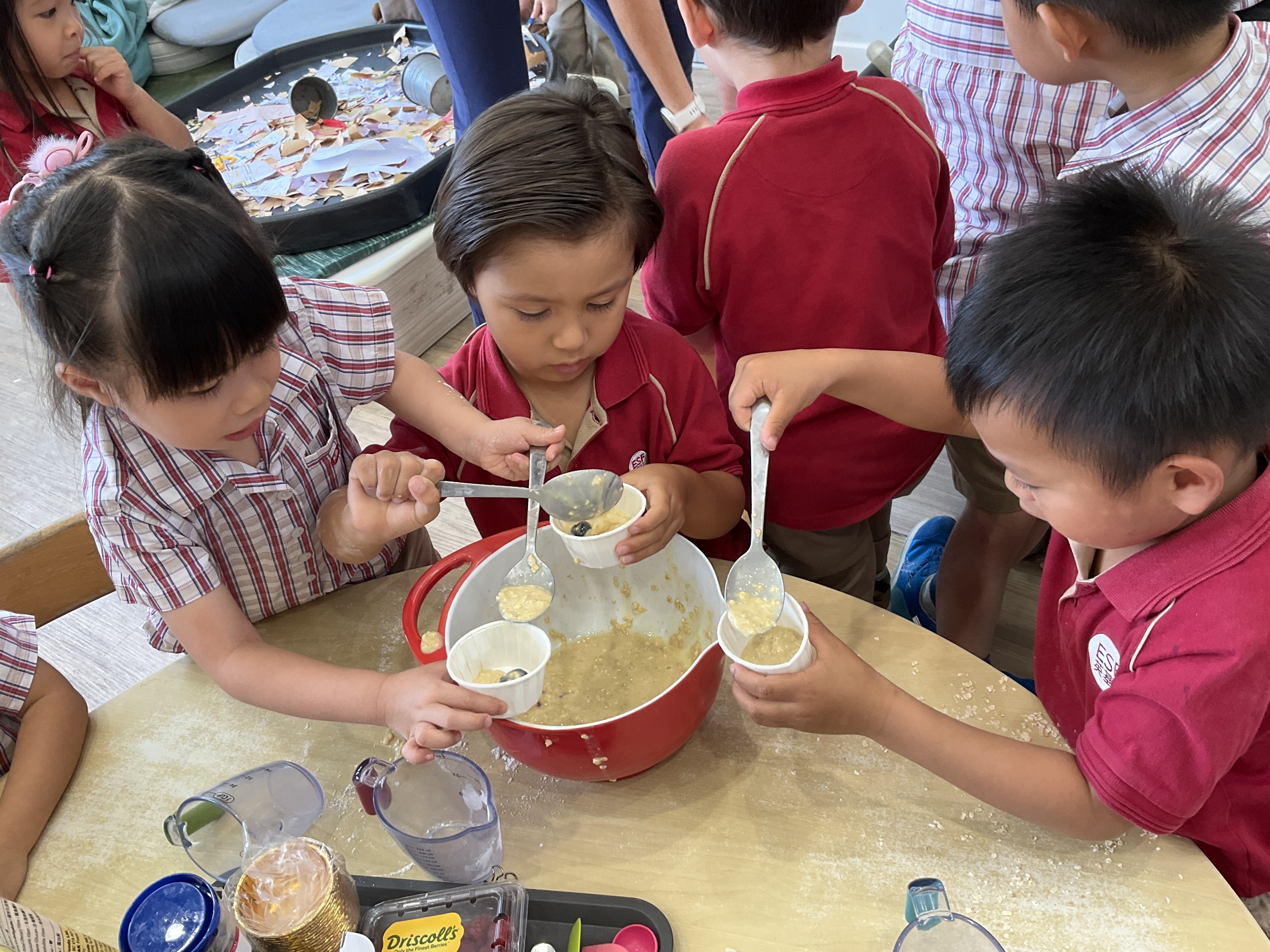
Book Week: Very Berry Muffins
To celebrate Book Week, the Firebugs explored Goldilocks and the Three Bears. Instead of the traditional porridge, the class baked ‘Very Berry Muffins’.
The activity was a great way for the children to develop their coordination and focus:
* Measuring: Learning about amounts as they helped scoop and pour ingredients.
* Mixing: Developing arm strength and control while stirring the batter.
* Preparation: Using their hands to handle berries and fill the muffin trays.
The children really enjoyed linking the story to their cooking, and they were very proud of their finished muffins.
To celebrate Book Week, the Firebugs explored Goldilocks and the Three Bears. Instead of the traditional porridge, the class baked ‘Very Berry Muffins’.
The activity was a great way for the children to develop their coordination and focus:
* Measuring: Learning about amounts as they helped scoop and pour ingredients.
* Mixing: Developing arm strength and control while stirring the batter.
* Preparation: Using their hands to handle berries and fill the muffin trays.
The children really enjoyed linking the story to their cooking, and they were very proud of their finished muffins.
Posted by:
Ms Irene Ma, 30/04/2026 10:25:37
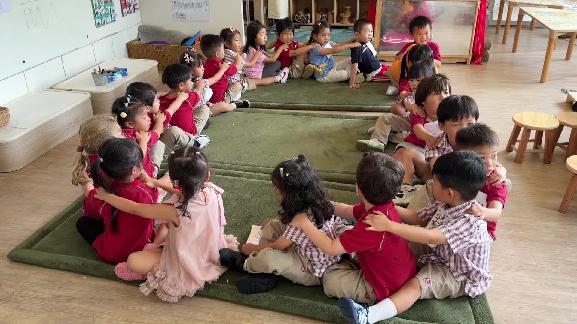
Hailey is tuning into the new unit "How We Express Ourselves" and exploring different ways to express herself. During whole-class learning time, she participated in the drama and song ‘Pull Out The Radish 拔萝卜‘:
拔萝卜,拔萝卜,(Pull out the radish)
bá luóbo, bá luóbo,
嗨吆嗨吆,拔不动。(Cannot pull the radish)
hāiyāo hāiyāo, bá bù dòng.
嗨吆嗨吆,拔到了。(Finally pull out the radish)
hāiyāo hāiyāo, bá dào le.
Hailey used her imagination and different marks to create a new character in the drama. She put her paper character on her clothes and acted out the story with Ma Lao Shi and all the firebug friends!
It is wonderful to see Hailey engaging with the Chinese language through creative play. Well done, Hailey! I really appreciate your creativity and participation in the little drama!
拔萝卜,拔萝卜,(Pull out the radish)
bá luóbo, bá luóbo,
嗨吆嗨吆,拔不动。(Cannot pull the radish)
hāiyāo hāiyāo, bá bù dòng.
嗨吆嗨吆,拔到了。(Finally pull out the radish)
hāiyāo hāiyāo, bá dào le.
Hailey used her imagination and different marks to create a new character in the drama. She put her paper character on her clothes and acted out the story with Ma Lao Shi and all the firebug friends!
It is wonderful to see Hailey engaging with the Chinese language through creative play. Well done, Hailey! I really appreciate your creativity and participation in the little drama!
Posted by:
Ms Irene Ma, 24/04/2026 11:12:47
24th April WHOLE CLASS LEARNING JOURNEY
Unit of Inquiry and Chinese
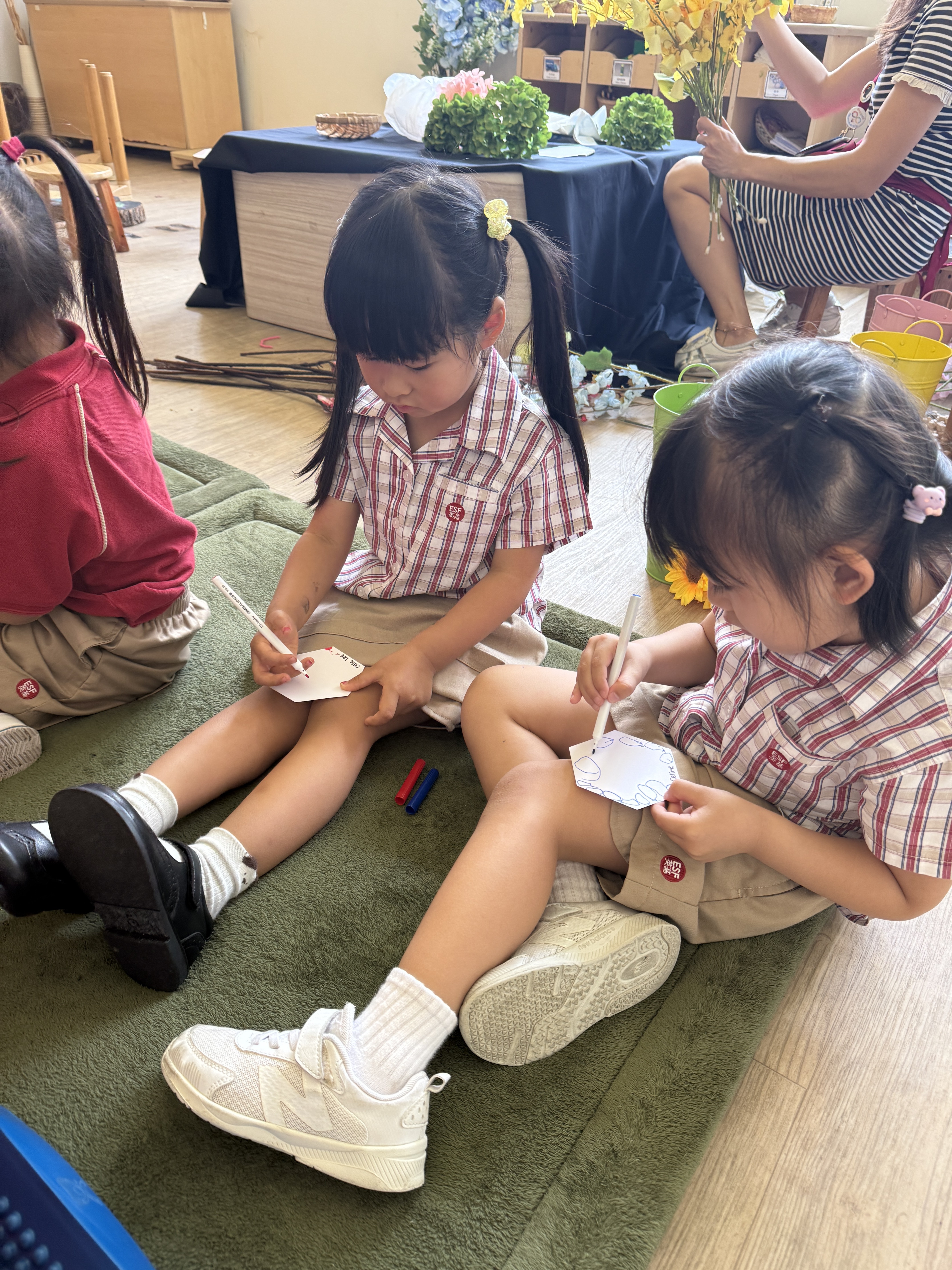
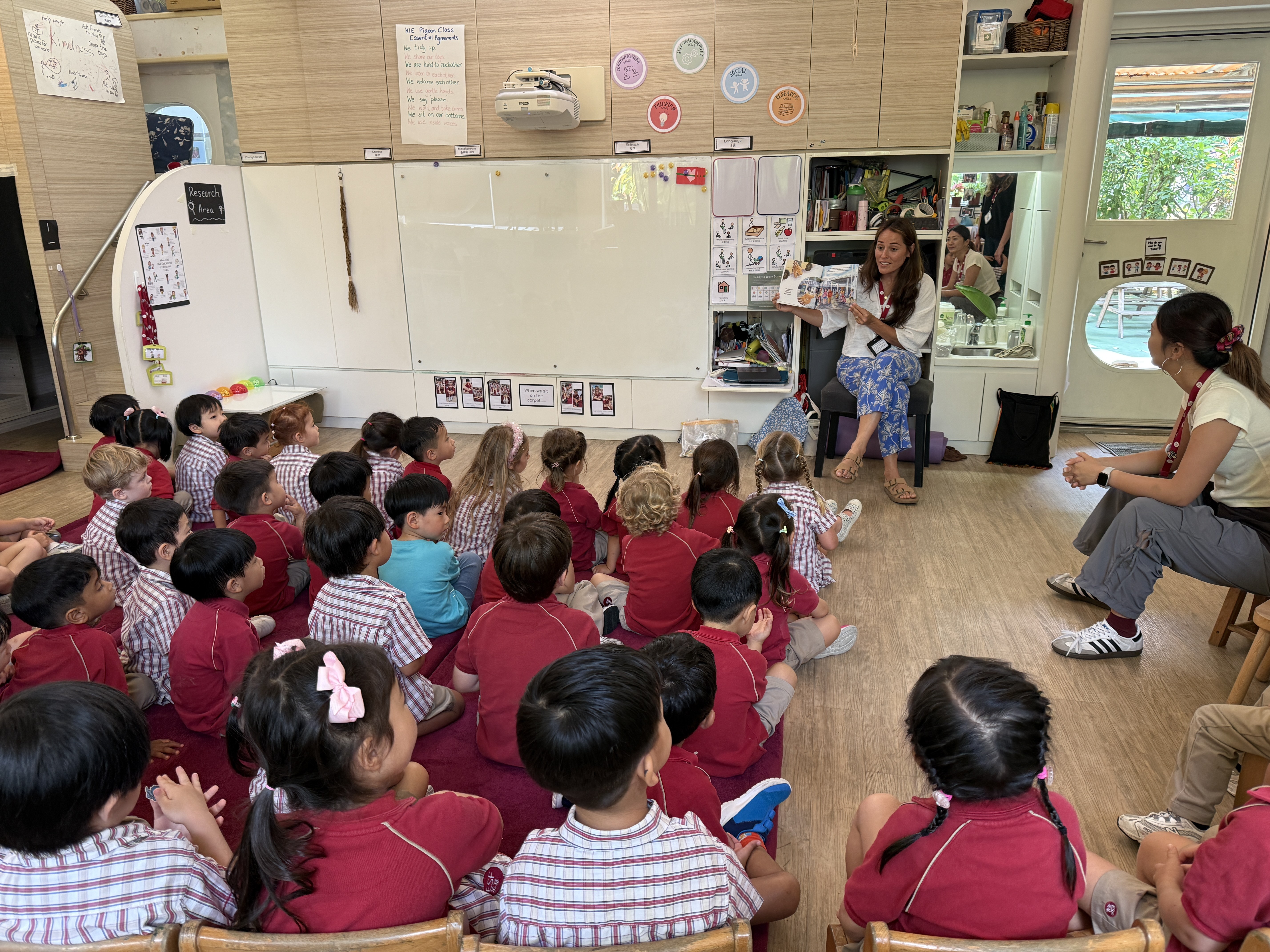
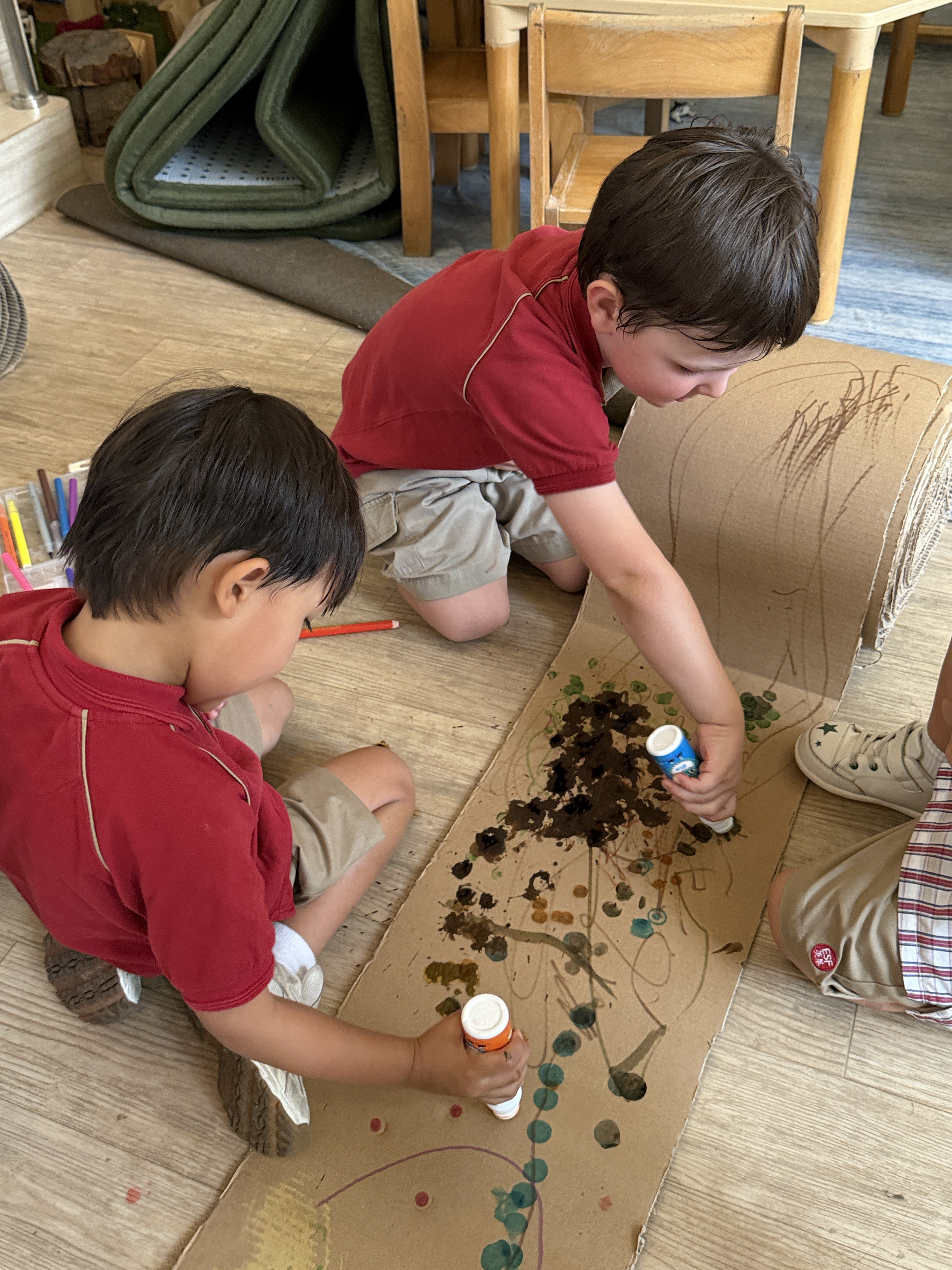
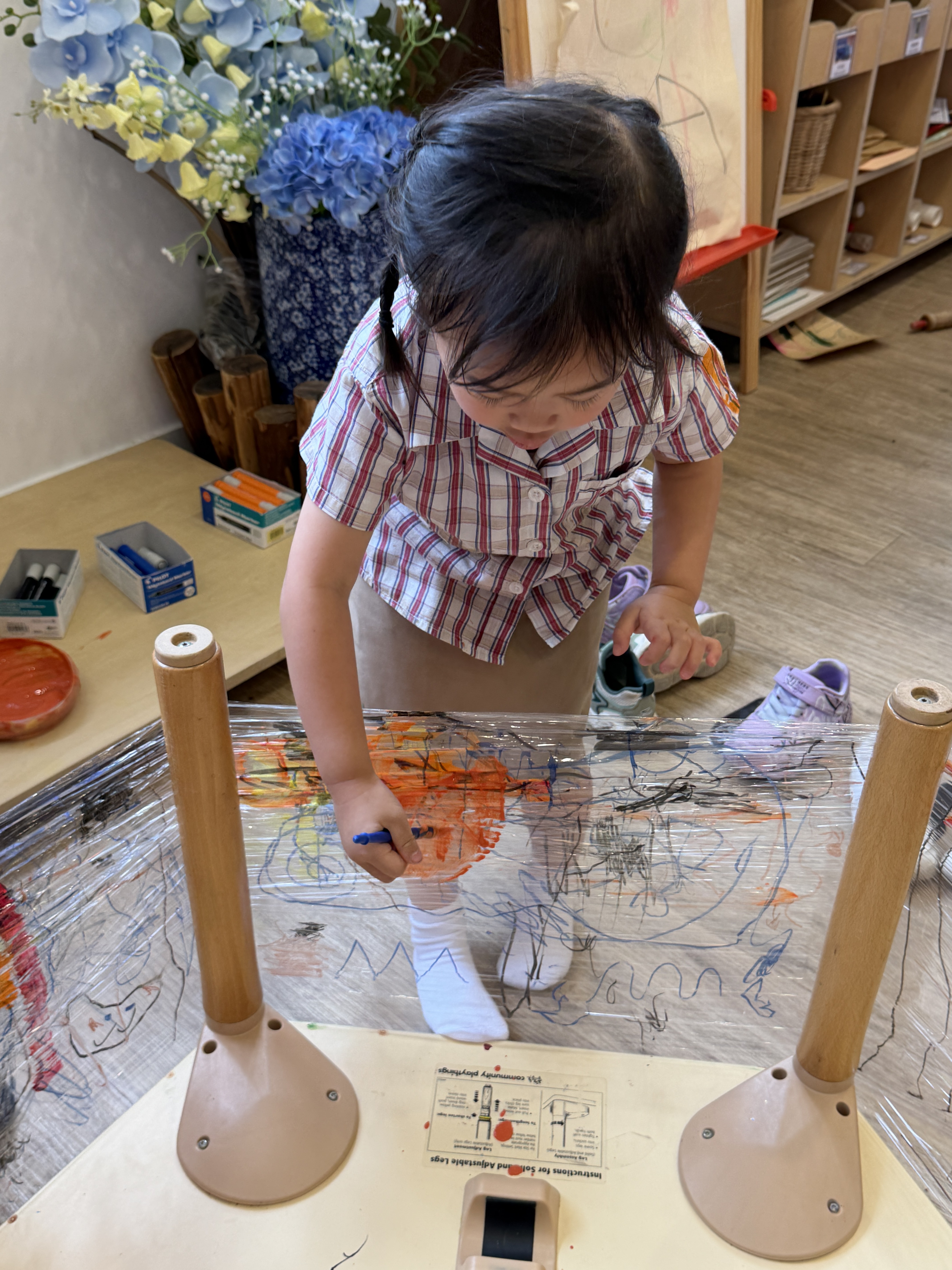
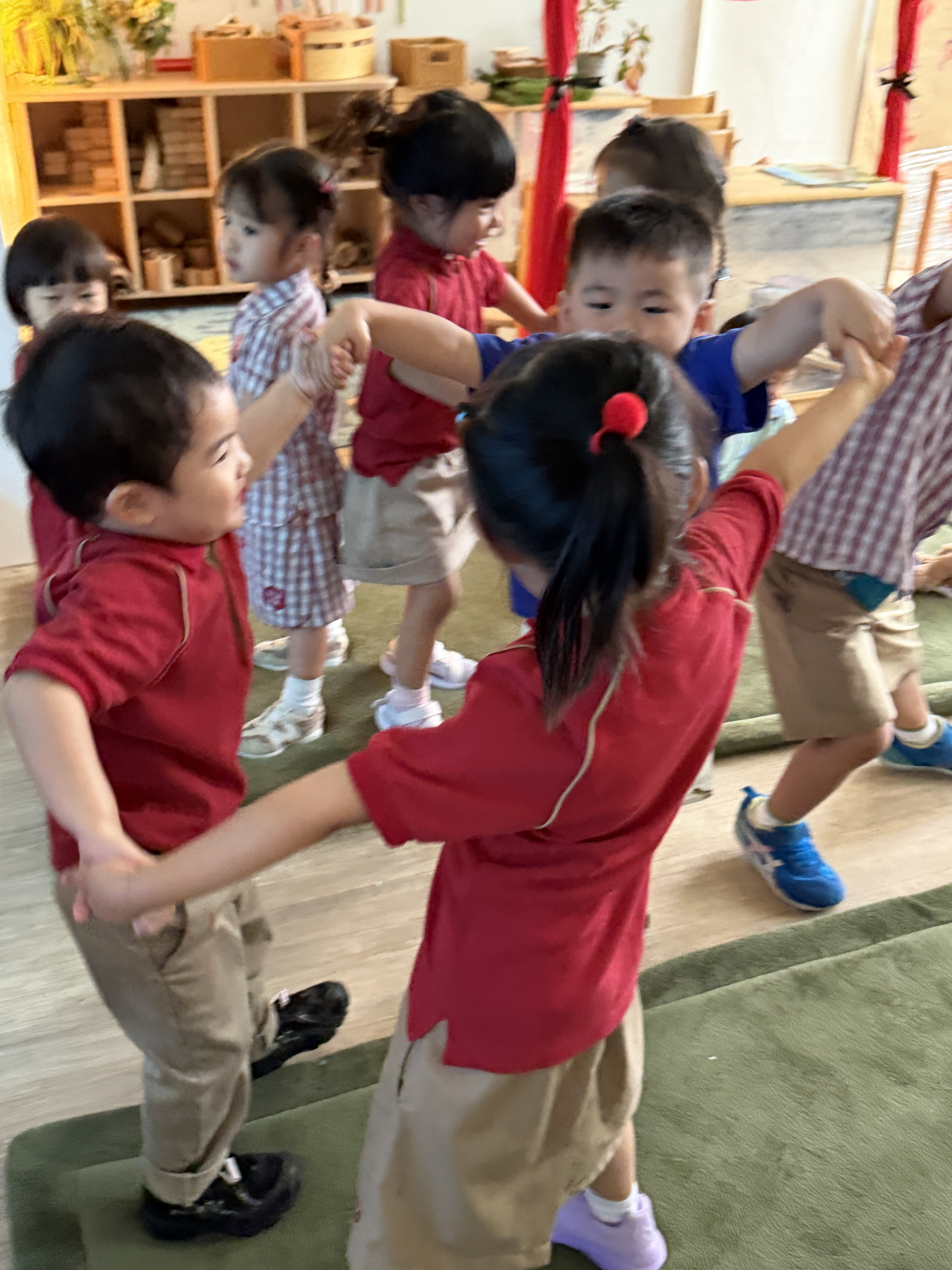
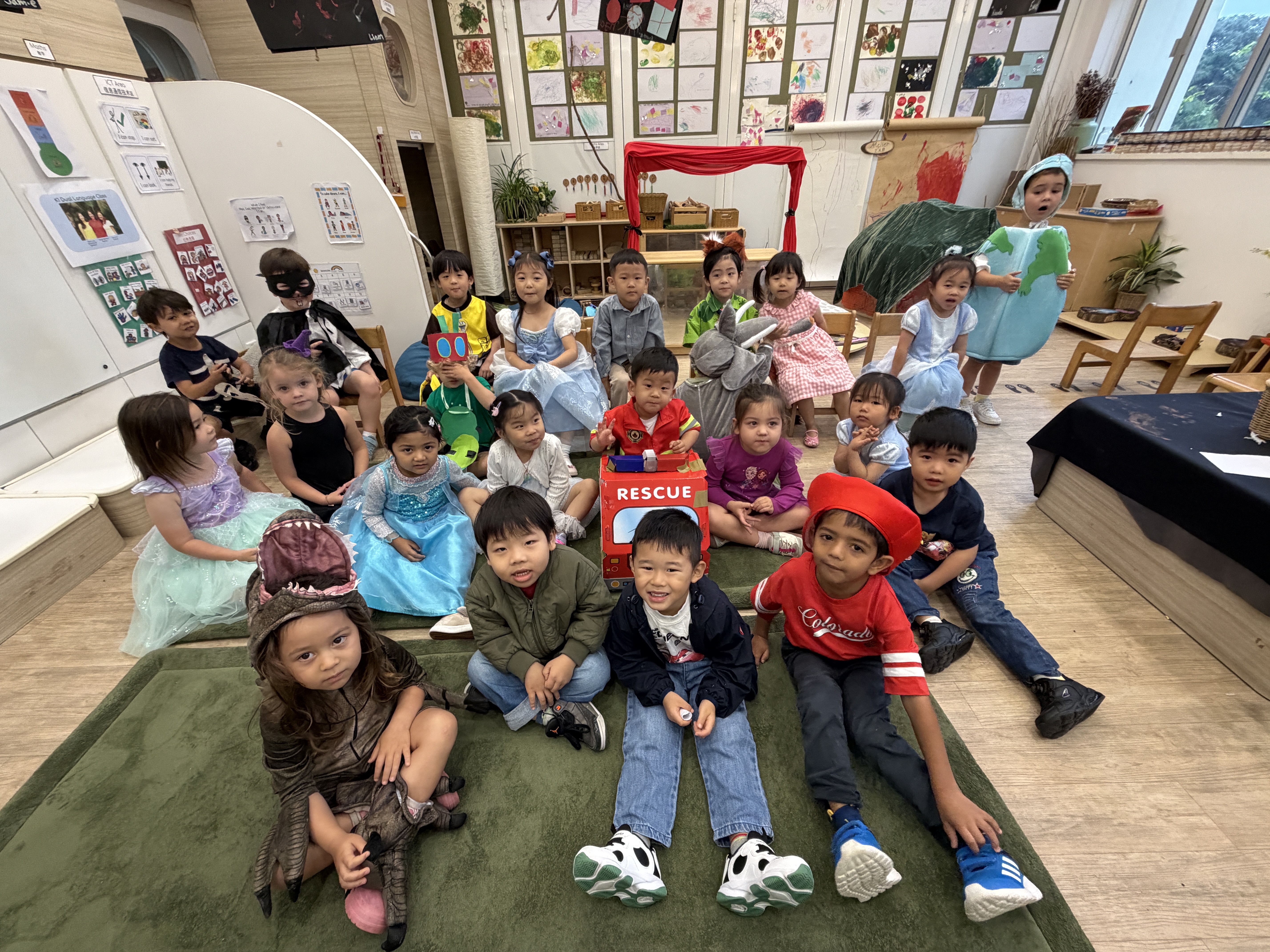
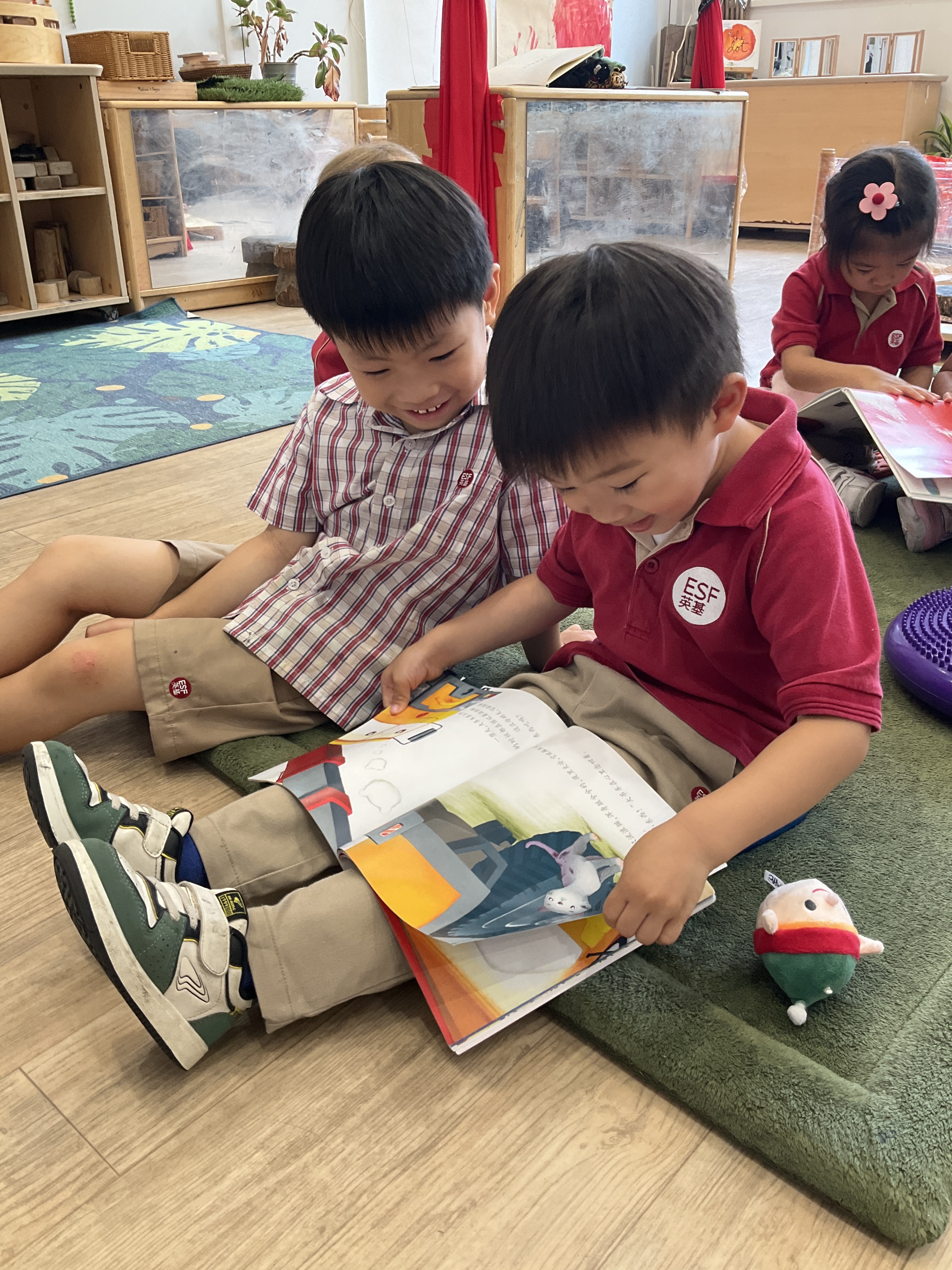
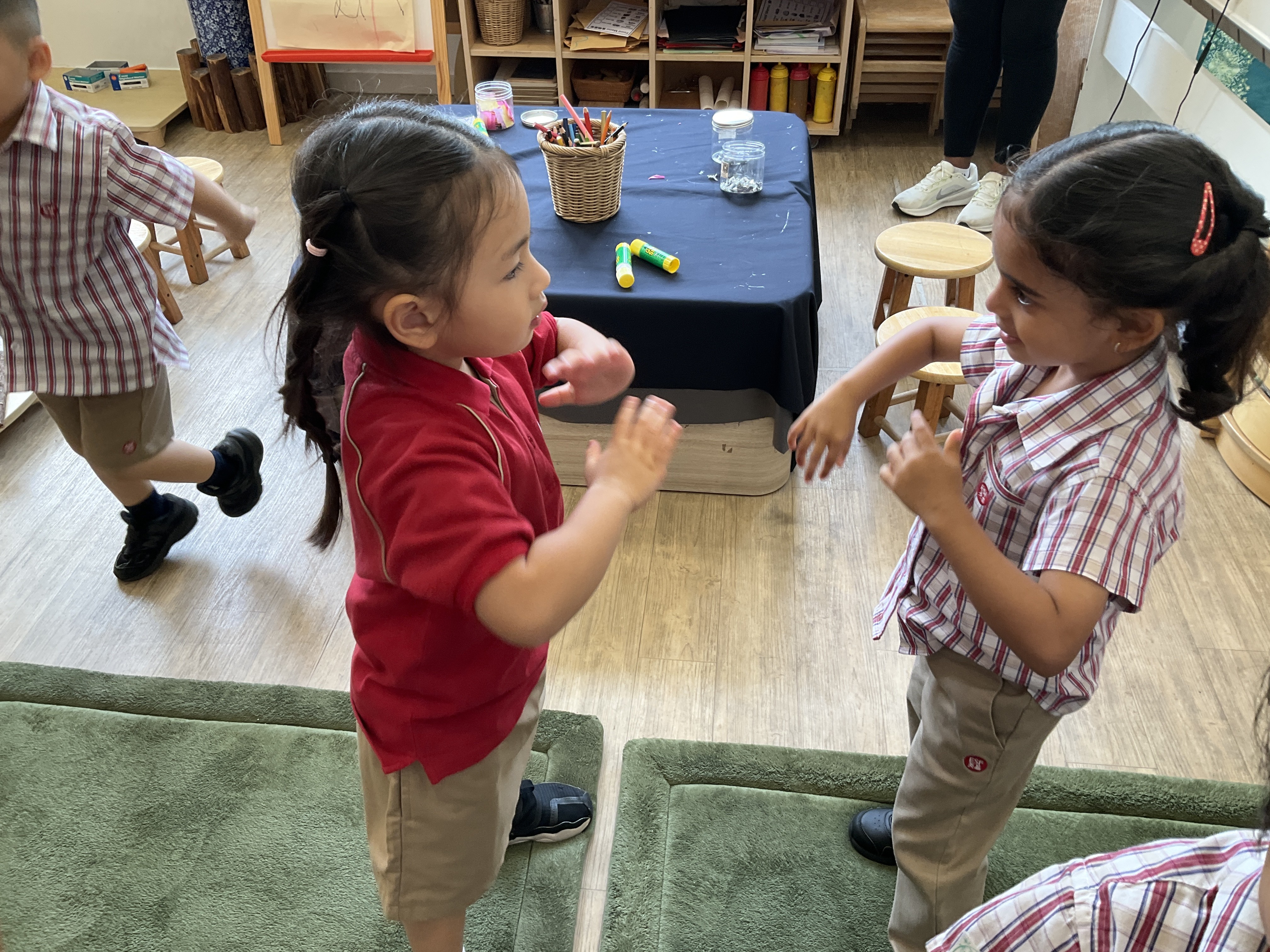
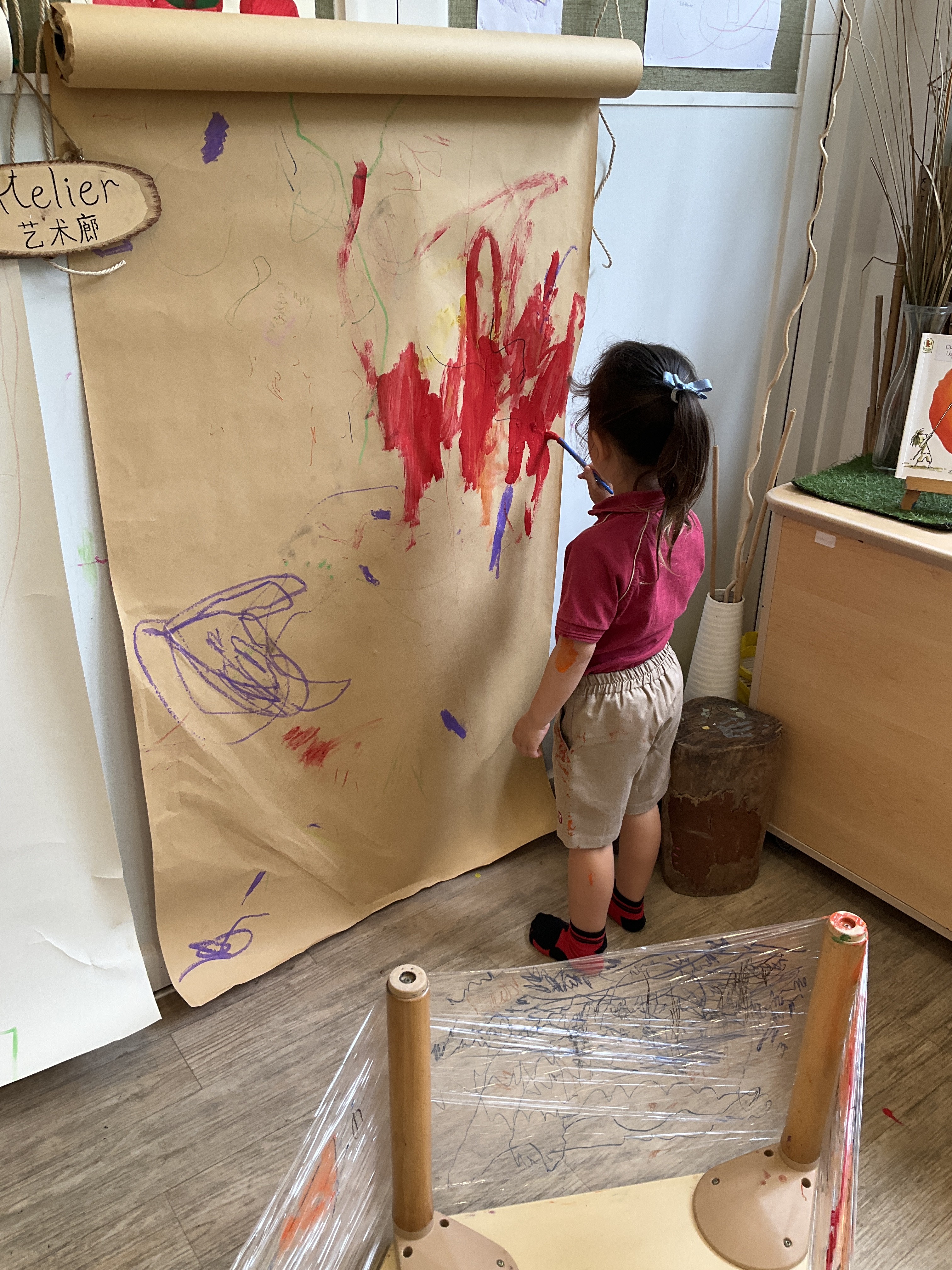
In our new unit of inquiry, "How We Express Ourselves 我们怎样表达自己", the children have begun exploring the different ways we can share our ideas and feelings. We set up an atelier in our classroom for mark-making, where the children experimented with different materials to see how they work. During our whole-class learning time, the children made marks on paper hexagons. We joined these together to make a path, showing how our work can connect. We also listened to different types of music and used chalk, charcoal, and pens to draw the sounds we heard. This week, we also celebrated Book Week and the joy of storytelling. We shared our "We Love Books" Padlet and looked at many of the children’s favourite stories. We were glad to welcome parents into our classroom to read with the children, and we also enjoyed a visit from Lindsay, who shared her experience as an author. To connect our reading to real life, we baked muffins together after reading "Goldilocks and the Three Bears".
Language and Literacy
After reading The Dot, we were inspired to experiment with making marks and expressing our ideas. Our class also enjoyed reading Lines that Wiggle and began to identify different types of lines. In phonics, we are continuing to build language skills by identifying rhyming pairs in 'Down by the Bay,' singing familiar nursery rhymes, and creating our own silly name songs, which the children are very much enjoying.
Mathematics
In mathematics, we are focusing on shapes and patterns. Using the song 'Shapes' and the story The Perfect Square, the children are learning to identify and name common shapes. We also played a shape memory game where the children had to identify which shape was missing, which helps build their executive functioning skills. At home, you can play simple memory games like placing three different shaped objects on a tray, asking your child to look at them, covering them with a cloth, and removing one to see if they can guess which object has been taken away. You can add more objects to make it more challenging as they gain confidence. You can also hunt for shapes in the house or garden to reinforce their learning in a practical way. We will begin to look at patterns in more detail next week.
Chinese Songs
跟着形状跳舞 Follow the shapes and dance
https://www.youtube.com/watch?v=7EwQDQVZiL4
彩色的地球 The Colourful Earth
https://www.youtube.com/watch?v=TibbAR-EhIQ
Chinese Vocabulary
triangle 三角形 (sān jiǎo xíng)
rectangle 长方形 (cháng fāng xíng)
square 正方形 (zhèng fāng xíng)
circle 圆形 (yuán xíng)
red 红色 (hóng sè)
rellow 黄色 (huáng sè)
green 绿色 (lǜ sè)
blue 蓝色 (lán sè)
black 黑色 (hēi sè)
white 白色 (bái sè)
dot 点 (diǎn)
lines 线 (xiàn)
Unit of Inquiry and Chinese
In our new unit of inquiry, "How We Express Ourselves 我们怎样表达自己", the children have begun exploring the different ways we can share our ideas and feelings. We set up an atelier in our classroom for mark-making, where the children experimented with different materials to see how they work. During our whole-class learning time, the children made marks on paper hexagons. We joined these together to make a path, showing how our work can connect. We also listened to different types of music and used chalk, charcoal, and pens to draw the sounds we heard. This week, we also celebrated Book Week and the joy of storytelling. We shared our "We Love Books" Padlet and looked at many of the children’s favourite stories. We were glad to welcome parents into our classroom to read with the children, and we also enjoyed a visit from Lindsay, who shared her experience as an author. To connect our reading to real life, we baked muffins together after reading "Goldilocks and the Three Bears".
Language and Literacy
After reading The Dot, we were inspired to experiment with making marks and expressing our ideas. Our class also enjoyed reading Lines that Wiggle and began to identify different types of lines. In phonics, we are continuing to build language skills by identifying rhyming pairs in 'Down by the Bay,' singing familiar nursery rhymes, and creating our own silly name songs, which the children are very much enjoying.
Mathematics
In mathematics, we are focusing on shapes and patterns. Using the song 'Shapes' and the story The Perfect Square, the children are learning to identify and name common shapes. We also played a shape memory game where the children had to identify which shape was missing, which helps build their executive functioning skills. At home, you can play simple memory games like placing three different shaped objects on a tray, asking your child to look at them, covering them with a cloth, and removing one to see if they can guess which object has been taken away. You can add more objects to make it more challenging as they gain confidence. You can also hunt for shapes in the house or garden to reinforce their learning in a practical way. We will begin to look at patterns in more detail next week.
Chinese Songs
跟着形状跳舞 Follow the shapes and dance
https://www.youtube.com/watch?v=7EwQDQVZiL4
彩色的地球 The Colourful Earth
https://www.youtube.com/watch?v=TibbAR-EhIQ
Chinese Vocabulary
triangle 三角形 (sān jiǎo xíng)
rectangle 长方形 (cháng fāng xíng)
square 正方形 (zhèng fāng xíng)
circle 圆形 (yuán xíng)
red 红色 (hóng sè)
rellow 黄色 (huáng sè)
green 绿色 (lǜ sè)
blue 蓝色 (lán sè)
black 黑色 (hēi sè)
white 白色 (bái sè)
dot 点 (diǎn)
lines 线 (xiàn)
Posted by:
Ms Maria Lee, 27/03/2026 13:31:22
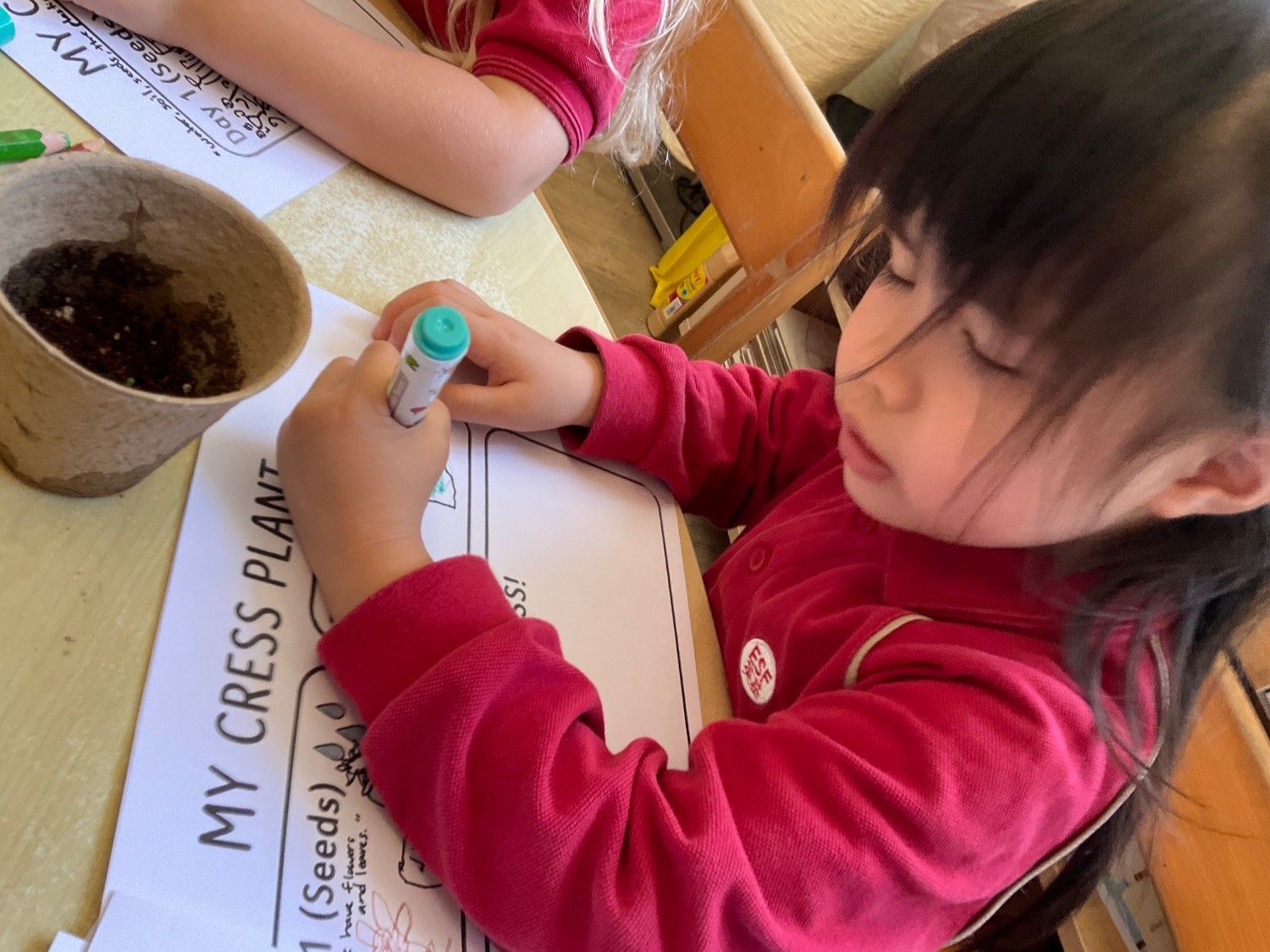
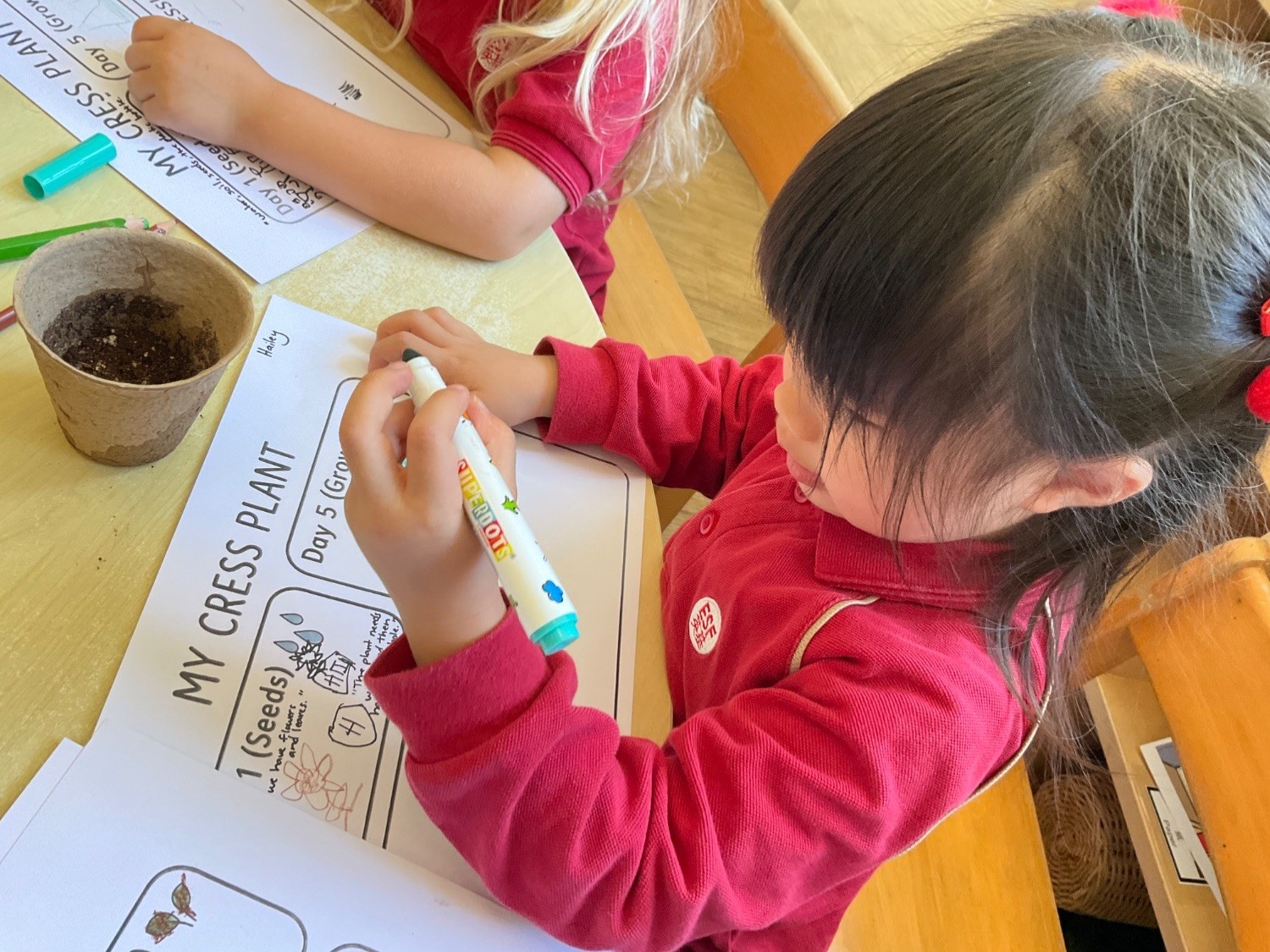
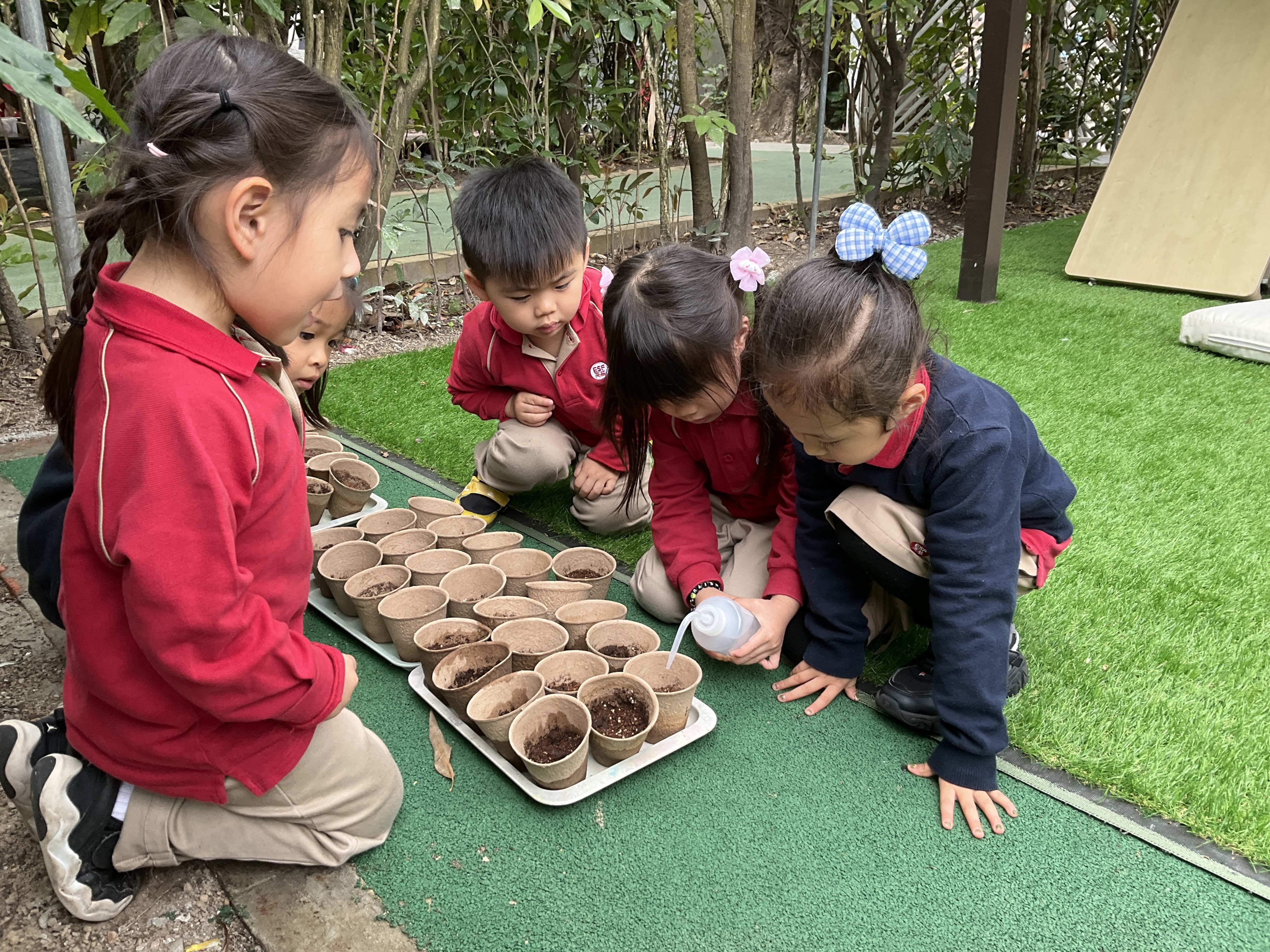
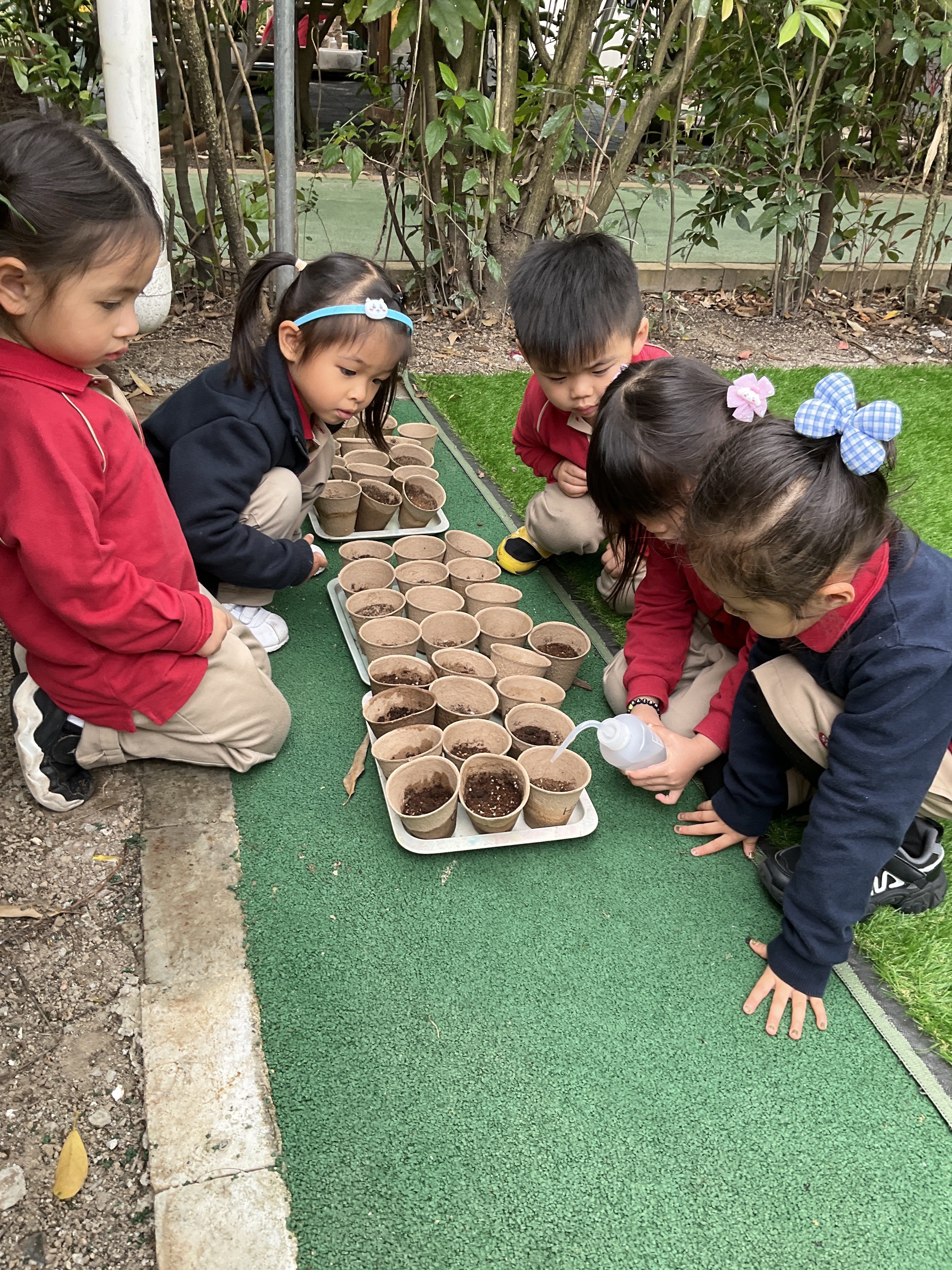
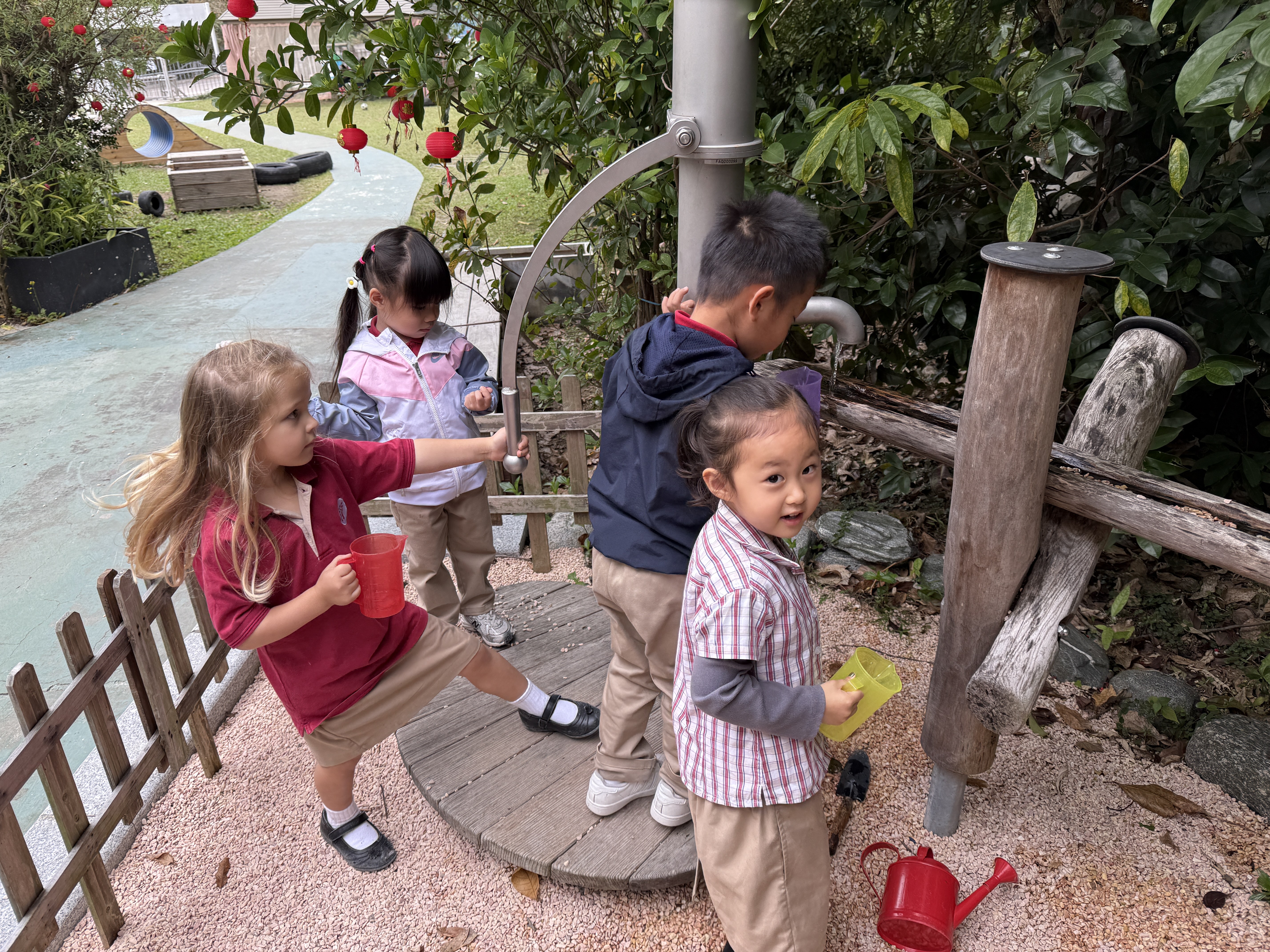
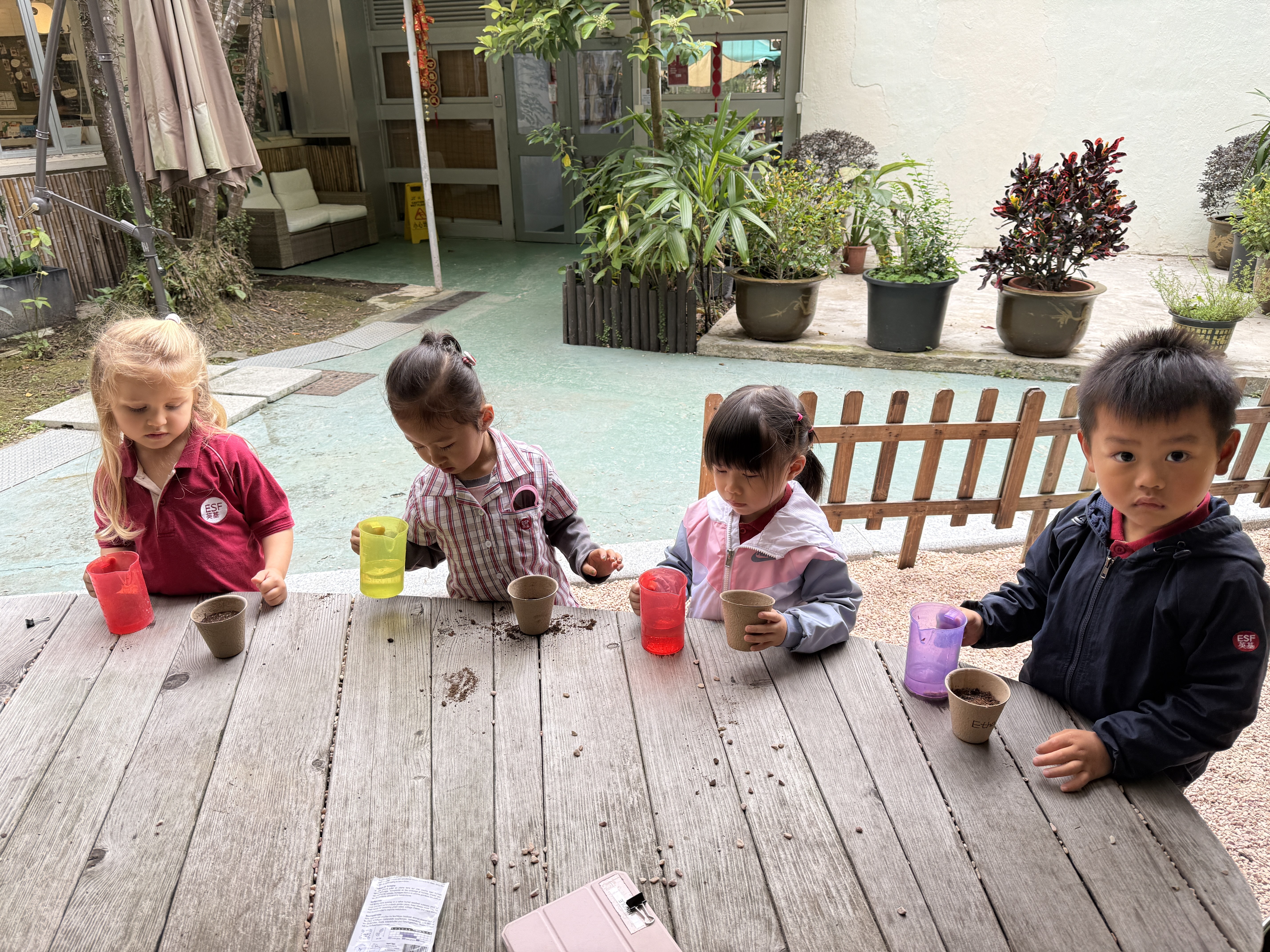
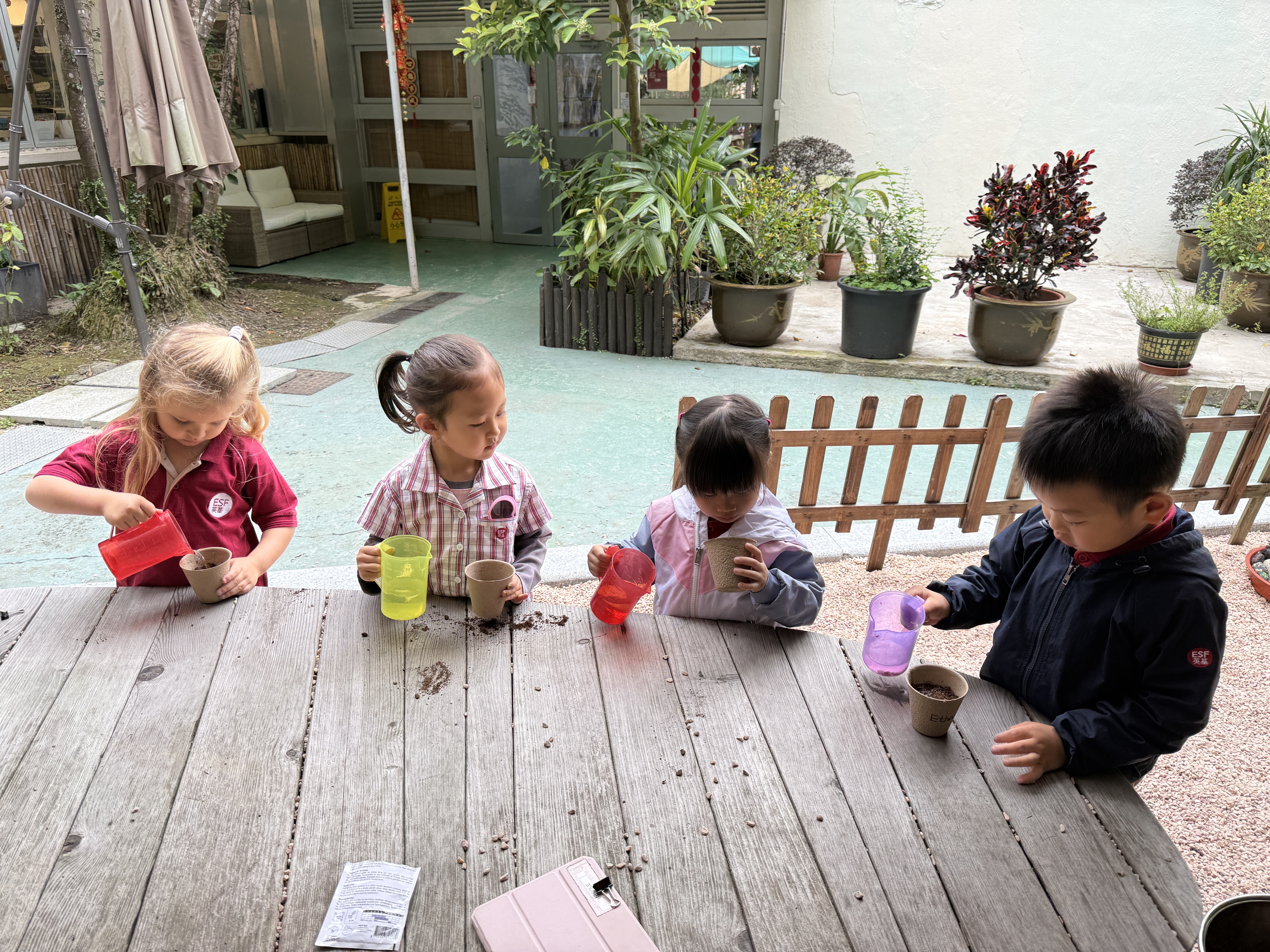
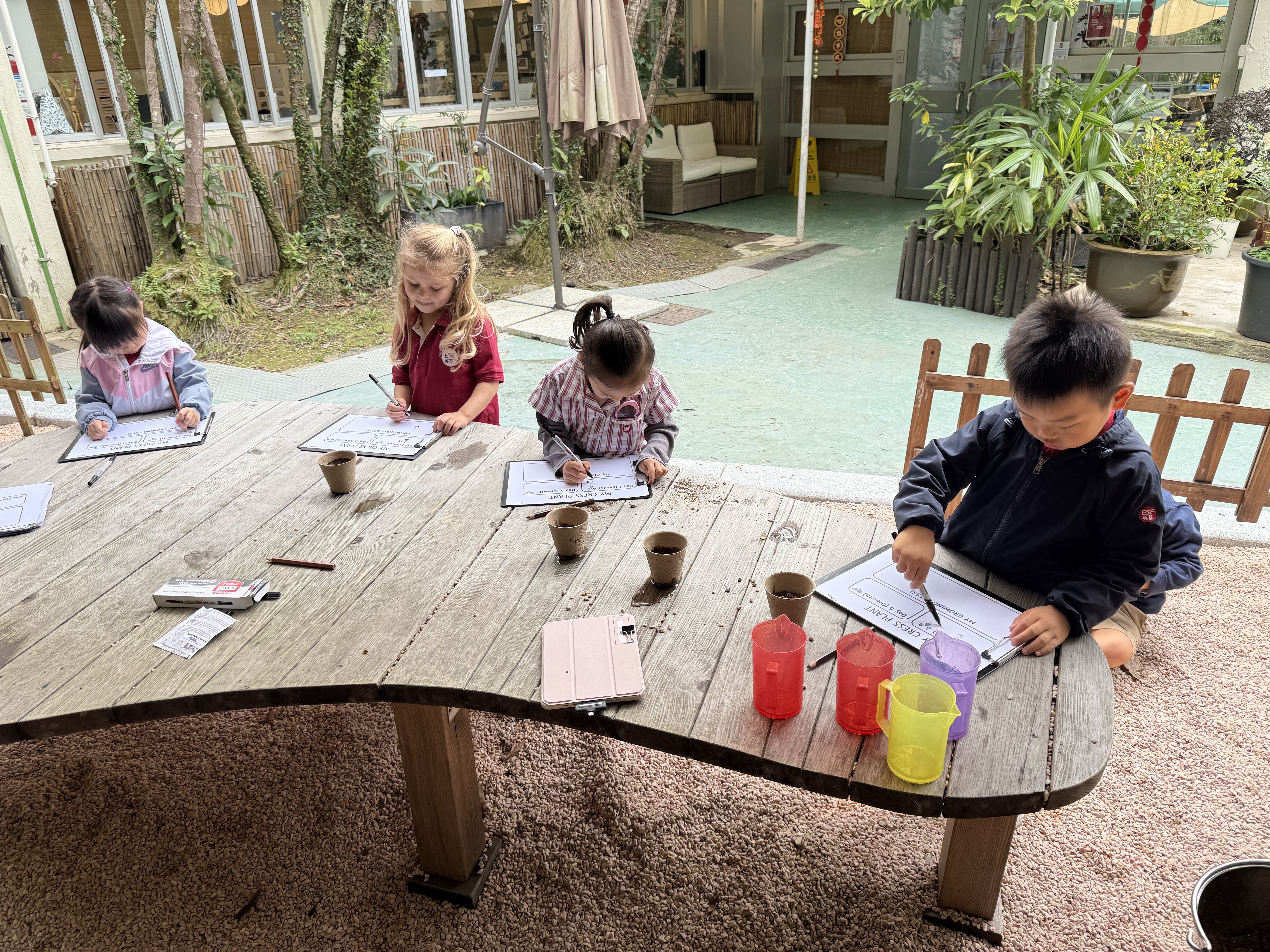
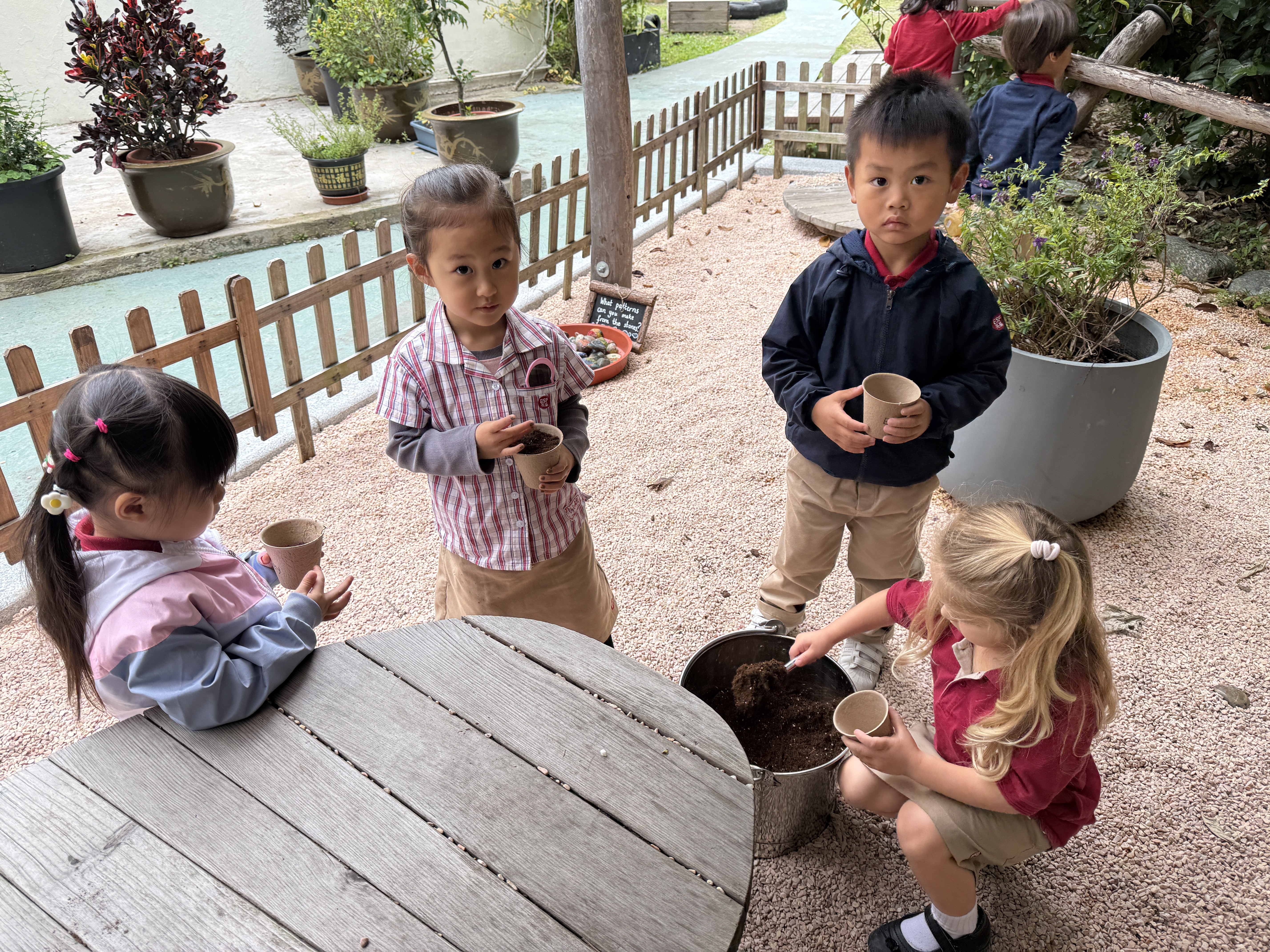
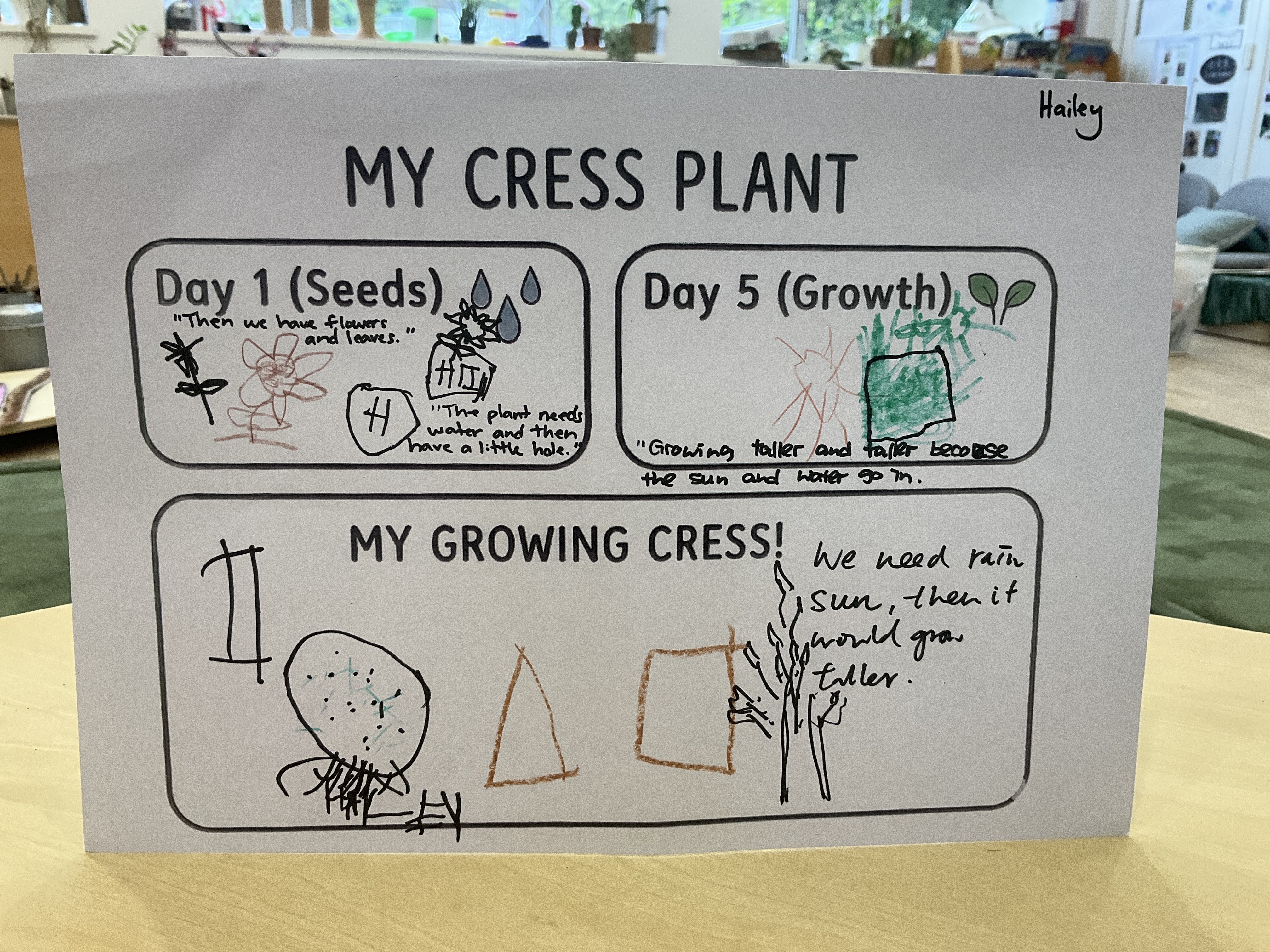
As part of our "Sharing the Planet" unit, Hailey has been busy growing her own watercress. Through scooping soil, planting seeds, and providing daily water and sunlight, she is witnessing the incredible life cycle of a plant in real-time. It’s been a joy to watch her observe the roots, stems, and leaves develop day by day as she learns what it means to care for our world.
Posted by:
Nicole Pattison, 16/03/2026 12:44:56
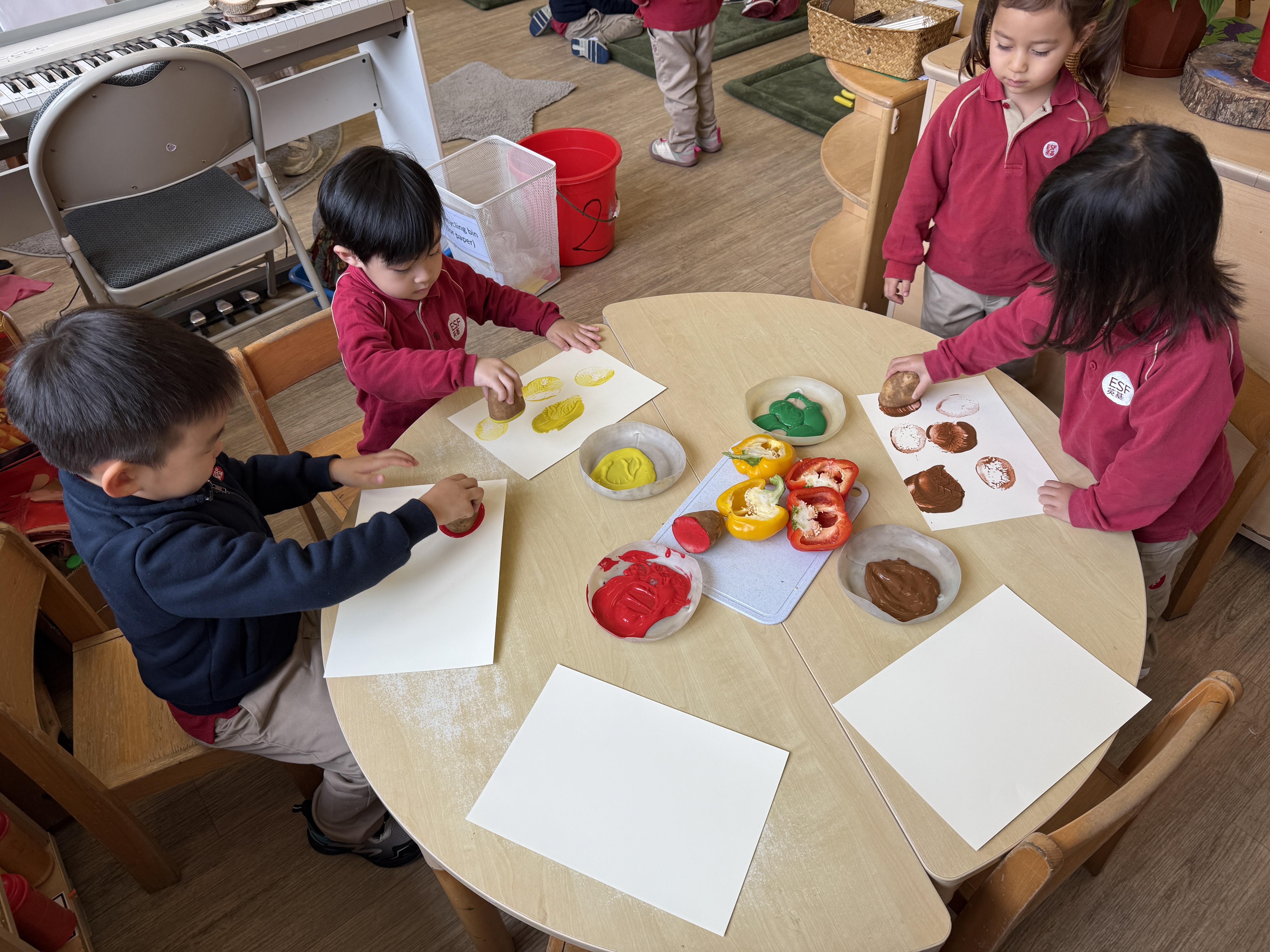
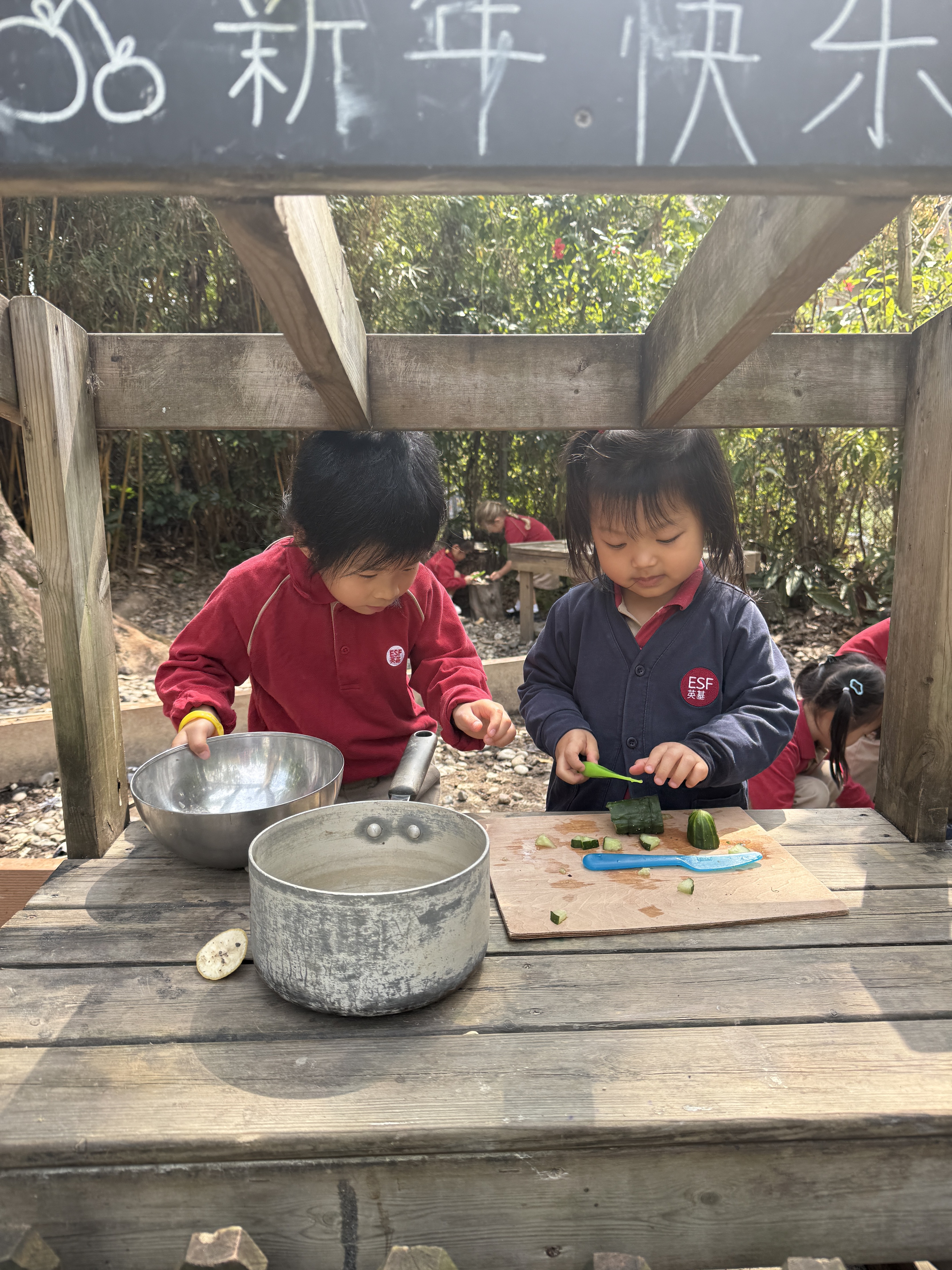
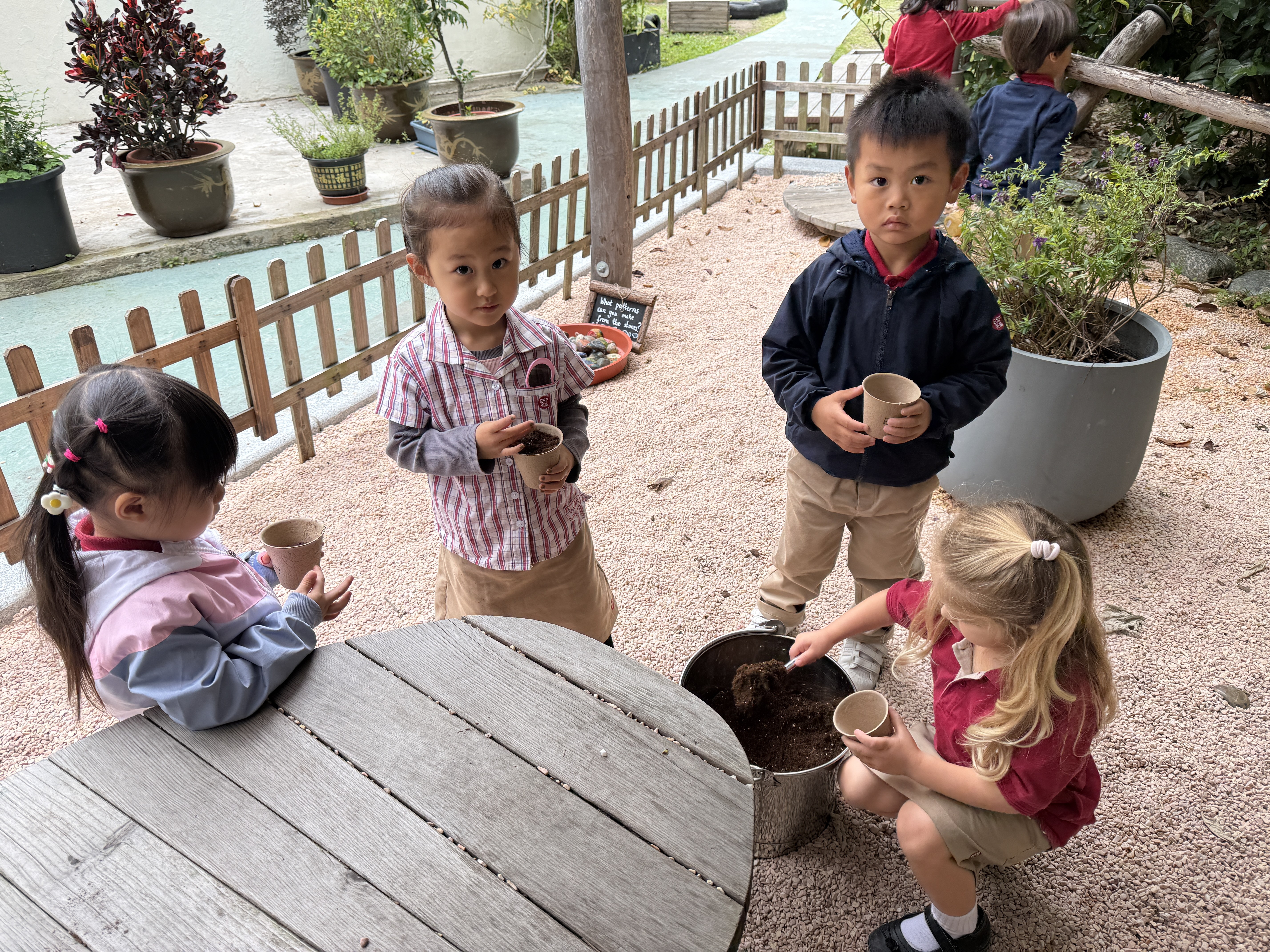
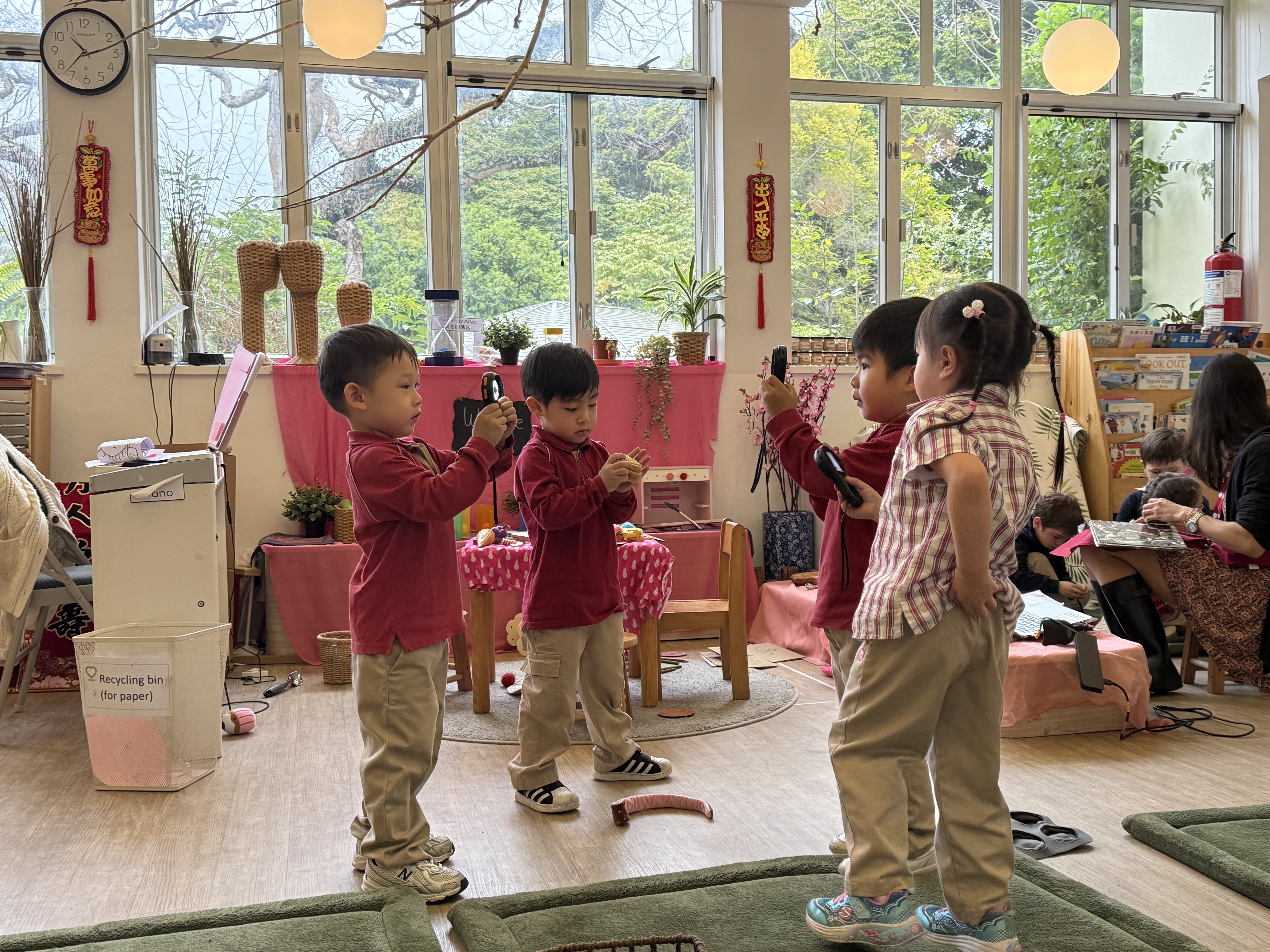
Unit of Inquiry
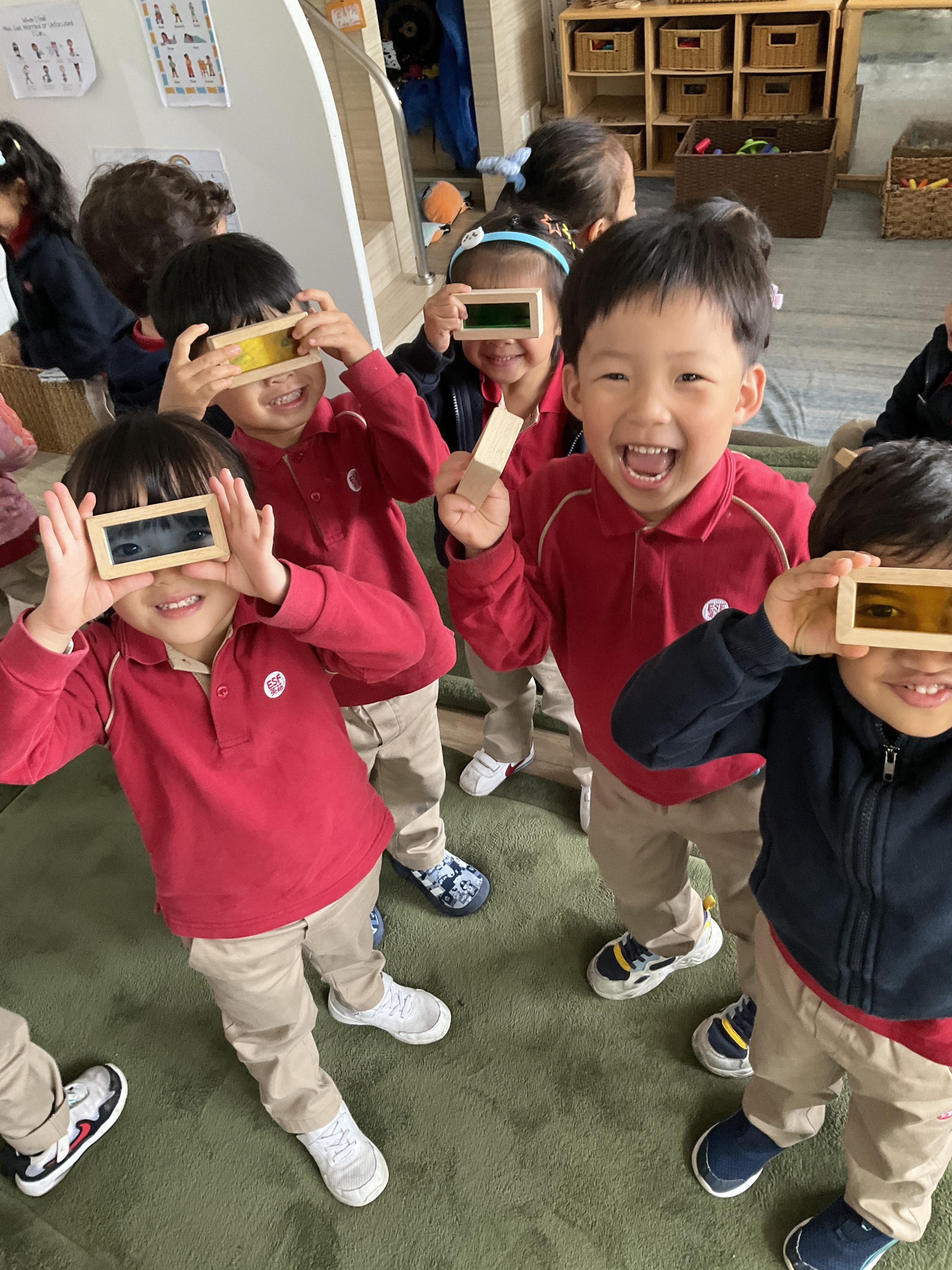
Our exploration of growth and nature has taken an exciting scientific turn! After our initial curiosity about seeds, we have begun focusing on the research skills needed to understand the world.
Special Guests
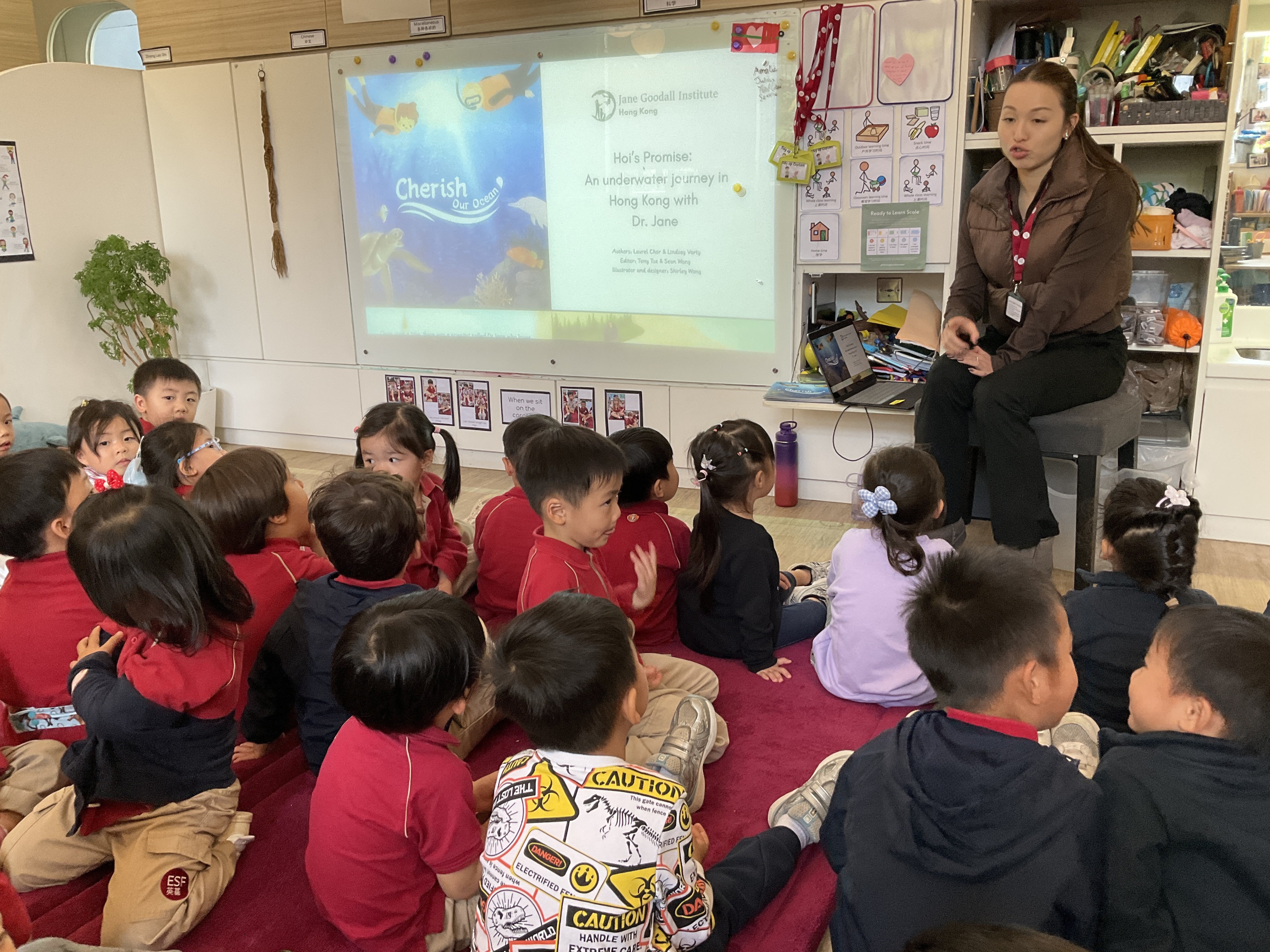
We were fortunate to host guests from The Jane Goodall Institute HK. The children were introduced to the life of Jane Goodall and enjoyed the story Cherish the Ocean. This experience aligned with our focus on being Caring and showing Responsibility toward all living things.
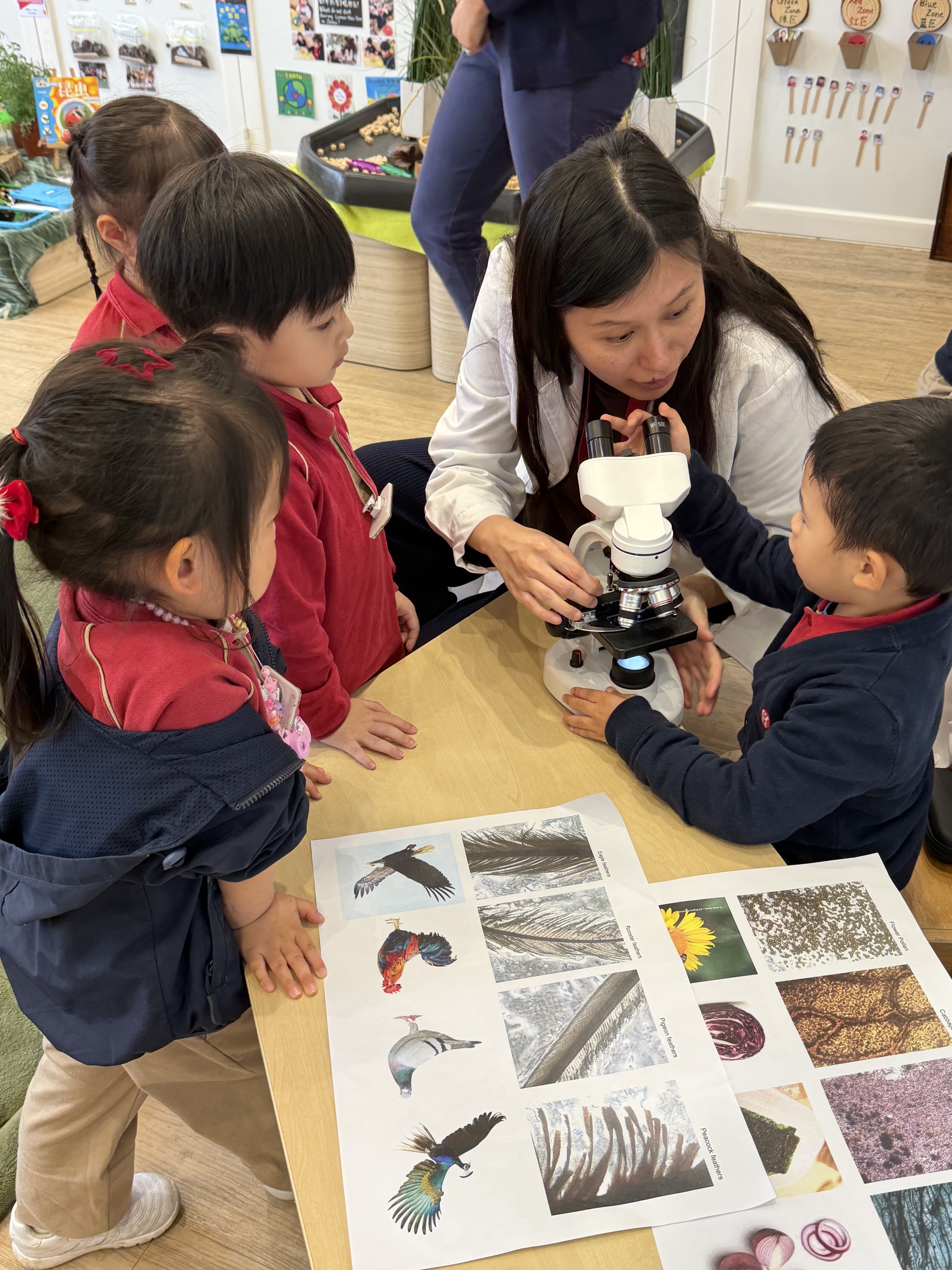
We were also delighted to have Lucas Lim’s mom, Alissa, visit our AM session. As a scientist and researcher, she helped the children dive deeper into their inquiries and even kindly lent her microscope for our classes to explore!
New Tools: The children learned to identify and use microscopes (显微镜) to examine various specimens (标本).
The PM session: Our afternoon friends continued this exploration using pictures of specimen slides and a microscope to see the world up close.
Inquiry in Action: We are practicing asking "Wh-" and "How" questions while using magnifying glasses and non-fiction books to find answers.
Hands-on Growth
We have put our knowledge into practice by planting our own cress seeds. The children have been identifying the essential elements plants need to thrive: soil, water, sun, and air. We are also practicing our mark-making skills by recording our observations as we await the first tiny sprouts.
Language and Literacy
Our vocabulary is growing alongside our plants as we explore the role of a 'researcher.' Through stories like Handa’s Surprise, Yucky Worms, and Shapes in Nature, the children are learning to use descriptive language to explain natural patterns and creatures. These shared reading experiences are significantly boosting their understanding and communication skills.
Mathematics: Measuring and Comparing
We are moving from basic counting into the world of Measurement. While we continue to recognise numbers up to 10 and sort familiar objects, we are now using mathematical language to compare our toy animals and natural finds:
Size: Big vs. Bigger, Small vs. Smaller
Length: Long vs. Longer
Chinese
The children have been deepening their connection to the natural world by learning to name the things they see outside. Through various games and songs, they have become more confident in identifying elements such as soil, seeds, flowers, the sun, and rain. To see these elements in action, the children participated in a bean-planting activity in small groups. Each child chose their own beans to plant and has taken responsibility for watering them regularly. They have been carefully observing the changes in their plants and keeping a record of what they see by making marks on paper and using iPads to take photos.
Our learning also extended into Chinese and mathematics as we explored 2D shapes. After reading the story "这是什么形状?" (What shape is this?), the children began identifying shapes in their environment. To practice their new skills, they chose their favourite shapes to build unique creations, such as houses, robots, and flowers.
Chinese Songs
形状游戏 The shape game
https://www.youtube.com/watch?v=HWfIECJcJo8
彩色的地球 The Colourful Earth
https://www.youtube.com/watch?v=TibbAR-EhIQ
一片叶子长出来 A leaf grows out
https://www.youtube.com/watch?v=WN0TGhoKZlM
Chinese Vocabulary
microscope 显微镜 (xiǎn wēi jìng)
specimen 标本 (biāo běn)
iPads 平板电脑 (píng bǎn diàn nǎo)
triangle 三角形 (sān jiǎo xíng)
rectangle 长方形 (cháng fāng xíng)
square 正方形 (zhèng fāng xíng)
circle 圆形 (yuán xíng)
leaf 树叶 (shù yè)
叶子 (yè zi)
flower 花 (huā)
tomato 西红柿 (xī hóng shì)
branch 树枝 (shù zhī)
Valentine's Day 情人节 (qíng rén jié)
birthday 生日 (shēng rì) Renri
Human’s Day 人日 (rén rì)
seed 种子 (zhǒng zi)
watering 浇水 (jiāo shuǐ)
soil 泥土 (ní tǔ)
sun 太阳 (tài yáng)
sunlight 阳光 (yáng guāng)
Our exploration of growth and nature has taken an exciting scientific turn! After our initial curiosity about seeds, we have begun focusing on the research skills needed to understand the world.
Special Guests
We were fortunate to host guests from The Jane Goodall Institute HK. The children were introduced to the life of Jane Goodall and enjoyed the story Cherish the Ocean. This experience aligned with our focus on being Caring and showing Responsibility toward all living things.
We were also delighted to have Lucas Lim’s mom, Alissa, visit our AM session. As a scientist and researcher, she helped the children dive deeper into their inquiries and even kindly lent her microscope for our classes to explore!
New Tools: The children learned to identify and use microscopes (显微镜) to examine various specimens (标本).
The PM session: Our afternoon friends continued this exploration using pictures of specimen slides and a microscope to see the world up close.
Inquiry in Action: We are practicing asking "Wh-" and "How" questions while using magnifying glasses and non-fiction books to find answers.
Hands-on Growth
We have put our knowledge into practice by planting our own cress seeds. The children have been identifying the essential elements plants need to thrive: soil, water, sun, and air. We are also practicing our mark-making skills by recording our observations as we await the first tiny sprouts.
Language and Literacy
Our vocabulary is growing alongside our plants as we explore the role of a 'researcher.' Through stories like Handa’s Surprise, Yucky Worms, and Shapes in Nature, the children are learning to use descriptive language to explain natural patterns and creatures. These shared reading experiences are significantly boosting their understanding and communication skills.
Mathematics: Measuring and Comparing
We are moving from basic counting into the world of Measurement. While we continue to recognise numbers up to 10 and sort familiar objects, we are now using mathematical language to compare our toy animals and natural finds:
Size: Big vs. Bigger, Small vs. Smaller
Length: Long vs. Longer
Chinese
The children have been deepening their connection to the natural world by learning to name the things they see outside. Through various games and songs, they have become more confident in identifying elements such as soil, seeds, flowers, the sun, and rain. To see these elements in action, the children participated in a bean-planting activity in small groups. Each child chose their own beans to plant and has taken responsibility for watering them regularly. They have been carefully observing the changes in their plants and keeping a record of what they see by making marks on paper and using iPads to take photos.
Our learning also extended into Chinese and mathematics as we explored 2D shapes. After reading the story "这是什么形状?" (What shape is this?), the children began identifying shapes in their environment. To practice their new skills, they chose their favourite shapes to build unique creations, such as houses, robots, and flowers.
Chinese Songs
形状游戏 The shape game
https://www.youtube.com/watch?v=HWfIECJcJo8
彩色的地球 The Colourful Earth
https://www.youtube.com/watch?v=TibbAR-EhIQ
一片叶子长出来 A leaf grows out
https://www.youtube.com/watch?v=WN0TGhoKZlM
Chinese Vocabulary
microscope 显微镜 (xiǎn wēi jìng)
specimen 标本 (biāo běn)
iPads 平板电脑 (píng bǎn diàn nǎo)
triangle 三角形 (sān jiǎo xíng)
rectangle 长方形 (cháng fāng xíng)
square 正方形 (zhèng fāng xíng)
circle 圆形 (yuán xíng)
leaf 树叶 (shù yè)
叶子 (yè zi)
flower 花 (huā)
tomato 西红柿 (xī hóng shì)
branch 树枝 (shù zhī)
Valentine's Day 情人节 (qíng rén jié)
birthday 生日 (shēng rì) Renri
Human’s Day 人日 (rén rì)
seed 种子 (zhǒng zi)
watering 浇水 (jiāo shuǐ)
soil 泥土 (ní tǔ)
sun 太阳 (tài yáng)
sunlight 阳光 (yáng guāng)
Posted by:
Nicole Pattison, 05/03/2026 15:48:56
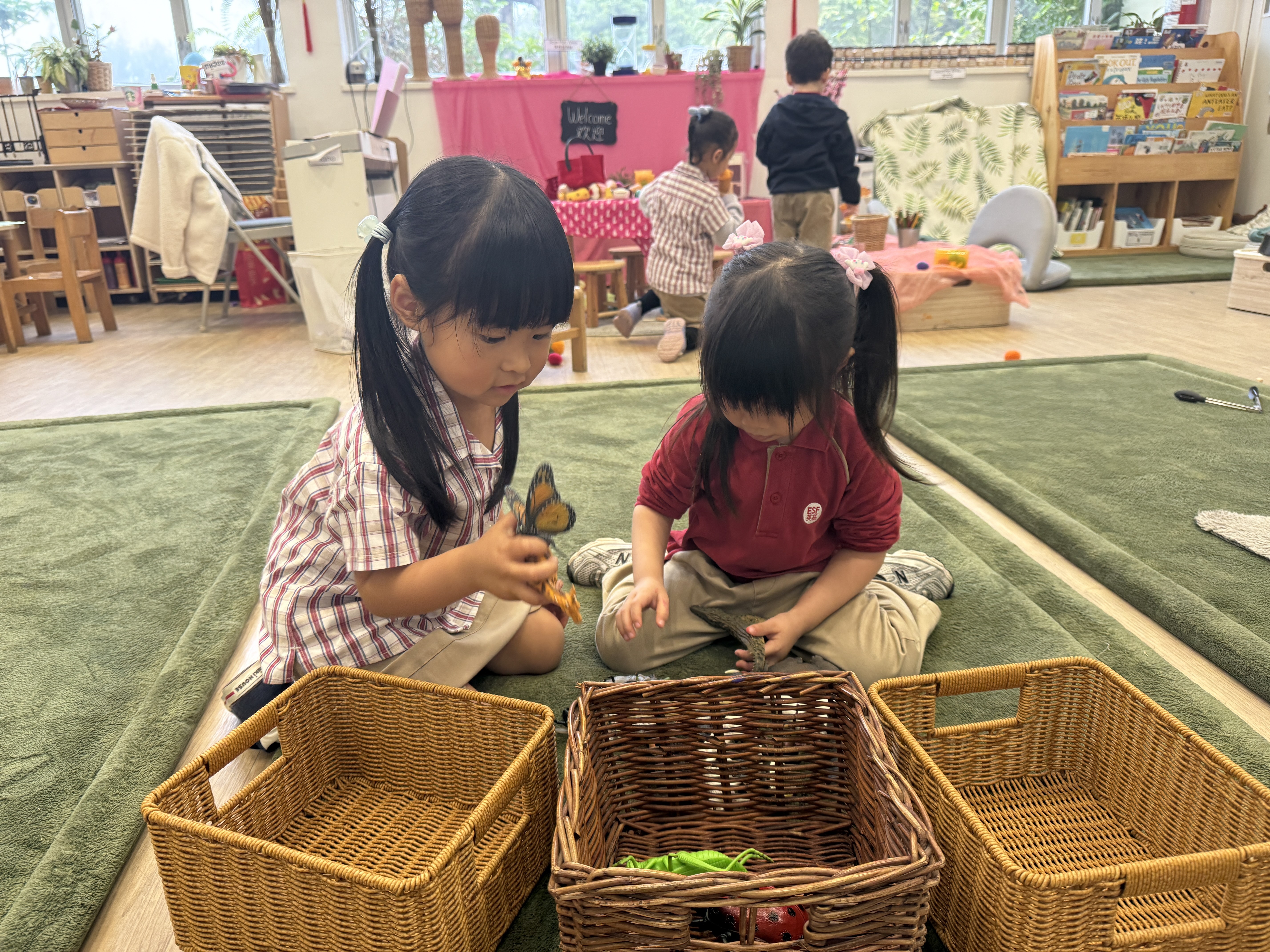
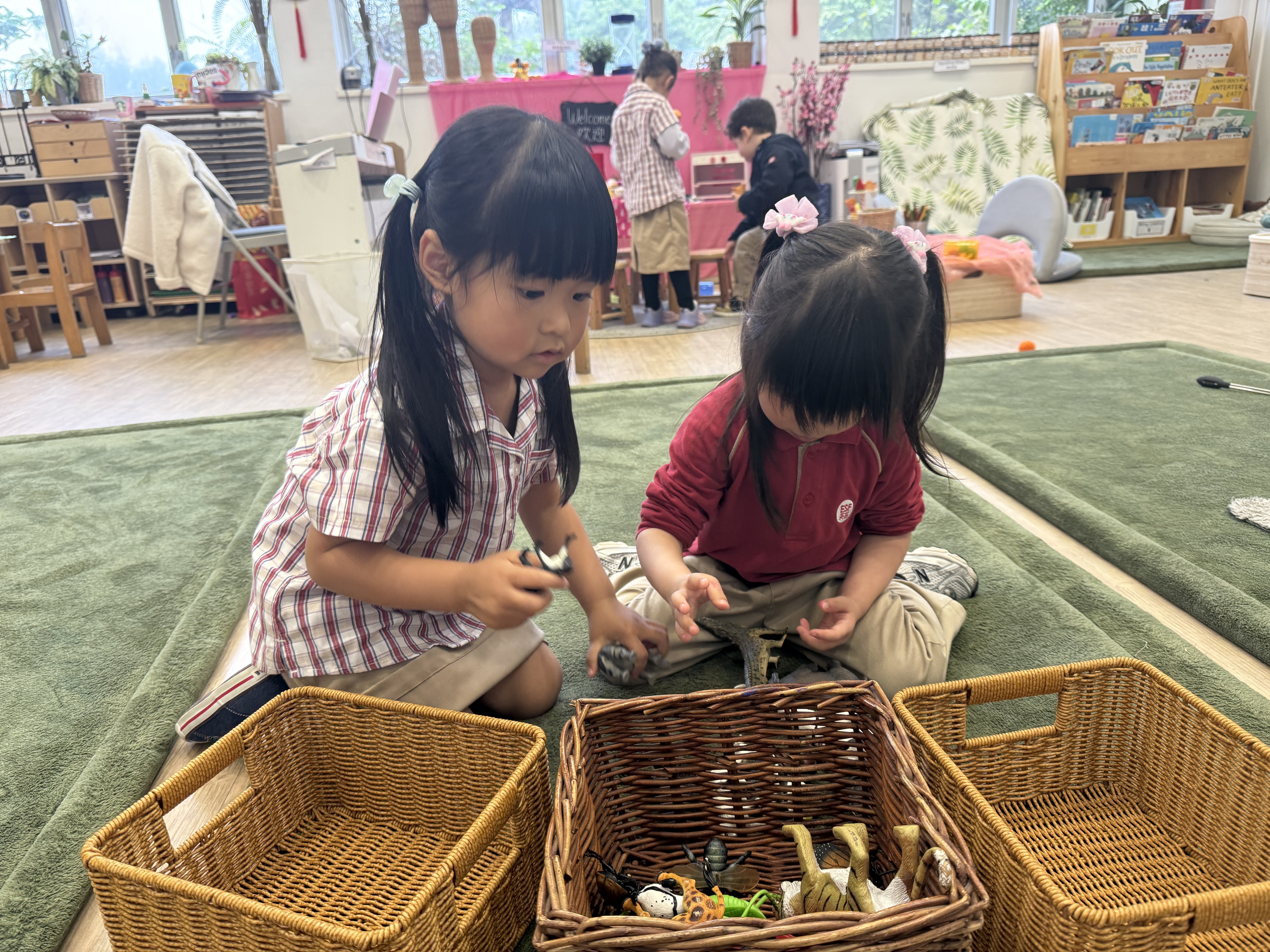
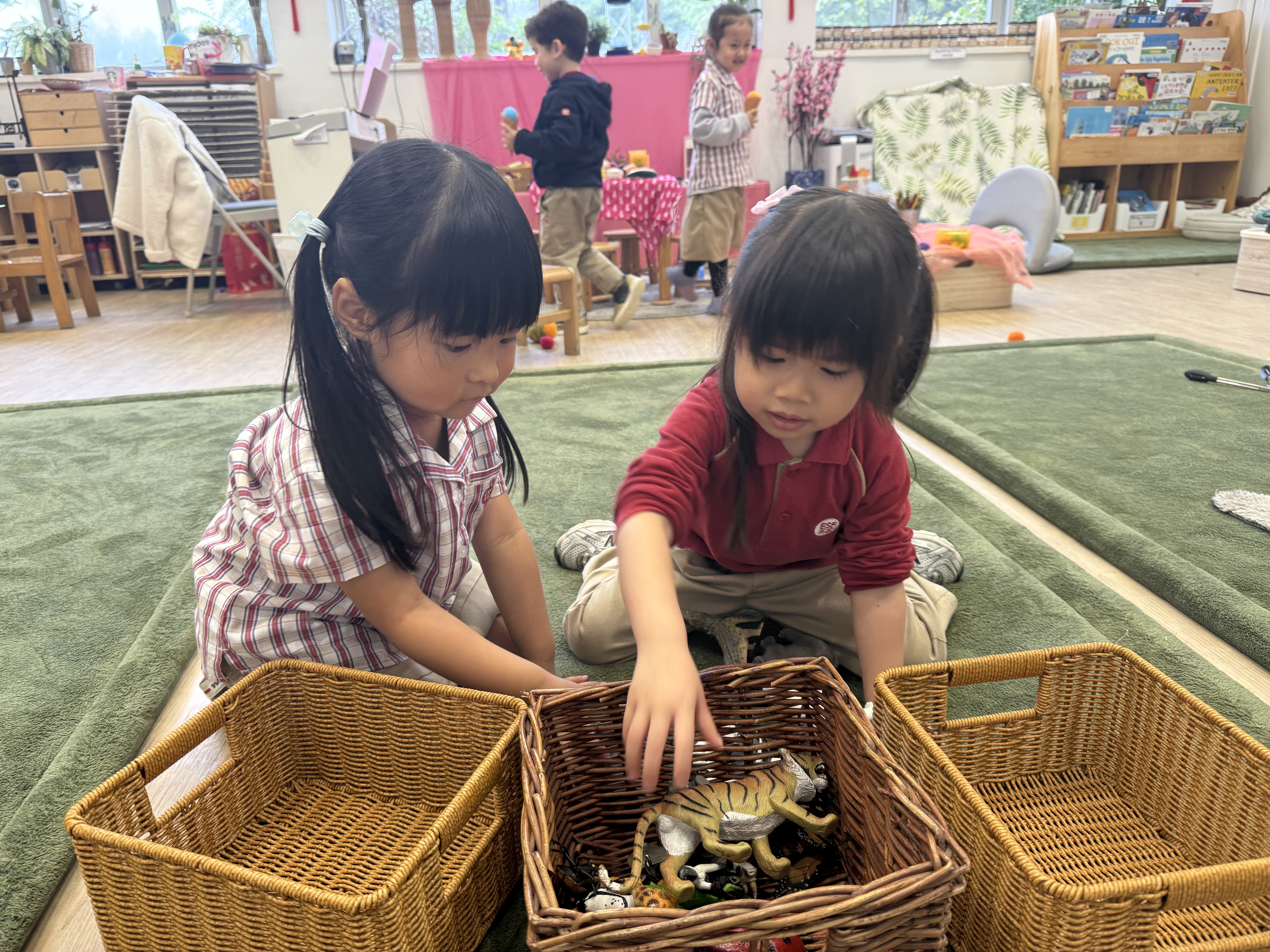
Throughout this unit, Hailey has been learning how to sort items. She practiced grouping animals and insects by type and organising objects by colour. This helps her identify patterns and understand the concepts of same, similar, and different—all foundational skills for early math. Next, we will practice sorting items by size (big and small).
Posted by:
Ms Irene Ma, 27/02/2026 12:58:09
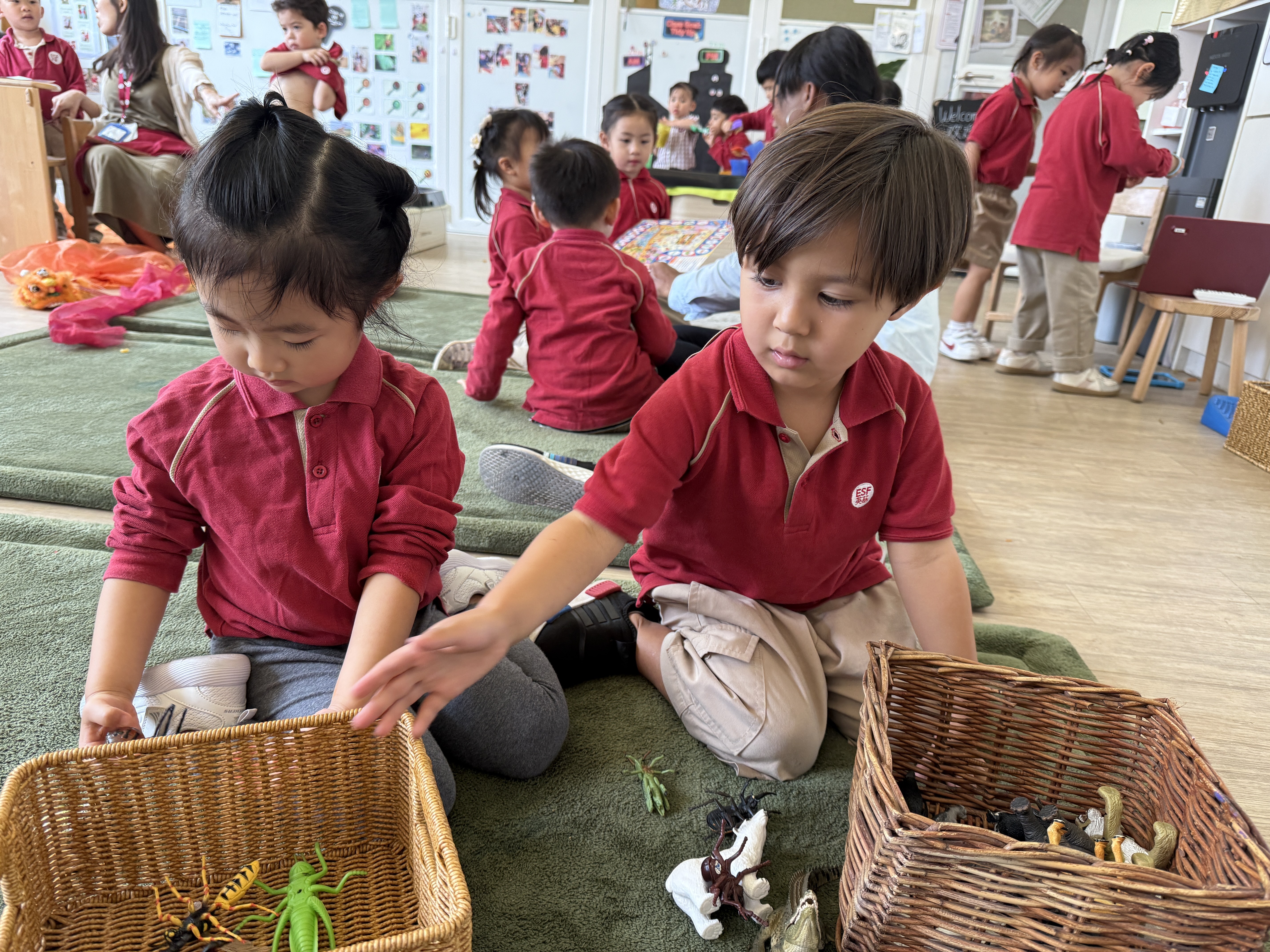
23rd February Whole Class Learning Journey
UOI and Chinese
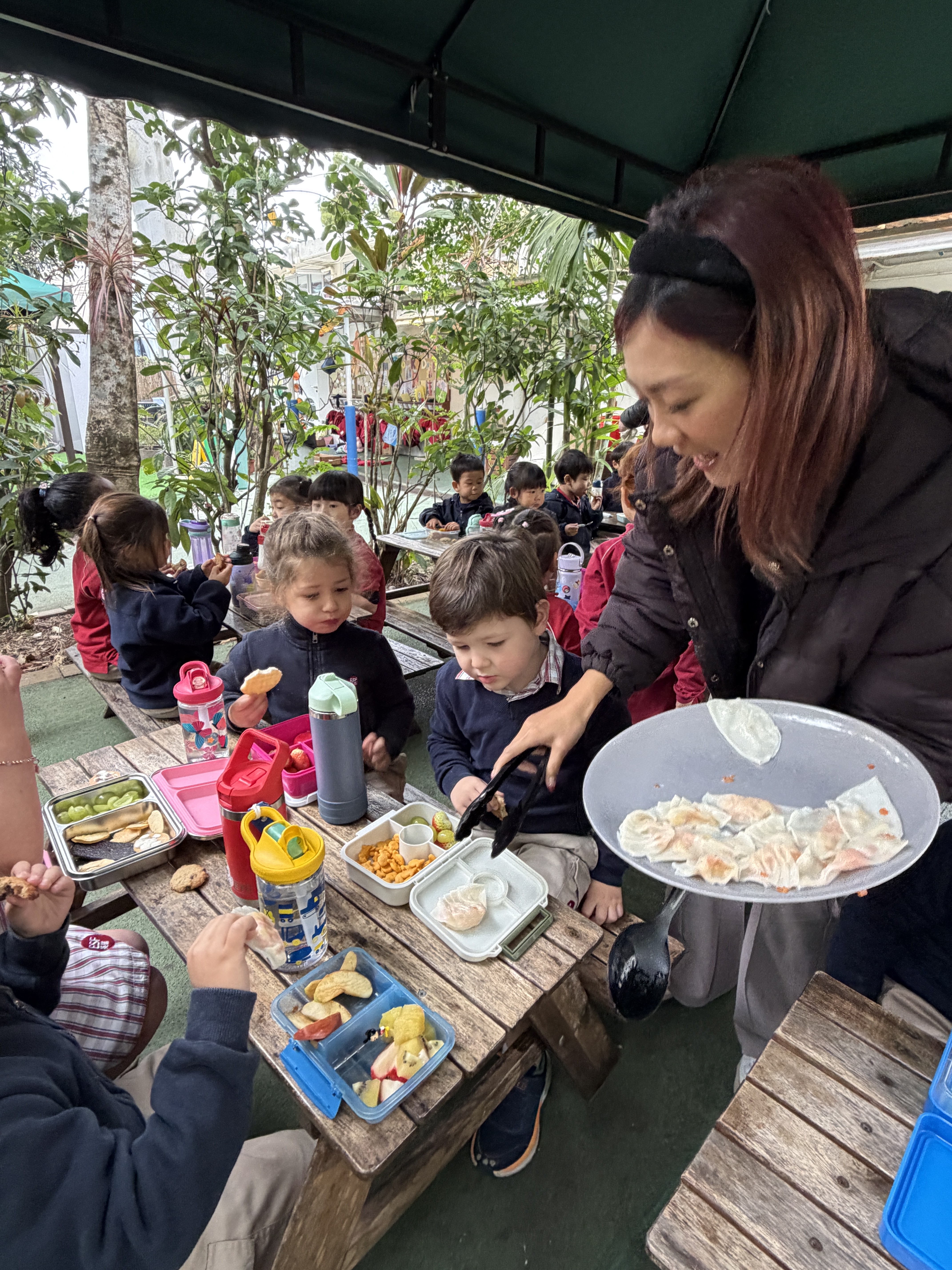
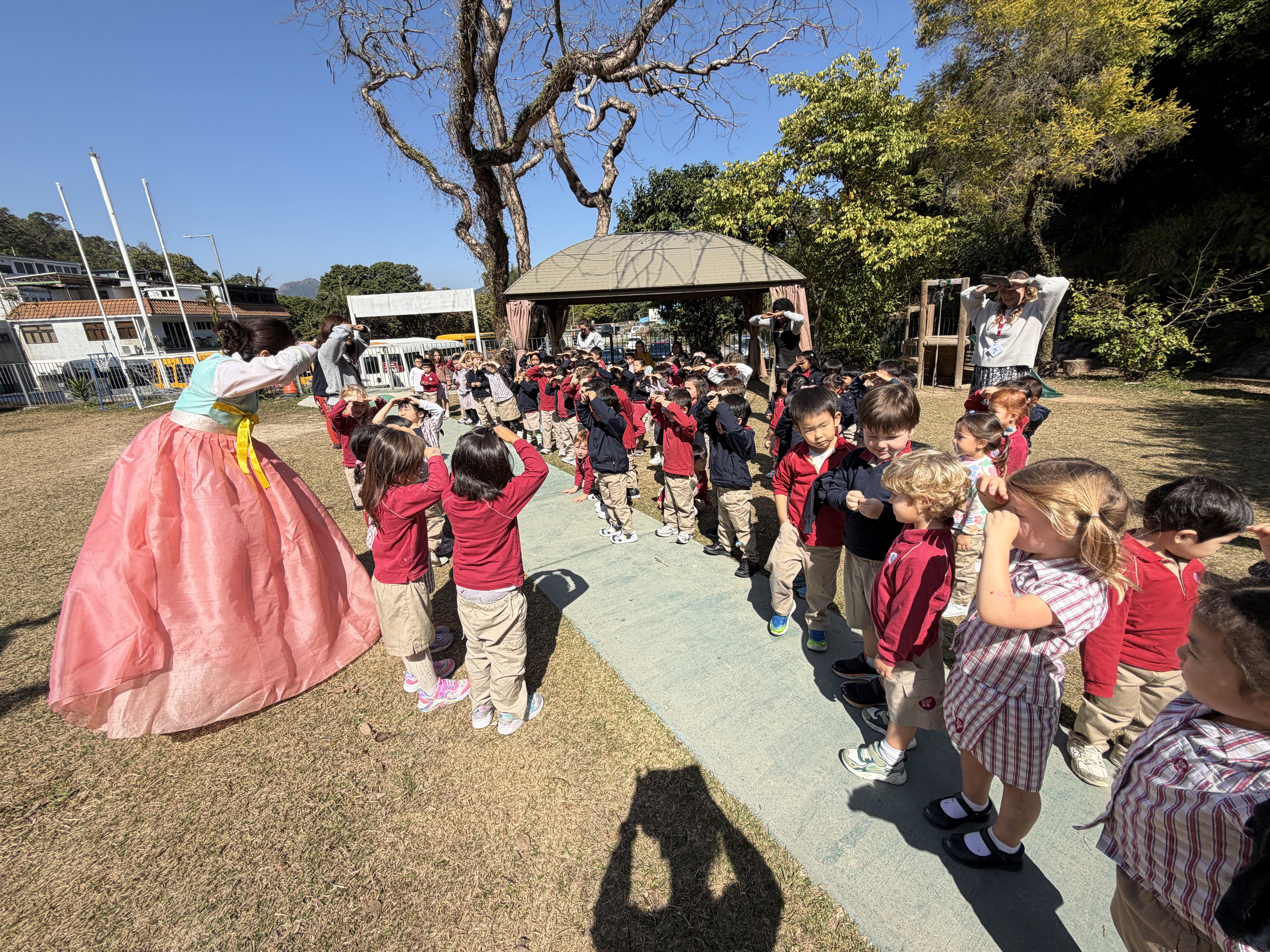
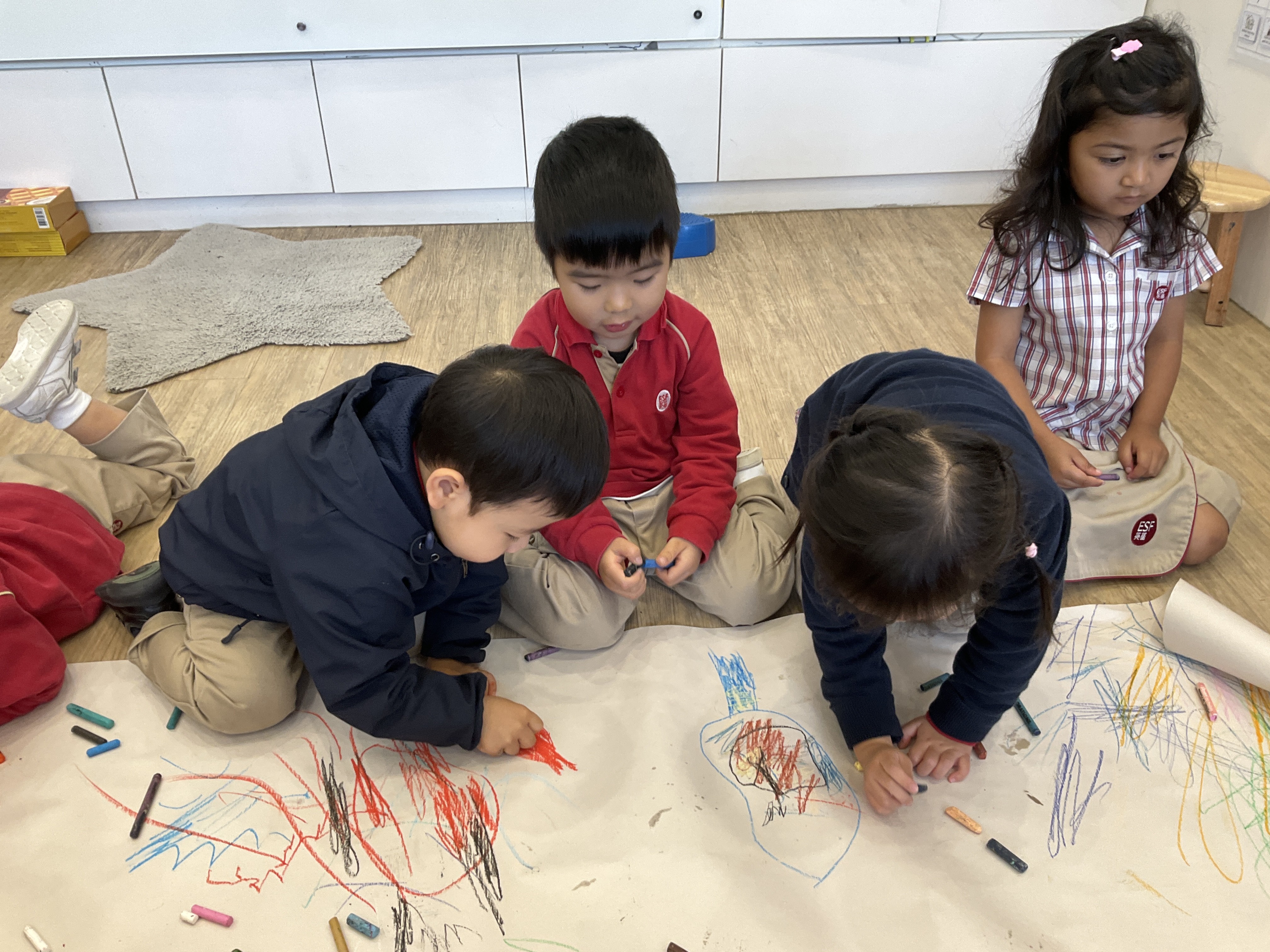
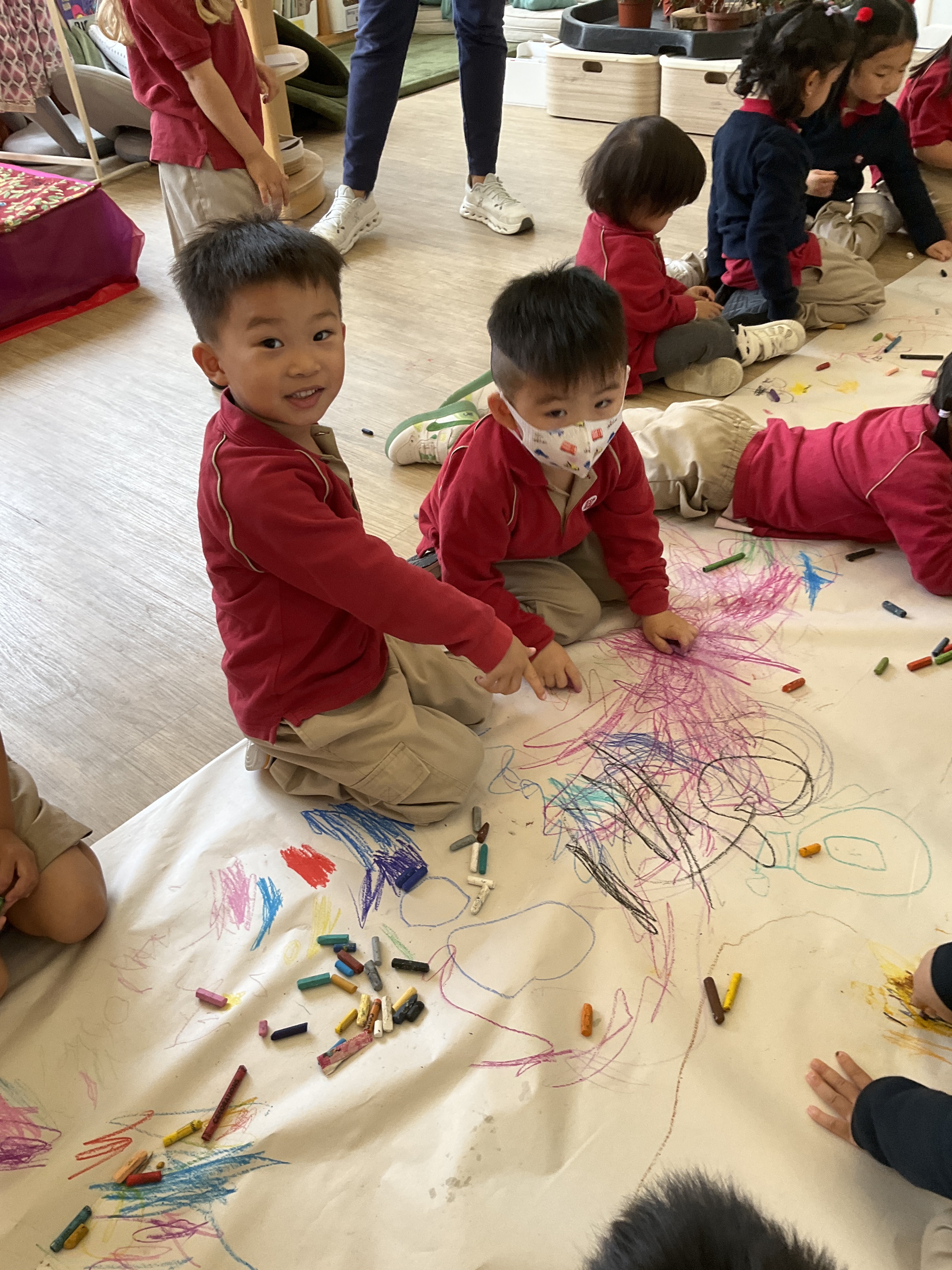
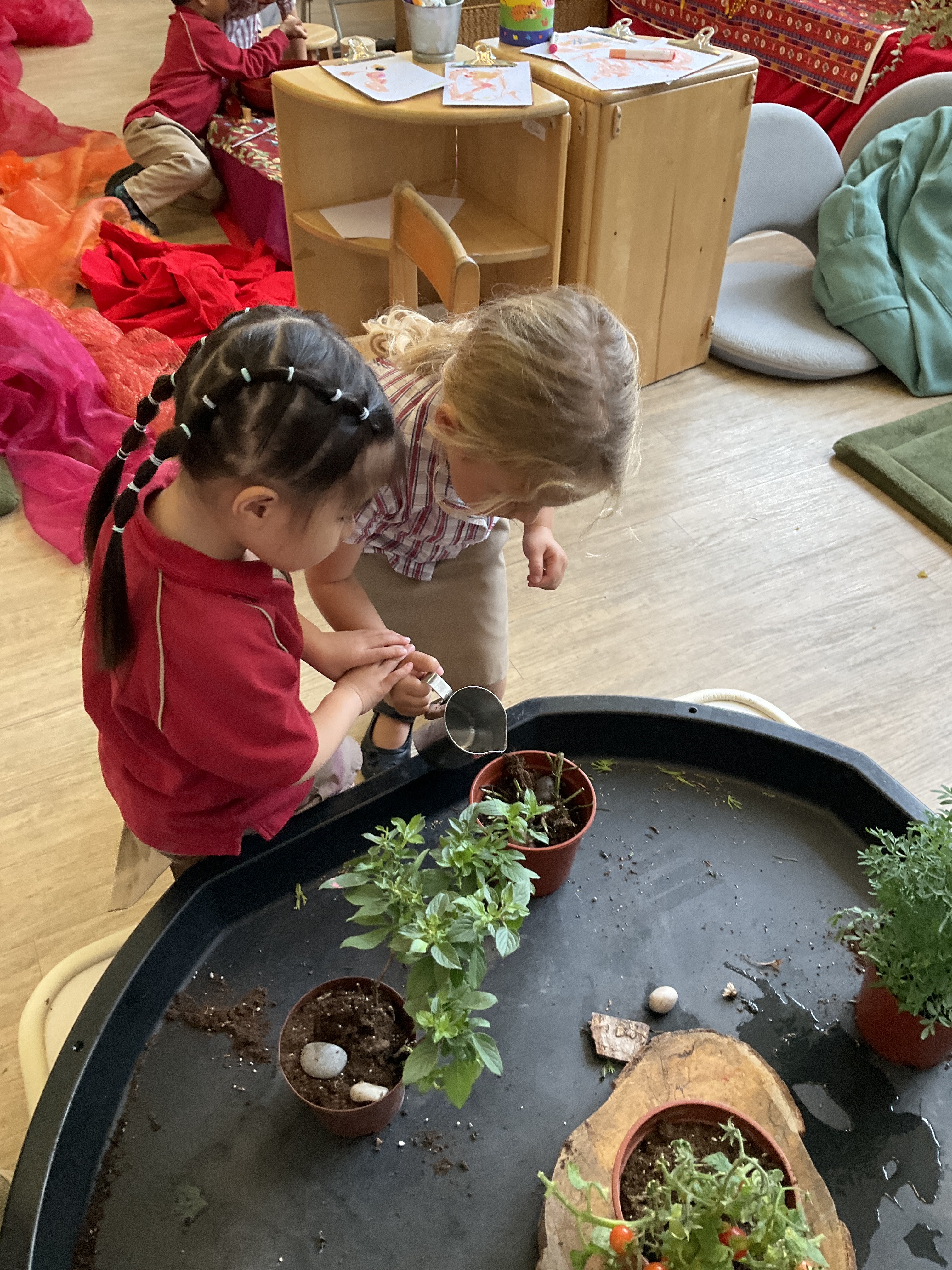
Throughout our recent learning journey, the children have been exploring cultural traditions and the natural world with curiosity and care. To foster open-mindedness, we celebrated the Lunar New Year (农历新年) by learning how different cultures mark this special time. We were delighted to welcome Ms. Minjung, who visited in her traditional Korean costume (韩服) to share how Seollal (Korean New Year - 韩国新年) is celebrated. The children observed how to perform a traditional bow and learned about the special foods enjoyed during the festival.
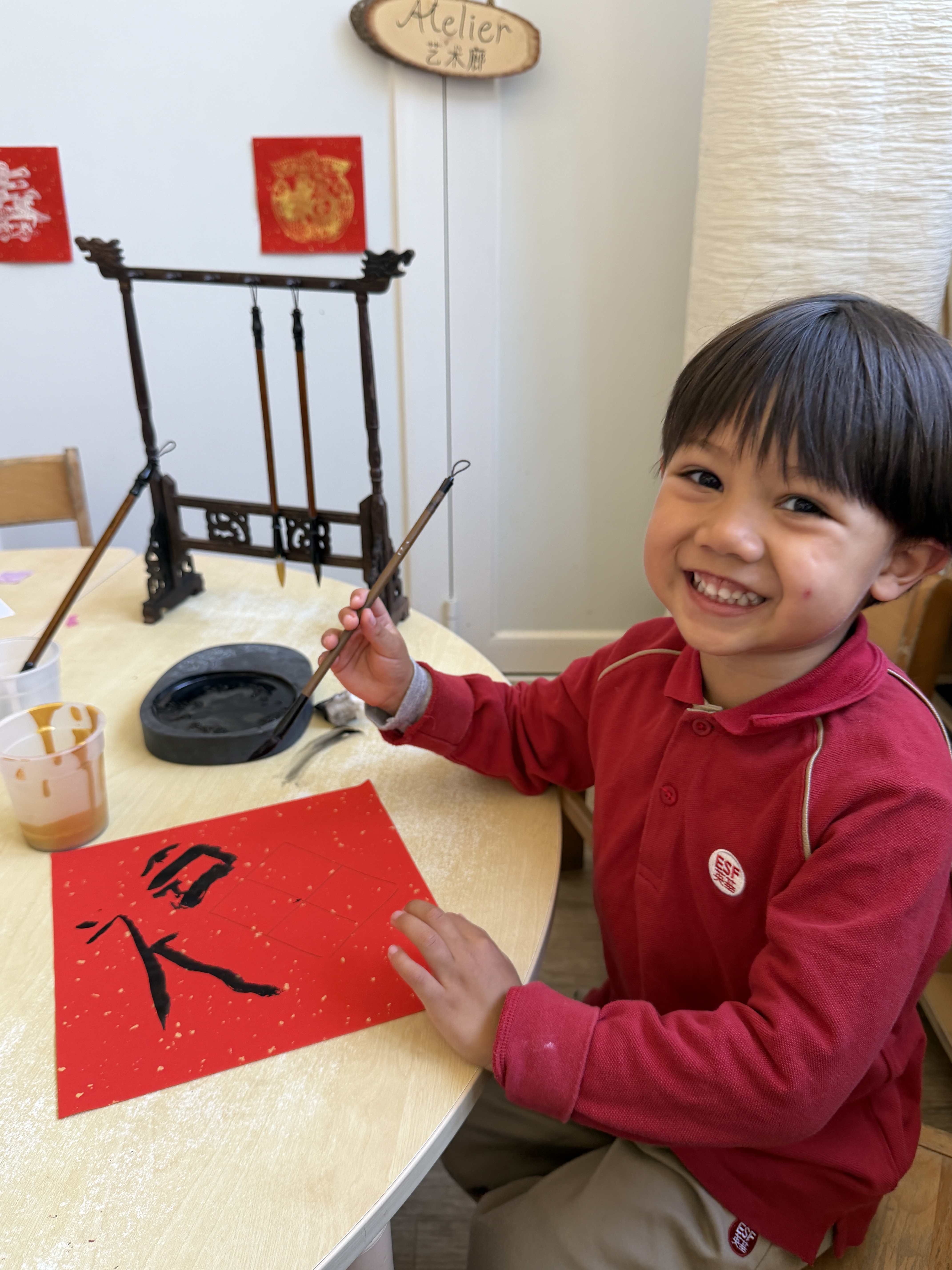
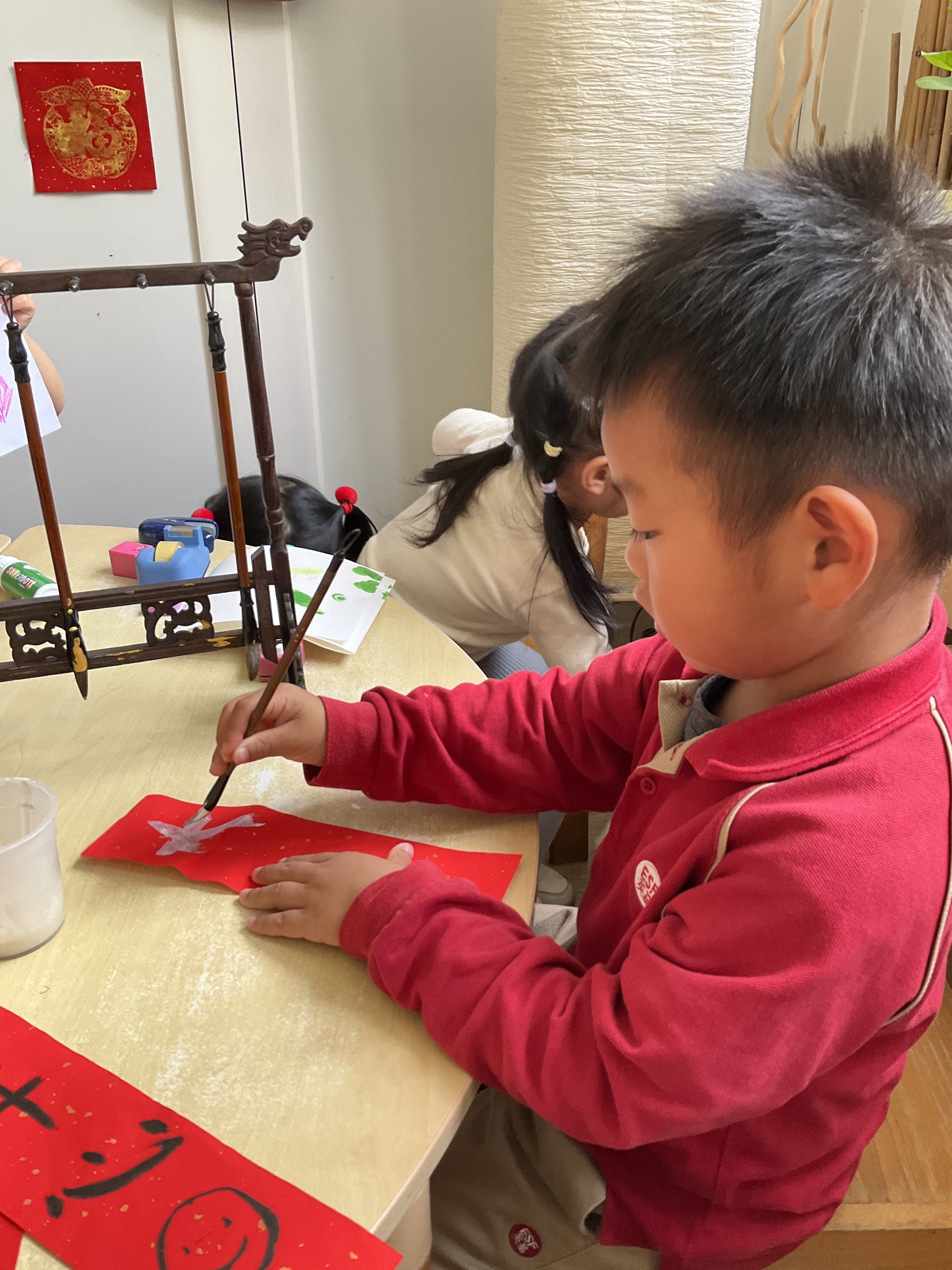
Our exploration continued through storytelling and performance. The children listened to the traditional tale of the 12 Zodiac animals (十二生肖) and watched a drama performance to deepen their understanding of the story. Demonstrating their growing confidence as risk-takers (敢于尝试的人), the Little Firebugs performed the song ‘新年Yeah’ (New Year Yeah!) for their peers and parents. During our Lunar New Year celebration day, the children engaged in several hands-on experiences, including making fruit skewers (水果串), woodblock painting (木板印画), and creating fish from red packets (红包). They also practiced using Chinese brushes (毛笔) and ink to write Spring Couplets (春联).
Following our holiday, we introduced the concept of Human’s Day (人日 ), which falls on the seventh day of the first lunar month. We read the story of the origin (起源) of this day, learning how it represents a collective birthday (生日) for everyone. The children practised singing the birthday song in Chinese and worked on recognising the characters for Human's Day (人日). We also celebrated Valentine’s Day (情人节) by drawing hearts for loved ones and participating in counting games.
In our Unit of Inquiry, we have begun exploring seeds (种子) and how they grow. After reading 'The Tiny Seed' (小种子), the children started to wonder about what seeds can produce. This led to the curious question, "Can seeds grow bread?" To find an answer, the children have been interviewing people around the school to gather information.
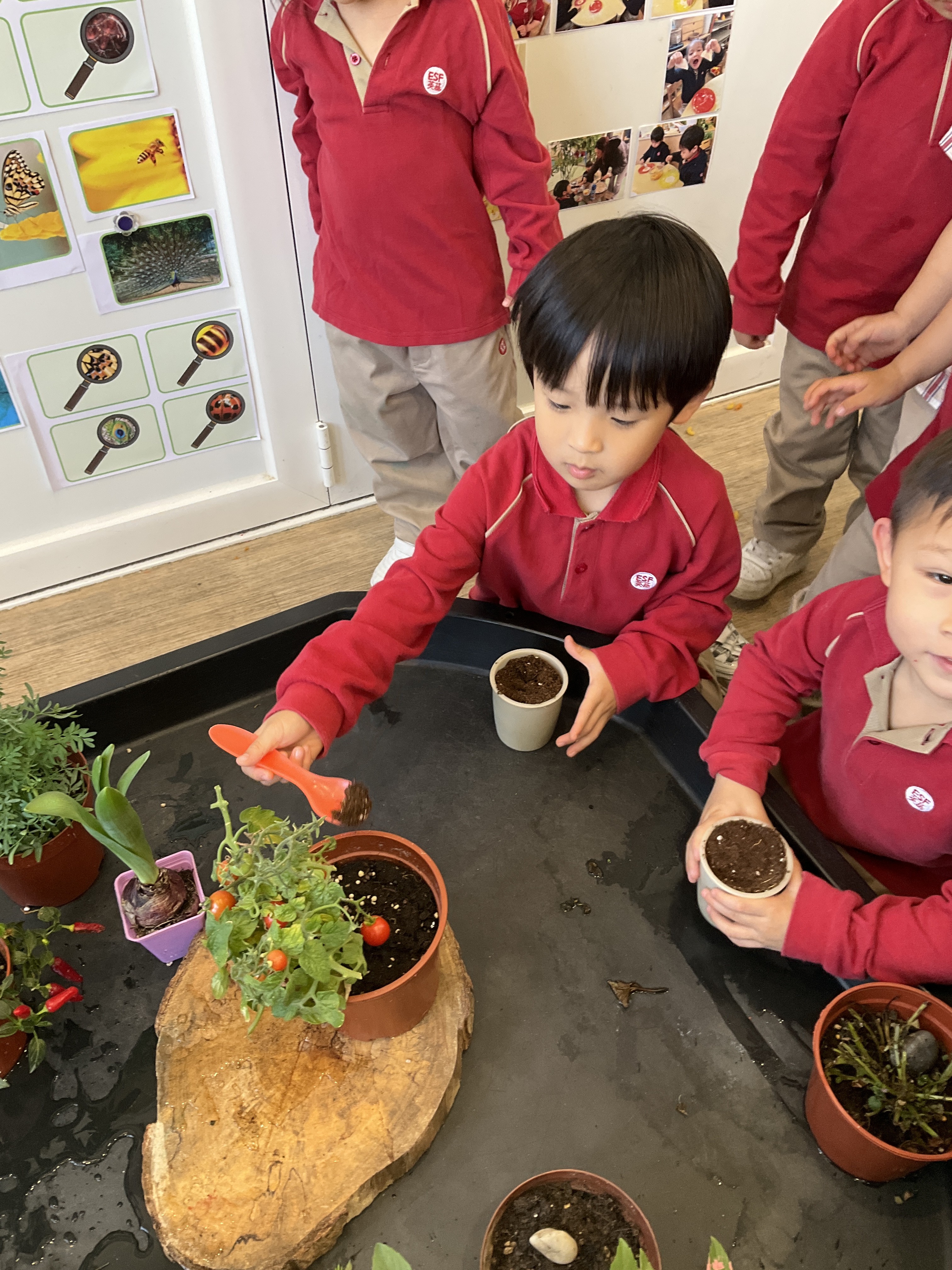
The children have also been taking an active role in caring for the plants in our classroom. They have been learning how to nurture them by adding soil (土壤) and fertiliser (肥料), as well as remembering to water (浇水) them regularly.
Alongside our academic inquiries, we continue to focus on the concept of kindness (善良). The children are encouraged to show care for people, plants, and the objects at our school. These thoughtful actions are recorded on our Kindness Tree. It is heartening to see the tree grow as the children become more mindful of how their actions affect the world around them.
Language and Maths
Through The Earth Book by Todd Parr, we explored how our actions affect the world around us. The children discussed ways to be "kind to nature," such as staying on the path to protect plants and being gentle with animals and insects. We also learned about the importance of not leaving rubbish behind and what actions we can take. After reading The Tiny Seed by Eric Carle, we used scarves to act out a seed's journey of growth. To express our love for the outdoors, we practised the song “I Love the Mountains” with rhythmic actions, reflecting on what we see and how nature makes us feel.
Mathematics: Counting through Movement
Our focus has been on sorting, counting, and numeral recognition. The children practiced their thinking skills by sorting familiar items and identifying what is the same or different. We have been using movement activities to strengthen our math skills, building number fluency with our “Count to 20” action song and using the story Tall, Tall Tree to practice recognising numbers. We also played a game using large dice to lead “Animal Walks,” which allowed the children to practice counting while engaging in physical play.
Chinese Songs
彩色的地球 The Colourful Earth
https://www.youtube.com/watch?v=TibbAR-EhIQ
一片叶子长出来 A leaf grows out
https://www.youtube.com/watch?v=WN0TGhoKZlM
Chinese Vocabulary
spring couplet 春联 (chūn lián)
leaf 树叶 (shù yè) 叶子 (yè zi)
flower 花 (huā)
tomato 西红柿 (xī hóng shì)
branch 树枝 (shù zhī)
Valentine's Day 情人节 (qíng rén jié)
birthday 生日 (shēng rì) Renri
Human’s Day 人日 (rén rì)
seed 种子 (zhǒng zi)
watering 浇水 (jiāo shuǐ)
soil 泥土 (ní tǔ)
sun 太阳 (tài yáng)
sunlight 阳光 (yáng guāng)
UOI and Chinese
Throughout our recent learning journey, the children have been exploring cultural traditions and the natural world with curiosity and care. To foster open-mindedness, we celebrated the Lunar New Year (农历新年) by learning how different cultures mark this special time. We were delighted to welcome Ms. Minjung, who visited in her traditional Korean costume (韩服) to share how Seollal (Korean New Year - 韩国新年) is celebrated. The children observed how to perform a traditional bow and learned about the special foods enjoyed during the festival.
Our exploration continued through storytelling and performance. The children listened to the traditional tale of the 12 Zodiac animals (十二生肖) and watched a drama performance to deepen their understanding of the story. Demonstrating their growing confidence as risk-takers (敢于尝试的人), the Little Firebugs performed the song ‘新年Yeah’ (New Year Yeah!) for their peers and parents. During our Lunar New Year celebration day, the children engaged in several hands-on experiences, including making fruit skewers (水果串), woodblock painting (木板印画), and creating fish from red packets (红包). They also practiced using Chinese brushes (毛笔) and ink to write Spring Couplets (春联).
Following our holiday, we introduced the concept of Human’s Day (人日 ), which falls on the seventh day of the first lunar month. We read the story of the origin (起源) of this day, learning how it represents a collective birthday (生日) for everyone. The children practised singing the birthday song in Chinese and worked on recognising the characters for Human's Day (人日). We also celebrated Valentine’s Day (情人节) by drawing hearts for loved ones and participating in counting games.
In our Unit of Inquiry, we have begun exploring seeds (种子) and how they grow. After reading 'The Tiny Seed' (小种子), the children started to wonder about what seeds can produce. This led to the curious question, "Can seeds grow bread?" To find an answer, the children have been interviewing people around the school to gather information.
The children have also been taking an active role in caring for the plants in our classroom. They have been learning how to nurture them by adding soil (土壤) and fertiliser (肥料), as well as remembering to water (浇水) them regularly.
Alongside our academic inquiries, we continue to focus on the concept of kindness (善良). The children are encouraged to show care for people, plants, and the objects at our school. These thoughtful actions are recorded on our Kindness Tree. It is heartening to see the tree grow as the children become more mindful of how their actions affect the world around them.
Language and Maths
Through The Earth Book by Todd Parr, we explored how our actions affect the world around us. The children discussed ways to be "kind to nature," such as staying on the path to protect plants and being gentle with animals and insects. We also learned about the importance of not leaving rubbish behind and what actions we can take. After reading The Tiny Seed by Eric Carle, we used scarves to act out a seed's journey of growth. To express our love for the outdoors, we practised the song “I Love the Mountains” with rhythmic actions, reflecting on what we see and how nature makes us feel.
Mathematics: Counting through Movement
Our focus has been on sorting, counting, and numeral recognition. The children practiced their thinking skills by sorting familiar items and identifying what is the same or different. We have been using movement activities to strengthen our math skills, building number fluency with our “Count to 20” action song and using the story Tall, Tall Tree to practice recognising numbers. We also played a game using large dice to lead “Animal Walks,” which allowed the children to practice counting while engaging in physical play.
Chinese Songs
彩色的地球 The Colourful Earth
https://www.youtube.com/watch?v=TibbAR-EhIQ
一片叶子长出来 A leaf grows out
https://www.youtube.com/watch?v=WN0TGhoKZlM
Chinese Vocabulary
spring couplet 春联 (chūn lián)
leaf 树叶 (shù yè) 叶子 (yè zi)
flower 花 (huā)
tomato 西红柿 (xī hóng shì)
branch 树枝 (shù zhī)
Valentine's Day 情人节 (qíng rén jié)
birthday 生日 (shēng rì) Renri
Human’s Day 人日 (rén rì)
seed 种子 (zhǒng zi)
watering 浇水 (jiāo shuǐ)
soil 泥土 (ní tǔ)
sun 太阳 (tài yáng)
sunlight 阳光 (yáng guāng)
Posted by:
Ms Irene Ma, 25/02/2026 13:46:47
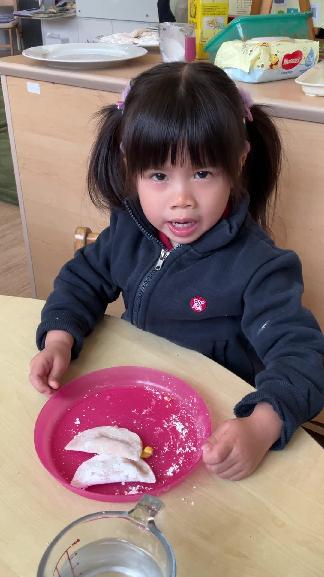
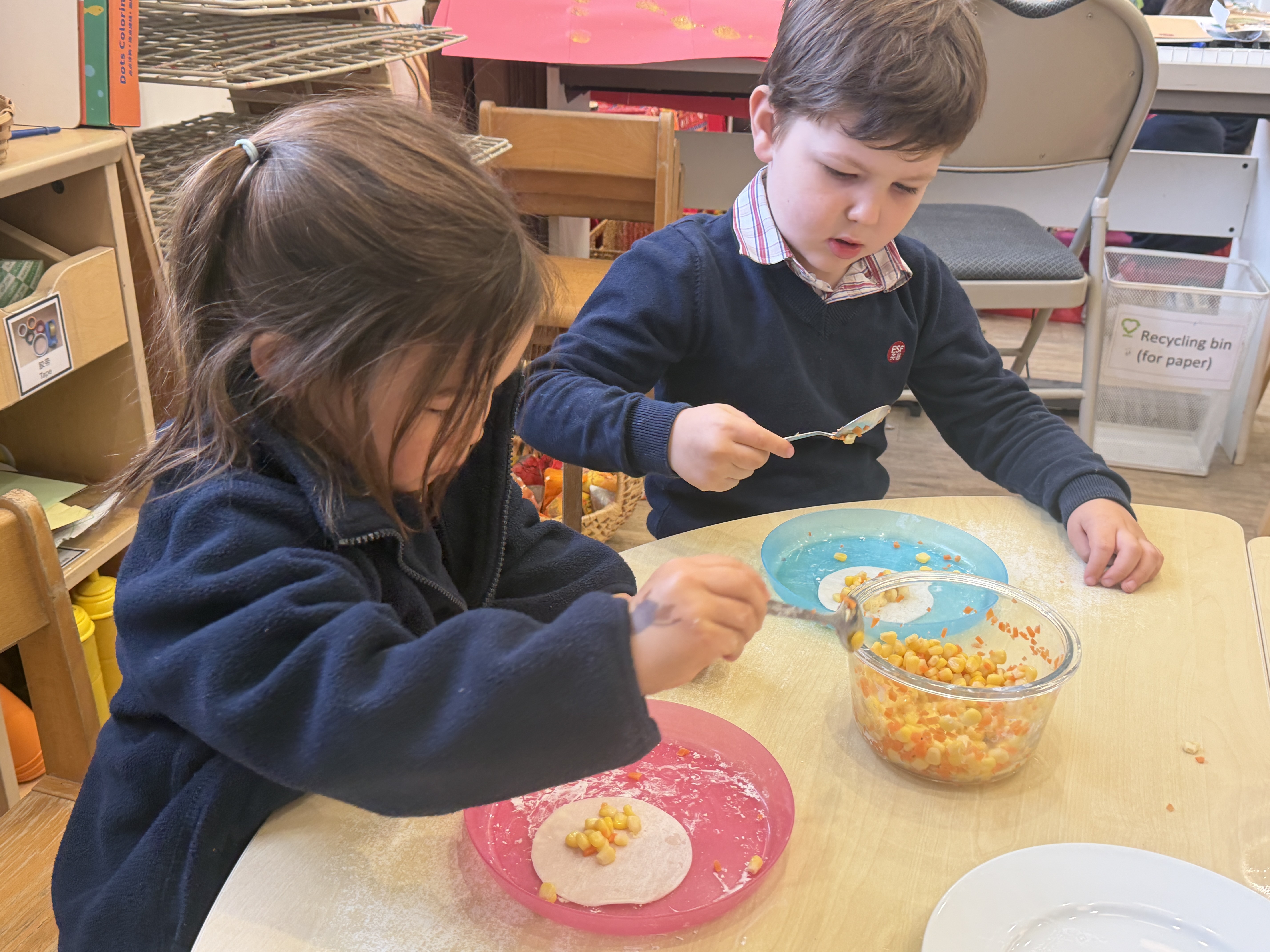
To welcome the Year of the Horse 马年, Hailey participated in a hands-on dumpling-making (包餃子 bāo jiǎo zi) activity. In Chinese culture, dumplings are shaped like ancient silver and gold ingots. Because of this, eating dumplings symbolises wealth and prosperity (招財進寶 zhāo cái jìn bǎo) for the coming year.
We prepared a healthy and delicious filling using fresh corn (玉米 yù mǐ) and carrots (胡蘿蔔 hú luó bo). Hailey was very focused as she placed the filling onto the dumpling wraps (餃子皮 jiǎo zi pí).
To assemble them, Hailey carefully folded (摺疊 zhé dié) the wraps in half and used a small amount of water (水 shuǐ) on her fingertips to stick (黏貼 nián tiē) the edges together.
Once the dumplings were ready, we boiled (水煮 shuǐ zhǔ) them in the school kitchen. The highlight of the day was sitting together to enjoy our handmade treats. It was wonderful to see Hailey take such pride in her work and appreciate the cultural significance of this festive dish.
I really enjoyed making dumplings with you Hailey. Thank you for your open-mindedness and efforts in the activity!
We prepared a healthy and delicious filling using fresh corn (玉米 yù mǐ) and carrots (胡蘿蔔 hú luó bo). Hailey was very focused as she placed the filling onto the dumpling wraps (餃子皮 jiǎo zi pí).
To assemble them, Hailey carefully folded (摺疊 zhé dié) the wraps in half and used a small amount of water (水 shuǐ) on her fingertips to stick (黏貼 nián tiē) the edges together.
Once the dumplings were ready, we boiled (水煮 shuǐ zhǔ) them in the school kitchen. The highlight of the day was sitting together to enjoy our handmade treats. It was wonderful to see Hailey take such pride in her work and appreciate the cultural significance of this festive dish.
I really enjoyed making dumplings with you Hailey. Thank you for your open-mindedness and efforts in the activity!
Posted by:
Ms Irene Ma, 25/02/2026 12:34:18
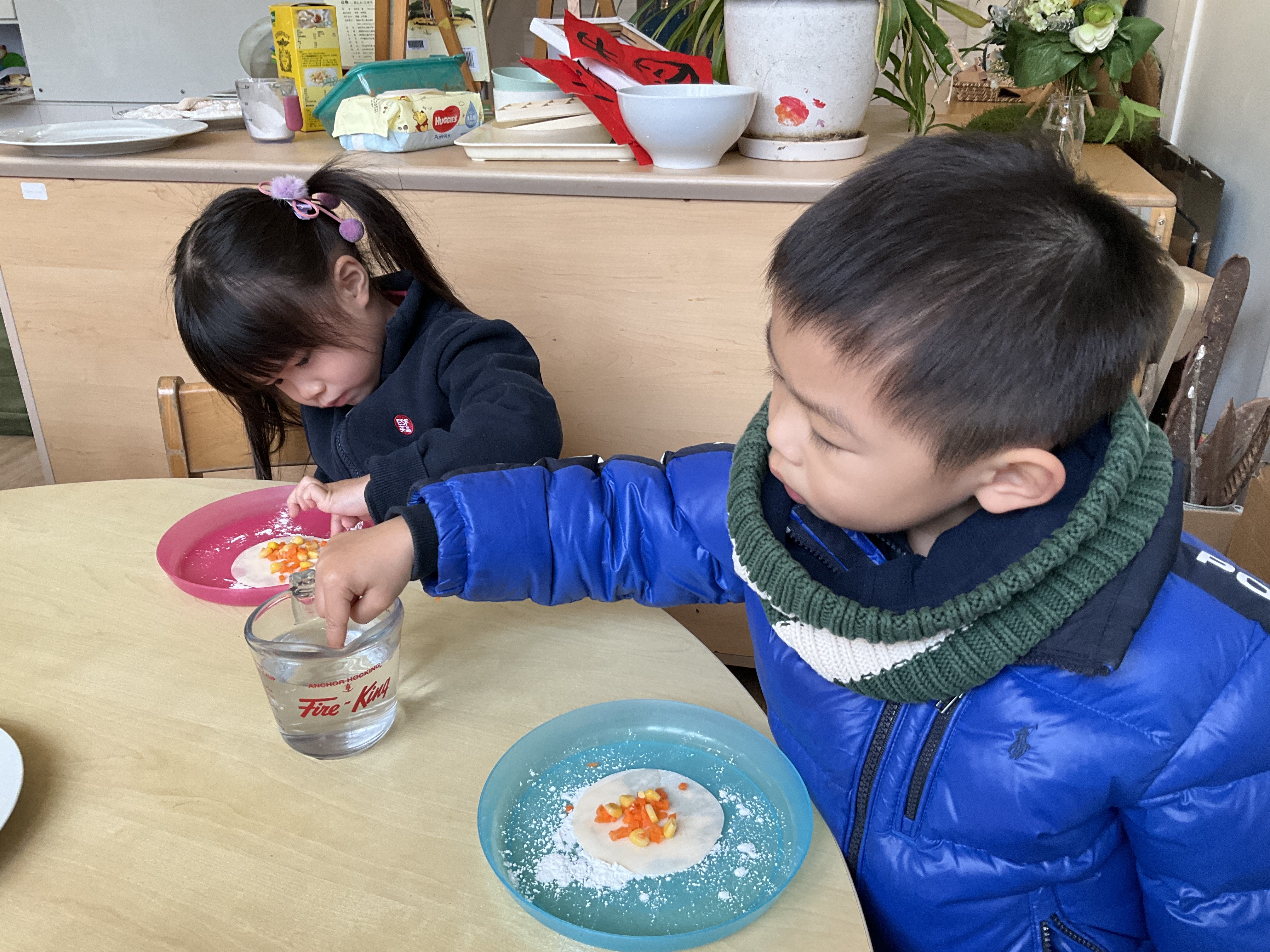
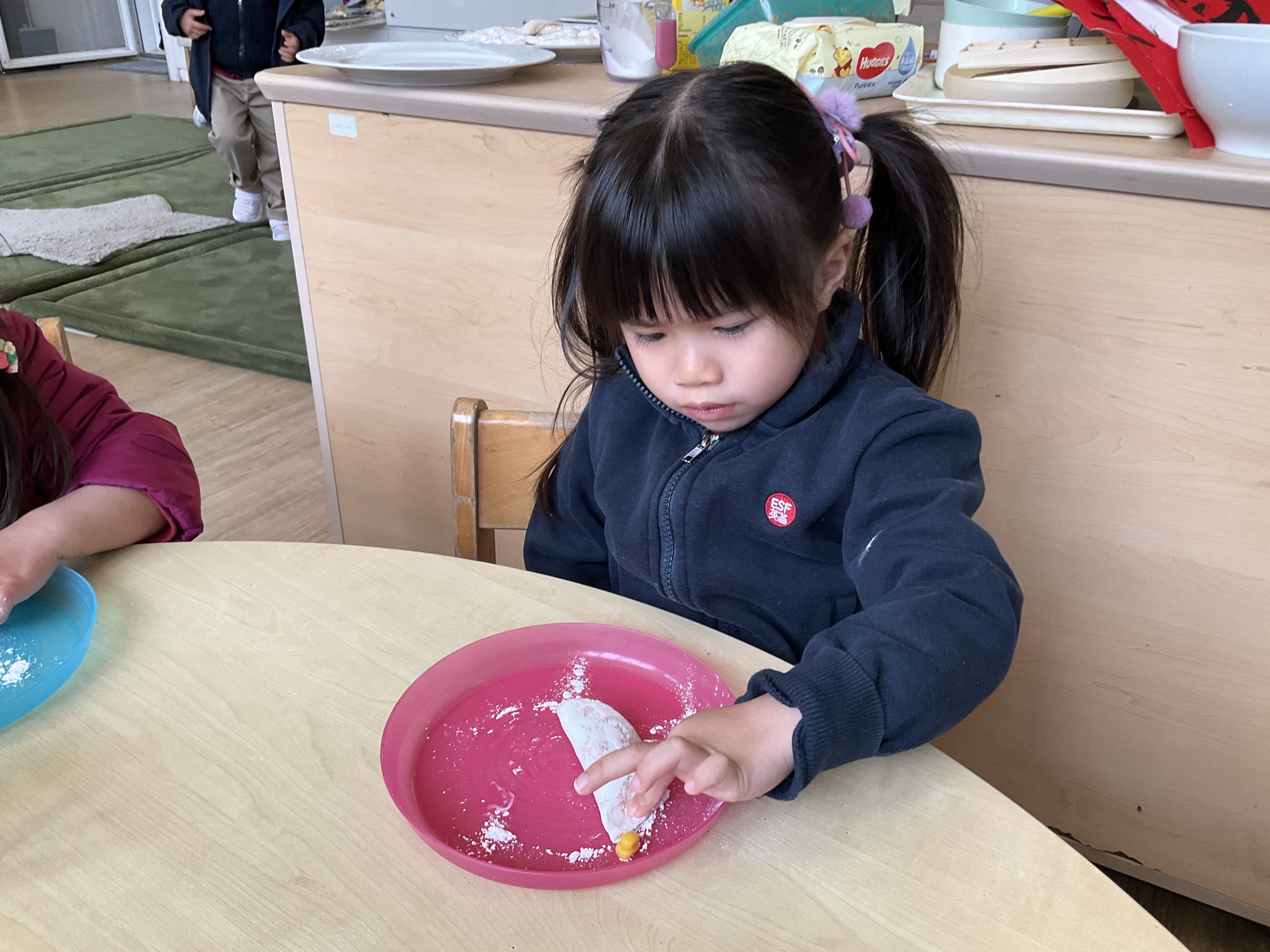
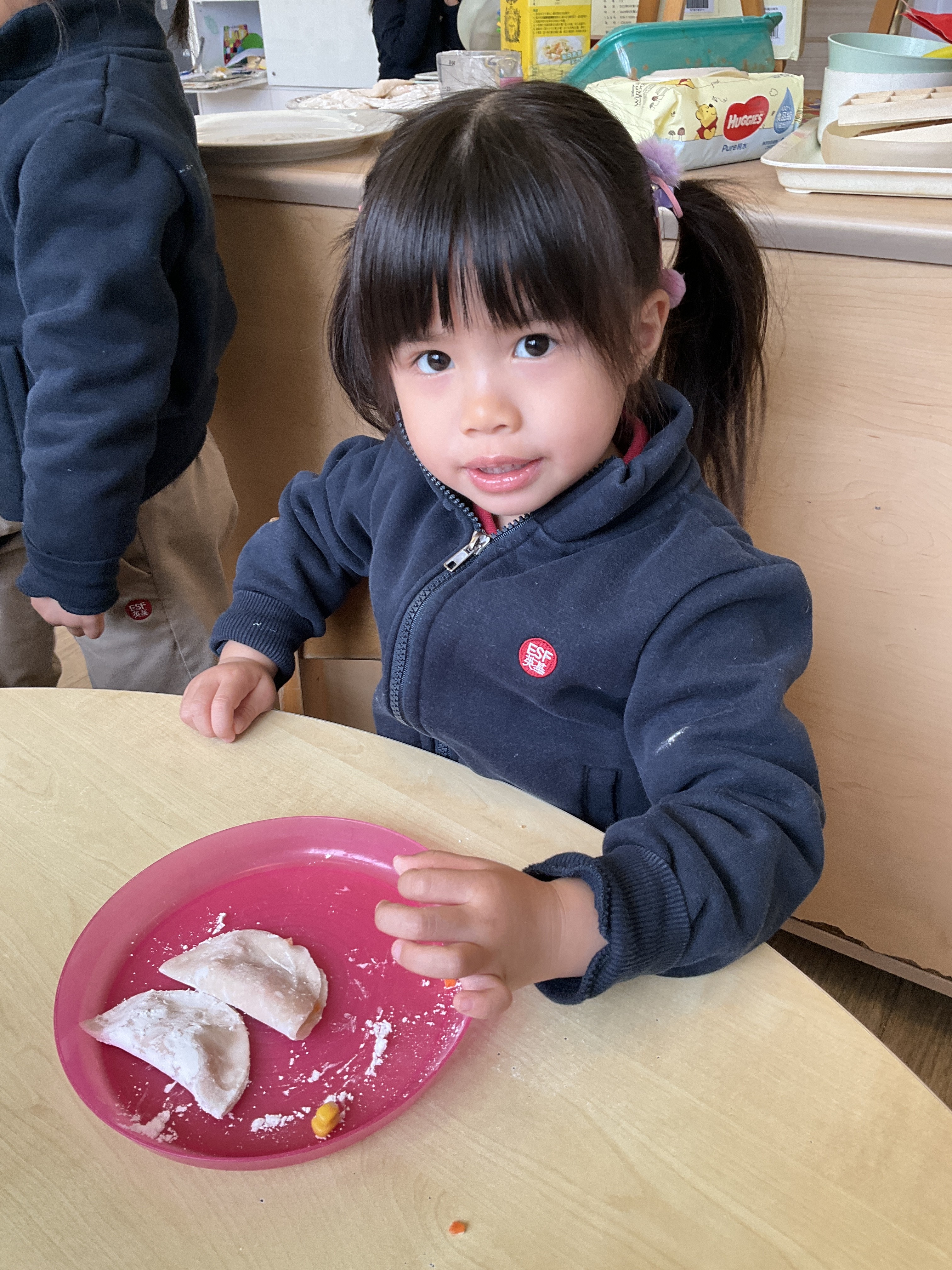
To welcome the Year of the Horse 马年, Hailey participated in a hands-on dumpling-making (包餃子 bāo jiǎo zi) activity. In Chinese culture, dumplings are shaped like ancient silver and gold ingots. Because of this, eating dumplings symbolises wealth and prosperity (招財進寶 zhāo cái jìn bǎo) for the coming year.
We prepared a healthy and delicious filling using fresh corn (玉米 yù mǐ) and carrots (胡蘿蔔 hú luó bo). Hailey was very focused as she placed the filling onto the dumpling wraps (餃子皮 jiǎo zi pí).
To assemble them, Hailey carefully folded (摺疊 zhé dié) the wraps in half and used a small amount of water (水 shuǐ) on her fingertips to stick (黏貼 nián tiē) the edges together.
Once the dumplings were ready, we boiled (水煮 shuǐ zhǔ) them in the school kitchen. The highlight of the day was sitting together to enjoy our handmade treats. It was wonderful to see Hailey take such pride in her work and appreciate the cultural significance of this festive dish.
I really enjoyed making dumplings with you Hailey. Thank you for your open-mindedness and efforts in the activity!
We prepared a healthy and delicious filling using fresh corn (玉米 yù mǐ) and carrots (胡蘿蔔 hú luó bo). Hailey was very focused as she placed the filling onto the dumpling wraps (餃子皮 jiǎo zi pí).
To assemble them, Hailey carefully folded (摺疊 zhé dié) the wraps in half and used a small amount of water (水 shuǐ) on her fingertips to stick (黏貼 nián tiē) the edges together.
Once the dumplings were ready, we boiled (水煮 shuǐ zhǔ) them in the school kitchen. The highlight of the day was sitting together to enjoy our handmade treats. It was wonderful to see Hailey take such pride in her work and appreciate the cultural significance of this festive dish.
I really enjoyed making dumplings with you Hailey. Thank you for your open-mindedness and efforts in the activity!
Posted by:
Ms Irene Ma, 12/02/2026 16:39:43
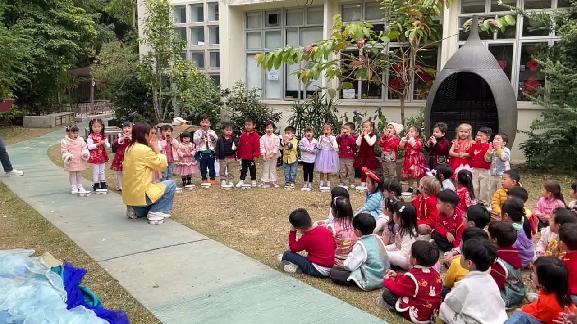
The little firebugs have been practising the song '新年 Yeah!' (Xīn nián Yeah!) and have learned various Chinese New Year vocabulary through its lyrics, including firecrackers (爆竹 - bào zhú), cymbals (锣 - luó), drums (鼓 - gǔ), and congratulations (恭喜 - gōng xǐ). They showed great spirit as risk-takers (冒险者 - mào xiǎn zhě), using tambourines (铃鼓 - líng gǔ) to play along with the rhythm (节奏 - jié zòu) while singing. Well done! Ma Lao Shi is so proud of you.
Lyrics of '新年 Yeah!' :
乒砰砰砰 爆竹乓乓乓
pīng pēng pèng pèng, bào zhú pāng pāng pāng
(Ping pang pang pang, firecrackers bang bang bang)
锣鼓咚咚咚 带来新希望
luó gǔ dōng dōng dōng, dài lái xīn xī wàng
(Cymbals and drums dong dong dong, bringing new hope)
乒砰砰砰 爆竹乓乓乓
pīng pēng pèng pèng, bào zhú pāng pāng pāng
(Ping pang pang pang, firecrackers bang bang bang)
锣鼓咚咚咚 今年好运到
luó gǔ dōng dōng dōng, jīn nián hǎo yùn dào
(Cymbals and drums dong dong dong, good luck arrives this year)
恭喜 恭喜 恭喜 恭喜
gōng xǐ, gōng xǐ, gōng xǐ, gōng xǐ
(Congratulations/Best wishes)
恭喜 恭喜 Yeah~
gōng xǐ, gōng xǐ, Yeah~
(Congratulations, congratulations, Yeah~)
岁岁平安 哈哈哈
suì suì píng ān, hā hā hā
(May you have peace year after year, ha ha ha)
年年有余 哈哈哈
nián nián yǒu yú, hā hā hā
(May you have abundance every year, ha ha ha)
健健康康 哈哈哈
jiàn jiàn kāng kāng, hā hā hā
(Wishing you good health, ha ha ha)
青春美丽 哈哈哈
qīng chūn měi lì, hā hā hā
(Wishing you youth and beauty, ha ha ha)
Everybody says Gong Xi
(大家都在说:恭喜)
(Everyone is saying: Congratulations)
Come on, let's go celebrate
(来吧,让我们一起庆祝)
(Come on, let's go celebrate)
Lyrics of '新年 Yeah!' :
乒砰砰砰 爆竹乓乓乓
pīng pēng pèng pèng, bào zhú pāng pāng pāng
(Ping pang pang pang, firecrackers bang bang bang)
锣鼓咚咚咚 带来新希望
luó gǔ dōng dōng dōng, dài lái xīn xī wàng
(Cymbals and drums dong dong dong, bringing new hope)
乒砰砰砰 爆竹乓乓乓
pīng pēng pèng pèng, bào zhú pāng pāng pāng
(Ping pang pang pang, firecrackers bang bang bang)
锣鼓咚咚咚 今年好运到
luó gǔ dōng dōng dōng, jīn nián hǎo yùn dào
(Cymbals and drums dong dong dong, good luck arrives this year)
恭喜 恭喜 恭喜 恭喜
gōng xǐ, gōng xǐ, gōng xǐ, gōng xǐ
(Congratulations/Best wishes)
恭喜 恭喜 Yeah~
gōng xǐ, gōng xǐ, Yeah~
(Congratulations, congratulations, Yeah~)
岁岁平安 哈哈哈
suì suì píng ān, hā hā hā
(May you have peace year after year, ha ha ha)
年年有余 哈哈哈
nián nián yǒu yú, hā hā hā
(May you have abundance every year, ha ha ha)
健健康康 哈哈哈
jiàn jiàn kāng kāng, hā hā hā
(Wishing you good health, ha ha ha)
青春美丽 哈哈哈
qīng chūn měi lì, hā hā hā
(Wishing you youth and beauty, ha ha ha)
Everybody says Gong Xi
(大家都在说:恭喜)
(Everyone is saying: Congratulations)
Come on, let's go celebrate
(来吧,让我们一起庆祝)
(Come on, let's go celebrate)
Posted by:
Nicole Pattison, 06/02/2026 14:35:58
6th Feb Learning Journey
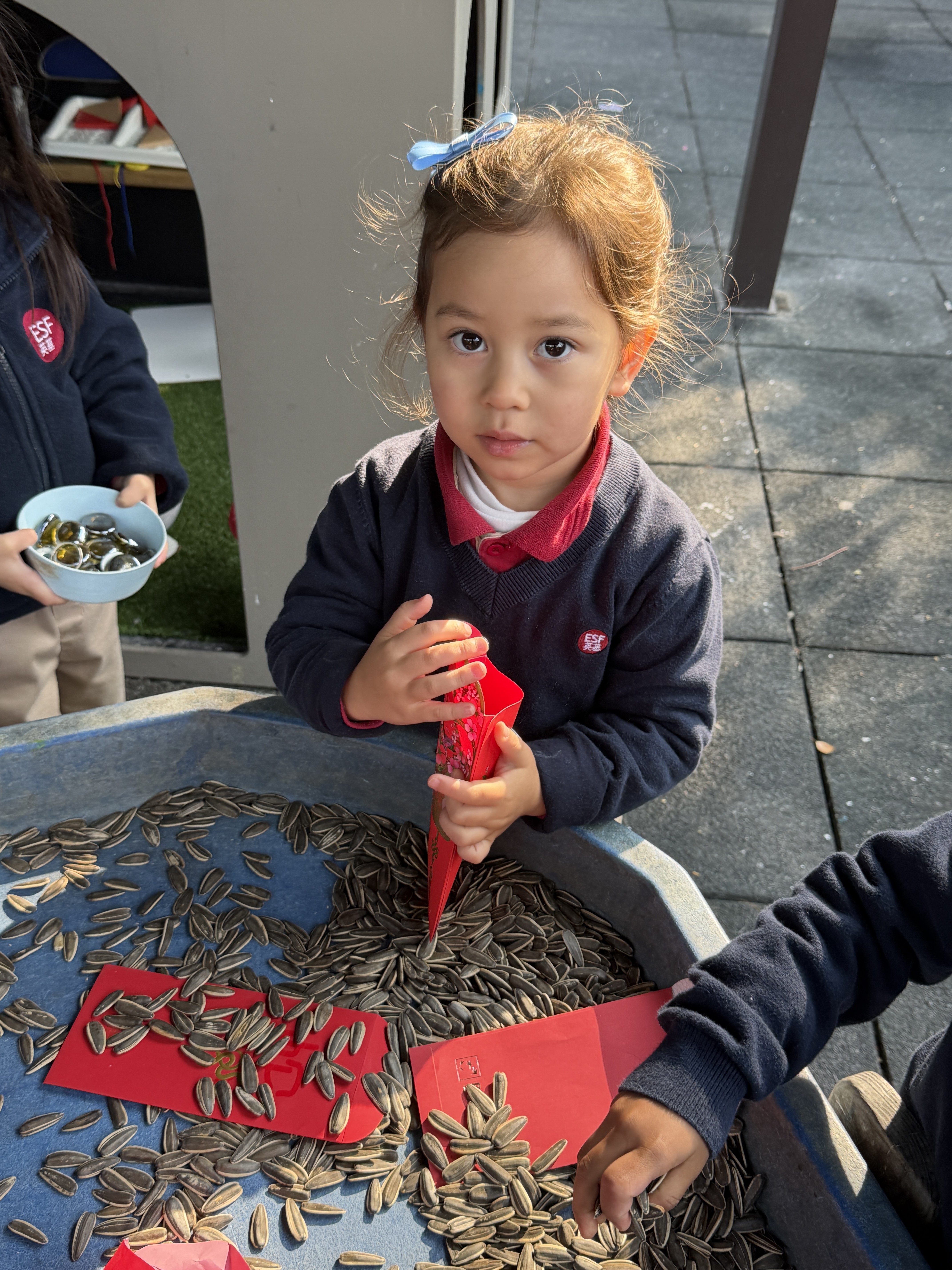
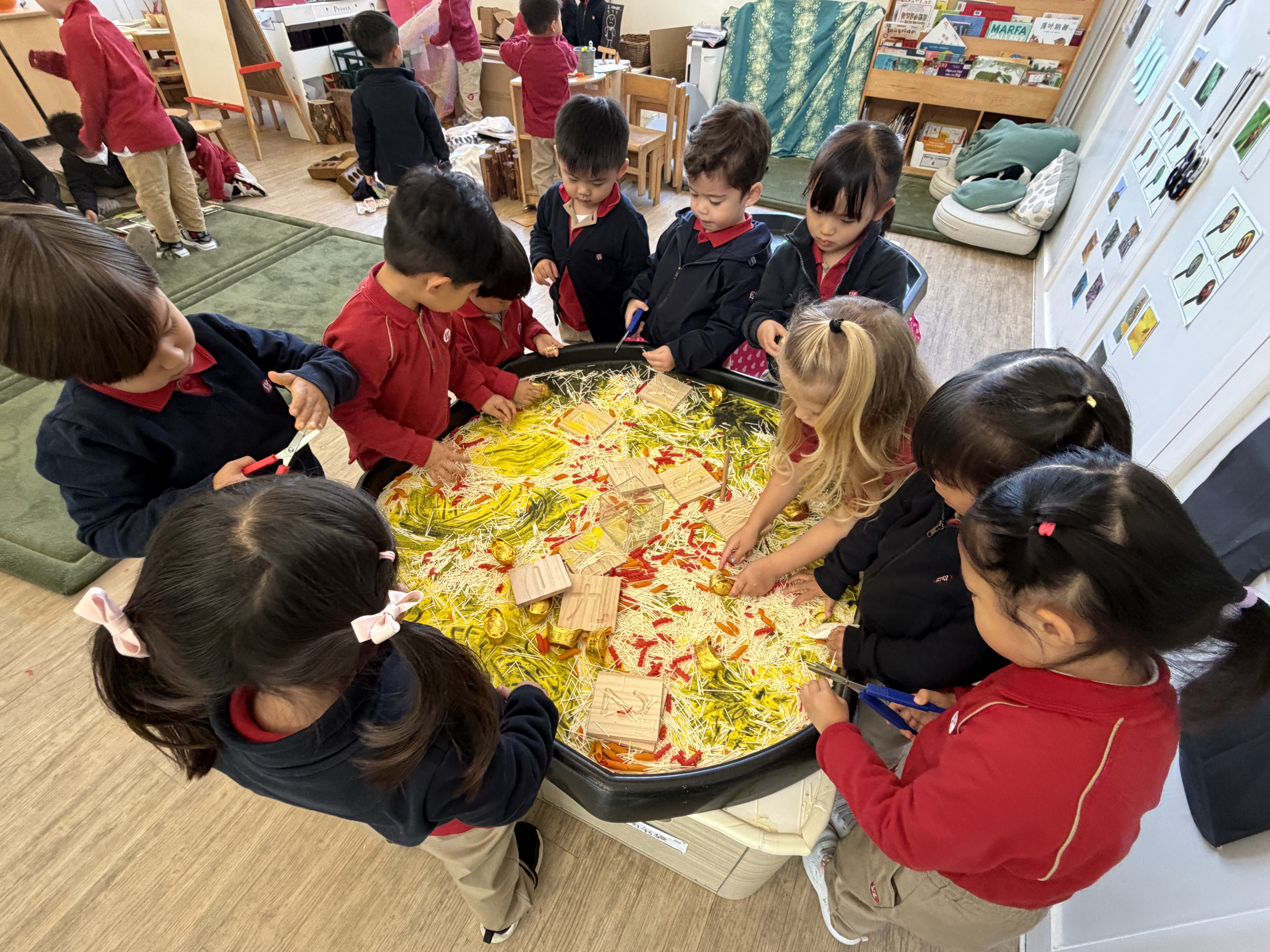
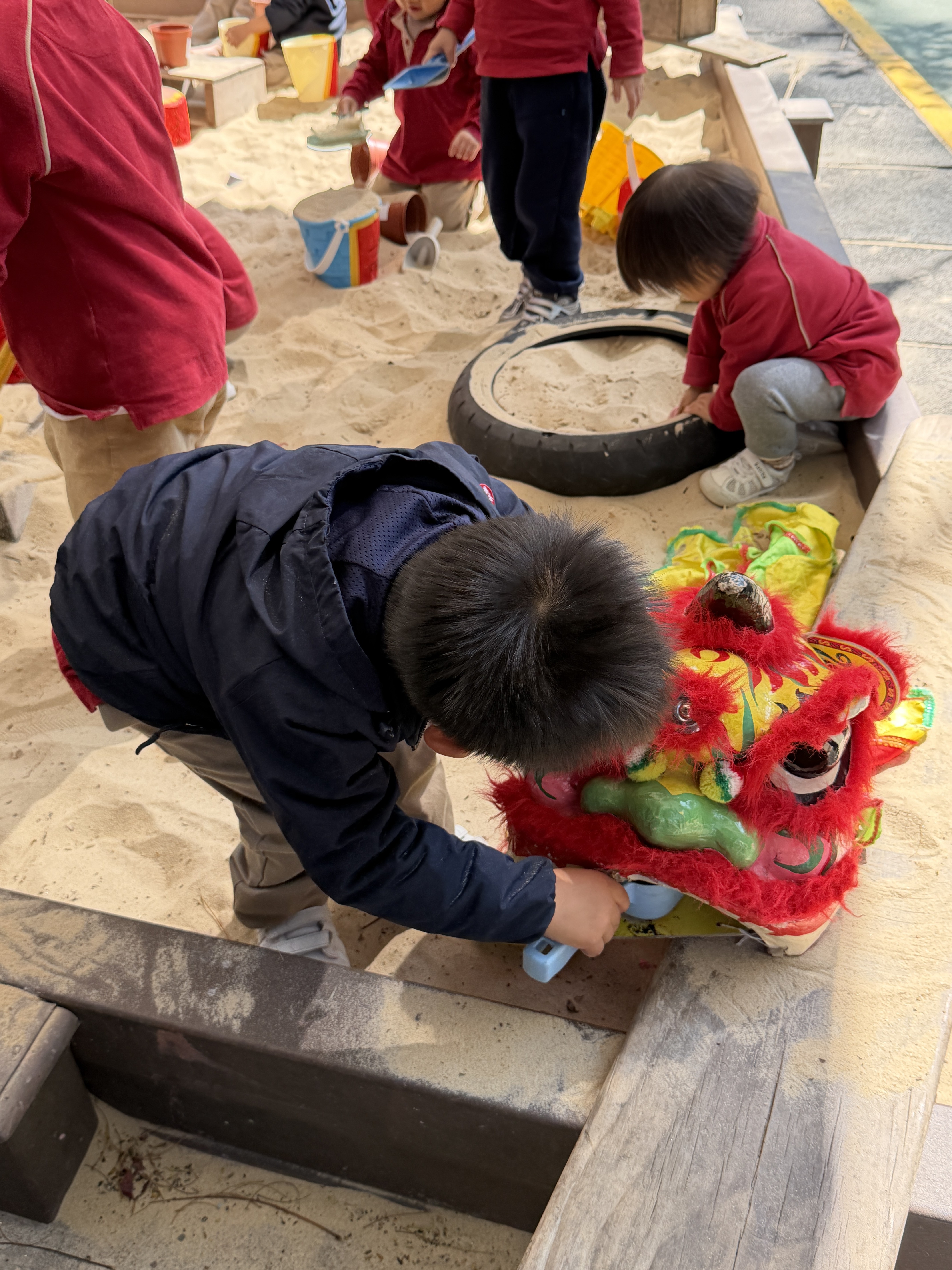
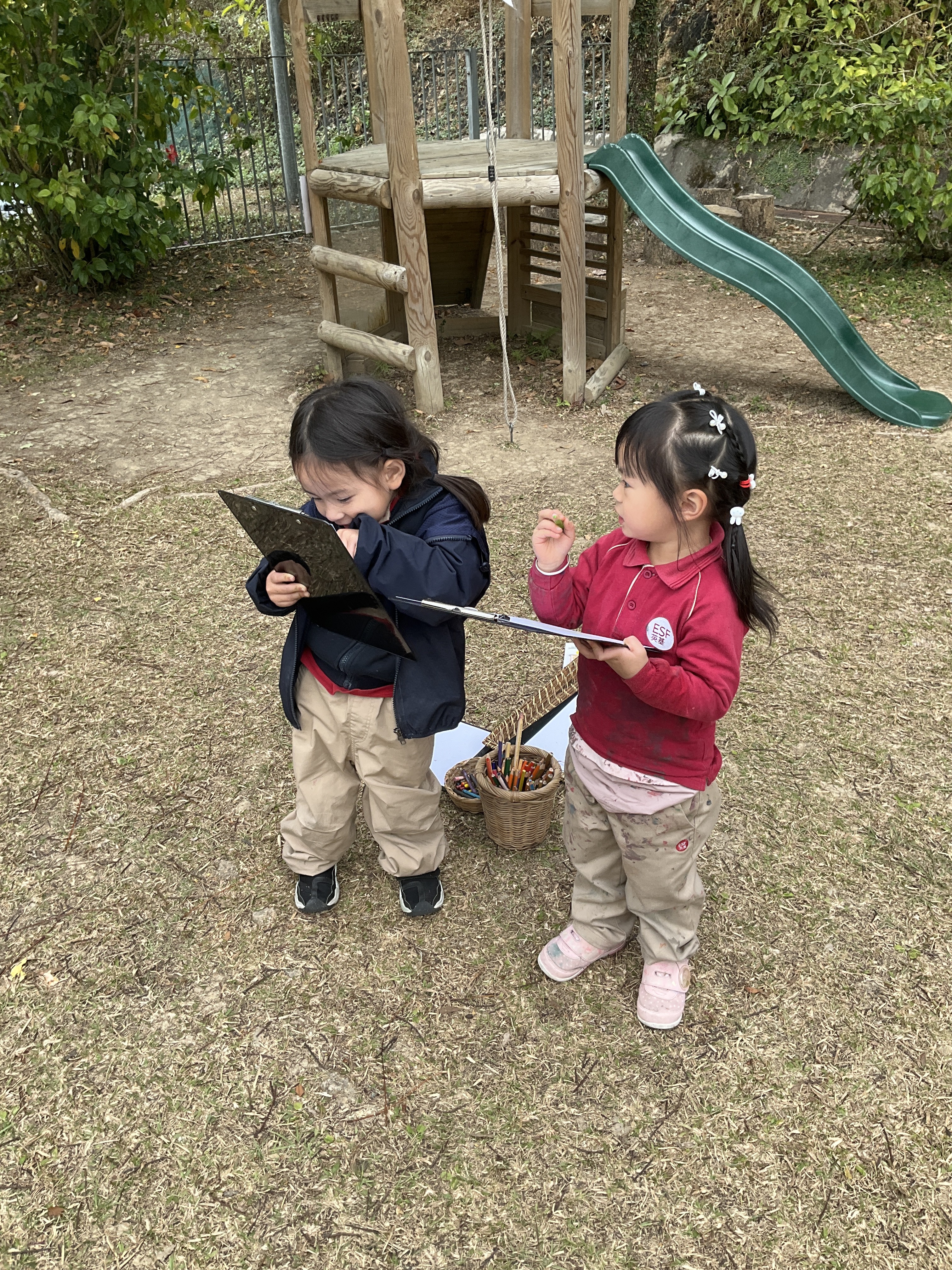
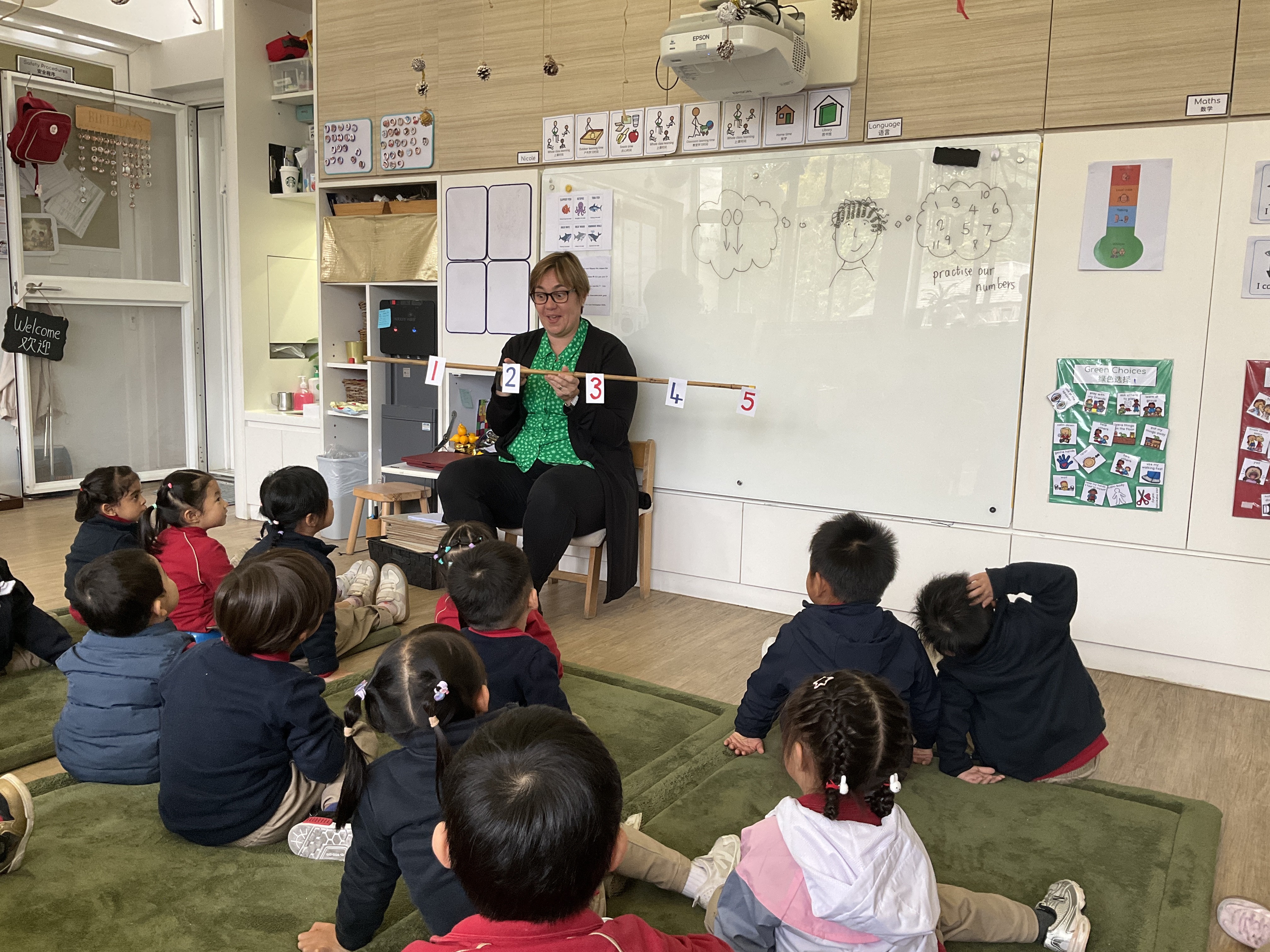
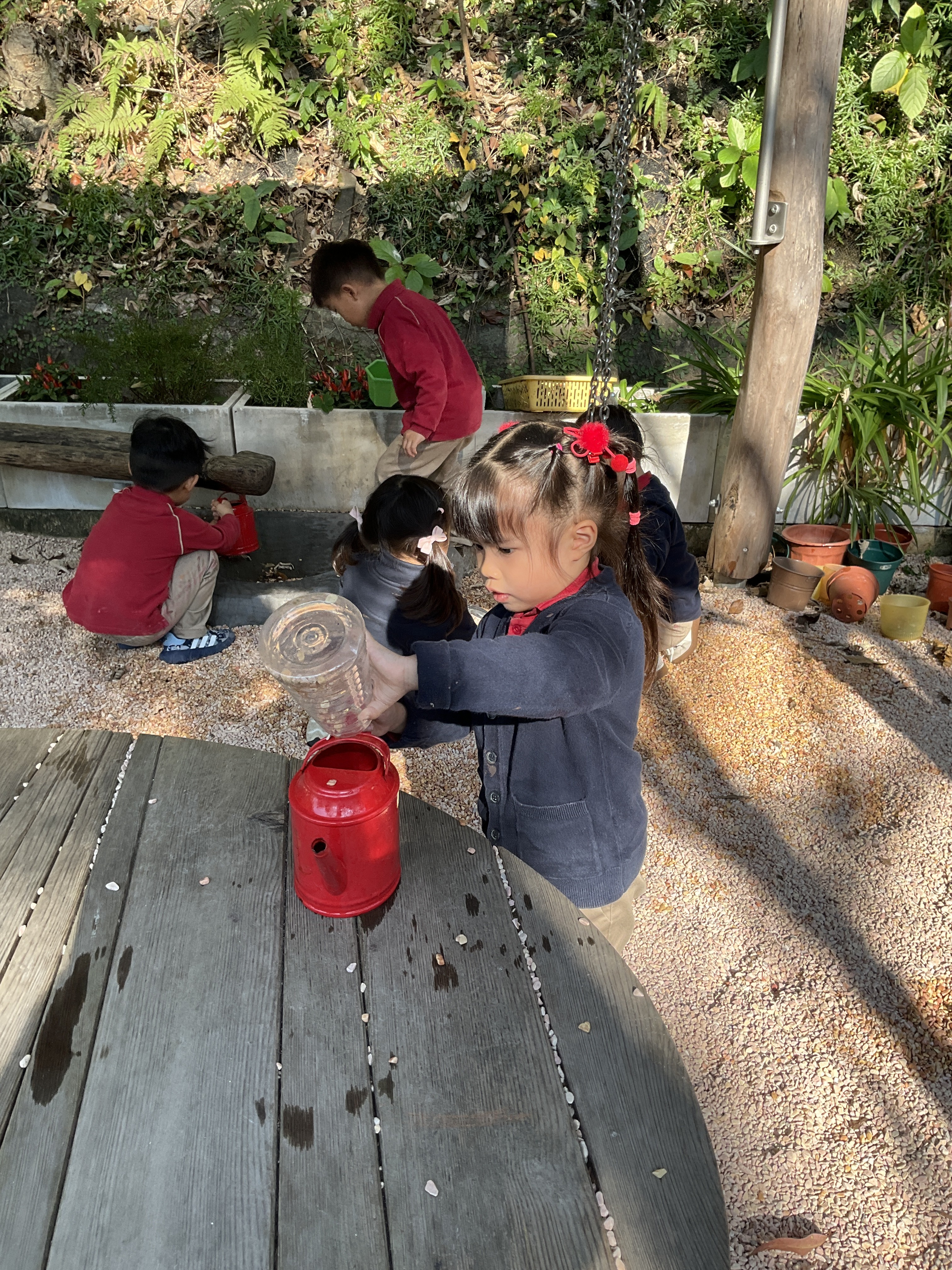
In our UOI, Sharing the Planet, the children began last week by exploring the natural world through Forest School sessions. Through a nature walk in the front garden, they collected leaves, sticks, and flowers to create clay faces and experimented with leaf pounding to make colourful prints. This led to a discovery about why fresh leaves contain more moisture and pigment than dry ones.
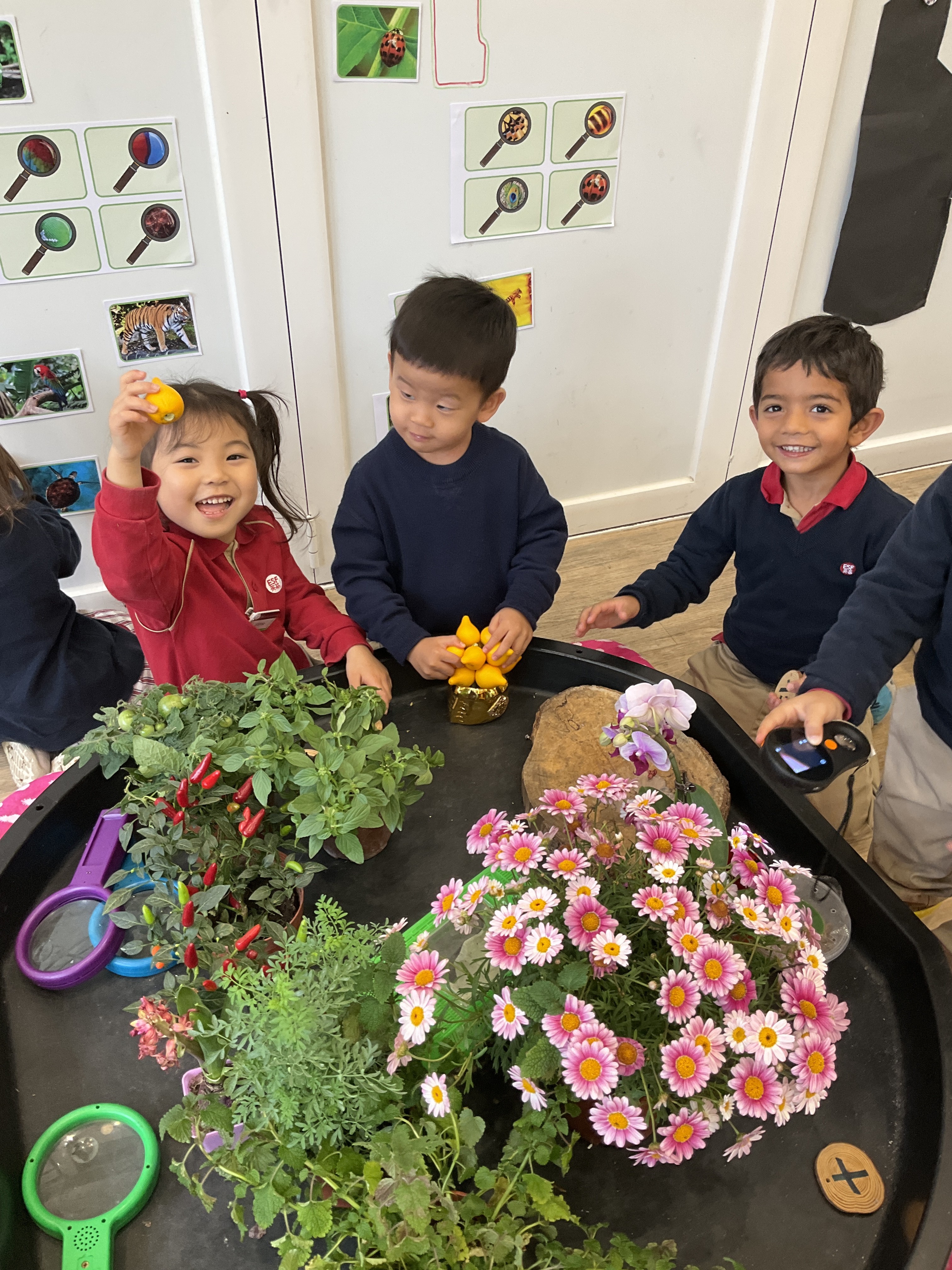
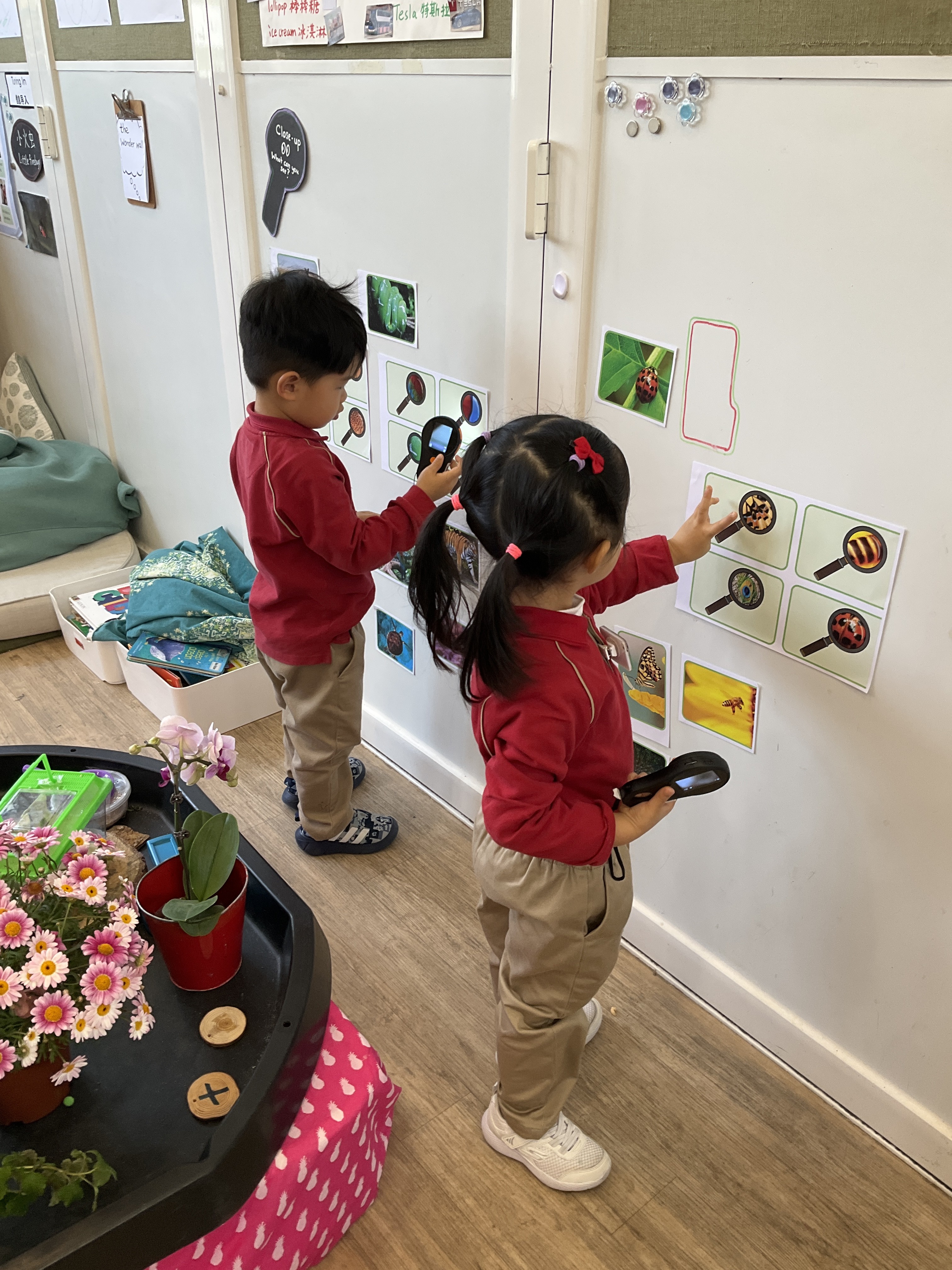
To build inquiry skills, we introduced a "Wonder Box" where the children used their sense of touch to "research" hidden objects like seashells, pinecones and interesting kitchen items with different textures. They drew their predictions on our Wonder Wall before we revealed what was inside. The children are continuing to draw their wonders and post it on the wall for us to research later.
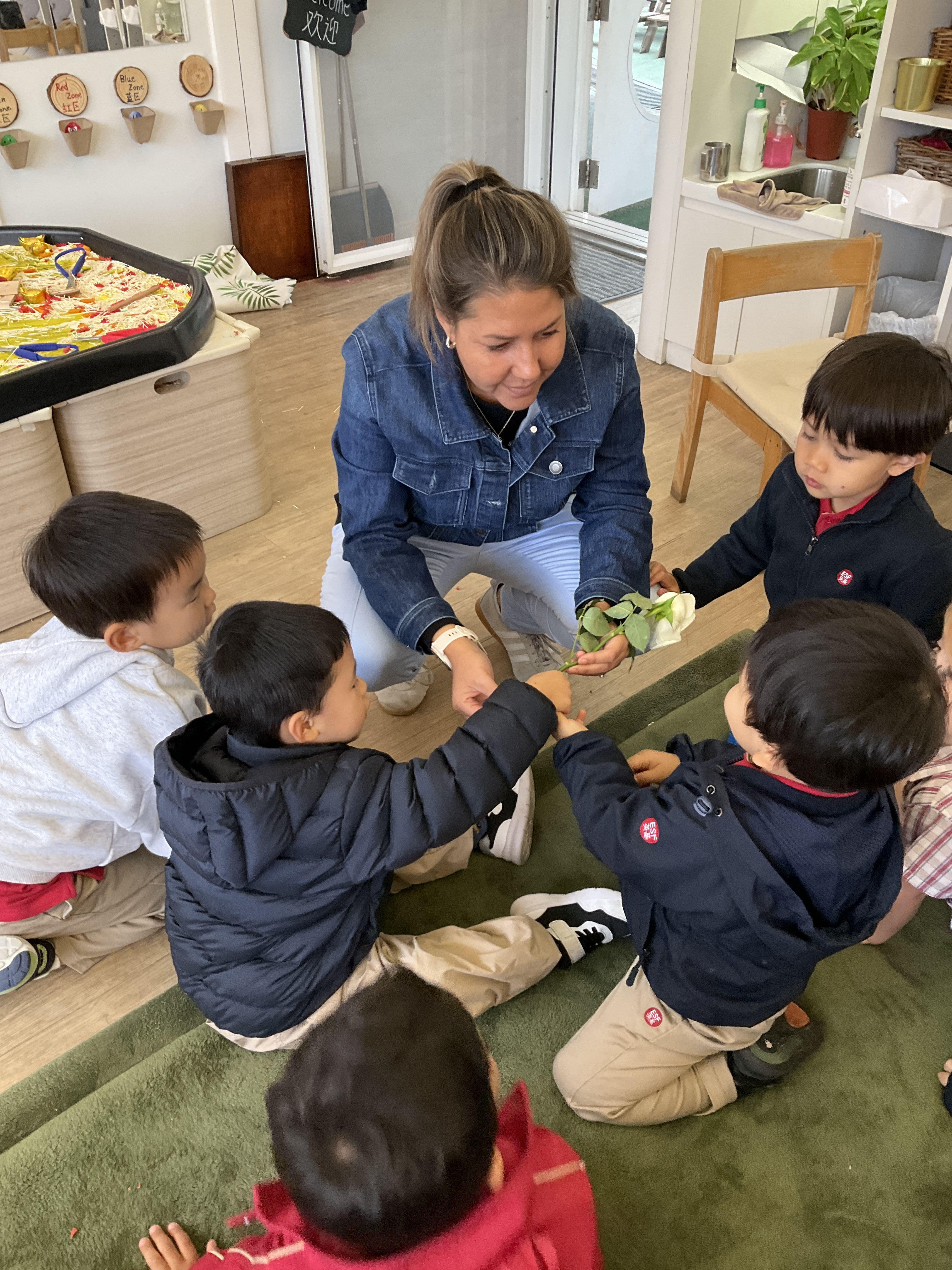
Our exploration of living things continued with a flower observation and experiment which prompted us to find out "How do plants drink water if they don’t have mouths?" To find out, we conducted an experiment with white flowers and different coloured water. The children observed the petals changing colour overnight (red, blue and yellow), providing a clear visual of how plants absorb water through their stems.
It’s also been a busy few weeks in maths. Inspired by the book Big, Bigger, Biggest, our little learners have been sorting plants and animals while practicing size comparisons. From counting underwater creatures to singing along to 'Slippery Fish,' the children are having fun building their counting and number recognition skills through play.
To support self-regulation, we have been using RAMSR (Rhythm and Movement for Self-Regulation) activities. This includes our "Hello" song, where children practice knee taps and "fairy claps" (tapping two fingers together) while greeting their peers to help them feel calm and focused.
For RSE, we are learning about personal boundaries and body autonomy through the story My Body Belongs to Me and a "Personal Space" song. This helps the children understand and respect the physical "bubble" around themselves and others.
Chinese
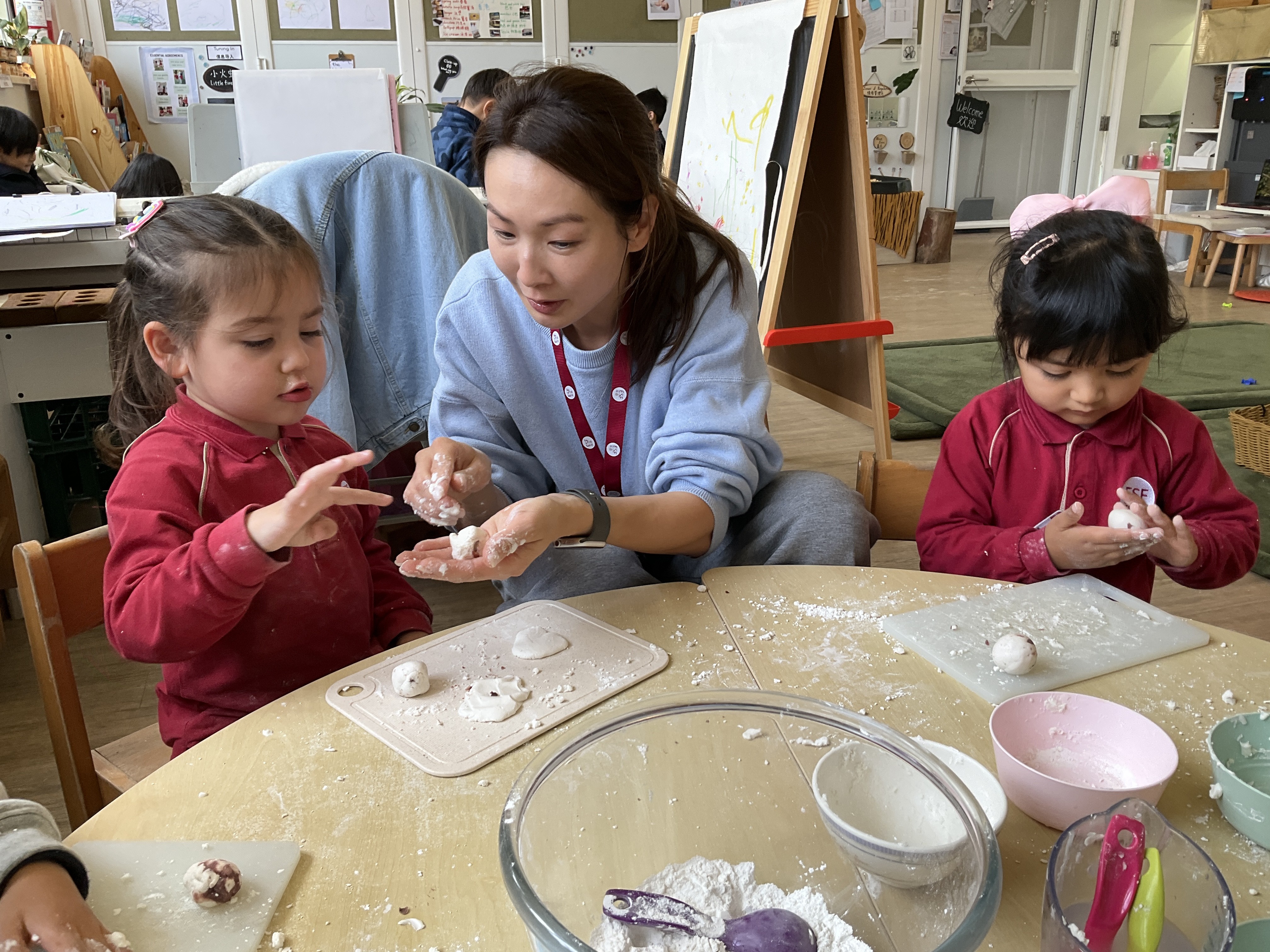
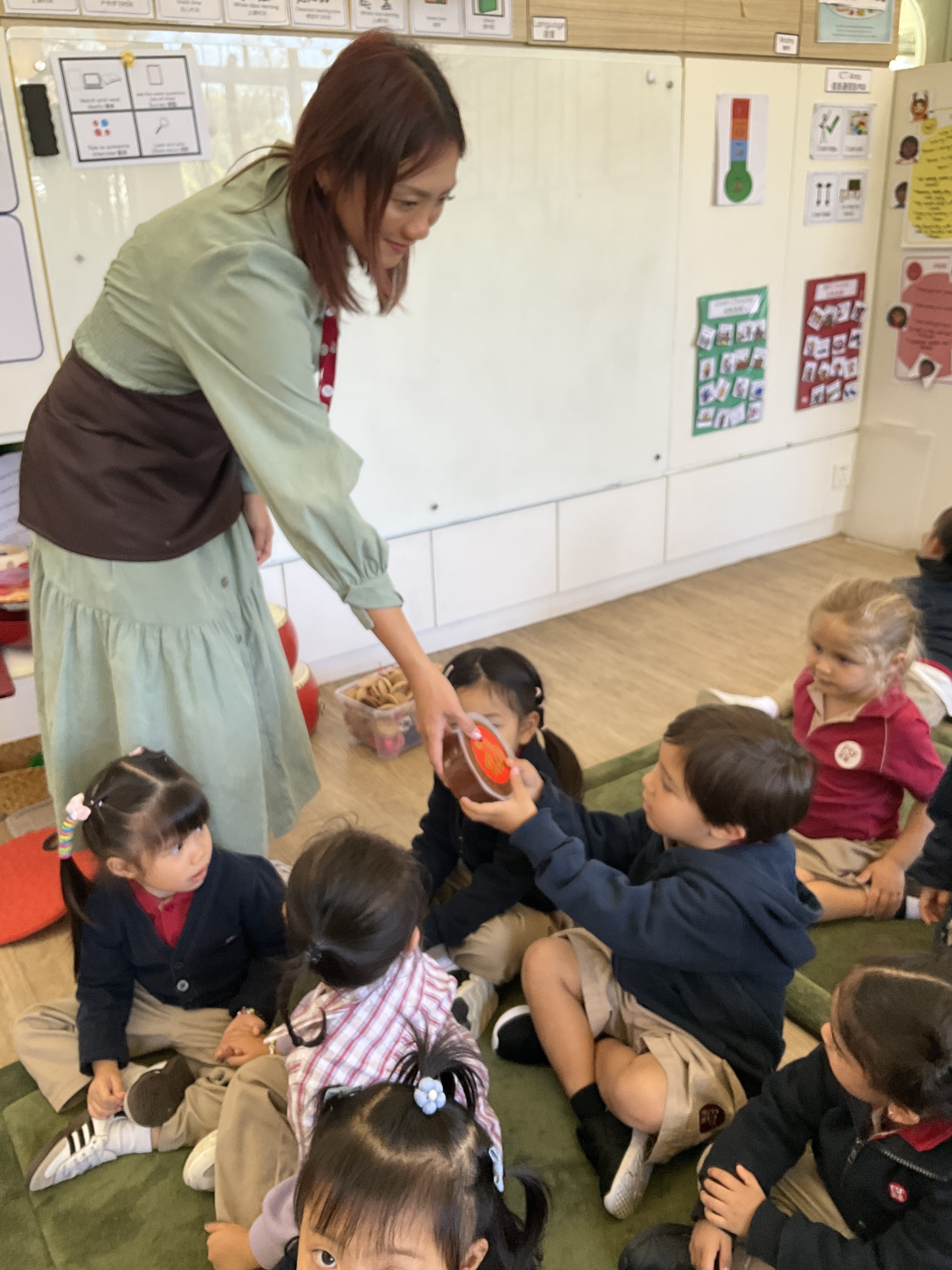
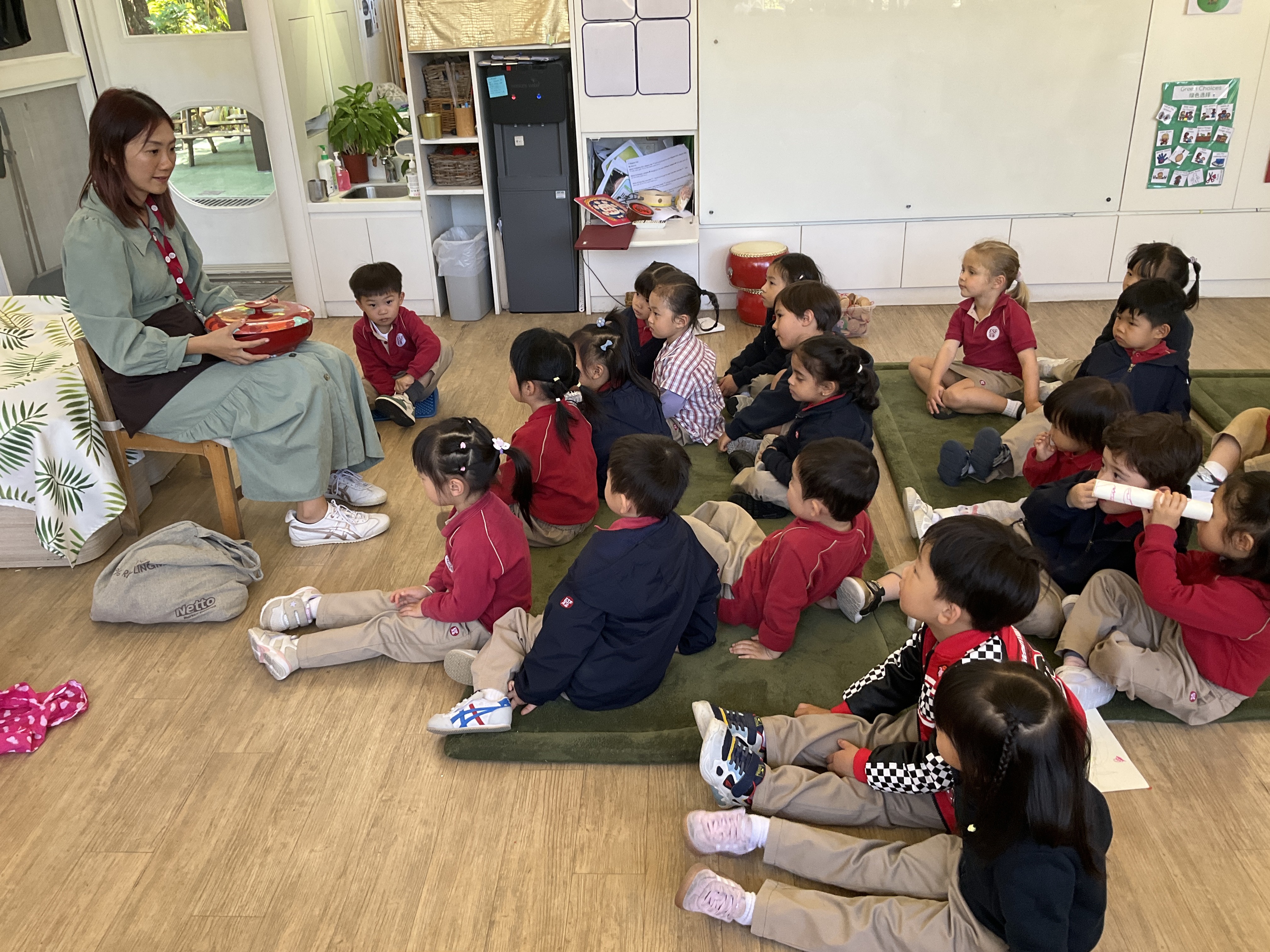
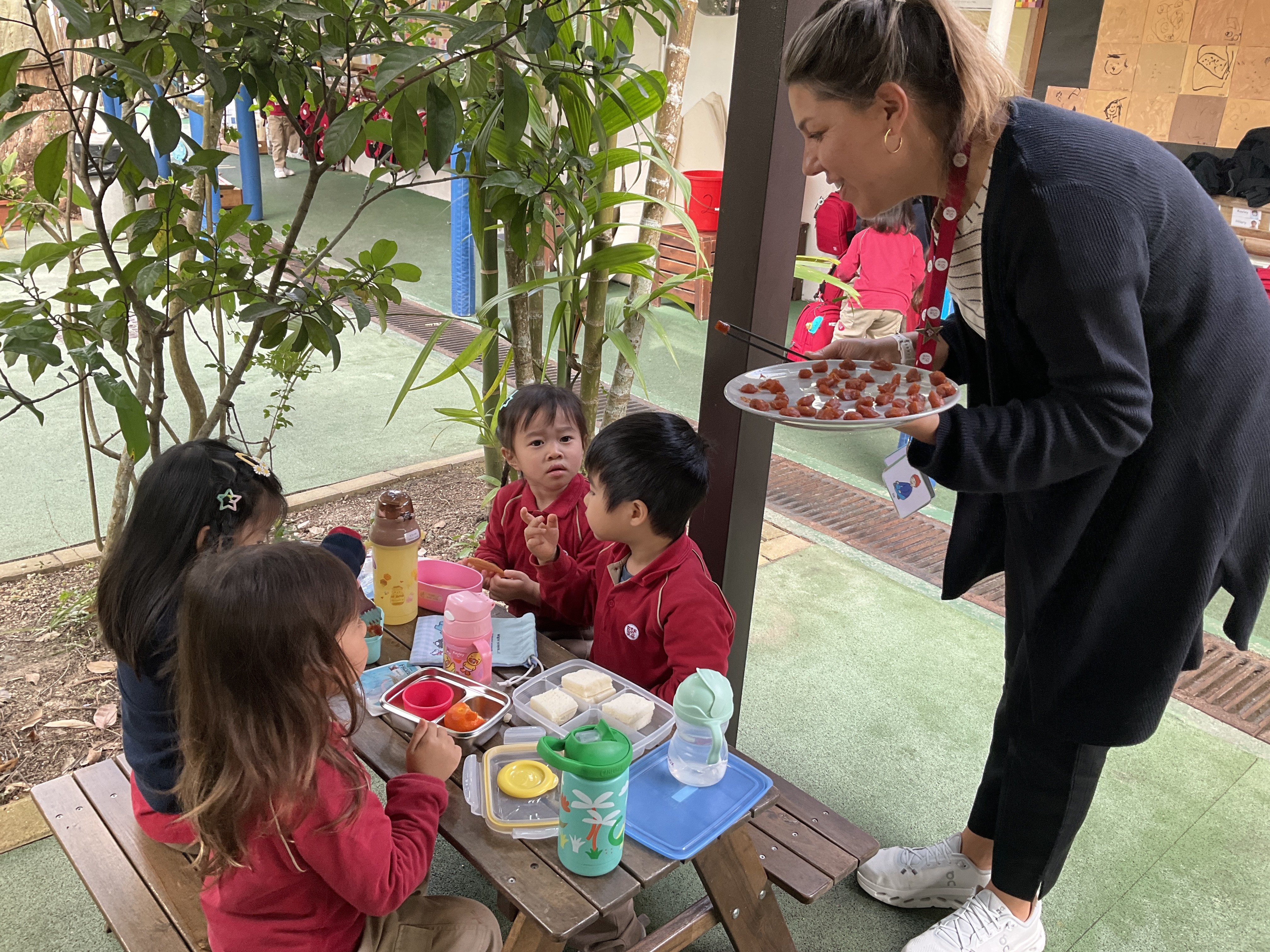
Over the past two weeks, we have been inquiring into the traditions of Lunar New Year in Hong Kong. What do you see during Lunar New Year in Hong Kong? What do people do to celebrate? What are the signature colours? What do people eat? The children were particularly interested in the food, so we used videos and storybooks to learn about traditional dishes. The children had a wonderful time making Tangyuan 汤圆 (tāng yuán) with red bean and sweet potato paste, and we also tasted New Year Cake 年糕 (nián gāo) and dried candied fruits. To support their learning, we co-created a celebration corner in the classroom filled with traditional clothes, candy boxes, gold coins, and lion dance materials. This space allows the children to share their own experiences and use their imagination through play.
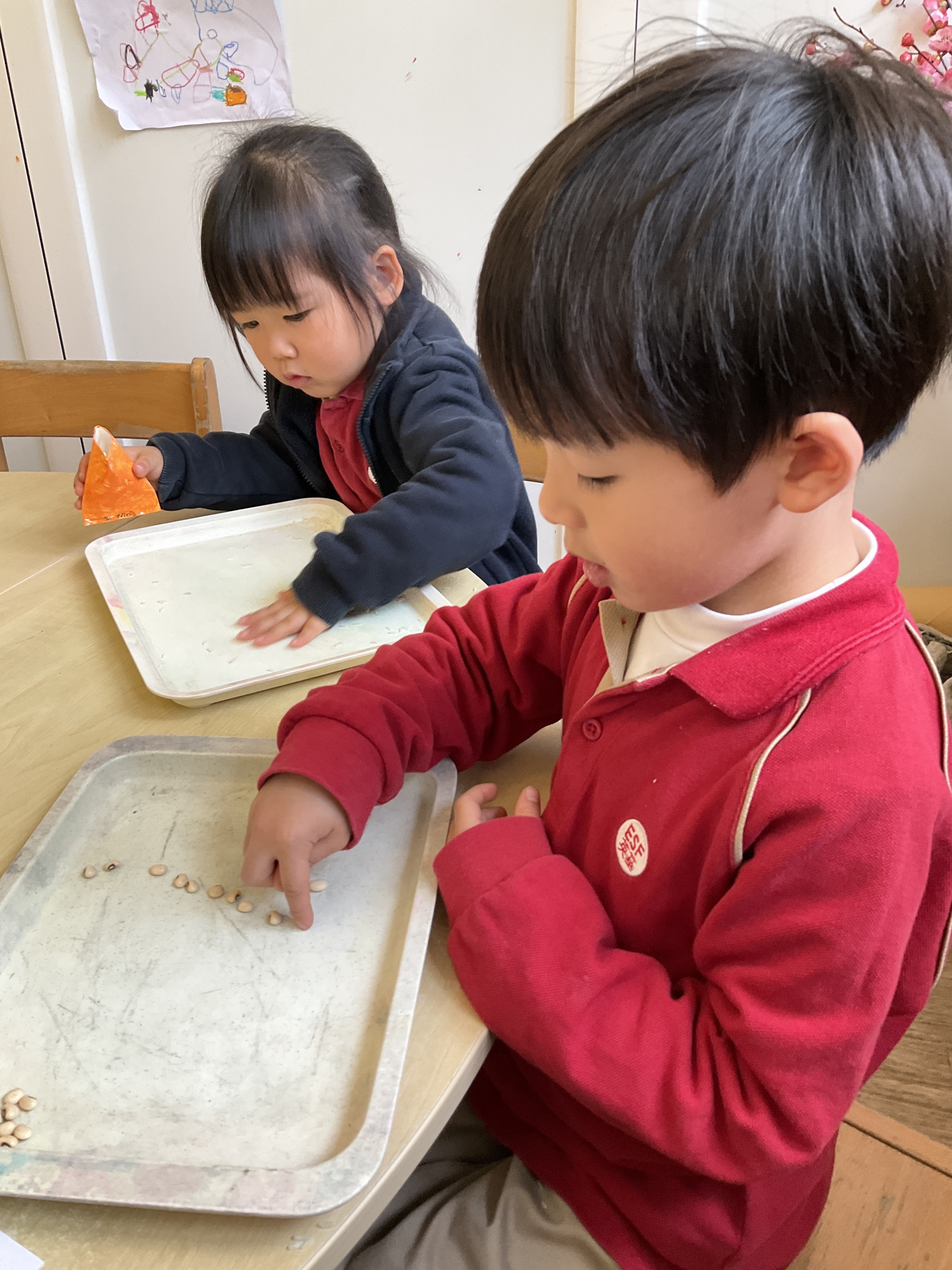
In our math activities, the children practiced counting from 1 to 10 in Chinese by making "Lucky Shakers" 幸运沙沙. They used 1-to-1 correspondence to count beans and rice before placing them into small pouches made from tissue rolls.
We have also been focusing on the natural world by taking responsibility for the plants and animals in our classroom. The children have been using various tools to observe and water the plants, as well as feed the worms and crickets. To find answers to their many questions, the children are developing four key inquiry skills: using media to watch and read, conducting surveys, interviewing others, and learning through close observation and play.
Chinese vocabulary
Sunflower seeds 瓜子 (guā zi)
Candy 糖果 (táng guǒ)
Rice cake 年糕 (nián gāo)
Glutinous rice balls 汤圆 (tāng yuán)
Gold color 金色 (jīn sè)
Silver color 银色 (yín sè)
Red color 红色 (hóng sè)
Lunar New Year 农历新年 (nóng lì xīn nián)
Dragon and lion dance 舞龙舞狮 (wǔ lóng wǔ shī)
Happy New Year 新年快乐 (xīn nián kuài lè)
Leaf 树叶 (shù yè)
Flower 花 (huā)
Tomato 西红柿 (xī hóng shì)
Branch 树枝 (shù zhī)
Bug 虫子 (chóng zi)
Cricket 蟋蟀 (xī shuài)
In our UOI, Sharing the Planet, the children began last week by exploring the natural world through Forest School sessions. Through a nature walk in the front garden, they collected leaves, sticks, and flowers to create clay faces and experimented with leaf pounding to make colourful prints. This led to a discovery about why fresh leaves contain more moisture and pigment than dry ones.
To build inquiry skills, we introduced a "Wonder Box" where the children used their sense of touch to "research" hidden objects like seashells, pinecones and interesting kitchen items with different textures. They drew their predictions on our Wonder Wall before we revealed what was inside. The children are continuing to draw their wonders and post it on the wall for us to research later.
Our exploration of living things continued with a flower observation and experiment which prompted us to find out "How do plants drink water if they don’t have mouths?" To find out, we conducted an experiment with white flowers and different coloured water. The children observed the petals changing colour overnight (red, blue and yellow), providing a clear visual of how plants absorb water through their stems.
It’s also been a busy few weeks in maths. Inspired by the book Big, Bigger, Biggest, our little learners have been sorting plants and animals while practicing size comparisons. From counting underwater creatures to singing along to 'Slippery Fish,' the children are having fun building their counting and number recognition skills through play.
To support self-regulation, we have been using RAMSR (Rhythm and Movement for Self-Regulation) activities. This includes our "Hello" song, where children practice knee taps and "fairy claps" (tapping two fingers together) while greeting their peers to help them feel calm and focused.
For RSE, we are learning about personal boundaries and body autonomy through the story My Body Belongs to Me and a "Personal Space" song. This helps the children understand and respect the physical "bubble" around themselves and others.
Chinese
Over the past two weeks, we have been inquiring into the traditions of Lunar New Year in Hong Kong. What do you see during Lunar New Year in Hong Kong? What do people do to celebrate? What are the signature colours? What do people eat? The children were particularly interested in the food, so we used videos and storybooks to learn about traditional dishes. The children had a wonderful time making Tangyuan 汤圆 (tāng yuán) with red bean and sweet potato paste, and we also tasted New Year Cake 年糕 (nián gāo) and dried candied fruits. To support their learning, we co-created a celebration corner in the classroom filled with traditional clothes, candy boxes, gold coins, and lion dance materials. This space allows the children to share their own experiences and use their imagination through play.
In our math activities, the children practiced counting from 1 to 10 in Chinese by making "Lucky Shakers" 幸运沙沙. They used 1-to-1 correspondence to count beans and rice before placing them into small pouches made from tissue rolls.
We have also been focusing on the natural world by taking responsibility for the plants and animals in our classroom. The children have been using various tools to observe and water the plants, as well as feed the worms and crickets. To find answers to their many questions, the children are developing four key inquiry skills: using media to watch and read, conducting surveys, interviewing others, and learning through close observation and play.
Chinese vocabulary
Sunflower seeds 瓜子 (guā zi)
Candy 糖果 (táng guǒ)
Rice cake 年糕 (nián gāo)
Glutinous rice balls 汤圆 (tāng yuán)
Gold color 金色 (jīn sè)
Silver color 银色 (yín sè)
Red color 红色 (hóng sè)
Lunar New Year 农历新年 (nóng lì xīn nián)
Dragon and lion dance 舞龙舞狮 (wǔ lóng wǔ shī)
Happy New Year 新年快乐 (xīn nián kuài lè)
Leaf 树叶 (shù yè)
Flower 花 (huā)
Tomato 西红柿 (xī hóng shì)
Branch 树枝 (shù zhī)
Bug 虫子 (chóng zi)
Cricket 蟋蟀 (xī shuài)
Posted by:
Ms Irene Ma, 30/01/2026 14:29:57
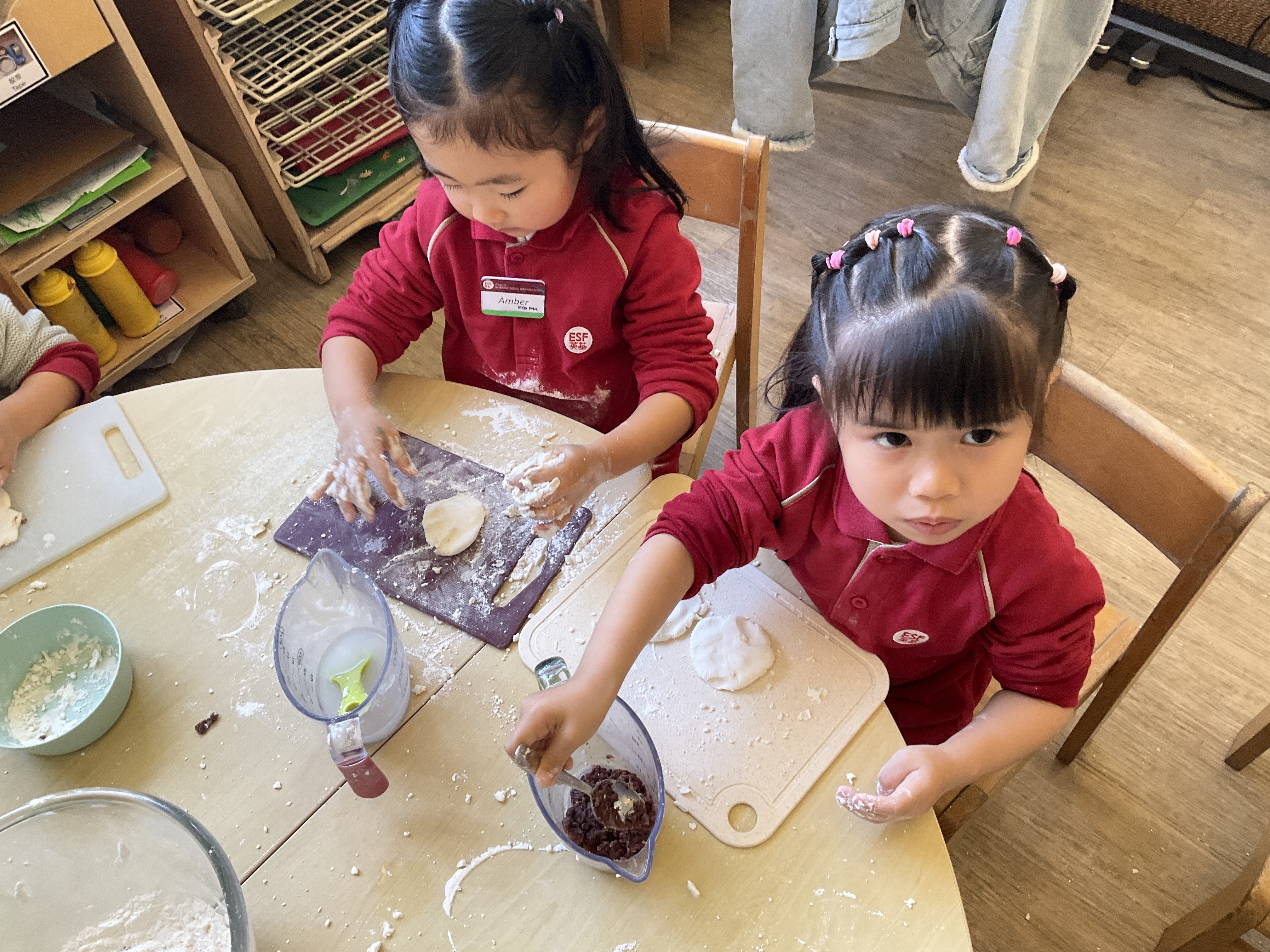
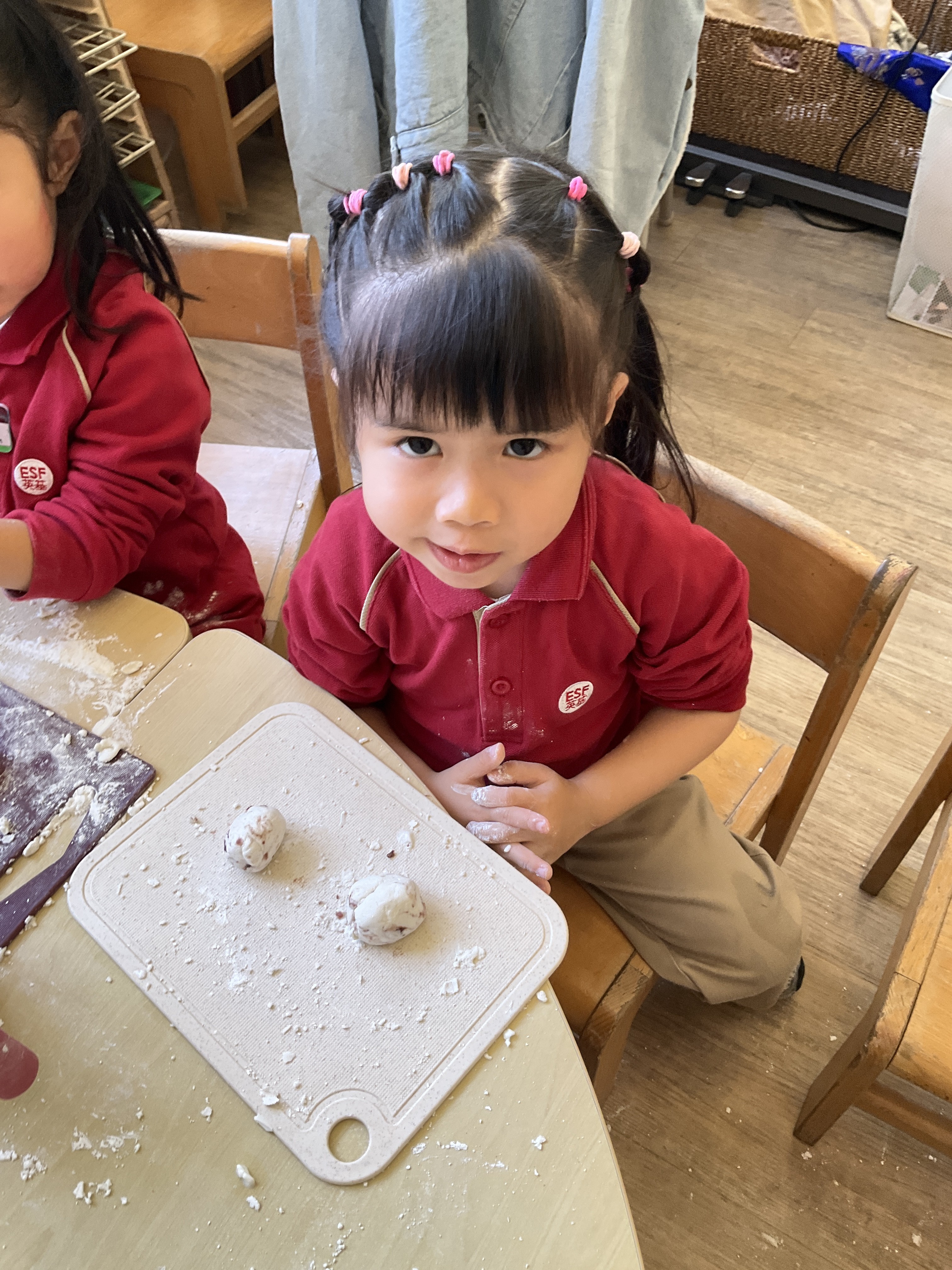
During our small-group activity, we made delicious Chinese rice balls called 汤圆. These sweet treats are made from glutinous rice flour and filled with red bean paste (豆沙馅) or purple sweet potato paste (紫薯馅), which Hailey found fascinating! First, Hailey mixed the flour (糯米粉) and water (水) to create a smooth dough. Then, she took a small piece of dough, added a bit of red bean paste (豆沙馅) and purple sweet potato paste (紫薯馅), and carefully wrapped it. Hailey enjoyed learning new vocabulary and practiced her fine motor skills while having fun making 汤圆 together!
Posted by:
Ms Irene Ma, 23/01/2026 15:55:18
23rd Jan 2026 Whole Class Learning Journey
Unit of Inquiry
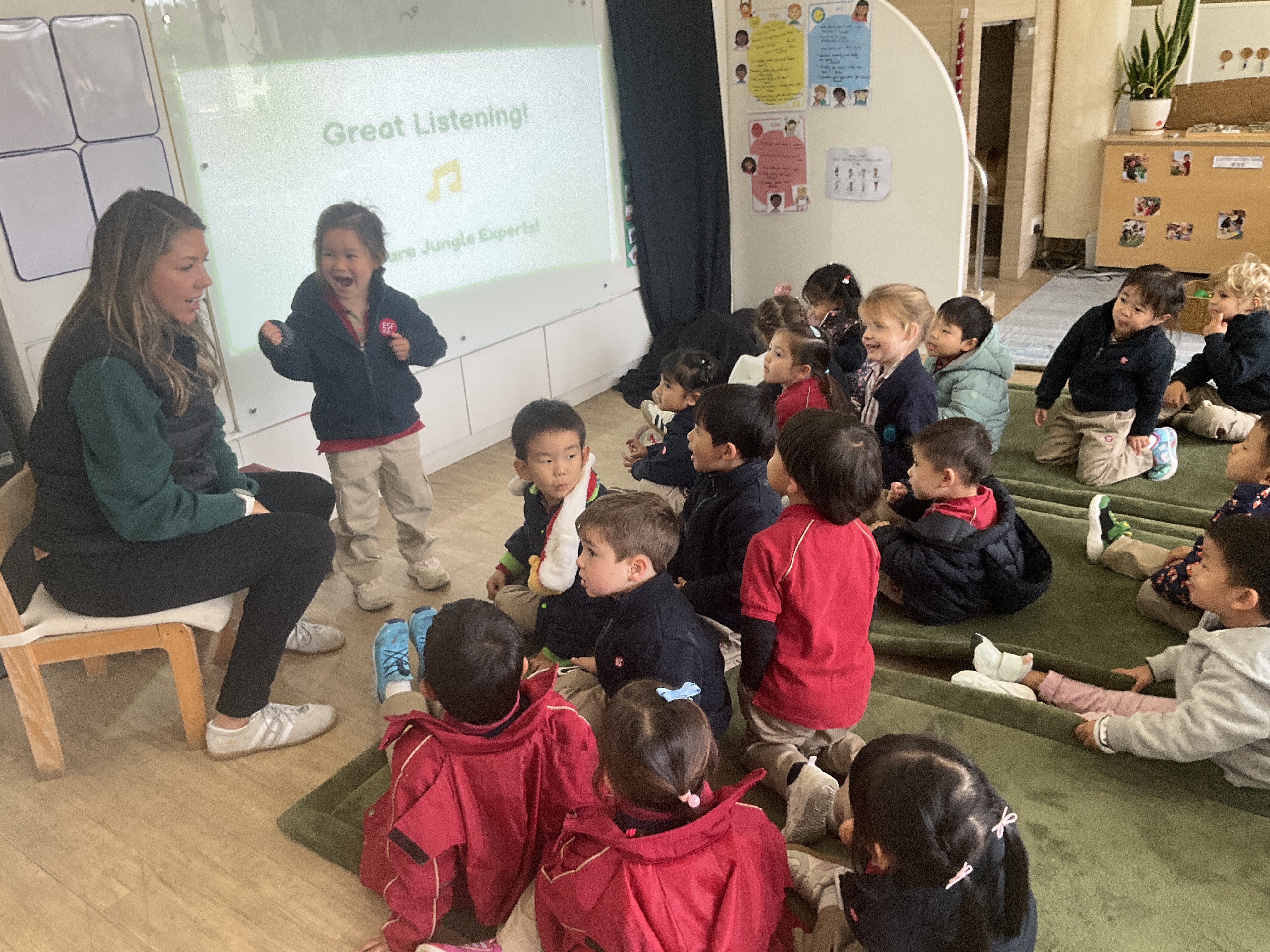
Since returning to school, we have been revisiting the theme of kindness and exploring what it means to be a good friend. We have read several books on kindness, including Have You Filled a Bucket Today by Carol McCloud. This story introduces the idea that everyone carries an invisible bucket: when others make us feel good, our bucket fills with positive feelings, but when unkind actions occur, our bucket can be emptied.
In our classroom, we have a “Kindness Tree”. Whenever someone does something kind that fills another person’s bucket, we write it down on a paper heart and place it on. At the end of each week, we celebrate by reading out all the acts of kindness together.
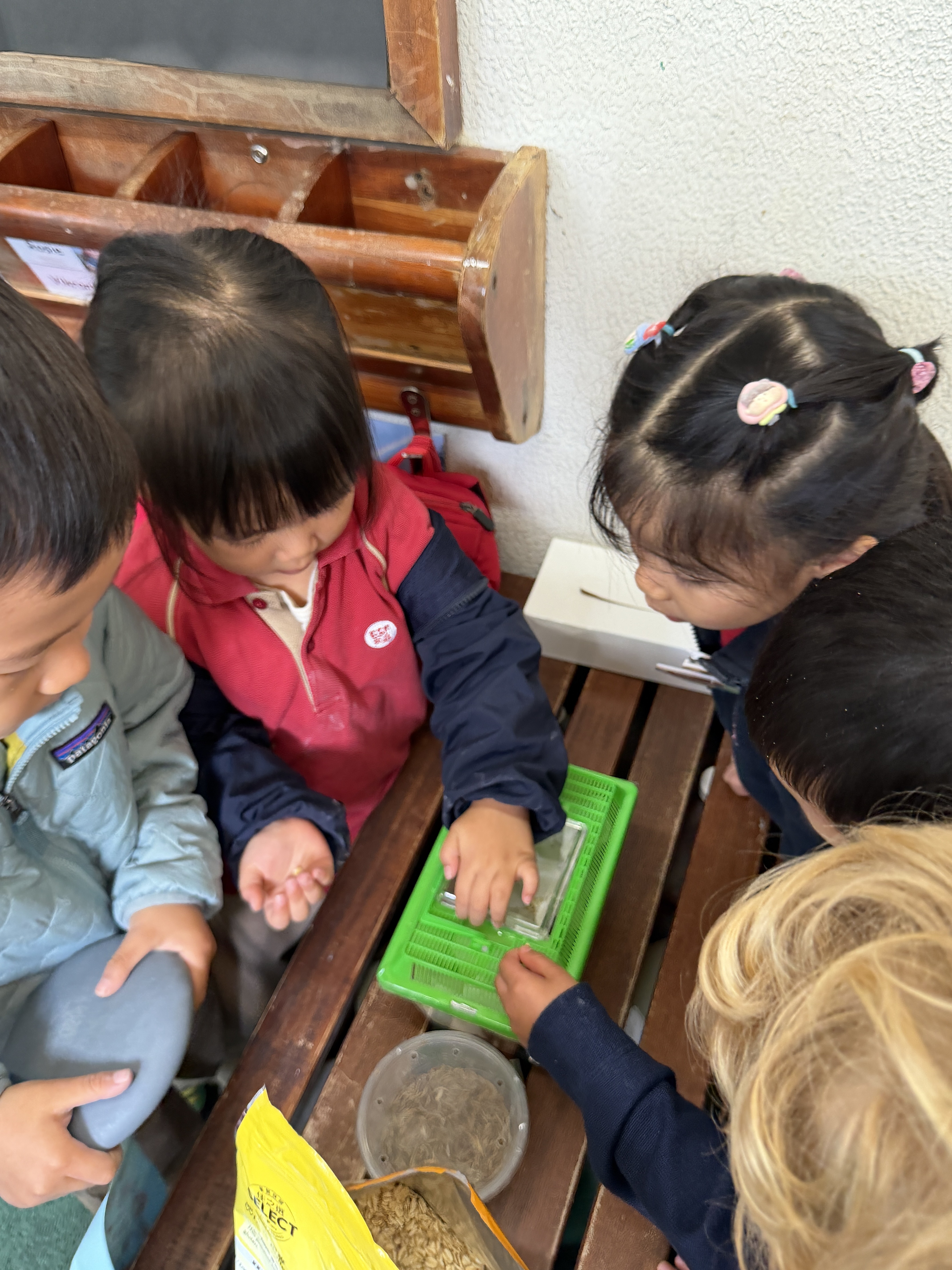
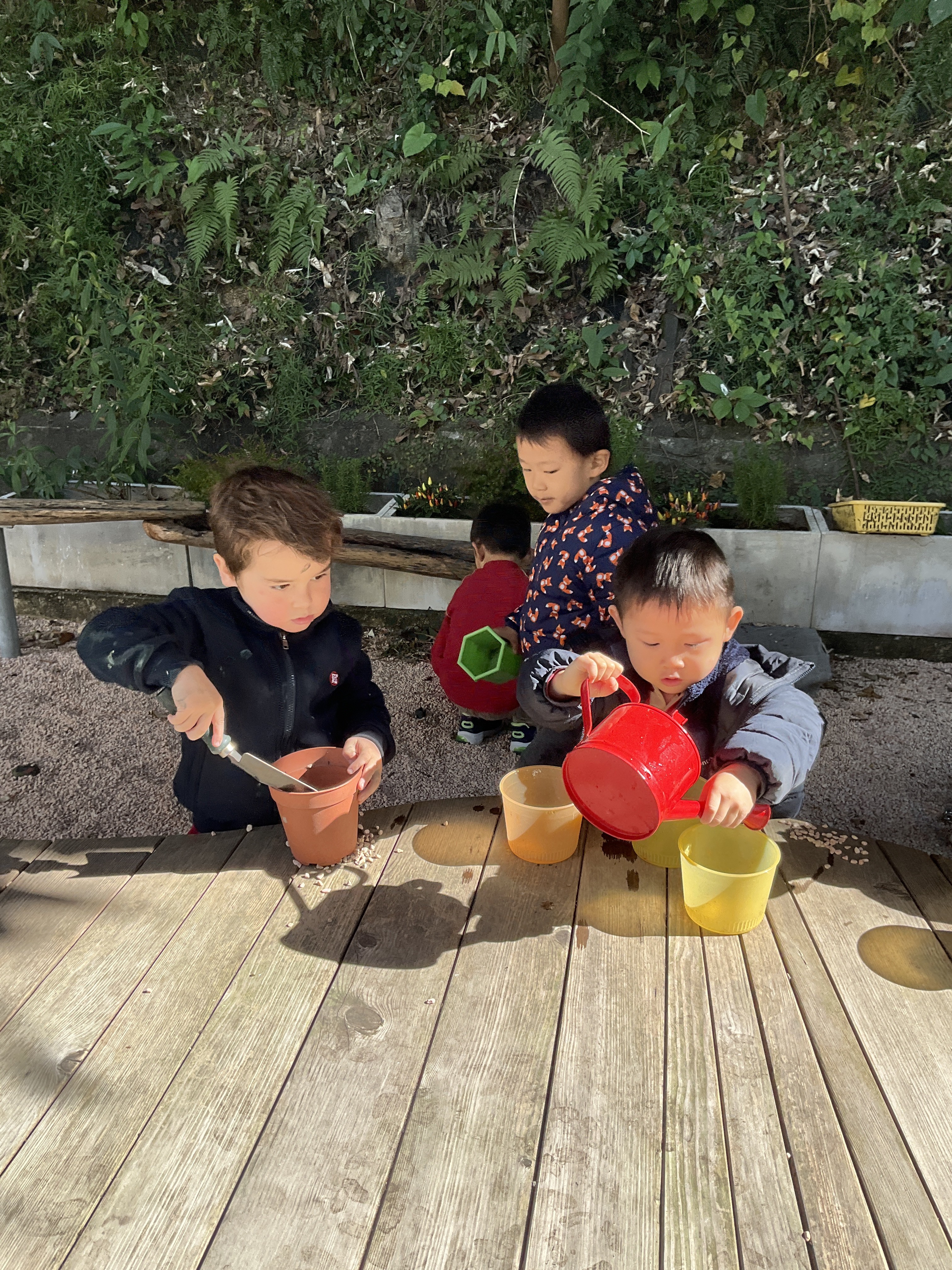
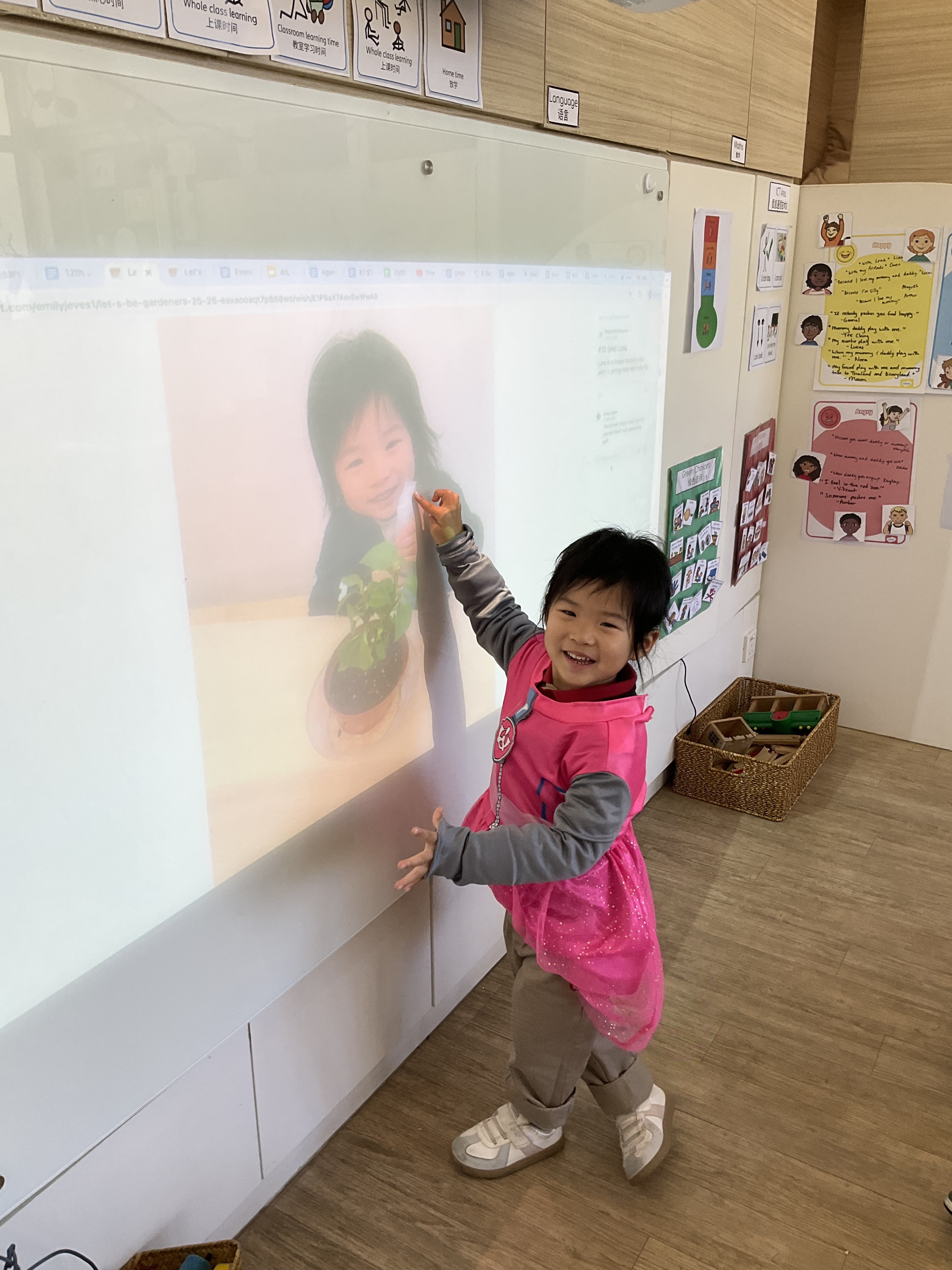
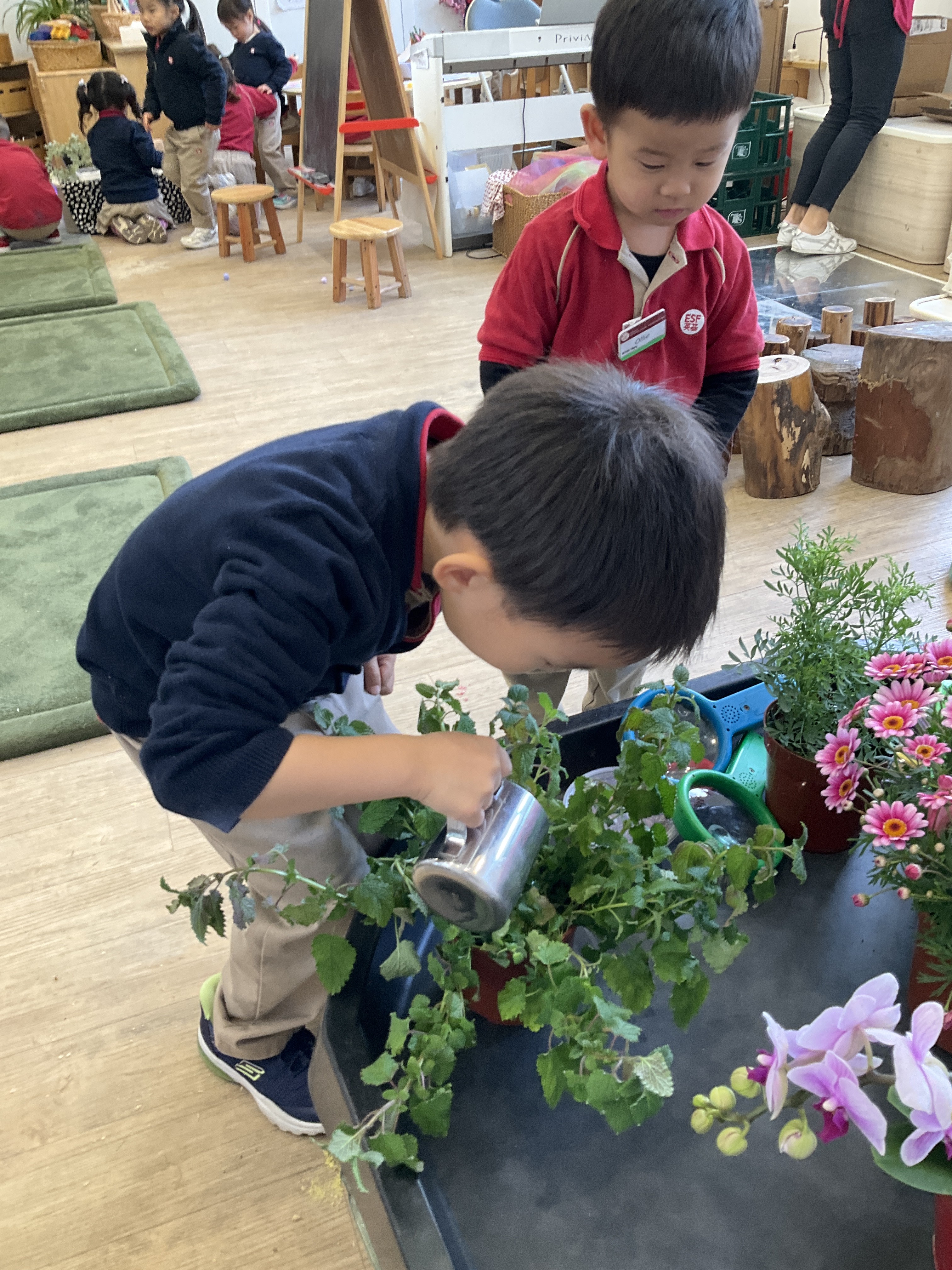
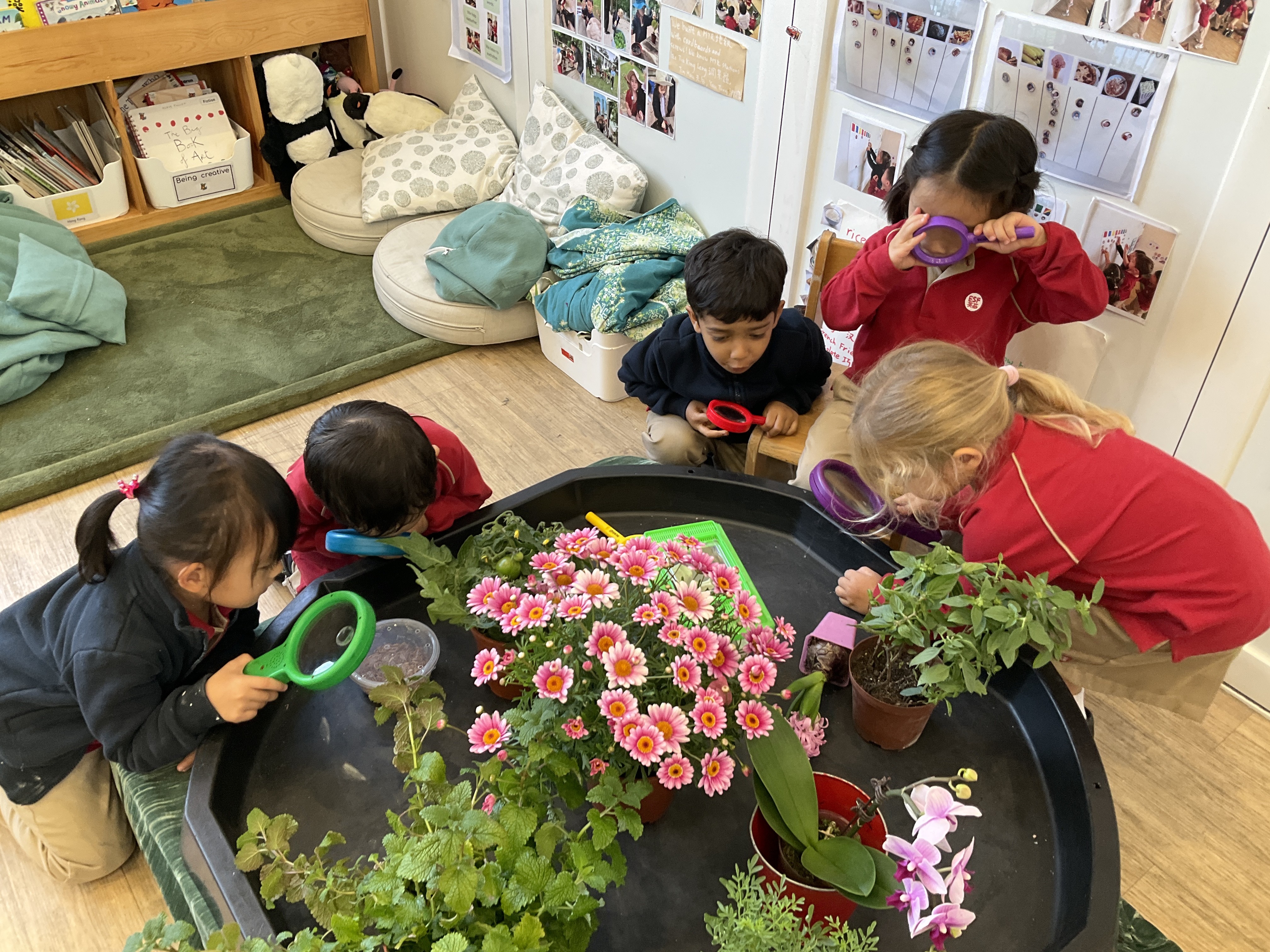
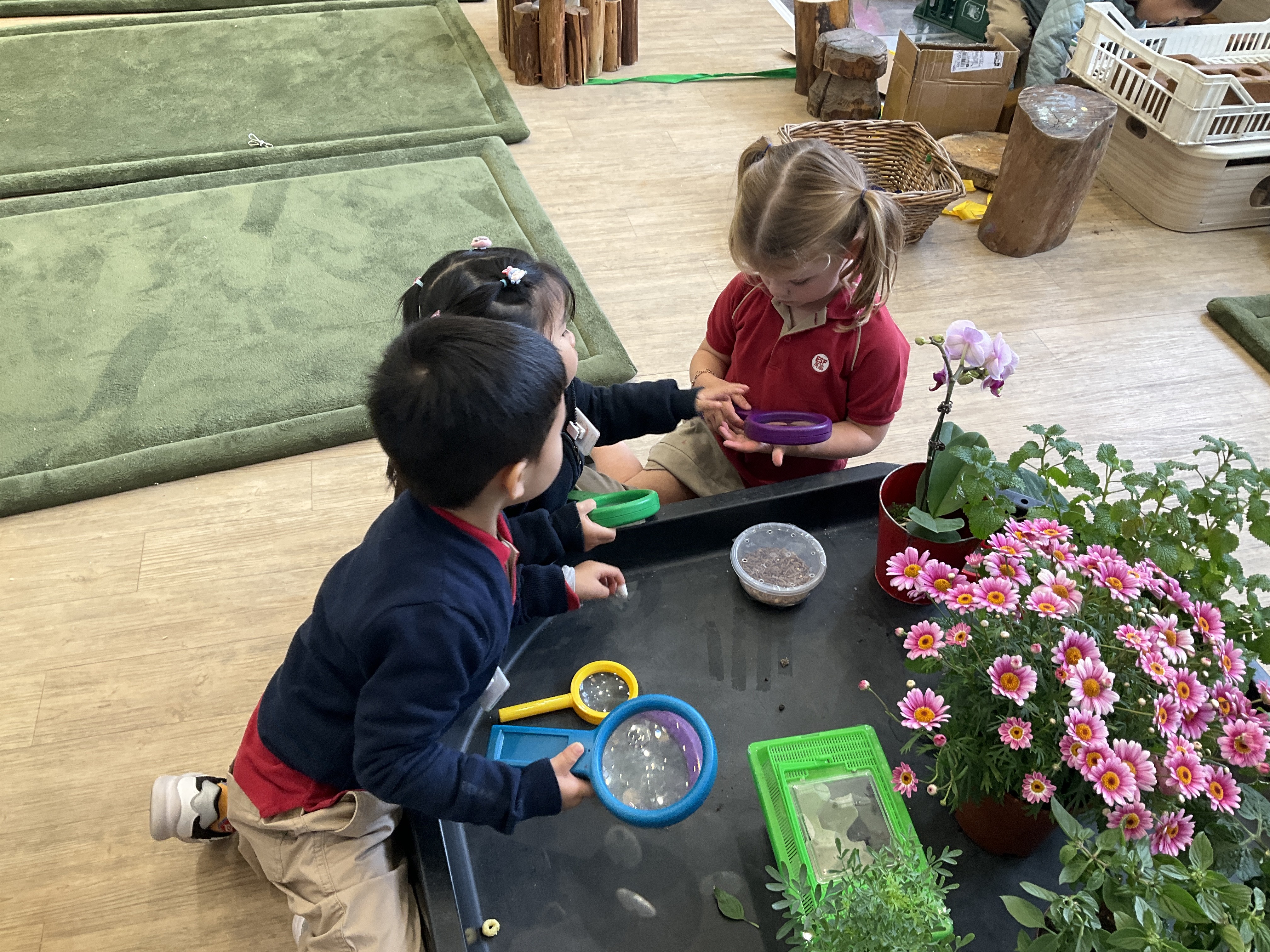
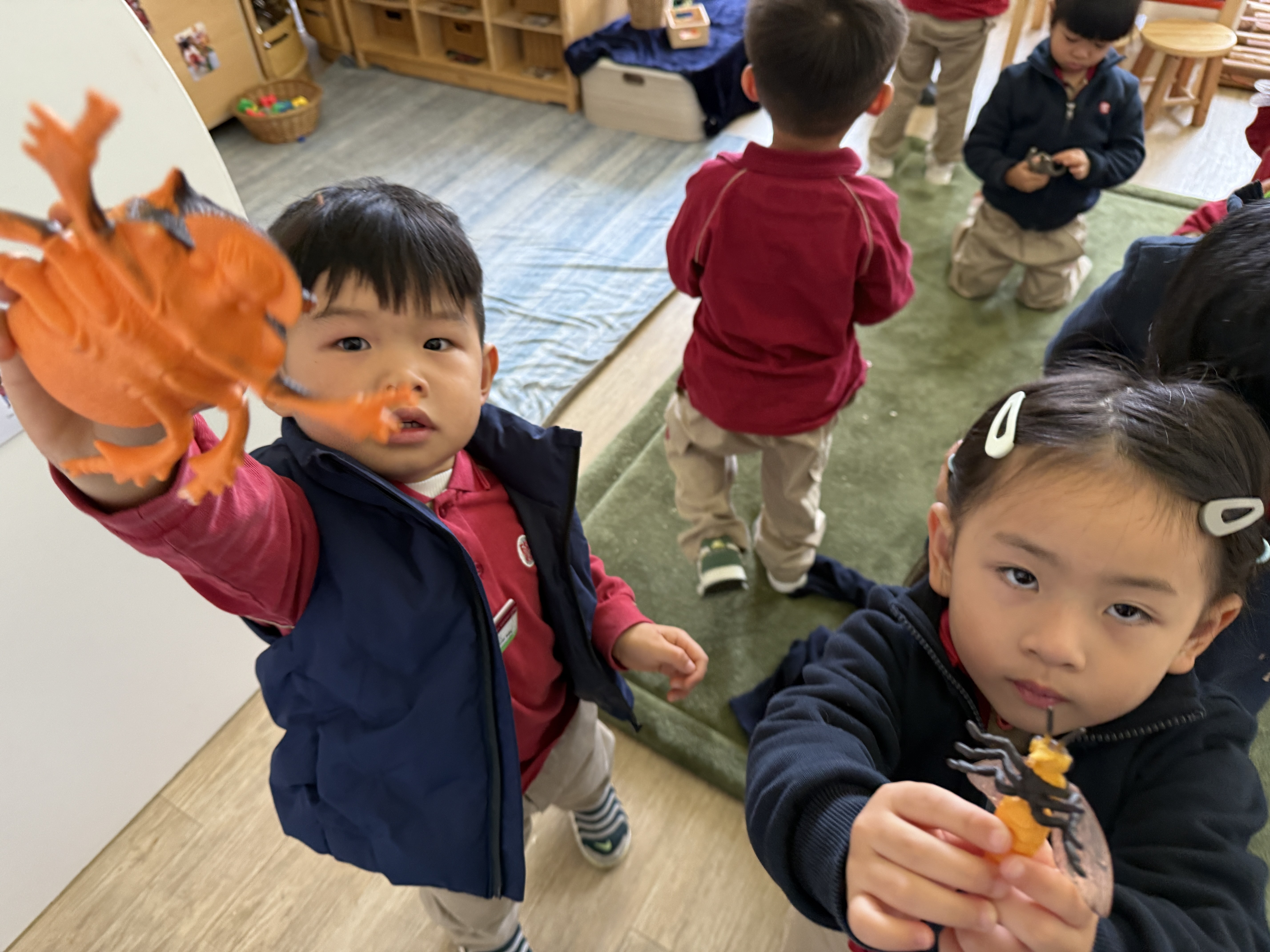
To tune into the new Unit of Inquiry ‘Sharing the Planet’, we shared our home planting photos from the ‘Let’s be gardeners’ Padlet. We also explored the outdoors on a nature walk and played animal sound games. It was great to discover how much the children already know about nature!
Math
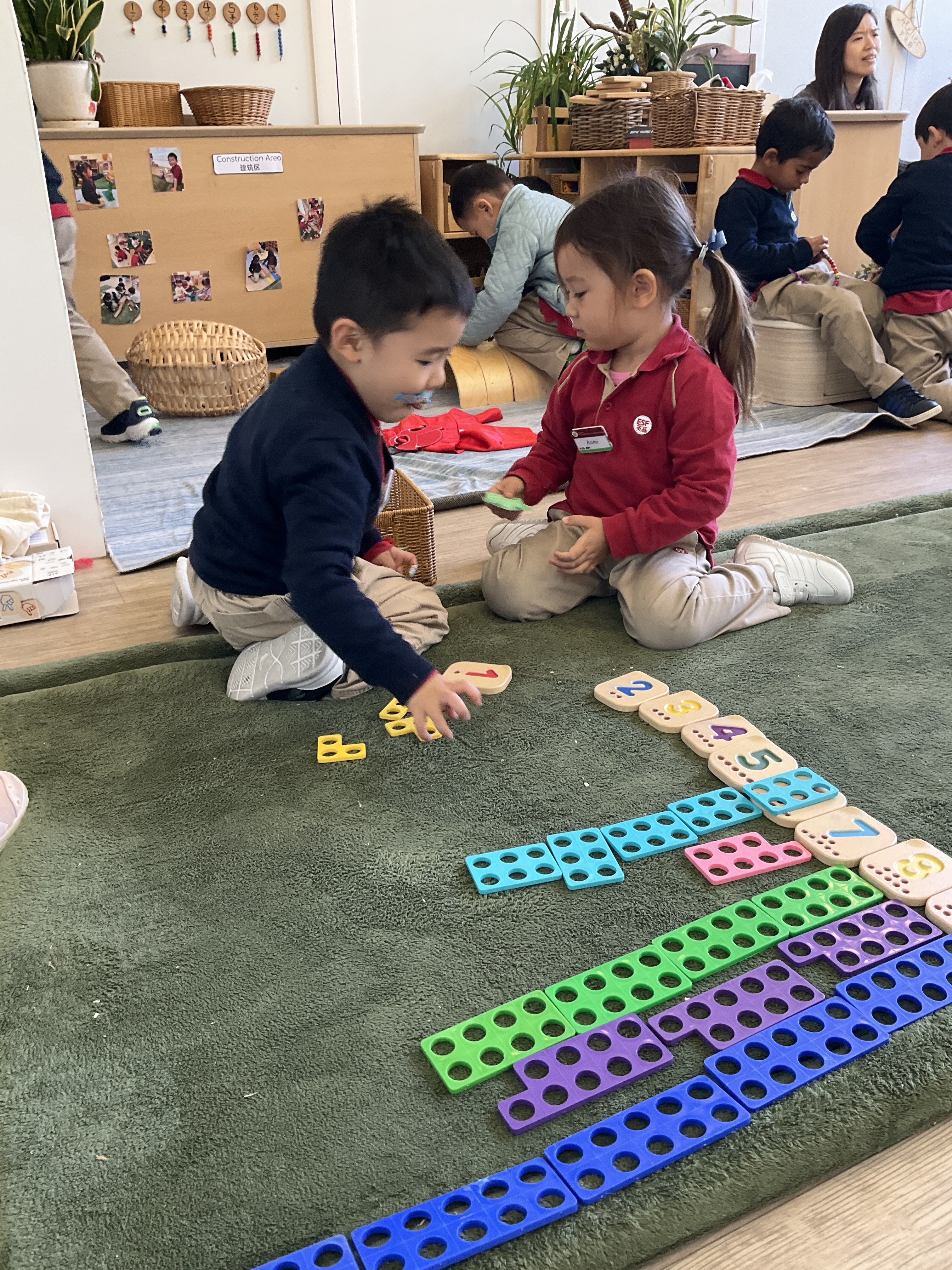
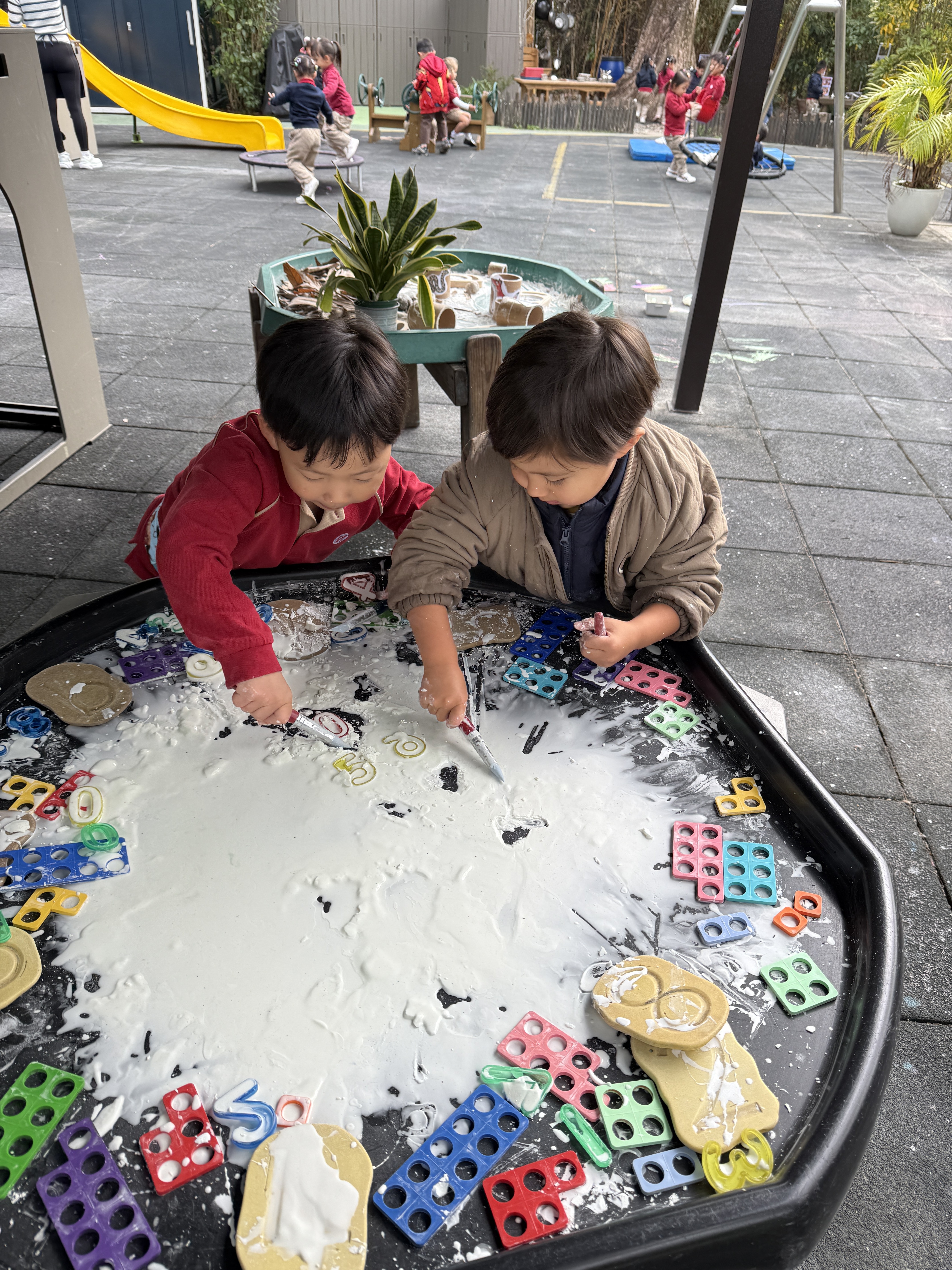
In class, we are focusing on counting and numeral recognition through hands-on play. To build visual and tactile memory, the children are finding hidden numbers using "binoculars," searching for numerals in sensory bins, and tracing numbers in sand. We are also reinforcing these skills physically by using our fingers to show quantities and incorporating counting into action songs and exercises. This approach helps children connect written numerals to their names and values.
Try this at home: Ask your child to show you a number on their fingers or "hunt" for numerals on cereal boxes, house doors, or street signs to help them spot math in the real world.
Language
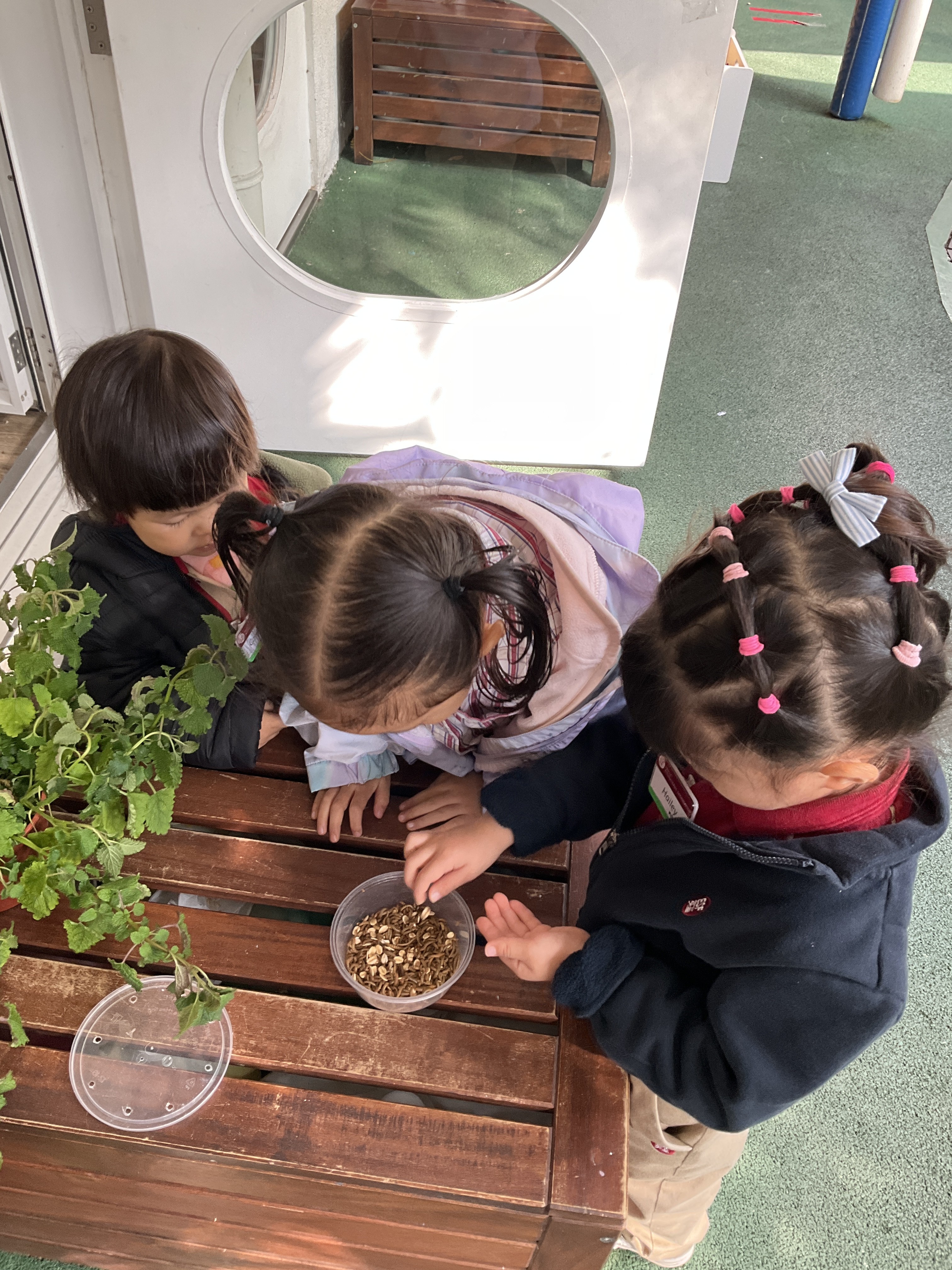
To support our language and social development, we have been discussing kindness towards others and nature. We recently read Hey, Little Ant, a story that explores whether a boy should squish an ant or let it go, encouraging the children to think from another creature’s perspective. This is being put into practice at our classroom observation station, where the children are learning to care for crickets, worms, and plants. We also played animal charades to build confidence in speaking and performing; the children were fantastic at acting out and sounding out different animals for their friends to guess!
Chinese
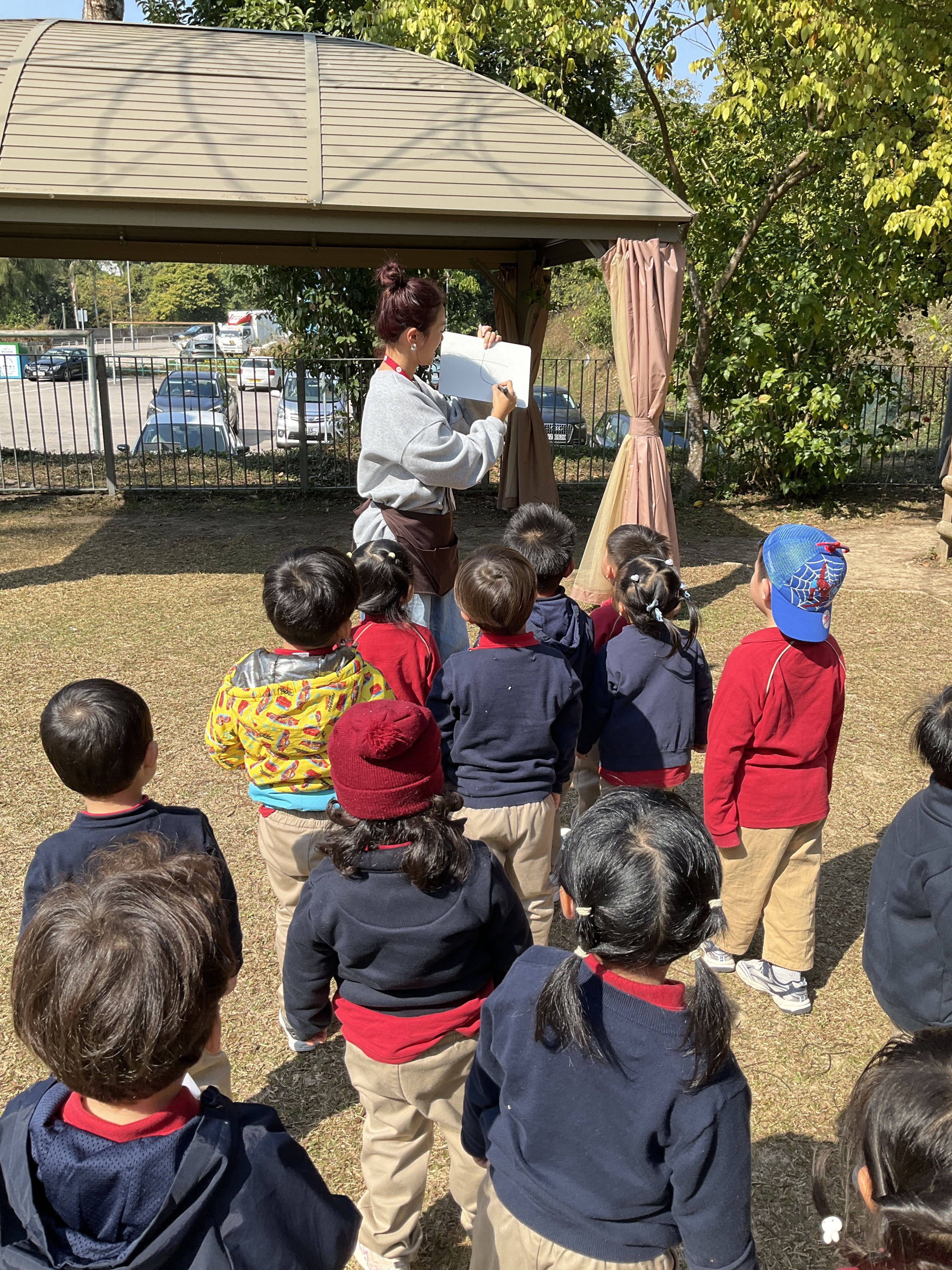
The children practiced answering the question ‘你叫什么名字?’ (What is your name?) by engaging in conversation and replying with ‘我叫...’ (My name is...). We extended this to our families, using the book ‘我的家庭书’ (My Family Book) and your lovely family photos to learn how to name different family members in Chinese.
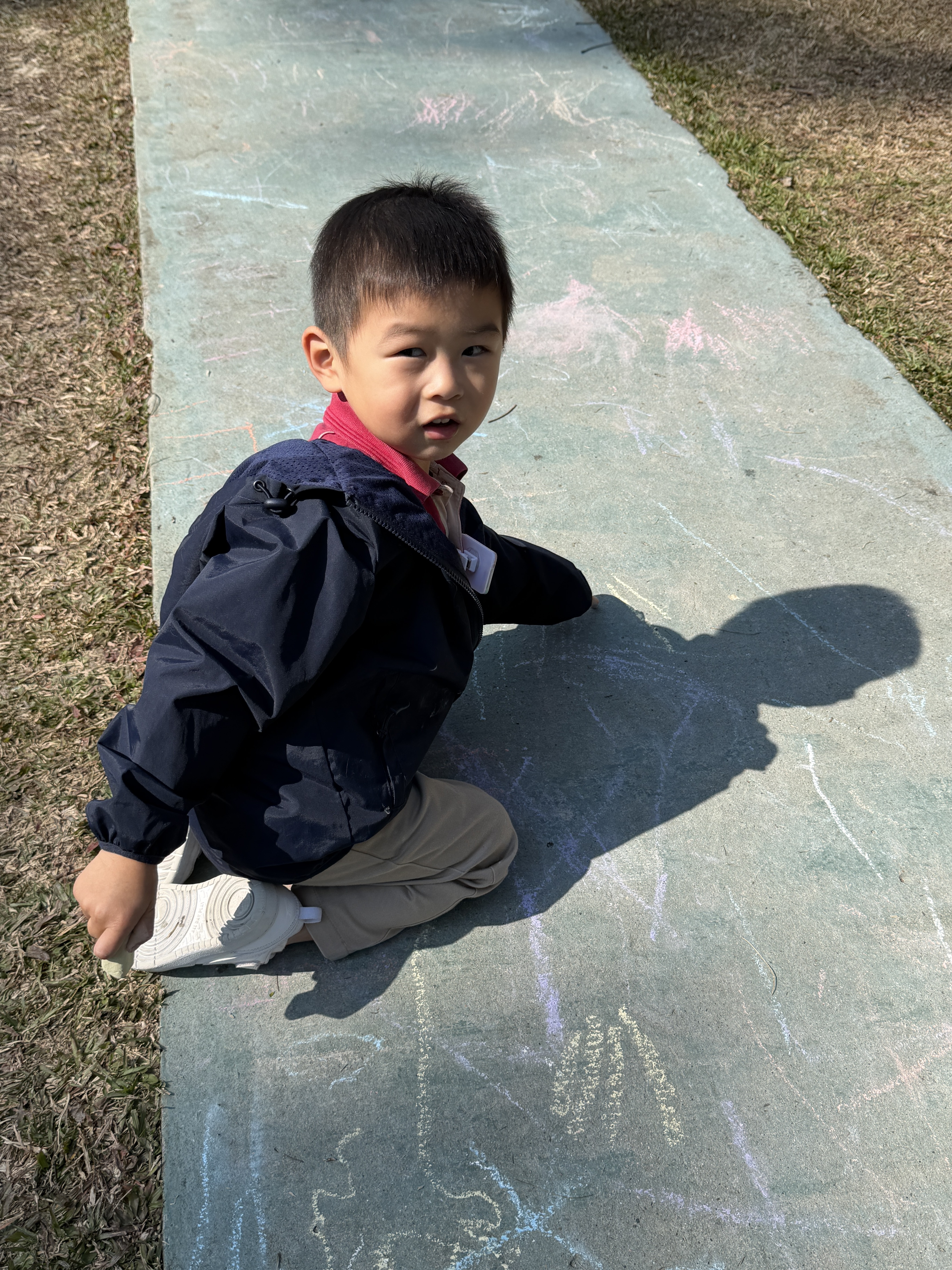
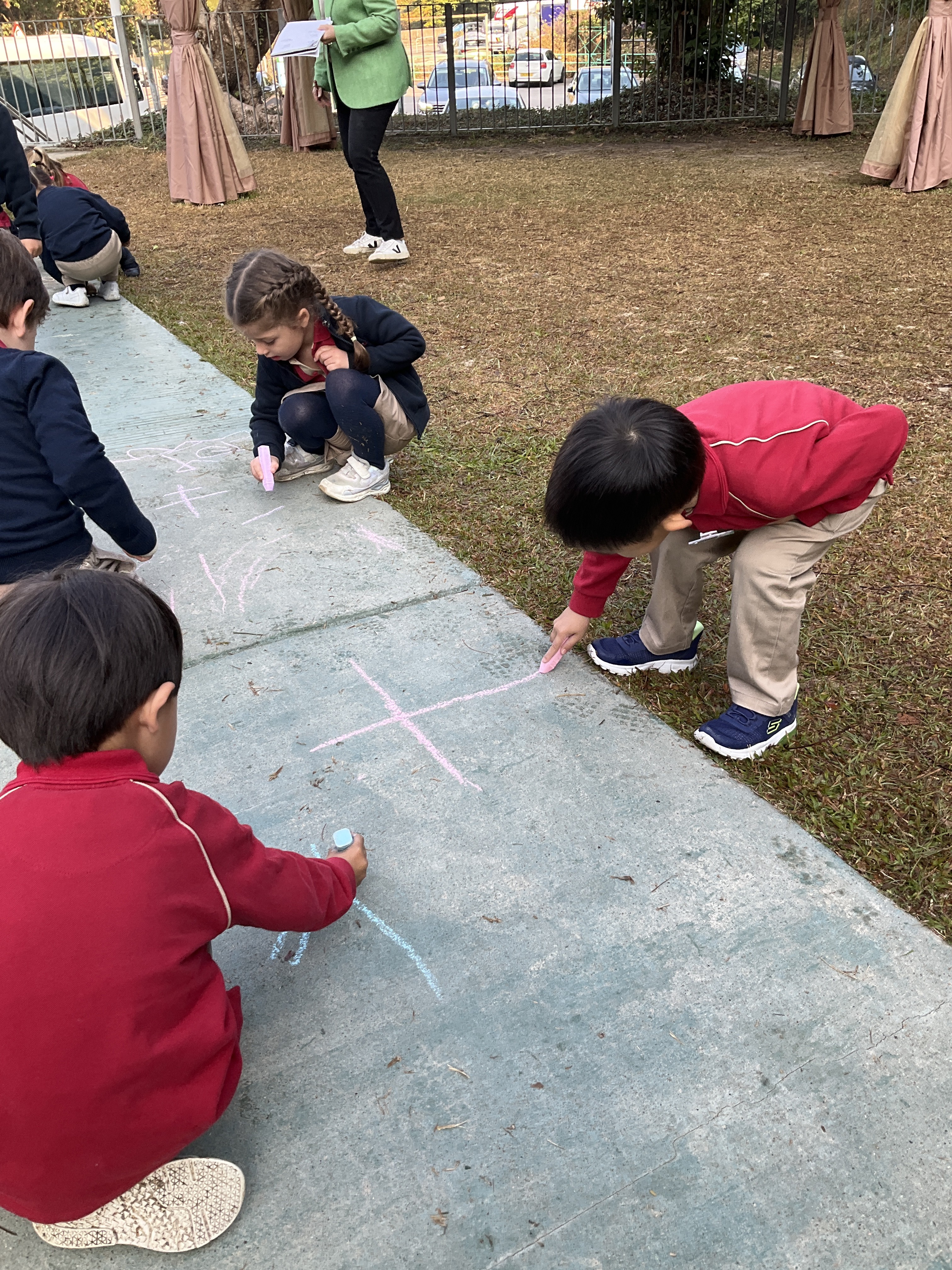
For Mathematics, we worked on one-to-one correspondence counting up to 10, supported by the story ‘月亮微笑了’ (The Moon Smiled) and using Numicons. The children are also beginning to recognize Chinese numerals 1 through 10. We made this learning active and fun by playing the ‘Ms. Wolf’ game and using chalk to practice writing numbers on the playground floor.
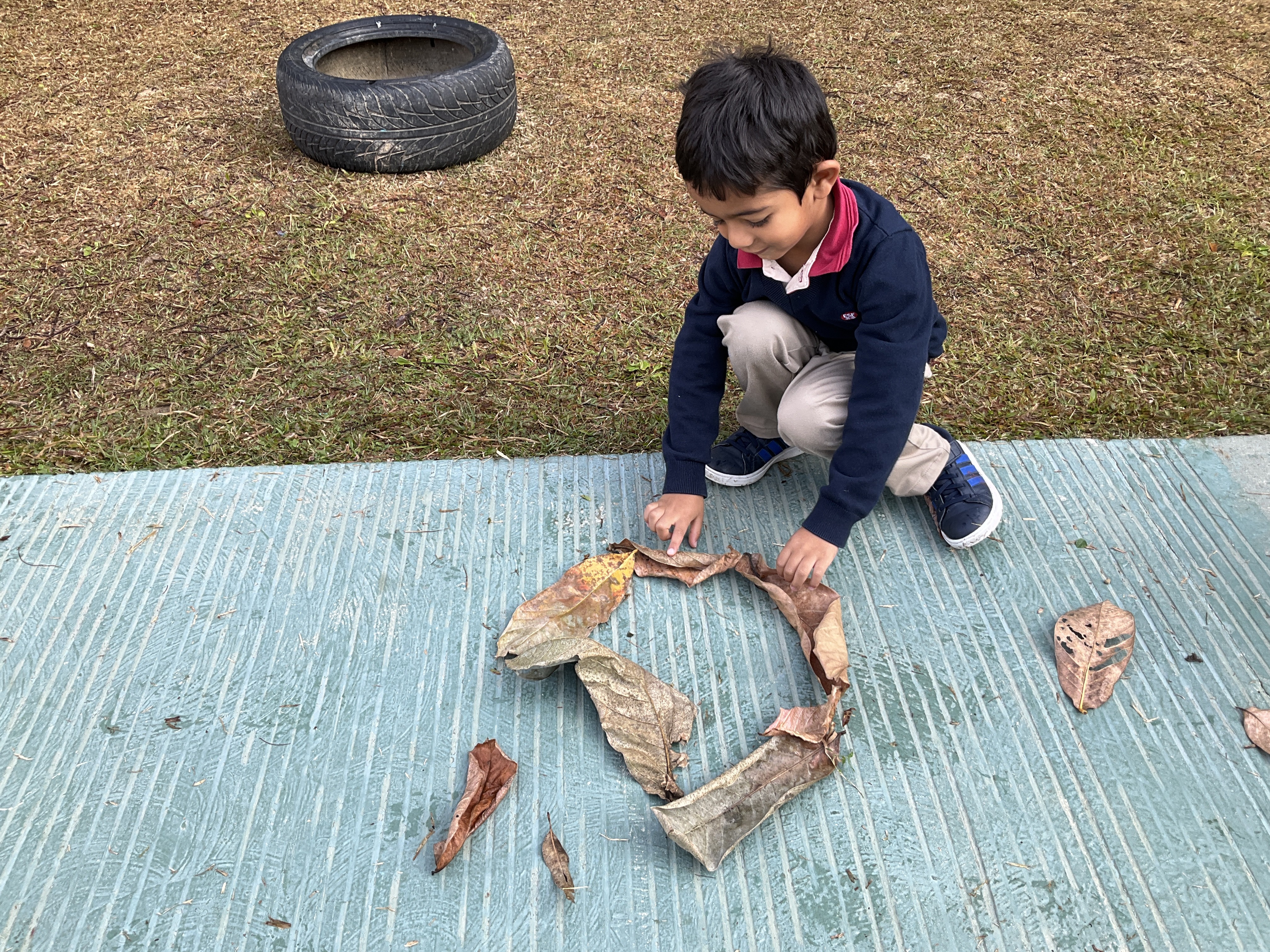
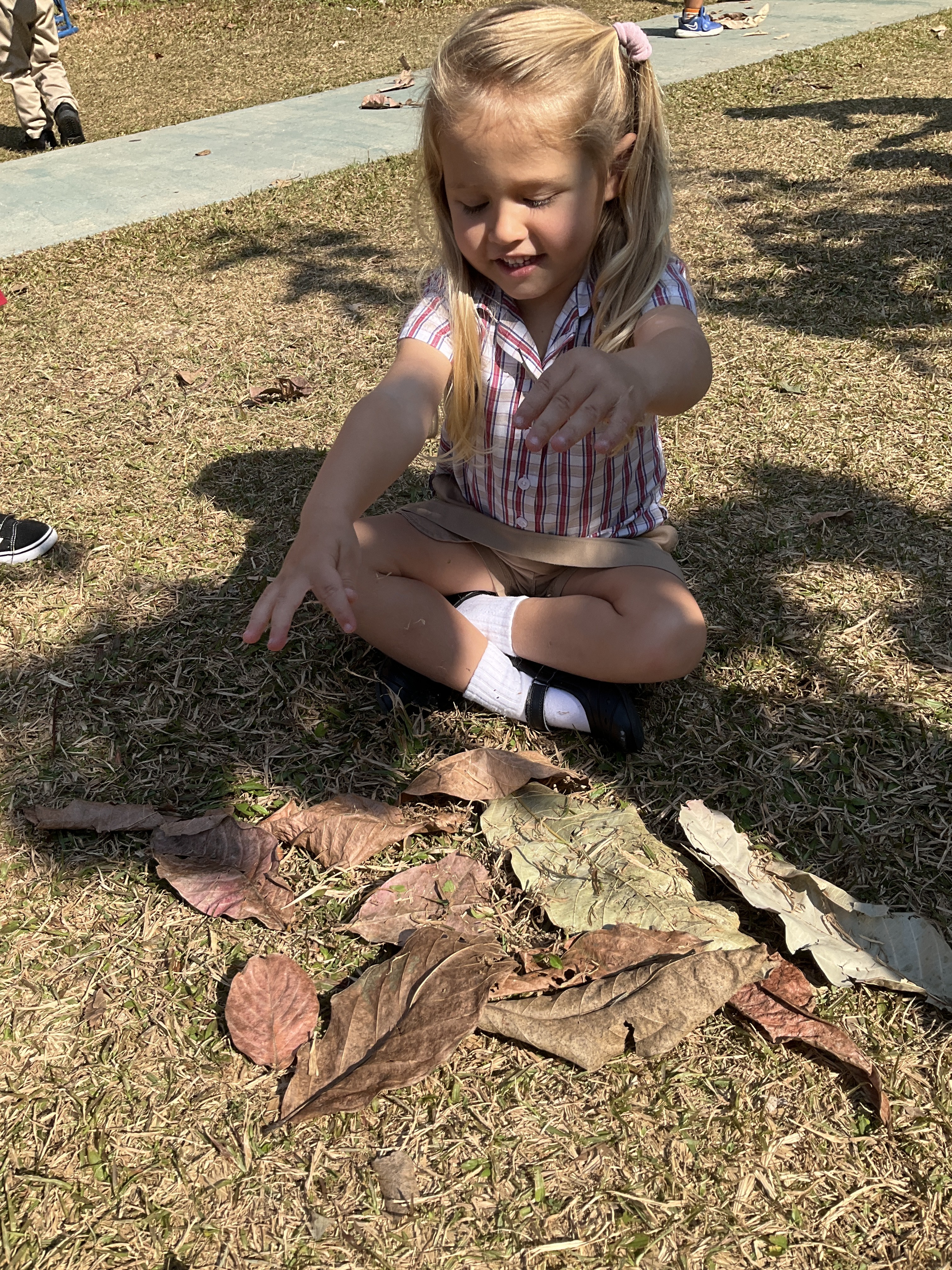
To launch our new Unit of Inquiry, ‘Sharing the Planet’, we have been exploring the natural world around us. After reading ‘叶子跳舞’ (Leaves Dancing), the children gathered fallen leaves to create unique nature collages. They used their imaginations to turn these natural treasures into wonderful shapes, such as a ‘dinosaur’ (恐龙), ‘golden truck’ (金色卡车), ‘cake’ (蛋糕), and ‘nest’ (鸟巢). To further connect with the living creatures we share our world with, we also sharpened our listening skills through fun animal-sound-guessing games.
我的家人
https://www.youtube.com/watch?v=iPvYsKAgsM0
Chinese Vocabulary
Dad爸爸(bà ba)
Mum妈妈(mā ma)
Older Brother哥哥(gē ge)
Older Sister姐姐(jiě jie)
Younger Brother弟弟(dì di)
Younger Sister妹妹(mèi mei)
Grandpa爷爷(yé ye)
Grandma奶奶(nǎi nai)
Auntie阿姨(ā yí)
I am... 我叫... (wǒ jiào...)
Unit of Inquiry
Since returning to school, we have been revisiting the theme of kindness and exploring what it means to be a good friend. We have read several books on kindness, including Have You Filled a Bucket Today by Carol McCloud. This story introduces the idea that everyone carries an invisible bucket: when others make us feel good, our bucket fills with positive feelings, but when unkind actions occur, our bucket can be emptied.
In our classroom, we have a “Kindness Tree”. Whenever someone does something kind that fills another person’s bucket, we write it down on a paper heart and place it on. At the end of each week, we celebrate by reading out all the acts of kindness together.
To tune into the new Unit of Inquiry ‘Sharing the Planet’, we shared our home planting photos from the ‘Let’s be gardeners’ Padlet. We also explored the outdoors on a nature walk and played animal sound games. It was great to discover how much the children already know about nature!
Math
In class, we are focusing on counting and numeral recognition through hands-on play. To build visual and tactile memory, the children are finding hidden numbers using "binoculars," searching for numerals in sensory bins, and tracing numbers in sand. We are also reinforcing these skills physically by using our fingers to show quantities and incorporating counting into action songs and exercises. This approach helps children connect written numerals to their names and values.
Try this at home: Ask your child to show you a number on their fingers or "hunt" for numerals on cereal boxes, house doors, or street signs to help them spot math in the real world.
Language
To support our language and social development, we have been discussing kindness towards others and nature. We recently read Hey, Little Ant, a story that explores whether a boy should squish an ant or let it go, encouraging the children to think from another creature’s perspective. This is being put into practice at our classroom observation station, where the children are learning to care for crickets, worms, and plants. We also played animal charades to build confidence in speaking and performing; the children were fantastic at acting out and sounding out different animals for their friends to guess!
Chinese
The children practiced answering the question ‘你叫什么名字?’ (What is your name?) by engaging in conversation and replying with ‘我叫...’ (My name is...). We extended this to our families, using the book ‘我的家庭书’ (My Family Book) and your lovely family photos to learn how to name different family members in Chinese.
For Mathematics, we worked on one-to-one correspondence counting up to 10, supported by the story ‘月亮微笑了’ (The Moon Smiled) and using Numicons. The children are also beginning to recognize Chinese numerals 1 through 10. We made this learning active and fun by playing the ‘Ms. Wolf’ game and using chalk to practice writing numbers on the playground floor.
To launch our new Unit of Inquiry, ‘Sharing the Planet’, we have been exploring the natural world around us. After reading ‘叶子跳舞’ (Leaves Dancing), the children gathered fallen leaves to create unique nature collages. They used their imaginations to turn these natural treasures into wonderful shapes, such as a ‘dinosaur’ (恐龙), ‘golden truck’ (金色卡车), ‘cake’ (蛋糕), and ‘nest’ (鸟巢). To further connect with the living creatures we share our world with, we also sharpened our listening skills through fun animal-sound-guessing games.
我的家人
https://www.youtube.com/watch?v=iPvYsKAgsM0
Chinese Vocabulary
Dad爸爸(bà ba)
Mum妈妈(mā ma)
Older Brother哥哥(gē ge)
Older Sister姐姐(jiě jie)
Younger Brother弟弟(dì di)
Younger Sister妹妹(mèi mei)
Grandpa爷爷(yé ye)
Grandma奶奶(nǎi nai)
Auntie阿姨(ā yí)
I am... 我叫... (wǒ jiào...)
Posted by:
Nicole Pattison, 23/01/2026 13:56:06
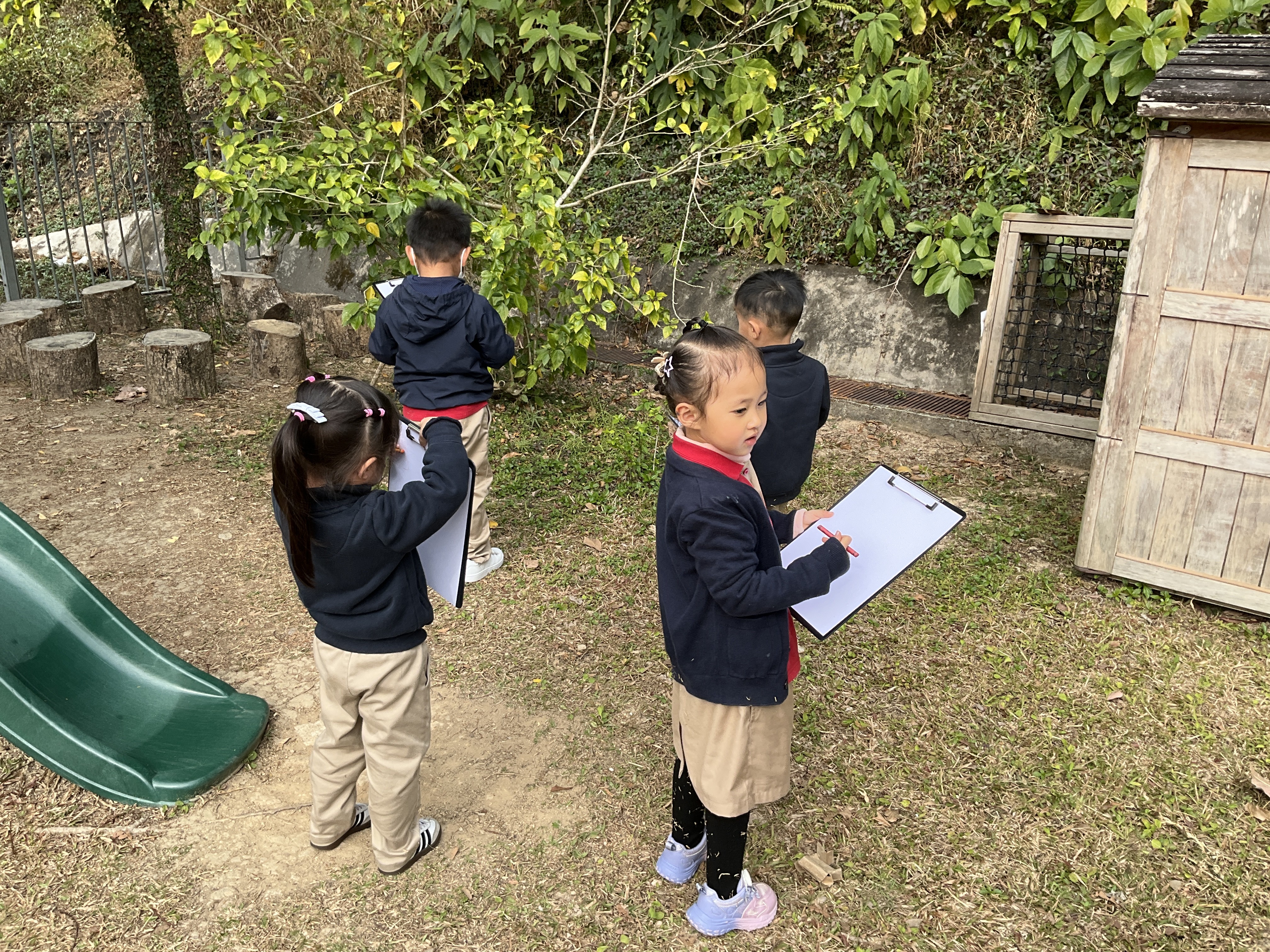
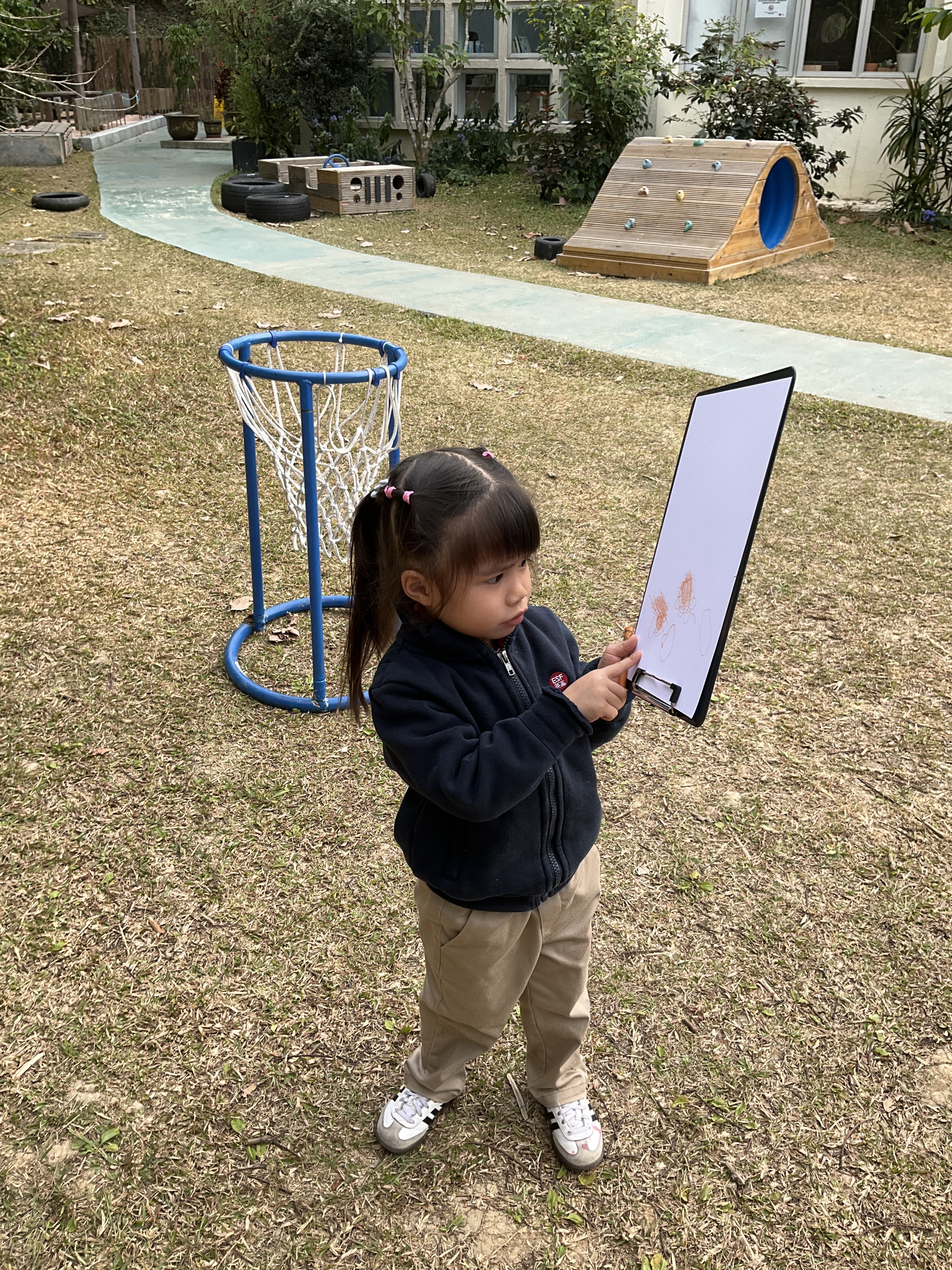
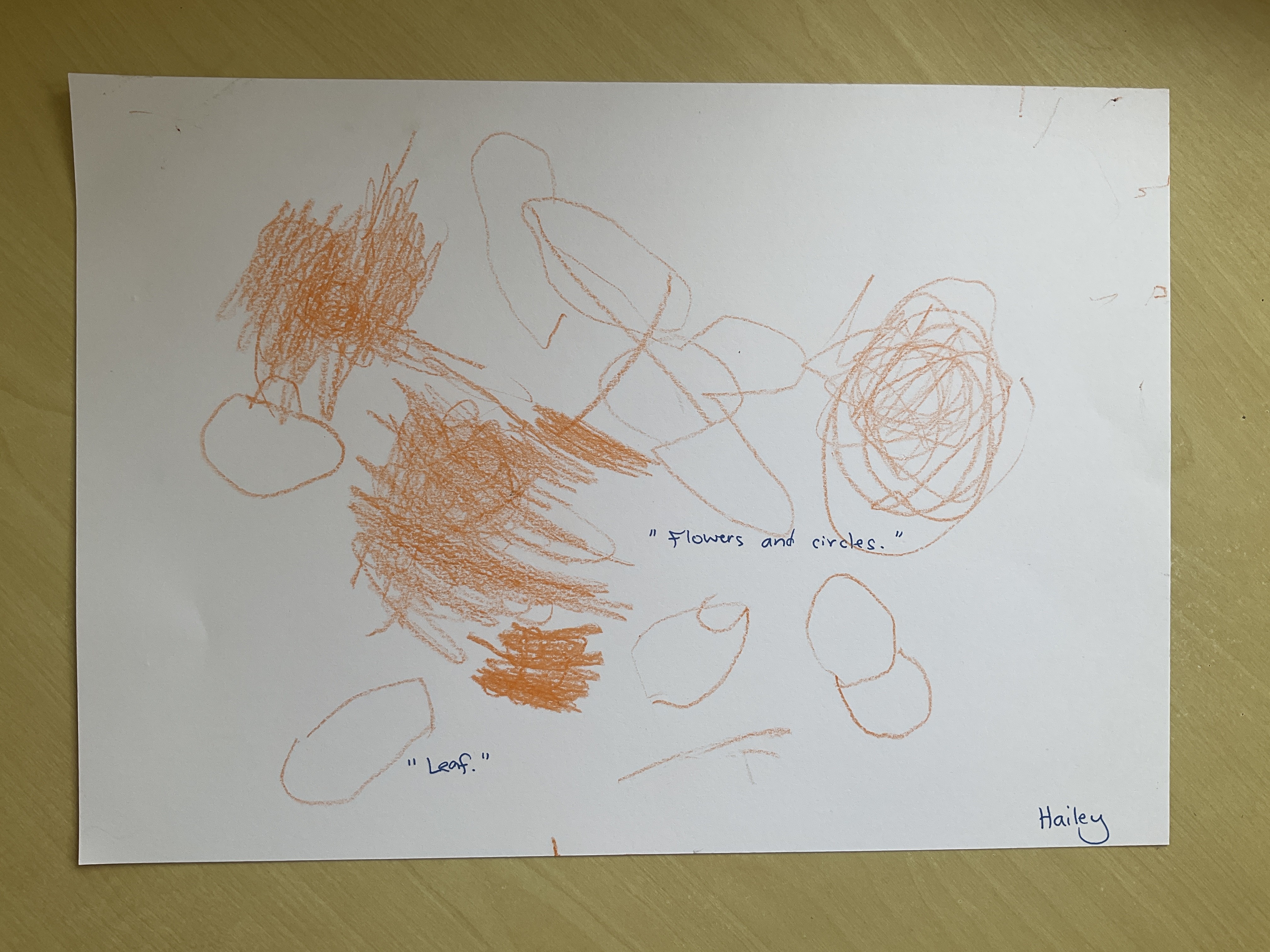
As part of our nature inquiry, Hailey explored the front garden using her senses to observe the environment. She looked closely at the surroundings and when asked to share with the group, she said, "flower and circles. Leaves."
To document the experience, Hailey drew an illustration of what she found, practicing the skill of recording observations through drawing.
Home Connection: Next time you are outdoors together, ask Hailey, "What can we find in nature here?" Encourage her to describe what she notices and which senses she is using to explore.
To document the experience, Hailey drew an illustration of what she found, practicing the skill of recording observations through drawing.
Home Connection: Next time you are outdoors together, ask Hailey, "What can we find in nature here?" Encourage her to describe what she notices and which senses she is using to explore.
Posted by:
Nicole Pattison, 05/12/2025 16:15:14
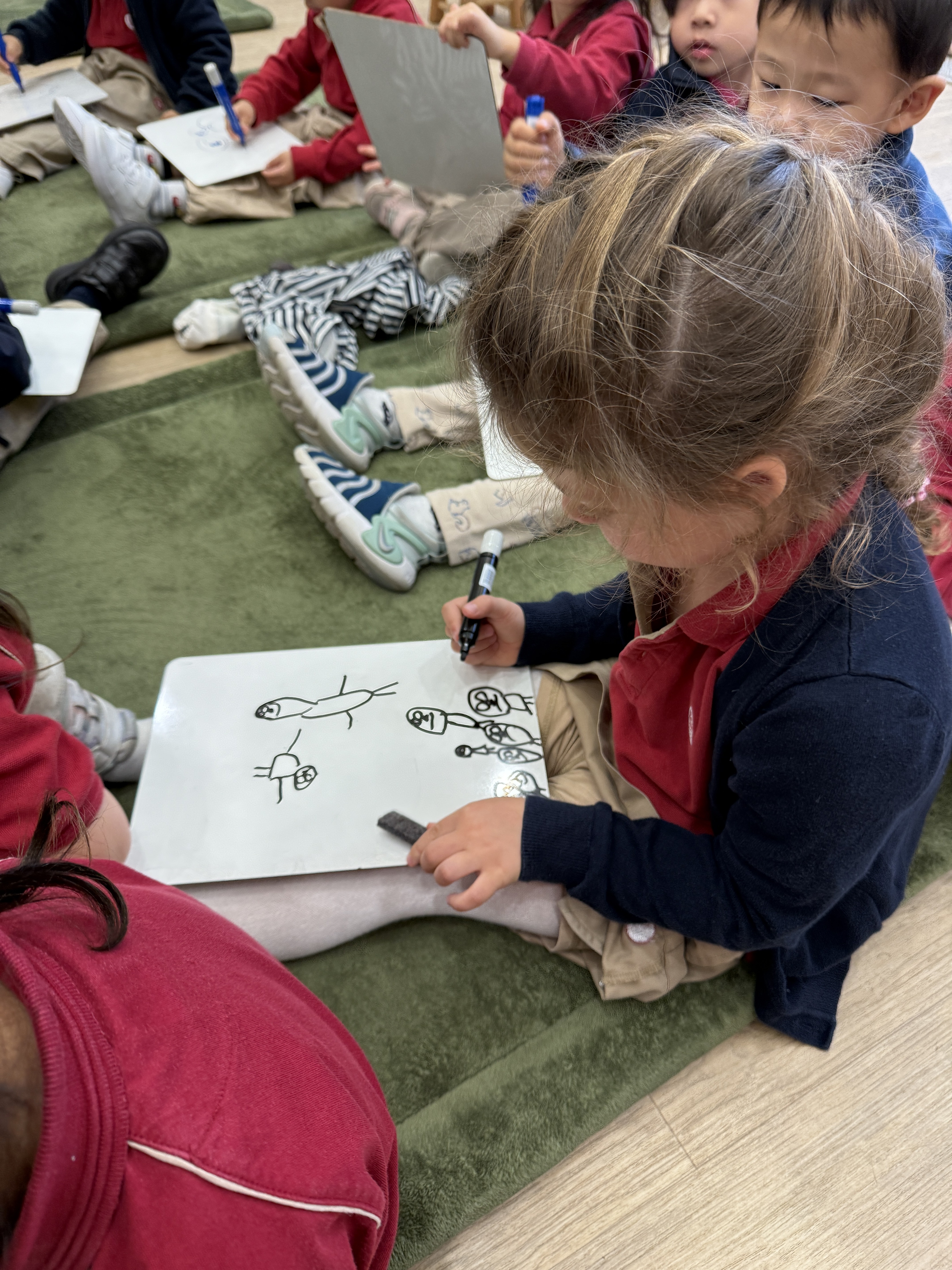
UOI
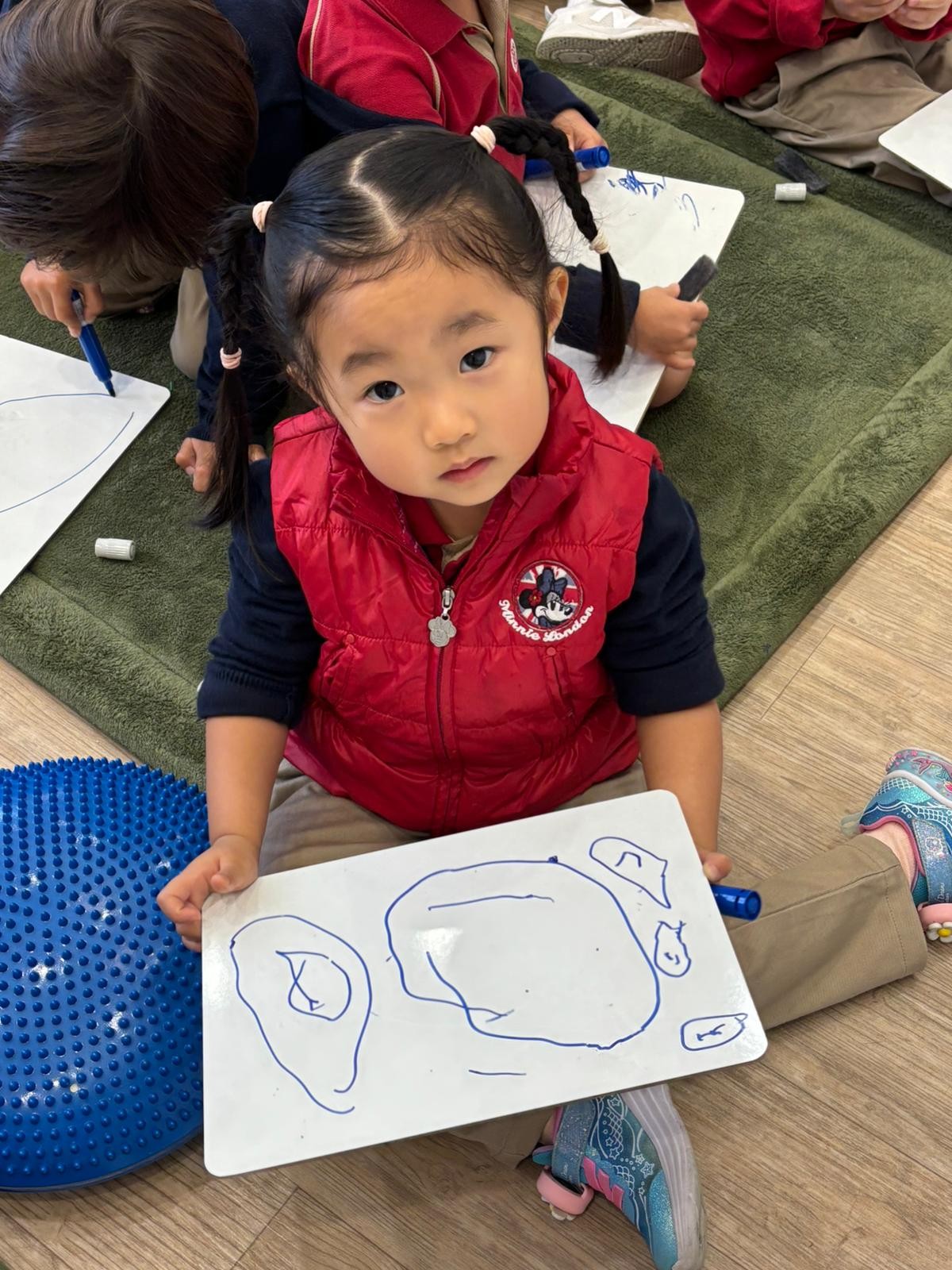
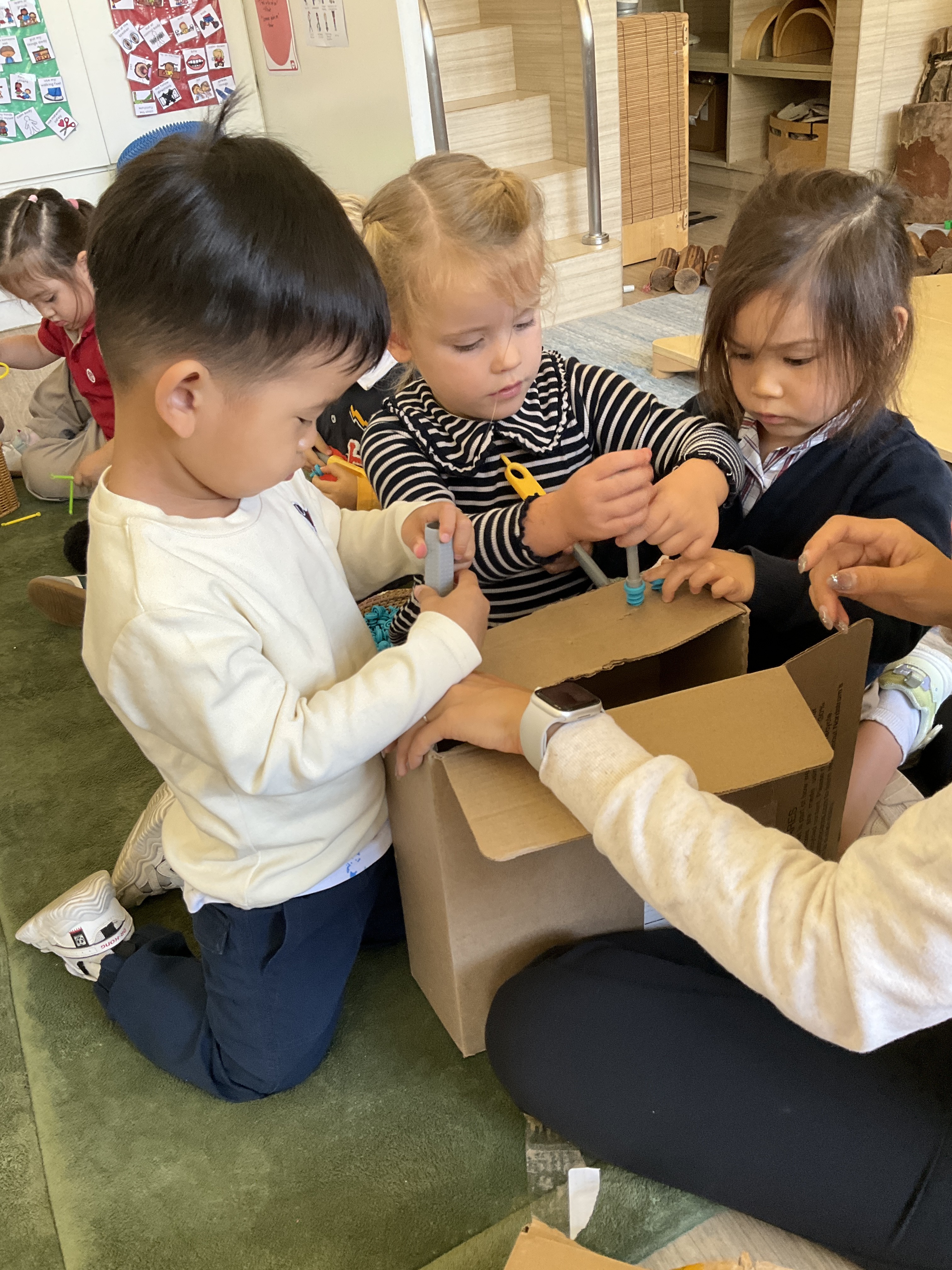
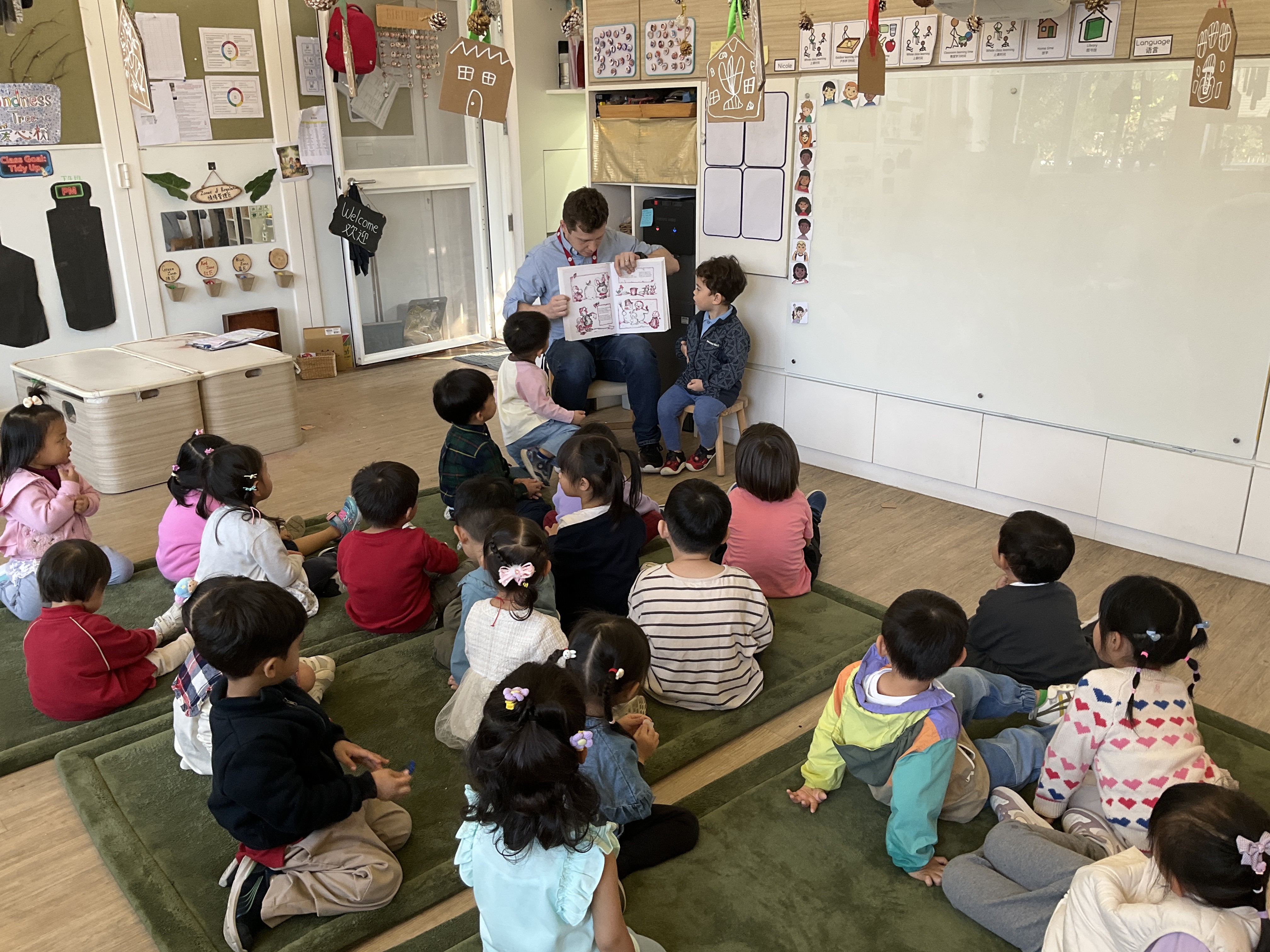
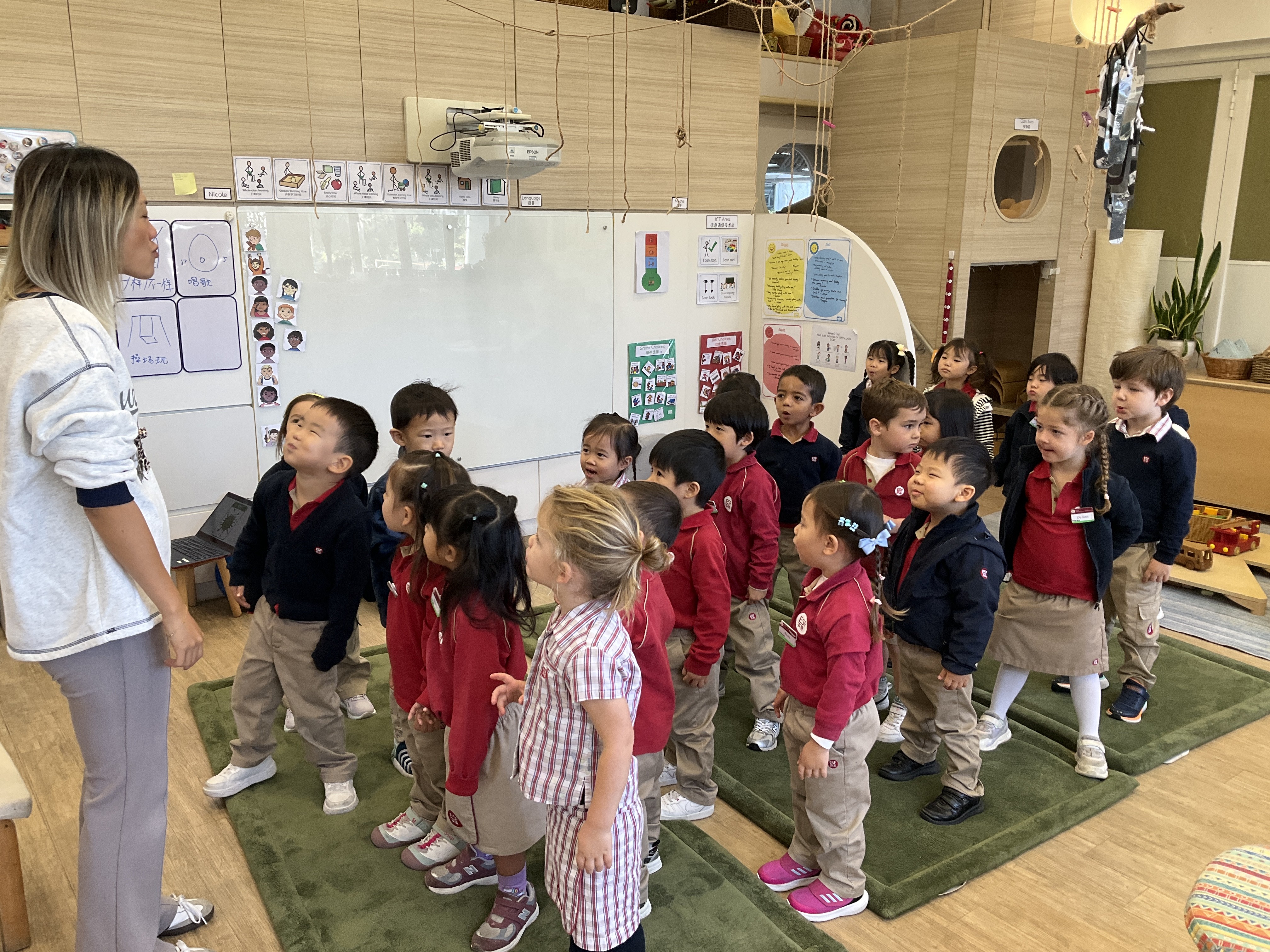
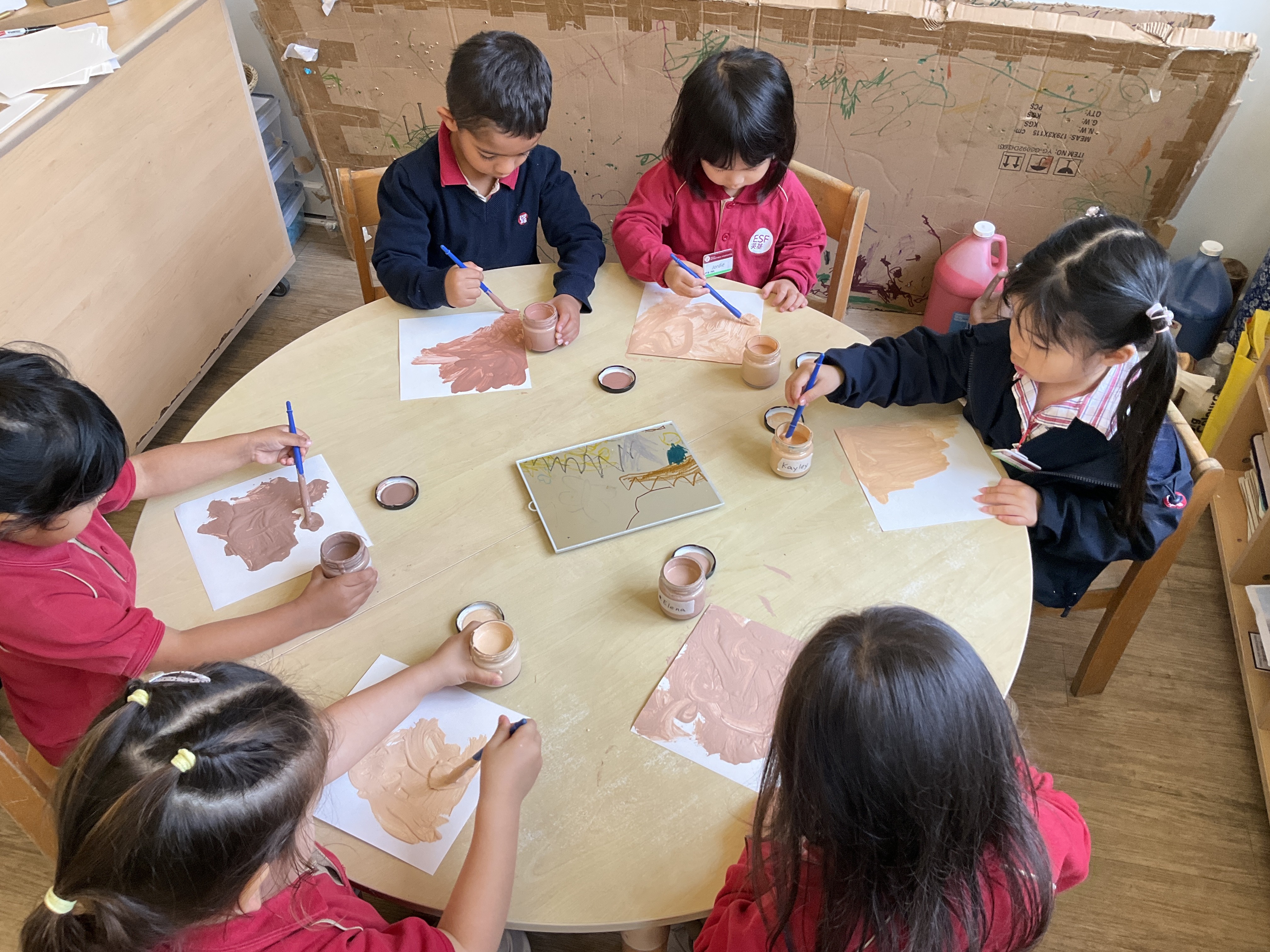
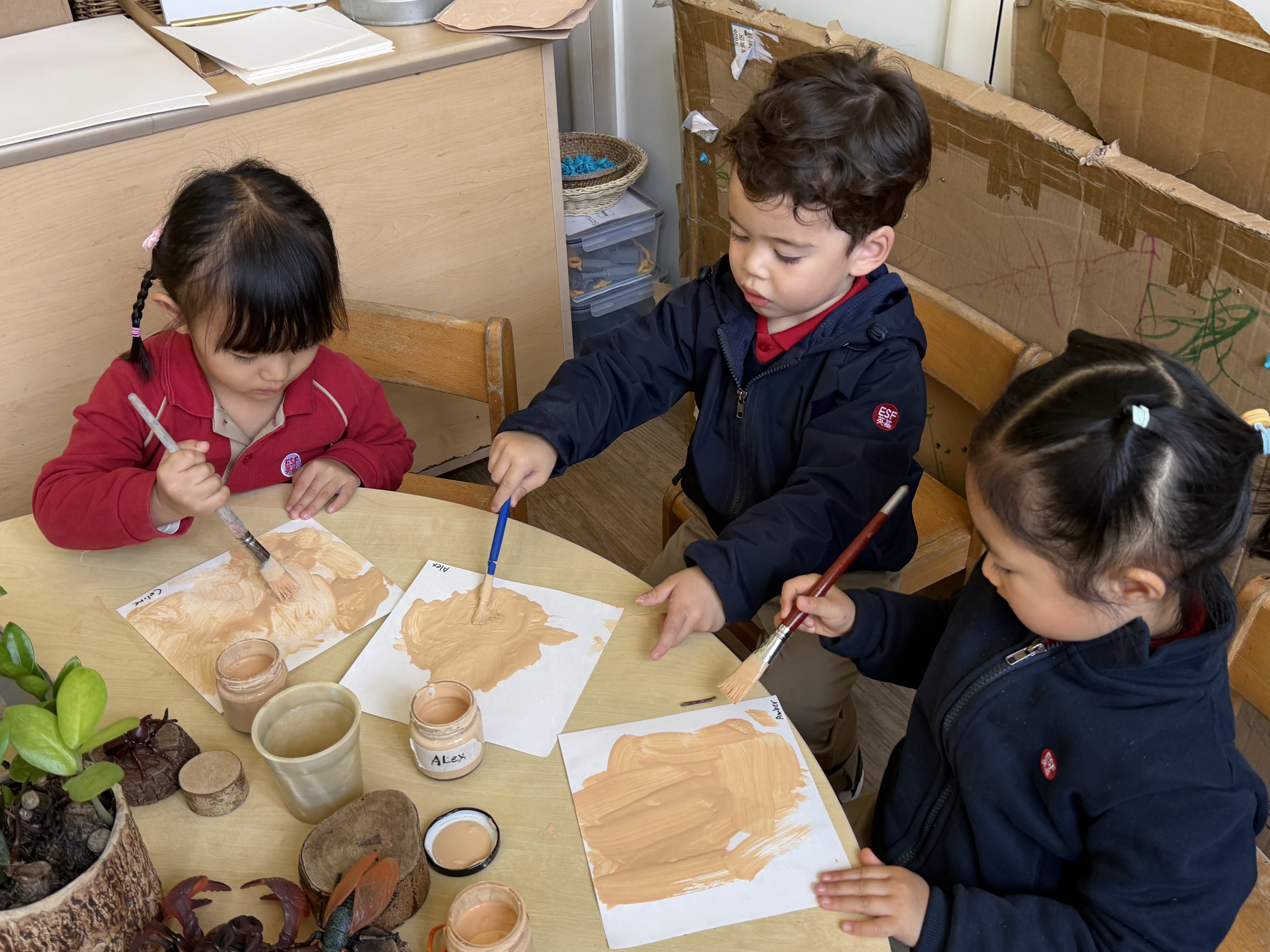
In the final weeks of this unit, we focused on building self-awareness and key emotional skills by exploring the question, "Who am I?" Children learned about their own physical appearance, personal preferences, and the people who make up their family and community. They discovered that everyone has different emotional needs and practiced important calm-down strategies, such as deep breathing, exercise, or seeking comfort from an adult. Through engaging "Feelings Activities," children practiced identifying and labelling their own feelings (what makes them happy, sad, or angry) and worked on recognising and labelling facial expressions in others (like smiling or crying).
Kindness and Cultural Appreciation
We read the book “Are you Kind?” so we could practice being a helper and a good friend! We learned that being kind means thinking about others. We have a Kindness Tree on our Learning Journey wall to celebrate the children’s acts of kindness and empathy.
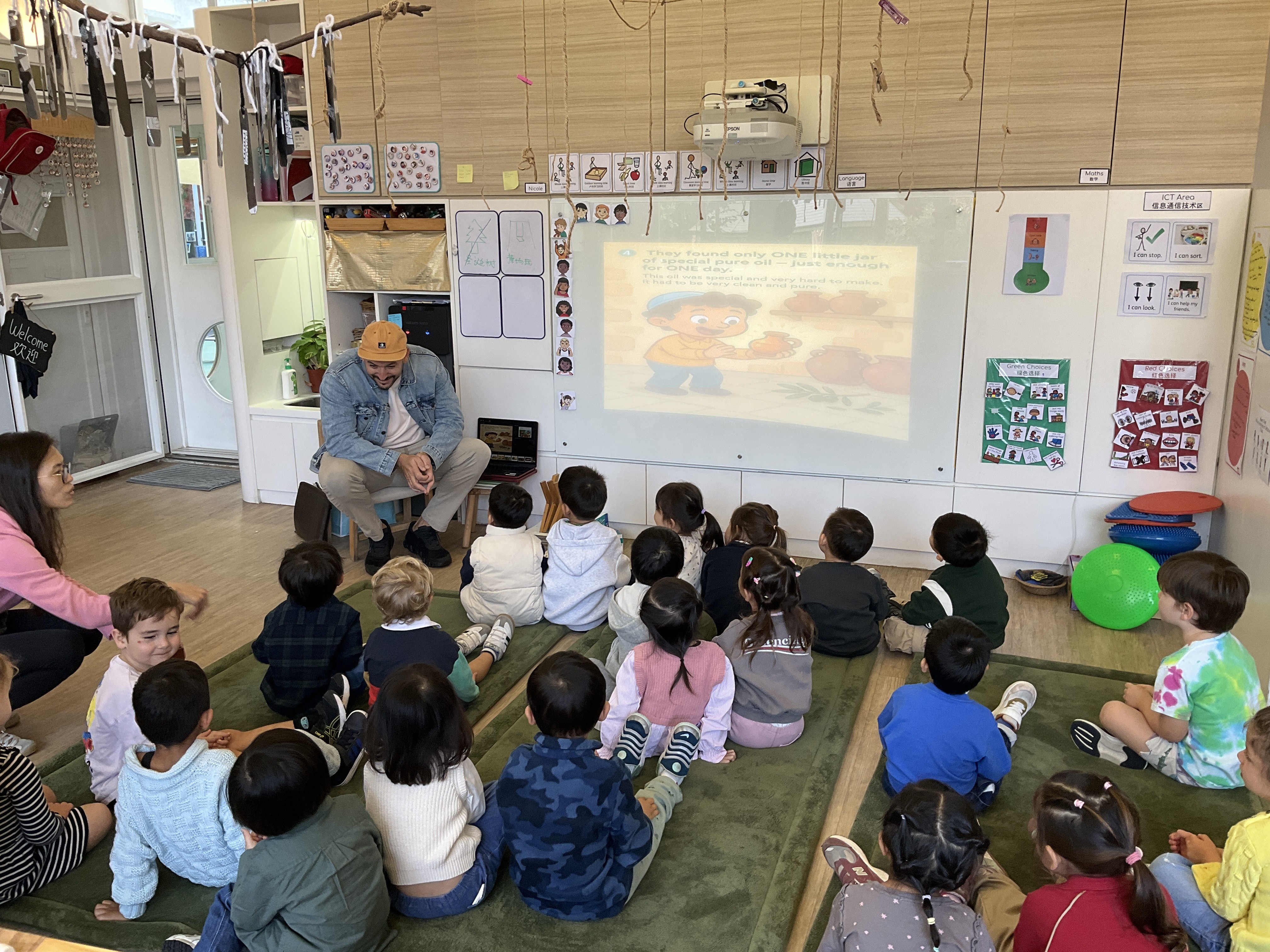
We also celebrated our diverse community through engaging visits from parent volunteers. Thank you to Jordie's Mom, Lindsay, who shared her wonderful Hong Kong-based story, "Welly the Wild Boar and the Quest for the Egg Puffs". This visit celebrated local culture and included a discussion about traditional Hong Kong snacks, like the egg puff, making for a very engaging session. We also had a visit from Romi’s dad, Tal, to learn about the Jewish holiday of Chanukah, the Festival of Lights. He shared the story of the oil that burned for eight whole nights. We learned about the Menorah and played with the traditional Jewish toy called a dreidel. Finally, we explored a traditional tale shared by Alex's Dad, Ugis. These experiences reinforced the idea that differences in backgrounds and traditions are valuable and special.
Language and Maths
The children strengthened their communication skills by reviewing that people have different preferences (foods, colours) and practicing how to express their own play preferences (what they like and dislike, such as blocks or biking). In Maths, we continued building data skills. Using group voting results, children practiced comparing quantities by answering questions like "Which one has more?" or "Which one has less?" Finally, the class had a special whole-group learning session with Ms. Emily, who introduced the large number line to visually reinforce number order and sequence, a key component of strong number sense.
Please continue to discuss these topics at home, asking your child about their favourite calm-down strategies, any acts of kindness they showed or received, and the important people and traditions in our community.
Chinese
The children have been exploring how different cultures around the world observe Winter. We discussed the Chinese celebration of the Winter Solstice (冬至), learning that families typically gather together and enjoy rice balls. Additionally, we discussed Christmas and introduced related Chinese vocabulary to the children.
Chinese Vocabulary:
Santa Claus 圣诞老公公 (shèngdàn lǎogōnggōng)
Christmas tree 圣诞树 (shèngdàn shù)
Reindeer 小鹿 (xiǎolù)
Bell 铃铛 (língdāng)
Christmas 圣诞节 (shèngdàn jié)
Merry Christmas 圣诞节快乐 (shèngdàn jié kuàilè)
happy 开心 (kāixīn)
sad 伤心 (shāngxīn)
angry 生气 (shēngqì)
silly 搞怪 (gǎoguài)
I am... 我叫... (wǒ jiào...)
I like 我喜欢 (wǒ xǐhuān)
I dislike 我不喜欢 (wǒ bù xǐhuān)
Mouth 嘴巴 (zuǐ ba)
Ears 耳朵 (ěr duo)
Head 头 (tóu)
Hands 手 (shǒu)
Shoulders 肩膀 (jiān bǎng)
Legs: 腿 (tuǐ)
Red: 红色 (hóng sè)
Yellow 黄色 (huáng sè)
Green 绿色 (lǜ sè)
Blue 蓝色 (lán sè)
In the final weeks of this unit, we focused on building self-awareness and key emotional skills by exploring the question, "Who am I?" Children learned about their own physical appearance, personal preferences, and the people who make up their family and community. They discovered that everyone has different emotional needs and practiced important calm-down strategies, such as deep breathing, exercise, or seeking comfort from an adult. Through engaging "Feelings Activities," children practiced identifying and labelling their own feelings (what makes them happy, sad, or angry) and worked on recognising and labelling facial expressions in others (like smiling or crying).
Kindness and Cultural Appreciation
We read the book “Are you Kind?” so we could practice being a helper and a good friend! We learned that being kind means thinking about others. We have a Kindness Tree on our Learning Journey wall to celebrate the children’s acts of kindness and empathy.
We also celebrated our diverse community through engaging visits from parent volunteers. Thank you to Jordie's Mom, Lindsay, who shared her wonderful Hong Kong-based story, "Welly the Wild Boar and the Quest for the Egg Puffs". This visit celebrated local culture and included a discussion about traditional Hong Kong snacks, like the egg puff, making for a very engaging session. We also had a visit from Romi’s dad, Tal, to learn about the Jewish holiday of Chanukah, the Festival of Lights. He shared the story of the oil that burned for eight whole nights. We learned about the Menorah and played with the traditional Jewish toy called a dreidel. Finally, we explored a traditional tale shared by Alex's Dad, Ugis. These experiences reinforced the idea that differences in backgrounds and traditions are valuable and special.
Language and Maths
The children strengthened their communication skills by reviewing that people have different preferences (foods, colours) and practicing how to express their own play preferences (what they like and dislike, such as blocks or biking). In Maths, we continued building data skills. Using group voting results, children practiced comparing quantities by answering questions like "Which one has more?" or "Which one has less?" Finally, the class had a special whole-group learning session with Ms. Emily, who introduced the large number line to visually reinforce number order and sequence, a key component of strong number sense.
Please continue to discuss these topics at home, asking your child about their favourite calm-down strategies, any acts of kindness they showed or received, and the important people and traditions in our community.
Chinese
The children have been exploring how different cultures around the world observe Winter. We discussed the Chinese celebration of the Winter Solstice (冬至), learning that families typically gather together and enjoy rice balls. Additionally, we discussed Christmas and introduced related Chinese vocabulary to the children.
Chinese Vocabulary:
Santa Claus 圣诞老公公 (shèngdàn lǎogōnggōng)
Christmas tree 圣诞树 (shèngdàn shù)
Reindeer 小鹿 (xiǎolù)
Bell 铃铛 (língdāng)
Christmas 圣诞节 (shèngdàn jié)
Merry Christmas 圣诞节快乐 (shèngdàn jié kuàilè)
happy 开心 (kāixīn)
sad 伤心 (shāngxīn)
angry 生气 (shēngqì)
silly 搞怪 (gǎoguài)
I am... 我叫... (wǒ jiào...)
I like 我喜欢 (wǒ xǐhuān)
I dislike 我不喜欢 (wǒ bù xǐhuān)
Mouth 嘴巴 (zuǐ ba)
Ears 耳朵 (ěr duo)
Head 头 (tóu)
Hands 手 (shǒu)
Shoulders 肩膀 (jiān bǎng)
Legs: 腿 (tuǐ)
Red: 红色 (hóng sè)
Yellow 黄色 (huáng sè)
Green 绿色 (lǜ sè)
Blue 蓝色 (lán sè)
Posted by:
Ms Irene Ma, 21/11/2025 15:23:12
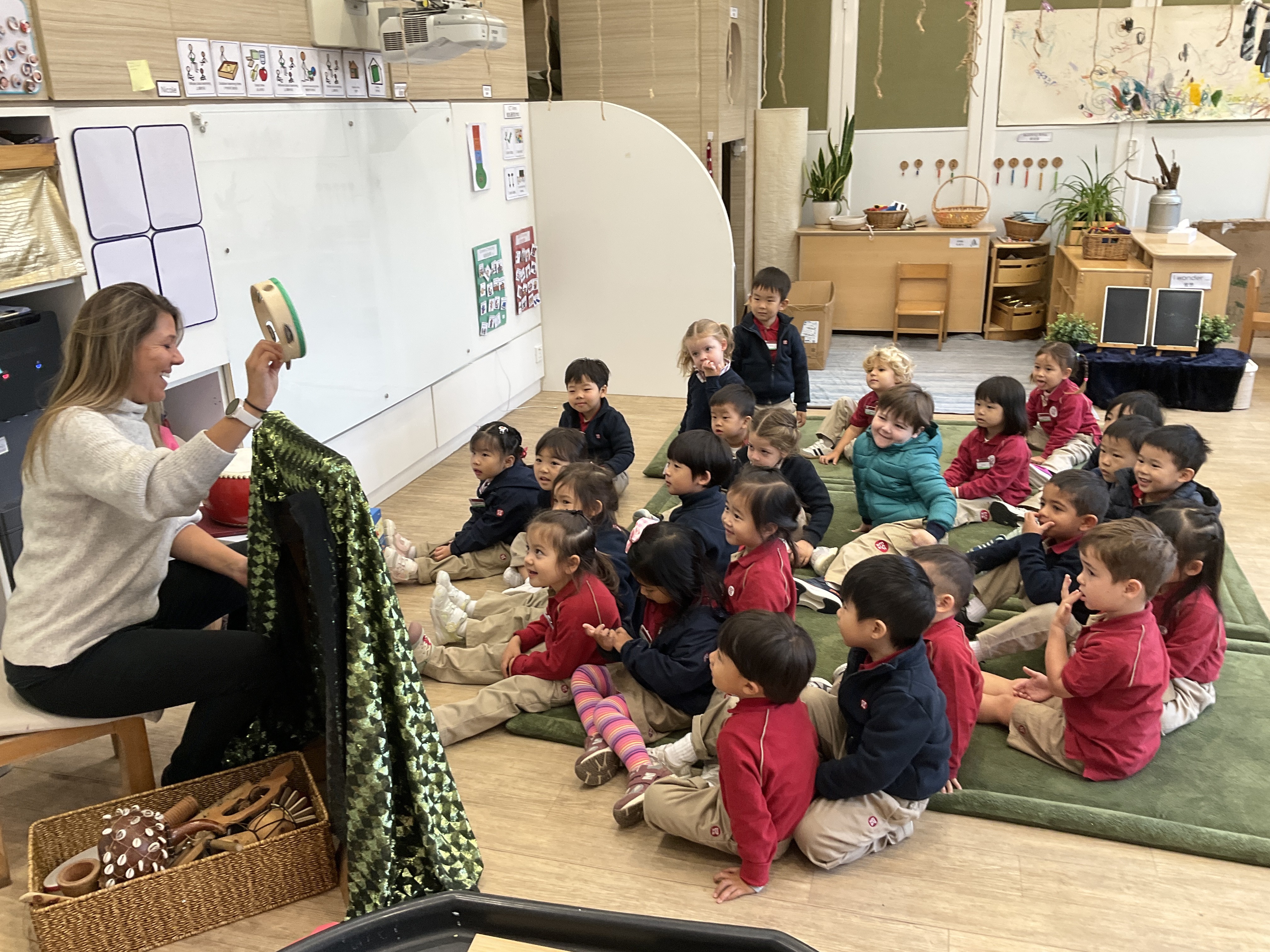
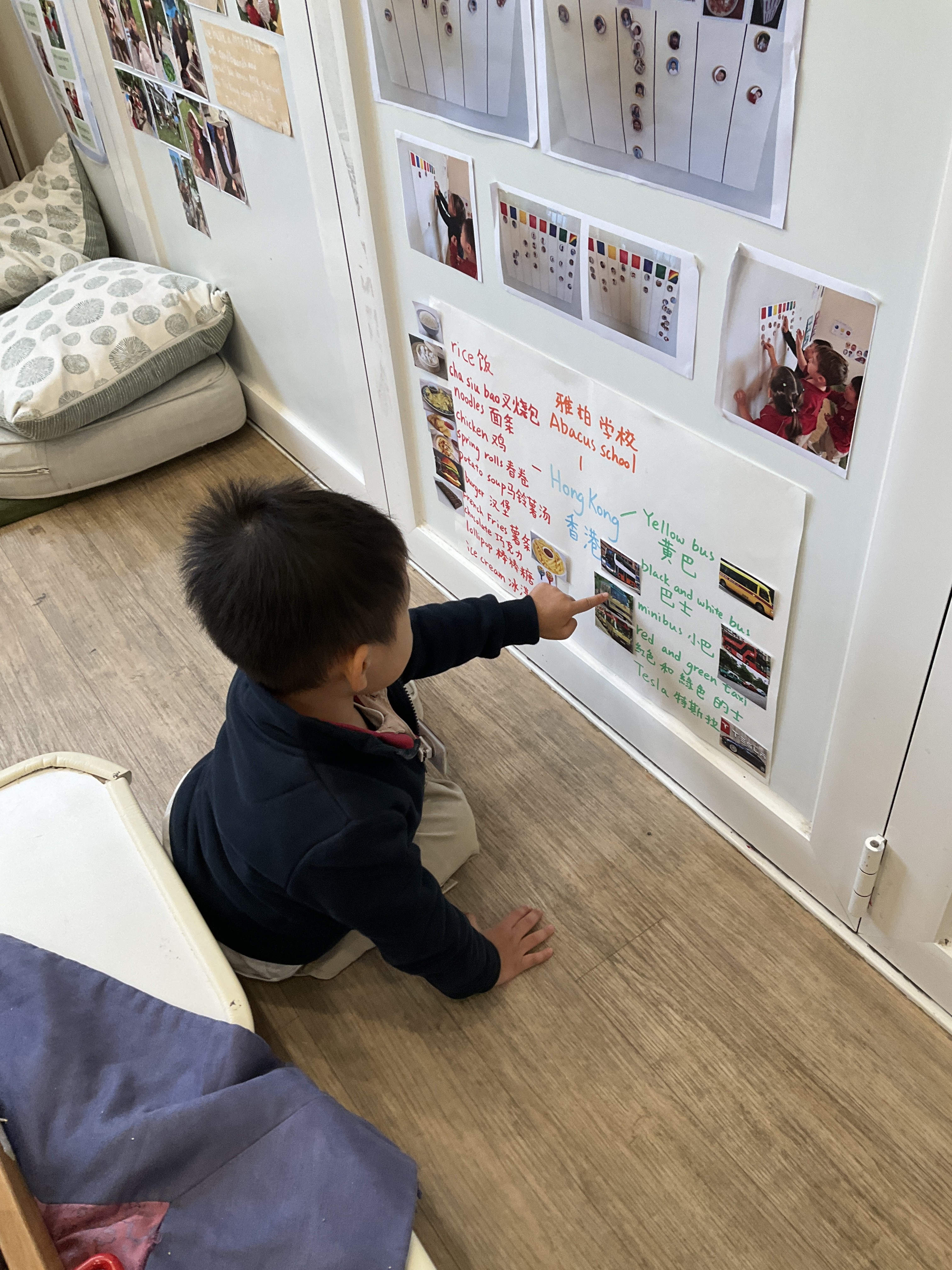
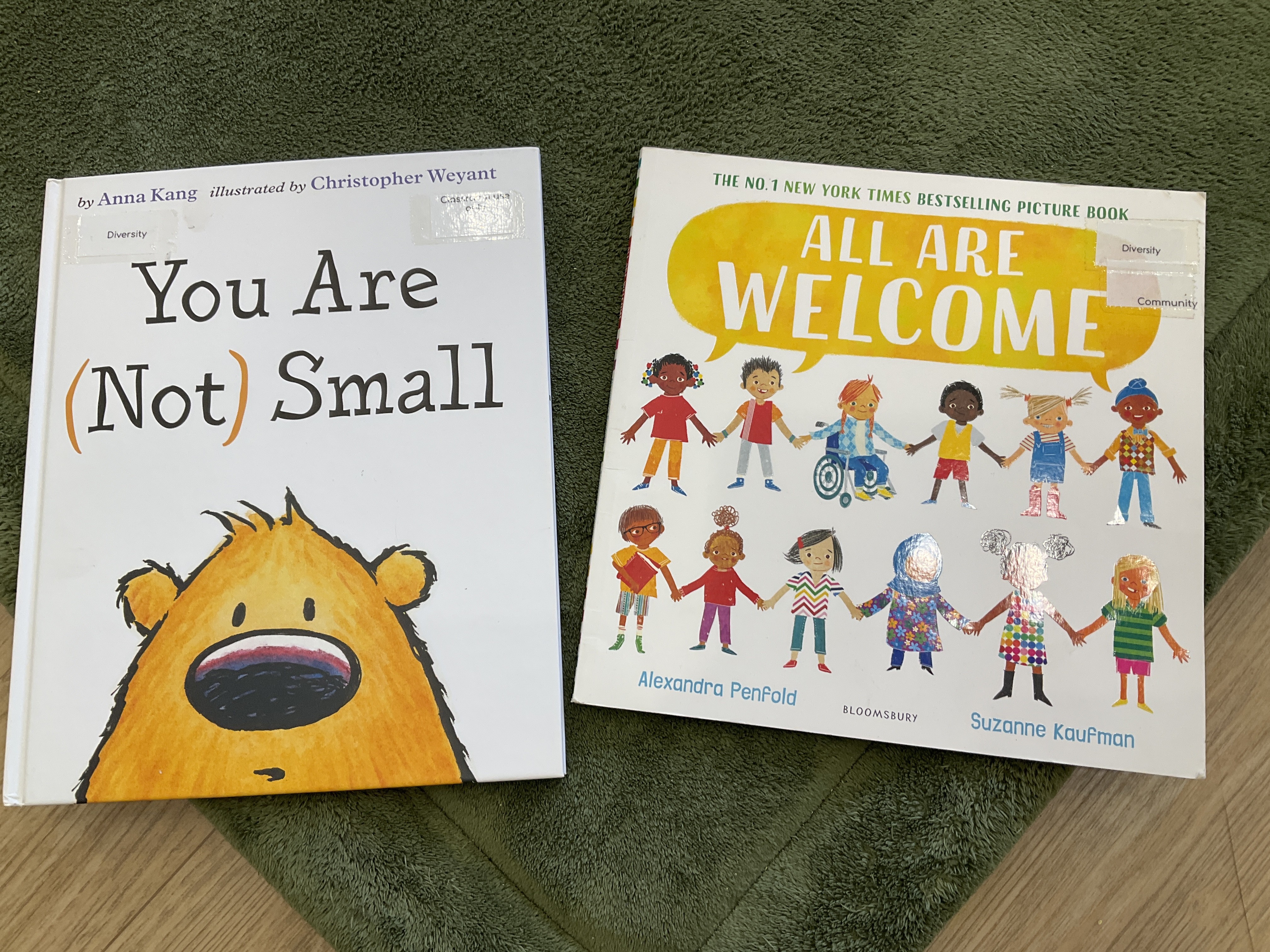
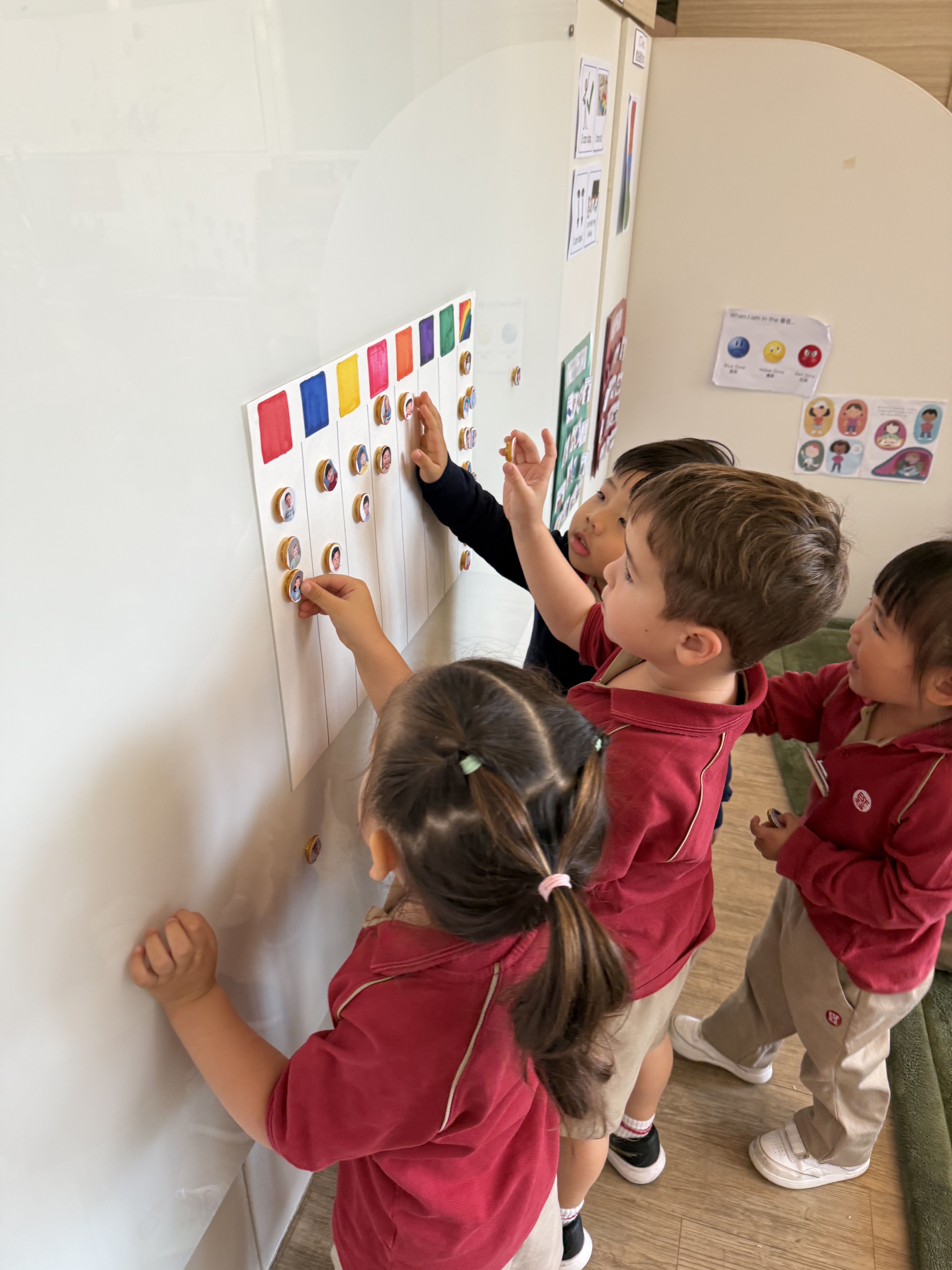
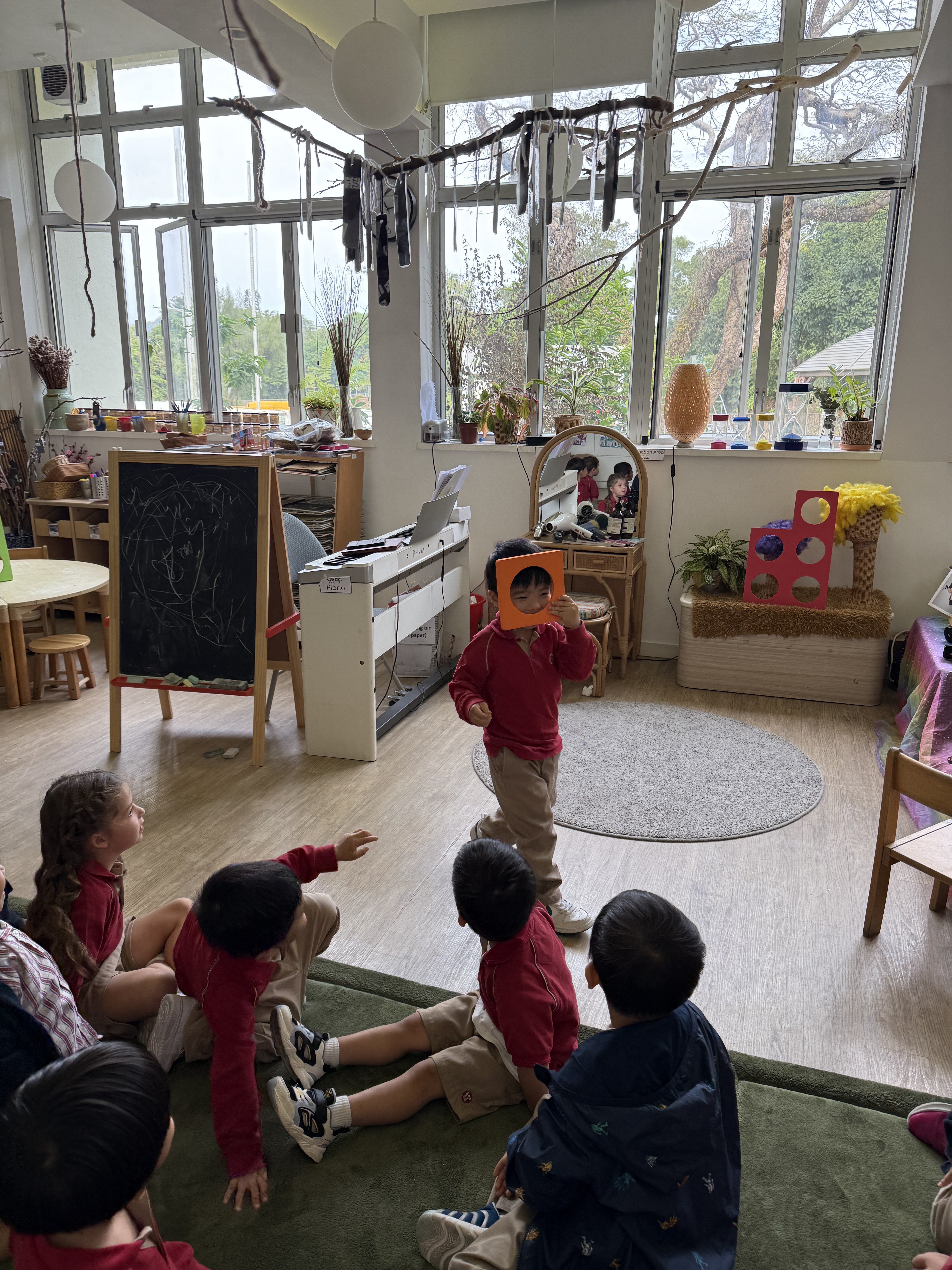
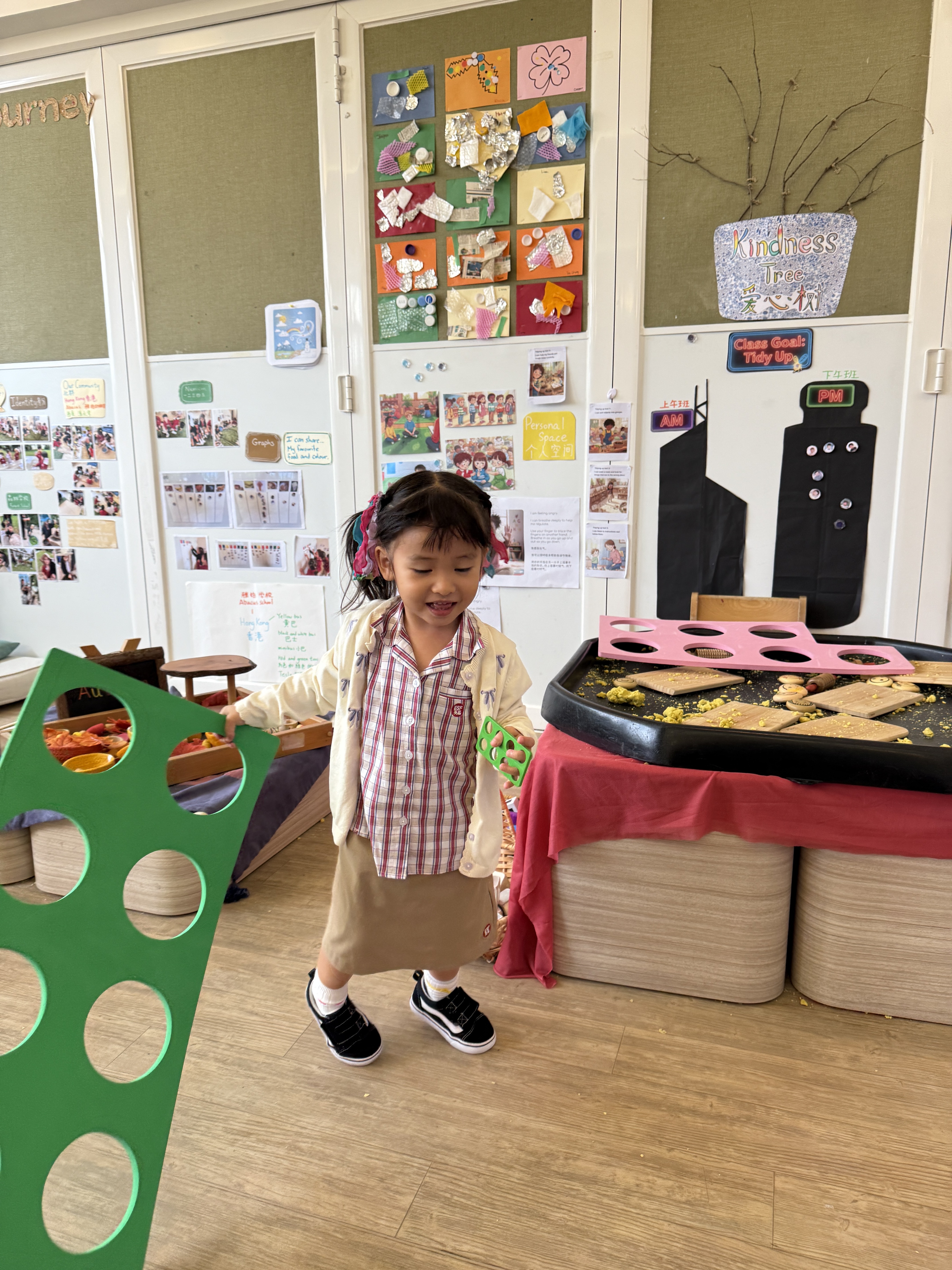
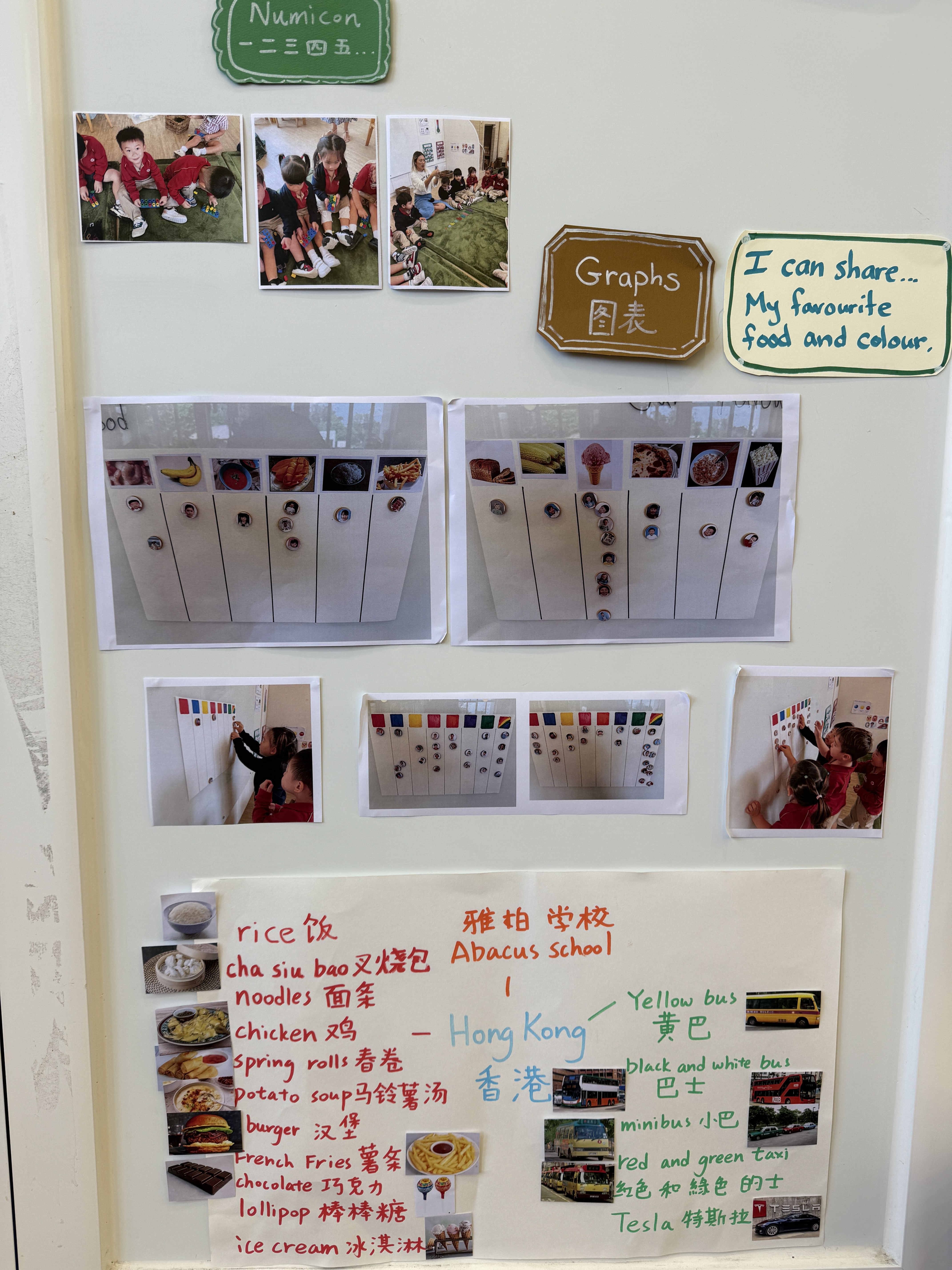
21st November WHOLE CLASS Learning Journey
UOI
The little firebugs have been exploring 'Everyone is different and special'. Through stories 'Everyone is Different', ‘You Are Not Small' and ‘All Are Welcome’, the children are developing an understanding and appreciation of individual differences. We are identifying that people have various physical features, which contribute to how we look different. The children are continuing to practice recognising and expressing their feelings and preferences. A big thank you to our parent volunteers for helping us complete the skin colour jars, an important activity that reinforces the children’s understanding of how unique and special every single child is.
Language
This week, we played active games using musical instruments to strengthen listening skills.
The class explored a variety of instruments and practiced stopping and starting with the instrument's beat. This activity specifically helps them learn to focus and control attention.
Following our exploration, we played a guessing game where they had to figure out which instrument was playing just by hearing its sound. This is important practice for being able to discriminate between different sounds.
Maths
We've been building on the children’s counting skills by introducing data handling—the first step in understanding charts and graphs! We started by practicing important social skills, like turn-taking, as children used body percussion to share their favorite colors and foods with the group.
Next, we created a simple bar graph. Each child voted for their choice by placing their own picture magnet into the corresponding column. The main learning goal was understanding the difference between the 'most' popular choice and the 'least' popular choice or simply by answering yes or no questions.
This helps children to visually compare quantities without needing to count every single vote, setting a strong foundation for future mathematical analysis.
Chinese
The children have been actively practising the phrases "我喜欢" (I like) and "我不喜欢" (I dislike) to express their preferences. They have taken the next step of sharing what their family members enjoy, such as specific colours, foods, and animals.
Through reading the story "花格子大象艾玛" (Elmer), we celebrated our differences and uniqueness within the class community. To support this learning, we introduced and used the vocabulary "一样" (same) and "不一样" (different) when making comparisons. Additionally, we have continued to recap the Zones of Regulation by practising the words for key feelings: "开心" (happy), "伤心" (sad), "生气" (angry), and "傻傻的" (silly).
Chinese Vocabulary:
happy 开心 (kāixīn)
sad 伤心 (shāngxīn)
angry 生气 (shēngqì)
silly 搞怪 (gǎoguài)
I am... 我叫... (wǒ jiào...)
I like 我喜欢 (wǒ xǐhuān)
I dislike 我不喜欢 (wǒ bù xǐhuān)
Mouth 嘴巴 (zuǐ ba)
Ears 耳朵 (ěr duo)
Head 头 (tóu)
Hands 手 (shǒu)
Shoulders 肩膀 (jiān bǎng)
Legs: 腿 (tuǐ)
Red: 红色 (hóng sè)
Yellow 黄色 (huáng sè)
Green 绿色 (lǜ sè)
Blue 蓝色 (lán sè)
Chinese songs:
我喜欢美丽颜色
https://www.youtube.com/watch?v=9NmRR53LZdc
你叫什么名字?What is your name?
https://www.youtube.com/watch?v=uhmjwL3Xpt0
UOI
The little firebugs have been exploring 'Everyone is different and special'. Through stories 'Everyone is Different', ‘You Are Not Small' and ‘All Are Welcome’, the children are developing an understanding and appreciation of individual differences. We are identifying that people have various physical features, which contribute to how we look different. The children are continuing to practice recognising and expressing their feelings and preferences. A big thank you to our parent volunteers for helping us complete the skin colour jars, an important activity that reinforces the children’s understanding of how unique and special every single child is.
Language
This week, we played active games using musical instruments to strengthen listening skills.
The class explored a variety of instruments and practiced stopping and starting with the instrument's beat. This activity specifically helps them learn to focus and control attention.
Following our exploration, we played a guessing game where they had to figure out which instrument was playing just by hearing its sound. This is important practice for being able to discriminate between different sounds.
Maths
We've been building on the children’s counting skills by introducing data handling—the first step in understanding charts and graphs! We started by practicing important social skills, like turn-taking, as children used body percussion to share their favorite colors and foods with the group.
Next, we created a simple bar graph. Each child voted for their choice by placing their own picture magnet into the corresponding column. The main learning goal was understanding the difference between the 'most' popular choice and the 'least' popular choice or simply by answering yes or no questions.
This helps children to visually compare quantities without needing to count every single vote, setting a strong foundation for future mathematical analysis.
Chinese
The children have been actively practising the phrases "我喜欢" (I like) and "我不喜欢" (I dislike) to express their preferences. They have taken the next step of sharing what their family members enjoy, such as specific colours, foods, and animals.
Through reading the story "花格子大象艾玛" (Elmer), we celebrated our differences and uniqueness within the class community. To support this learning, we introduced and used the vocabulary "一样" (same) and "不一样" (different) when making comparisons. Additionally, we have continued to recap the Zones of Regulation by practising the words for key feelings: "开心" (happy), "伤心" (sad), "生气" (angry), and "傻傻的" (silly).
Chinese Vocabulary:
happy 开心 (kāixīn)
sad 伤心 (shāngxīn)
angry 生气 (shēngqì)
silly 搞怪 (gǎoguài)
I am... 我叫... (wǒ jiào...)
I like 我喜欢 (wǒ xǐhuān)
I dislike 我不喜欢 (wǒ bù xǐhuān)
Mouth 嘴巴 (zuǐ ba)
Ears 耳朵 (ěr duo)
Head 头 (tóu)
Hands 手 (shǒu)
Shoulders 肩膀 (jiān bǎng)
Legs: 腿 (tuǐ)
Red: 红色 (hóng sè)
Yellow 黄色 (huáng sè)
Green 绿色 (lǜ sè)
Blue 蓝色 (lán sè)
Chinese songs:
我喜欢美丽颜色
https://www.youtube.com/watch?v=9NmRR53LZdc
你叫什么名字?What is your name?
https://www.youtube.com/watch?v=uhmjwL3Xpt0
Posted by:
Ms Irene Ma, 20/11/2025 12:45:38
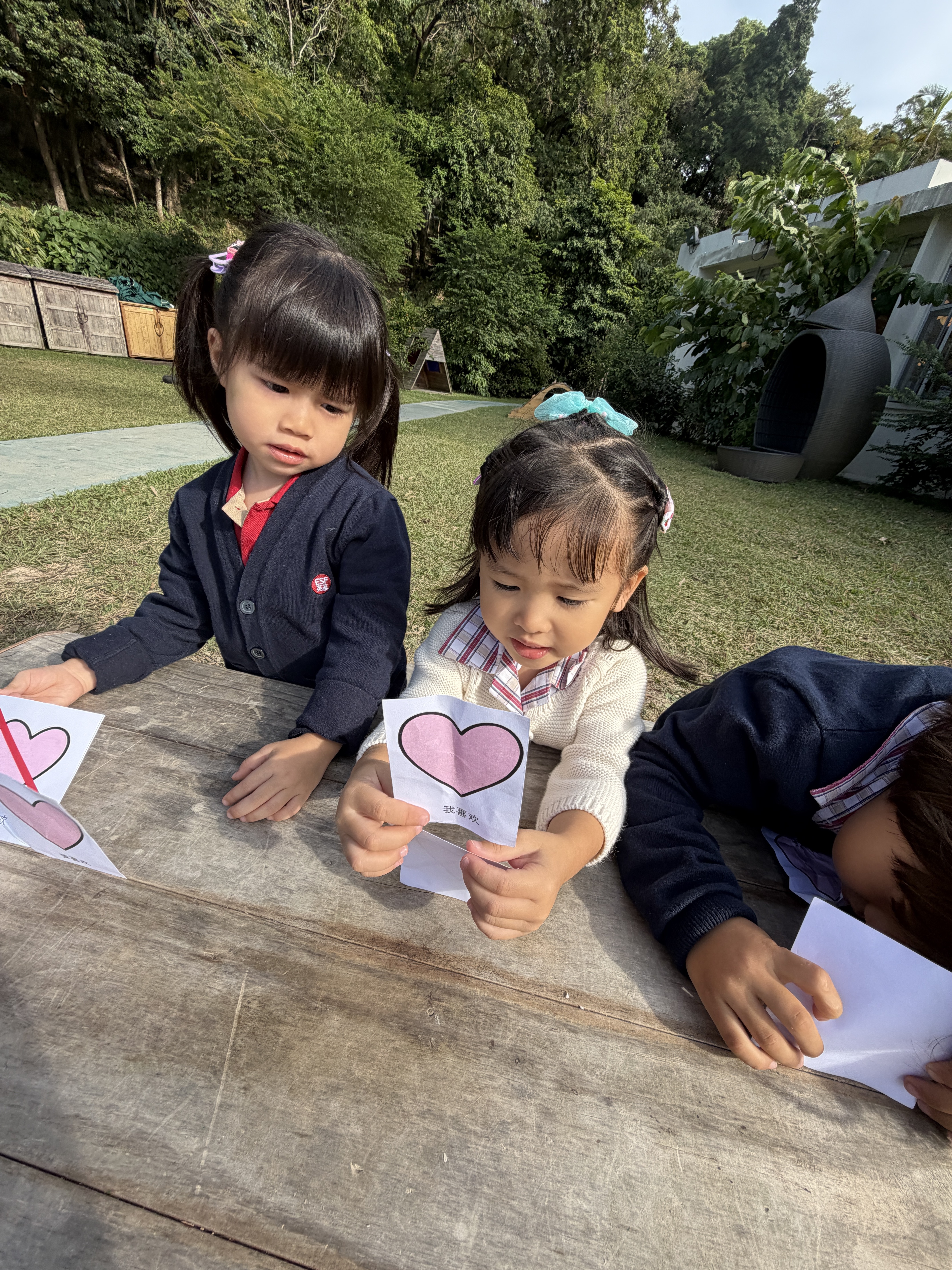
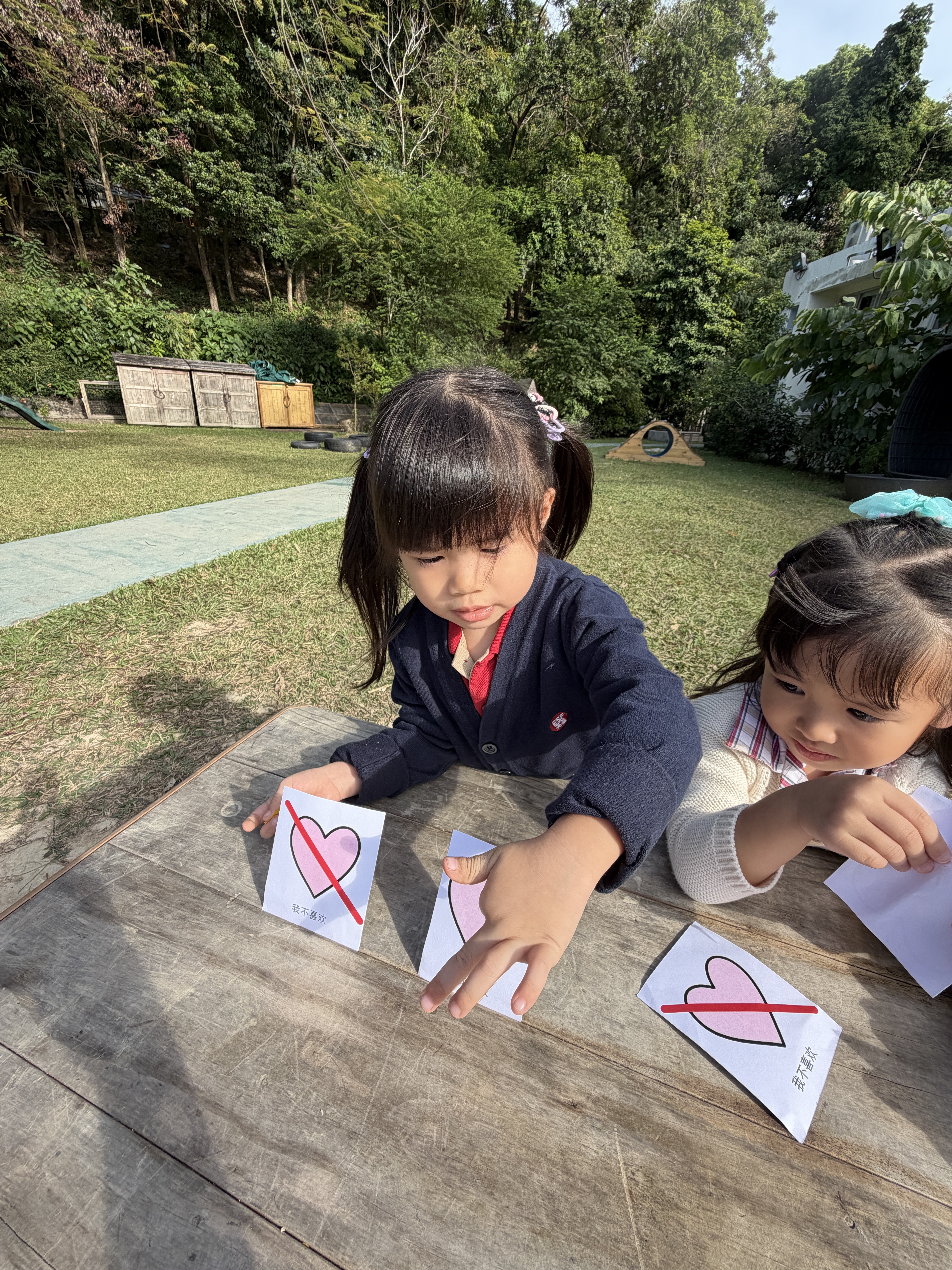
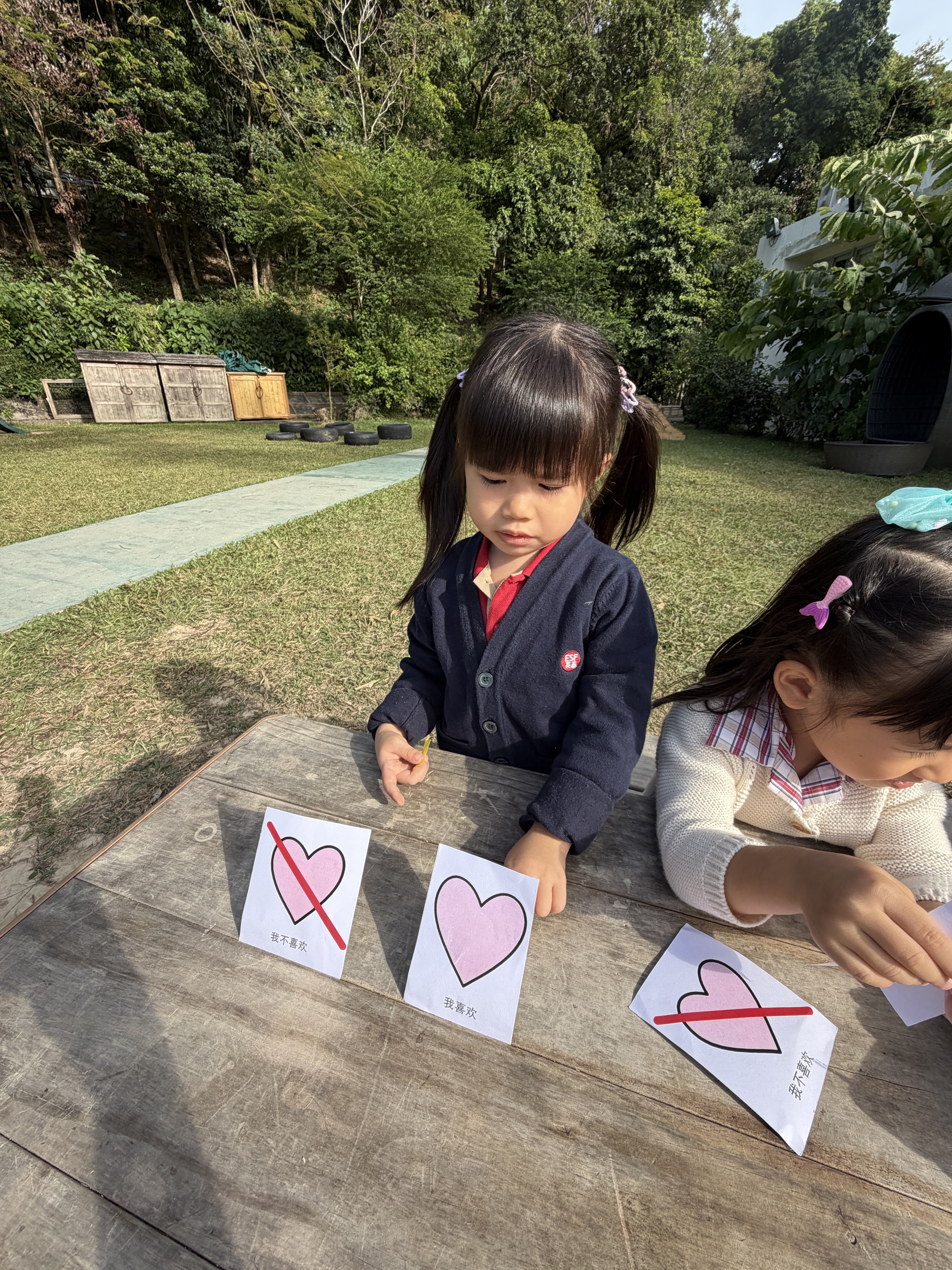
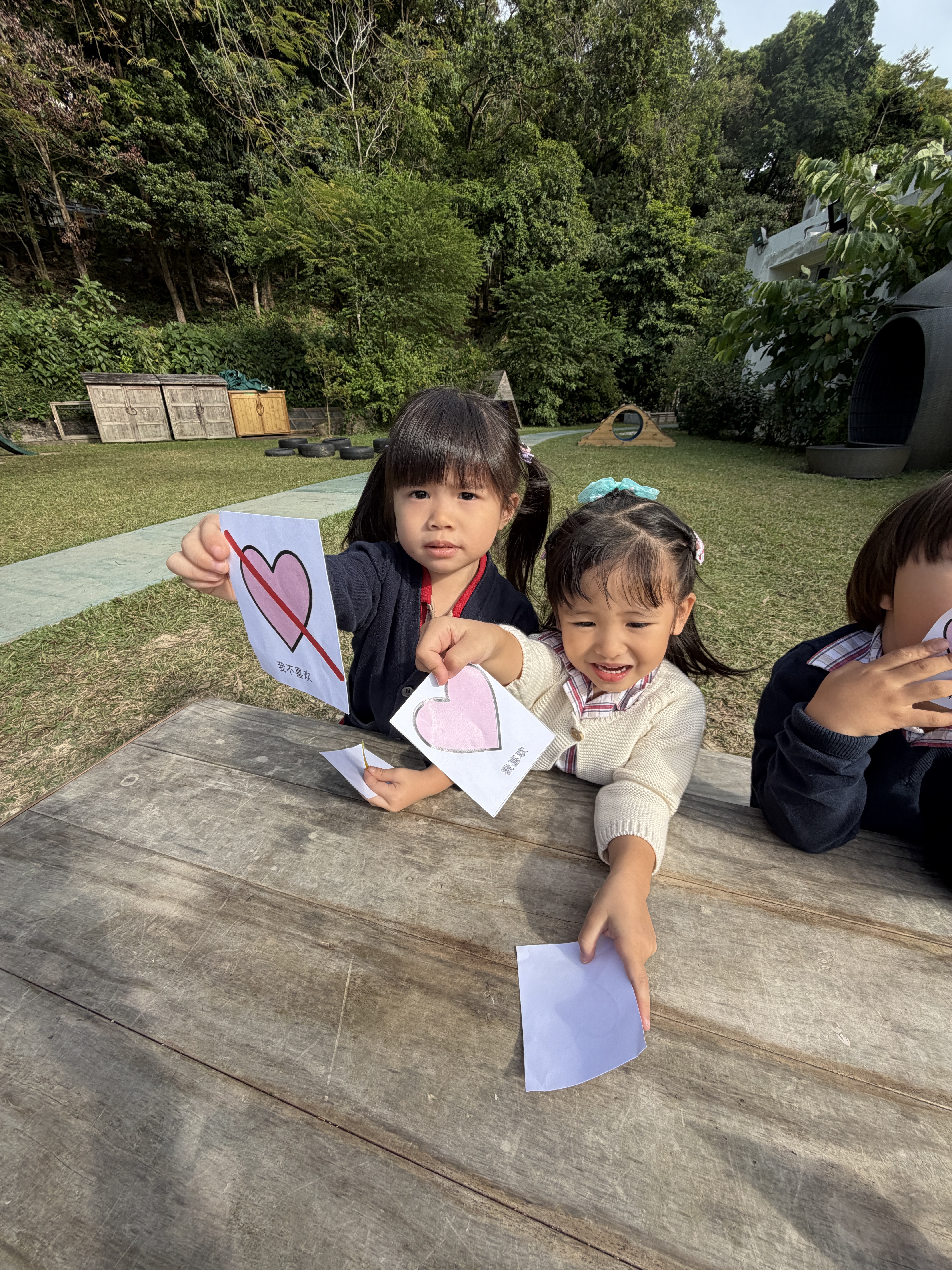
In our 'Who We Are' unit, we explored identity by focusing on personal preferences. This small group activity helped children practice expressing what they like and dislike in Mandarin. Using visual cards, the children responded to the question, 'Do you like it? 你喜欢吗?' The children learned and practised the phrases 我喜欢 (I like) and 我不喜欢 (I don't like). After raising their preference cards, they were encouraged to extend their responses into full sentences, such as '我喜欢红色 I like red.' This activity is foundational for building self-awareness and developing basic Mandarin communication skills.
Hailey confidently used the phrases 我喜欢/我不喜欢 to show her preferences. She made great attempts to repeat and form simple sentences like '我喜欢兔子 I like rabbits.' It was wonderful to hear Hailey share things her family likes, too! Well done for continuing to try to speak in Mandarin!
Hailey confidently used the phrases 我喜欢/我不喜欢 to show her preferences. She made great attempts to repeat and form simple sentences like '我喜欢兔子 I like rabbits.' It was wonderful to hear Hailey share things her family likes, too! Well done for continuing to try to speak in Mandarin!
Posted by:
Nicole Pattison, 18/11/2025 08:04:05
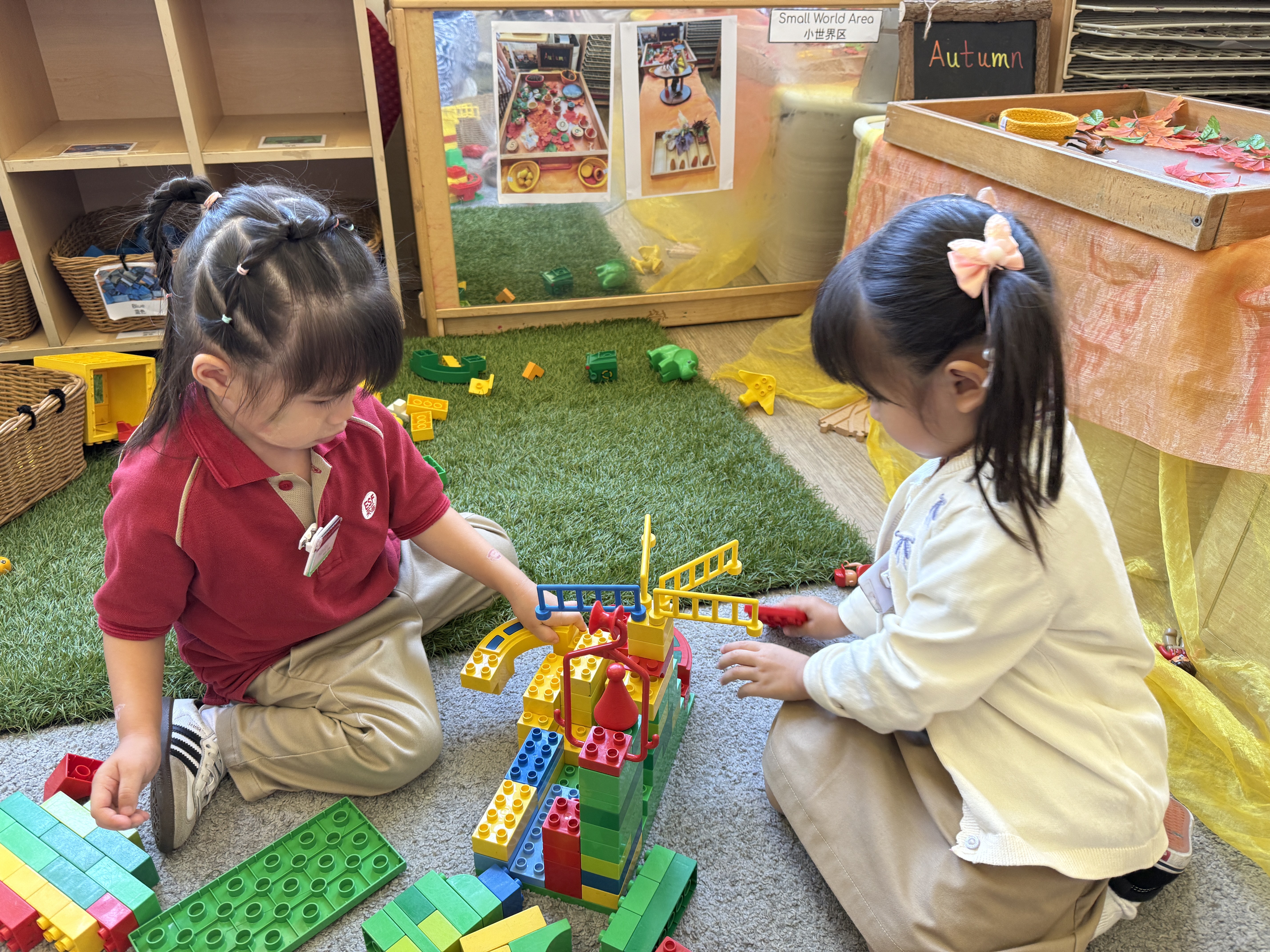
Building with LEGO, Hailey and a classmate worked together to construct a house. She showed teamwork and shared focus to complete their project.
Posted by:
Nicole Pattison, 07/11/2025 13:04:58
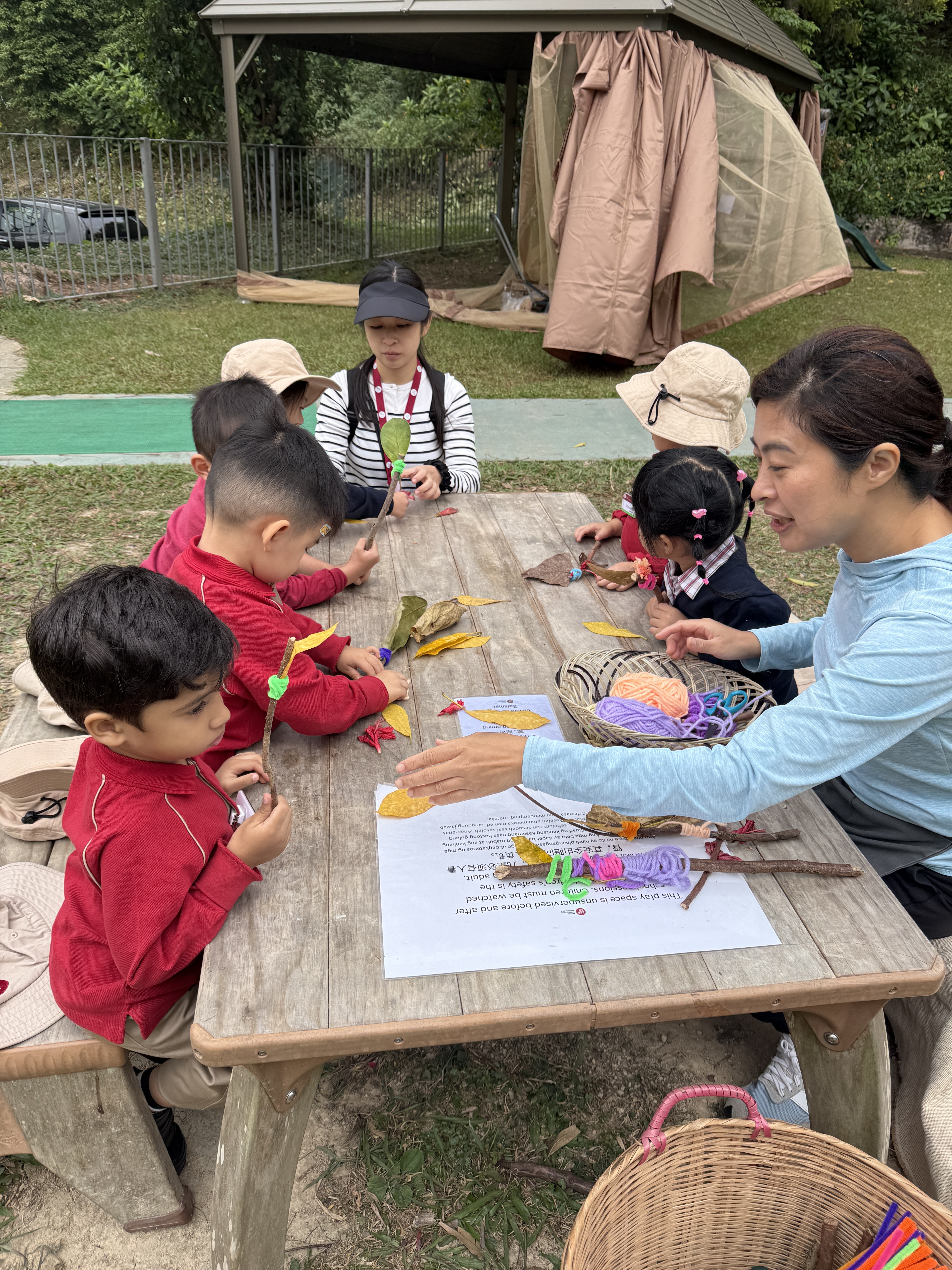
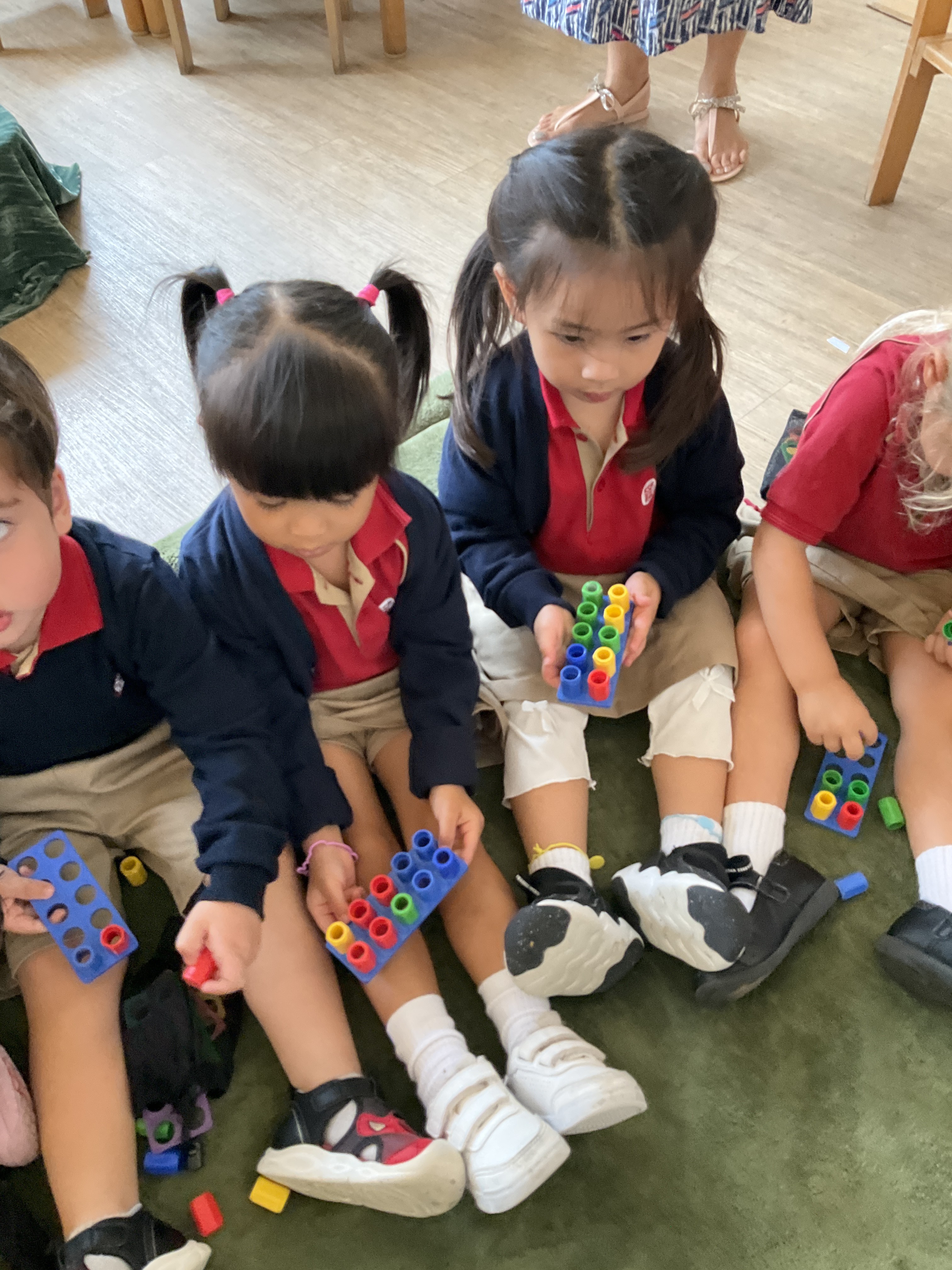
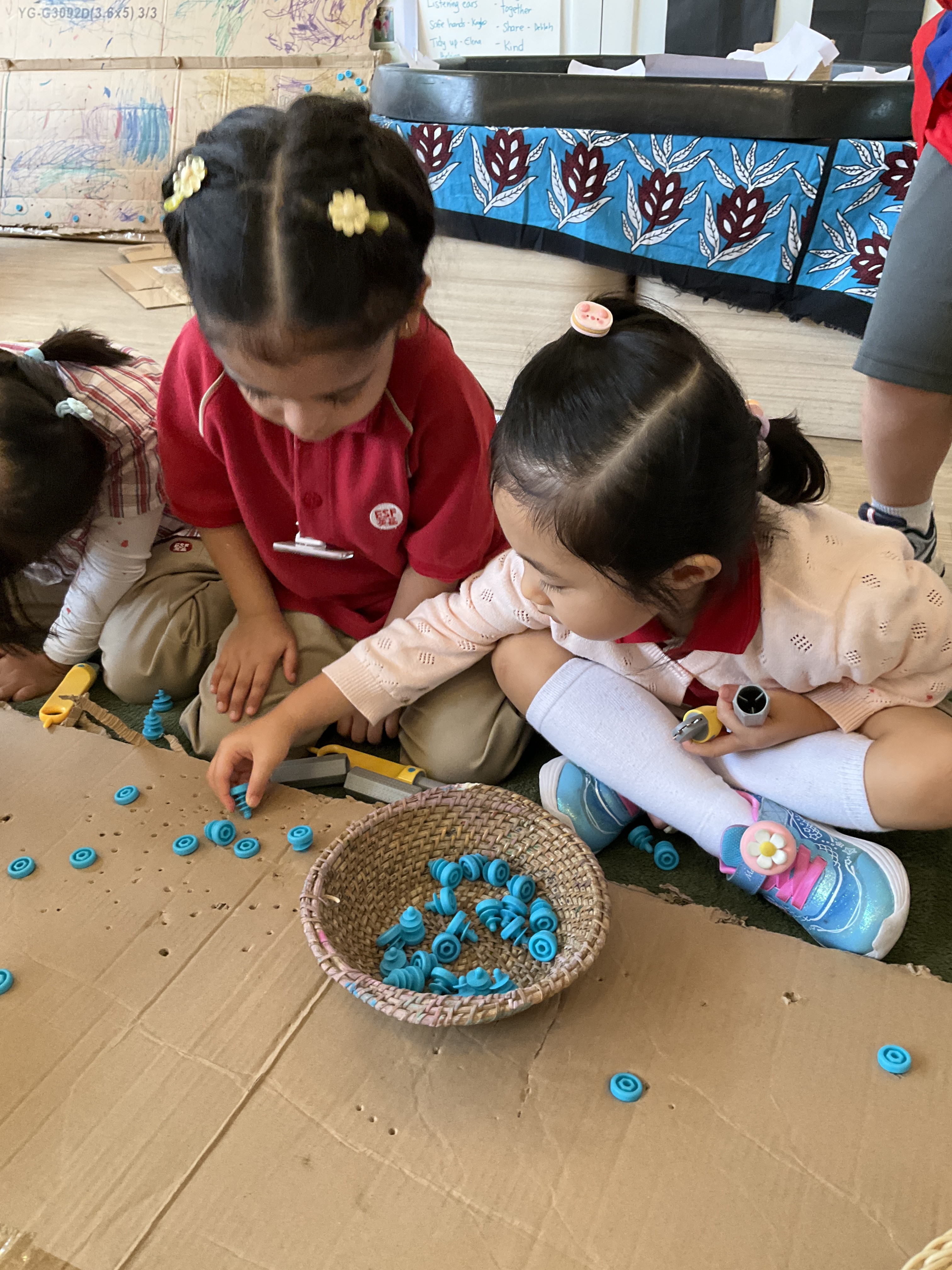
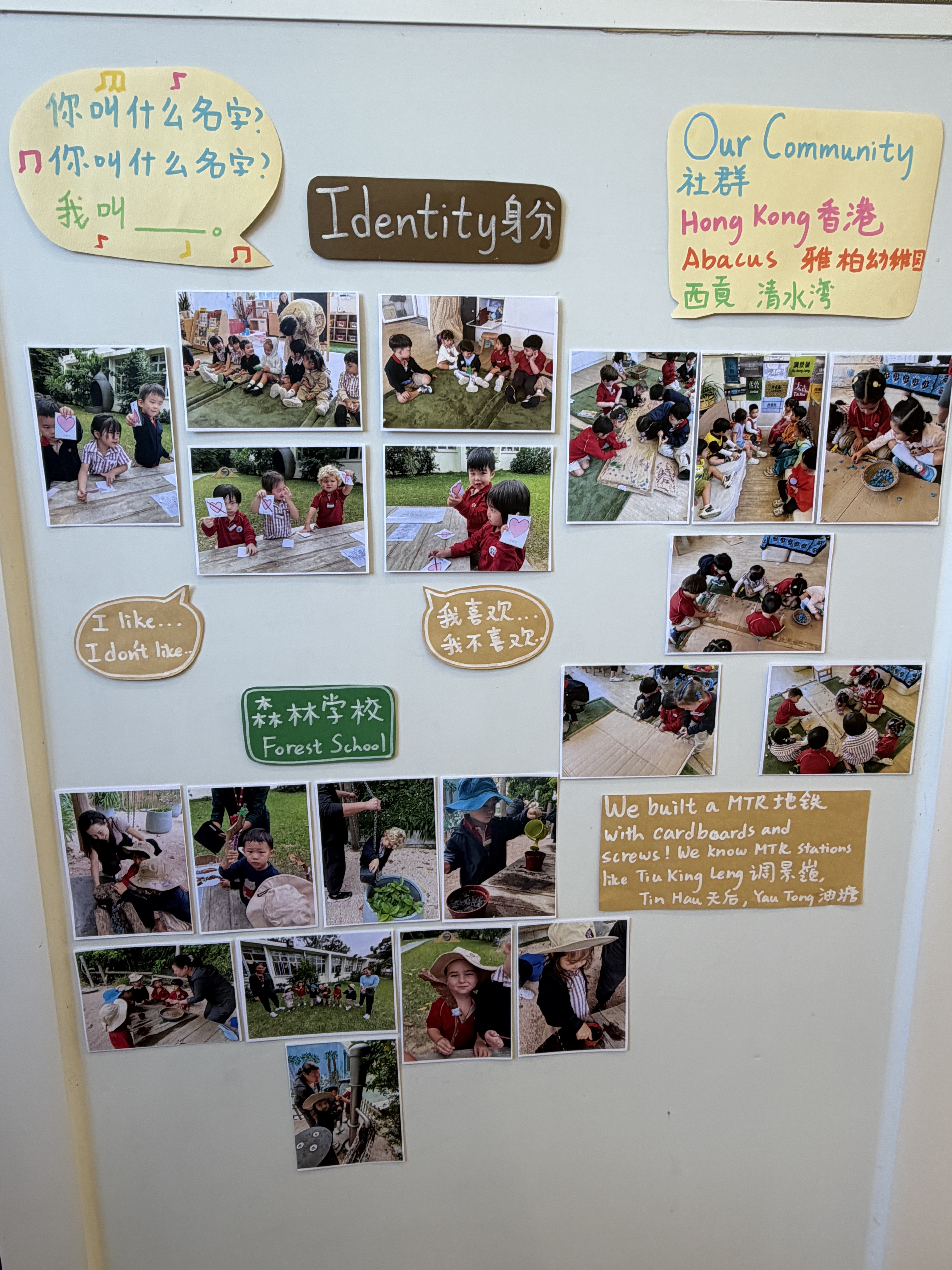
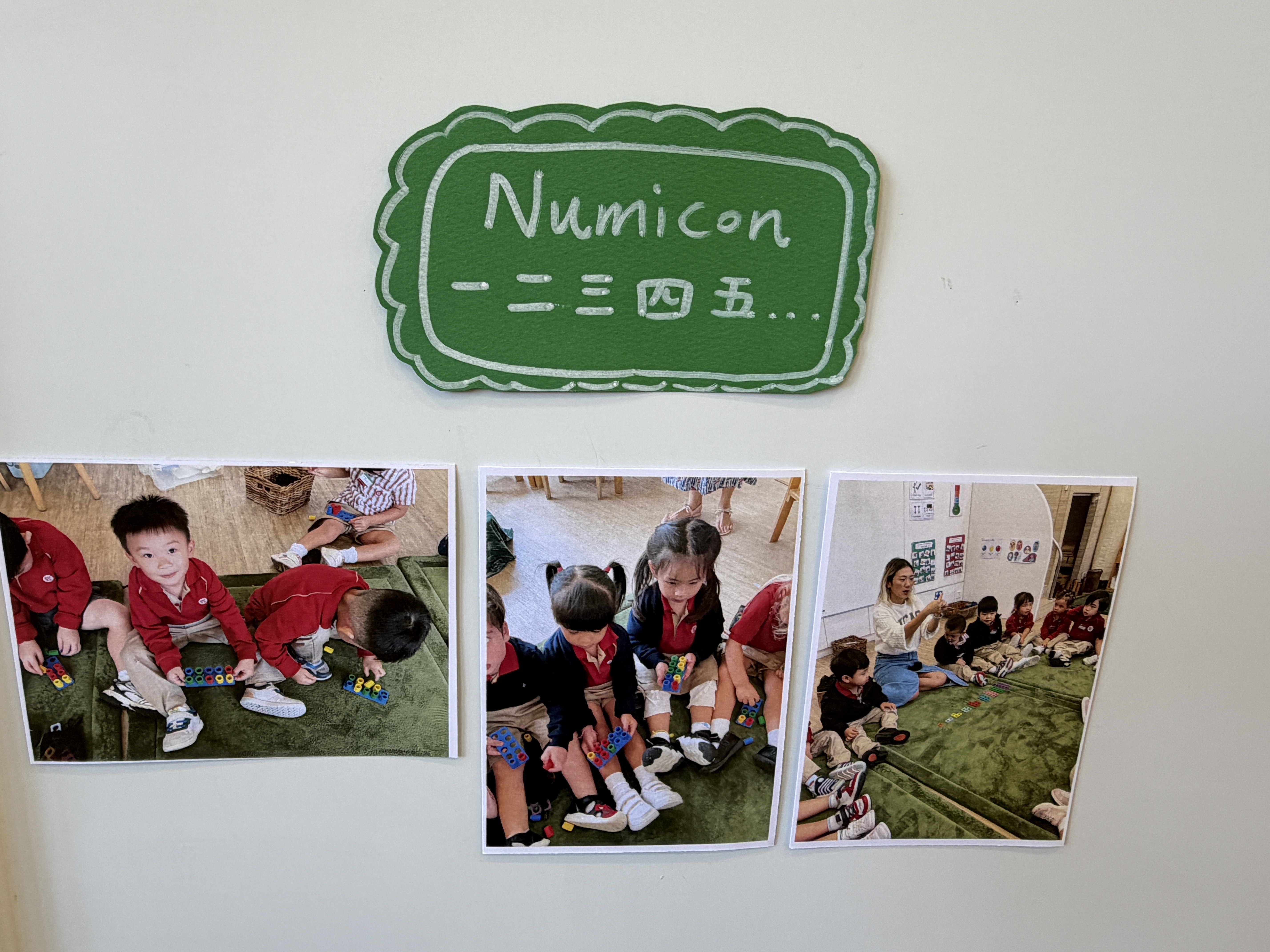
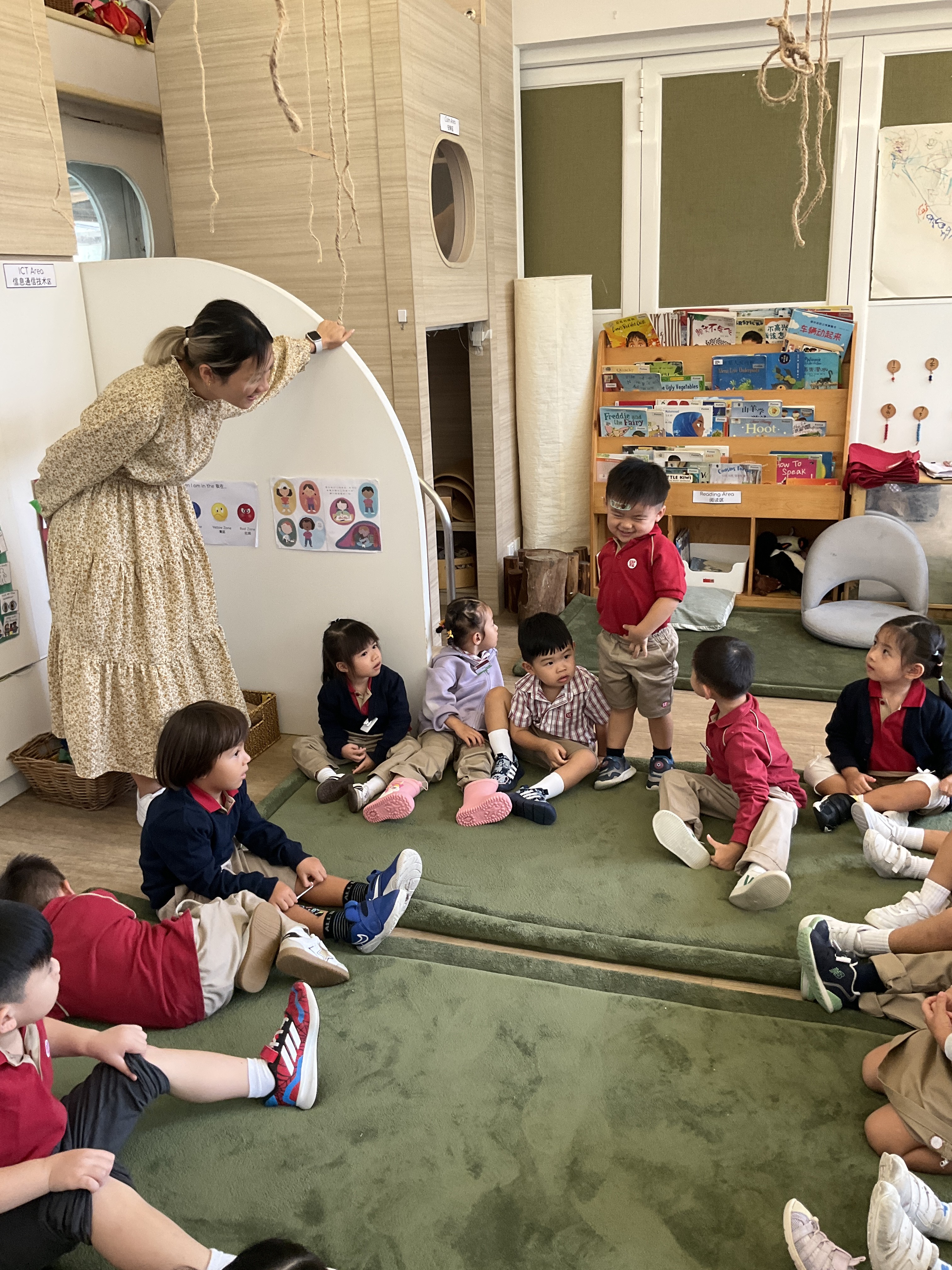
WWA Learning Journey
Unit of Inquiry
Our Firebugs have actively developed their communication skills and language over the past few weeks, notably demonstrating the Learner Profile traits of Communicators and Risk-Takers. Students bravely shared “My Favourite Things” with their class, and we celebrated their courage in speaking publicly. We also introduced a talking stick to reinforce active listening and turn-taking as they shared details about themselves, such as their favourite food and colour.
We read the story 'We're All Different' and used it to discuss how we can all like different things. We emphasised that our differences—in interests, hair, skin colour, etc.—are what make us unique and special, ensuring we celebrate everyone.
We had a fantastic time at our Forest School session; connecting with nature and fostering creativity. We learned about being kind to nature and planting with Ms. Michelle. The children enthusiastically added seeds to flower pots and used the water pump to fill watering cans. With Zhang Lao Shi, the children practiced creativity and observation by collecting natural materials ie. sticks, leaves, and flowers to create 'magic sticks,' which they decorated with coloured yarn. This activity promoted fine motor skills, imagination, and respect for the natural world.
Language
We have continued to develop essential listening skills through our foundational focus on Environmental Sounds. We played a "Feely Bag Sounds" game which allowed children to practice auditory discrimination by carefully listening, shaking the bag containing distinct objects (like blocks or a bell), and guessing the source of the sound.
Maths
In maths we continued with our Numicon exploration in our sensory trays and used Numicon stamps to decorate Hong Kong postcards, linking math and culture. We continued our small groups to reinforce key skills like one-to-one counting, number recognition, subitising and practicing turn-taking games.
Chinese
Our current learning journey focuses on identity and exploring our Hong Kong community. The children are actively practicing Chinese phrases, learning to answer 'What is your name? 你叫什么名字?' with 'I am___. 我叫___.', and expressing preferences using 我喜欢 (I like) and 我 不喜欢 (I dislike). To deepen their understanding of our Hong Kong community, we discussed familiar Hong Kong transport like minibuses, taxis, and the MTR. This led to a hands-on activity where the children collaboratively built a large cardboard MTR for our role-play area, incorporating station names they know, such as Tai Koo and Lohas Park, seamlessly integrating Chinese language practice into imaginative play about our city.
The Chinese Vocabulary and questions
What is your name? 你叫什么名字? (nǐ jiào shén me míng zi?)
I am... 我叫... (wǒ jiào...)
I like 我喜欢 (wǒ xǐhuān)
I dislike 我不喜欢 (wǒ bù xǐhuān)
MTR (Mass Transit Railway) 地铁 (dìtiě)
Mouth 嘴巴 (zuǐ ba)
Ears 耳朵 (ěr duo)
Head 头 (tóu)
Hands 手 (shǒu)
Shoulders 肩膀 (jiān bǎng)
Legs: 腿 (tuǐ)
Red: 红色 (hóng sè)
Yellow 黄色 (huáng sè)
Green 绿色 (lǜ sè)
Blue 蓝色 (lán sè)
Red choices 红色选择 (hóng sè xuǎn zé)
Green choices 绿色选择 (lǜ sè xuǎn zé)
Please tidy up 请收拾 (qǐng shōu shi)
Wash hands 洗手 (xǐ shǒu)
Go to toilet 去洗手间 (qù xǐ shǒu jiān)
The Chinese song:
你叫什么名字?What is your name?
https://www.youtube.com/watch?v=uhmjwL3Xpt0
Unit of Inquiry
Our Firebugs have actively developed their communication skills and language over the past few weeks, notably demonstrating the Learner Profile traits of Communicators and Risk-Takers. Students bravely shared “My Favourite Things” with their class, and we celebrated their courage in speaking publicly. We also introduced a talking stick to reinforce active listening and turn-taking as they shared details about themselves, such as their favourite food and colour.
We read the story 'We're All Different' and used it to discuss how we can all like different things. We emphasised that our differences—in interests, hair, skin colour, etc.—are what make us unique and special, ensuring we celebrate everyone.
We had a fantastic time at our Forest School session; connecting with nature and fostering creativity. We learned about being kind to nature and planting with Ms. Michelle. The children enthusiastically added seeds to flower pots and used the water pump to fill watering cans. With Zhang Lao Shi, the children practiced creativity and observation by collecting natural materials ie. sticks, leaves, and flowers to create 'magic sticks,' which they decorated with coloured yarn. This activity promoted fine motor skills, imagination, and respect for the natural world.
Language
We have continued to develop essential listening skills through our foundational focus on Environmental Sounds. We played a "Feely Bag Sounds" game which allowed children to practice auditory discrimination by carefully listening, shaking the bag containing distinct objects (like blocks or a bell), and guessing the source of the sound.
Maths
In maths we continued with our Numicon exploration in our sensory trays and used Numicon stamps to decorate Hong Kong postcards, linking math and culture. We continued our small groups to reinforce key skills like one-to-one counting, number recognition, subitising and practicing turn-taking games.
Chinese
Our current learning journey focuses on identity and exploring our Hong Kong community. The children are actively practicing Chinese phrases, learning to answer 'What is your name? 你叫什么名字?' with 'I am___. 我叫___.', and expressing preferences using 我喜欢 (I like) and 我 不喜欢 (I dislike). To deepen their understanding of our Hong Kong community, we discussed familiar Hong Kong transport like minibuses, taxis, and the MTR. This led to a hands-on activity where the children collaboratively built a large cardboard MTR for our role-play area, incorporating station names they know, such as Tai Koo and Lohas Park, seamlessly integrating Chinese language practice into imaginative play about our city.
The Chinese Vocabulary and questions
What is your name? 你叫什么名字? (nǐ jiào shén me míng zi?)
I am... 我叫... (wǒ jiào...)
I like 我喜欢 (wǒ xǐhuān)
I dislike 我不喜欢 (wǒ bù xǐhuān)
MTR (Mass Transit Railway) 地铁 (dìtiě)
Mouth 嘴巴 (zuǐ ba)
Ears 耳朵 (ěr duo)
Head 头 (tóu)
Hands 手 (shǒu)
Shoulders 肩膀 (jiān bǎng)
Legs: 腿 (tuǐ)
Red: 红色 (hóng sè)
Yellow 黄色 (huáng sè)
Green 绿色 (lǜ sè)
Blue 蓝色 (lán sè)
Red choices 红色选择 (hóng sè xuǎn zé)
Green choices 绿色选择 (lǜ sè xuǎn zé)
Please tidy up 请收拾 (qǐng shōu shi)
Wash hands 洗手 (xǐ shǒu)
Go to toilet 去洗手间 (qù xǐ shǒu jiān)
The Chinese song:
你叫什么名字?What is your name?
https://www.youtube.com/watch?v=uhmjwL3Xpt0
Posted by:
Nicole Pattison, 07/11/2025 11:51:36
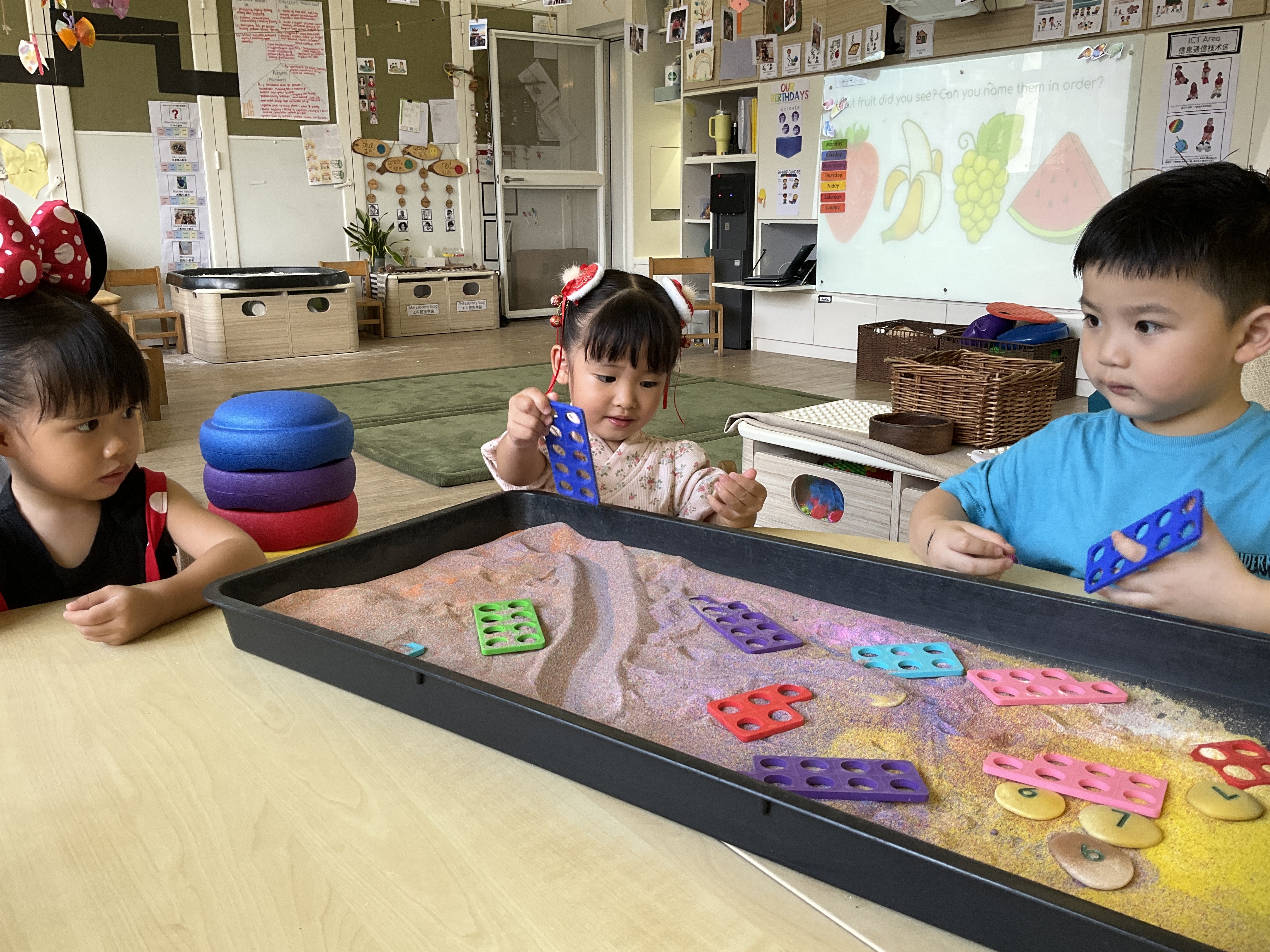
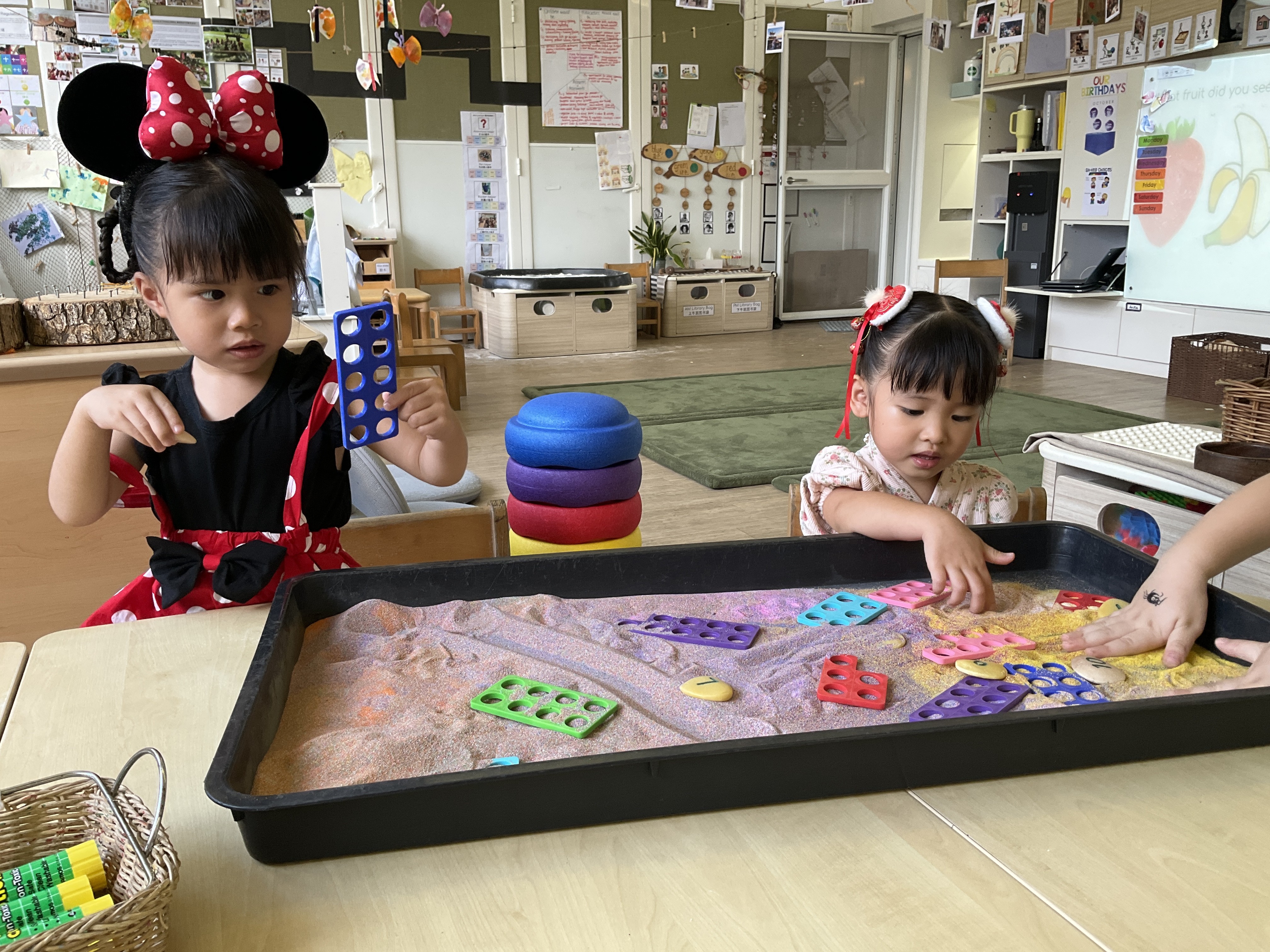
In maths, we’ve been exploring numbers and counting through various learning opportunities, including whole class, small group, and child-selected activities.
Hailey is practicing and demonstrating their ability to subitise. Subitising is the important skill of knowing 'how many' just by looking, without needing to count each item one-by-one.
During our small group activity, the children had to find matching Numicon pieces in a tray. Hailey recognised the pattern and shape of the Numicon piece she was holding and located the corresponding piece, demonstrating visual recall for numbers 1 to 5. This skill is foundational for developing quick mental math abilities. Well done, Hailey! Keep up the great work!
Hailey is practicing and demonstrating their ability to subitise. Subitising is the important skill of knowing 'how many' just by looking, without needing to count each item one-by-one.
During our small group activity, the children had to find matching Numicon pieces in a tray. Hailey recognised the pattern and shape of the Numicon piece she was holding and located the corresponding piece, demonstrating visual recall for numbers 1 to 5. This skill is foundational for developing quick mental math abilities. Well done, Hailey! Keep up the great work!
Posted by:
Ms Maria Lee, 24/10/2025 07:29:10
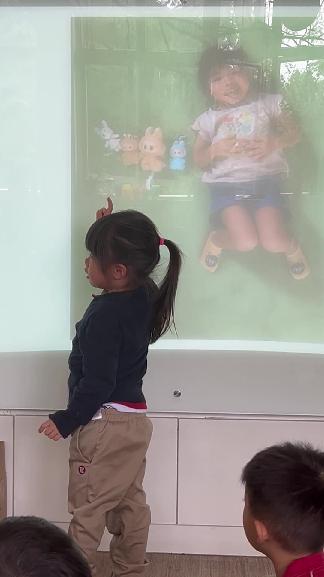
Hailey was a risk-taker and stood in front of the whole class to share her favourite things during the whole-class learning time. She used her communication skills to express her thoughts. Well done Hailey, we are so proud of your first attempt!
Posted by:
Ms Maria Lee, 25/10/2025 10:11:26
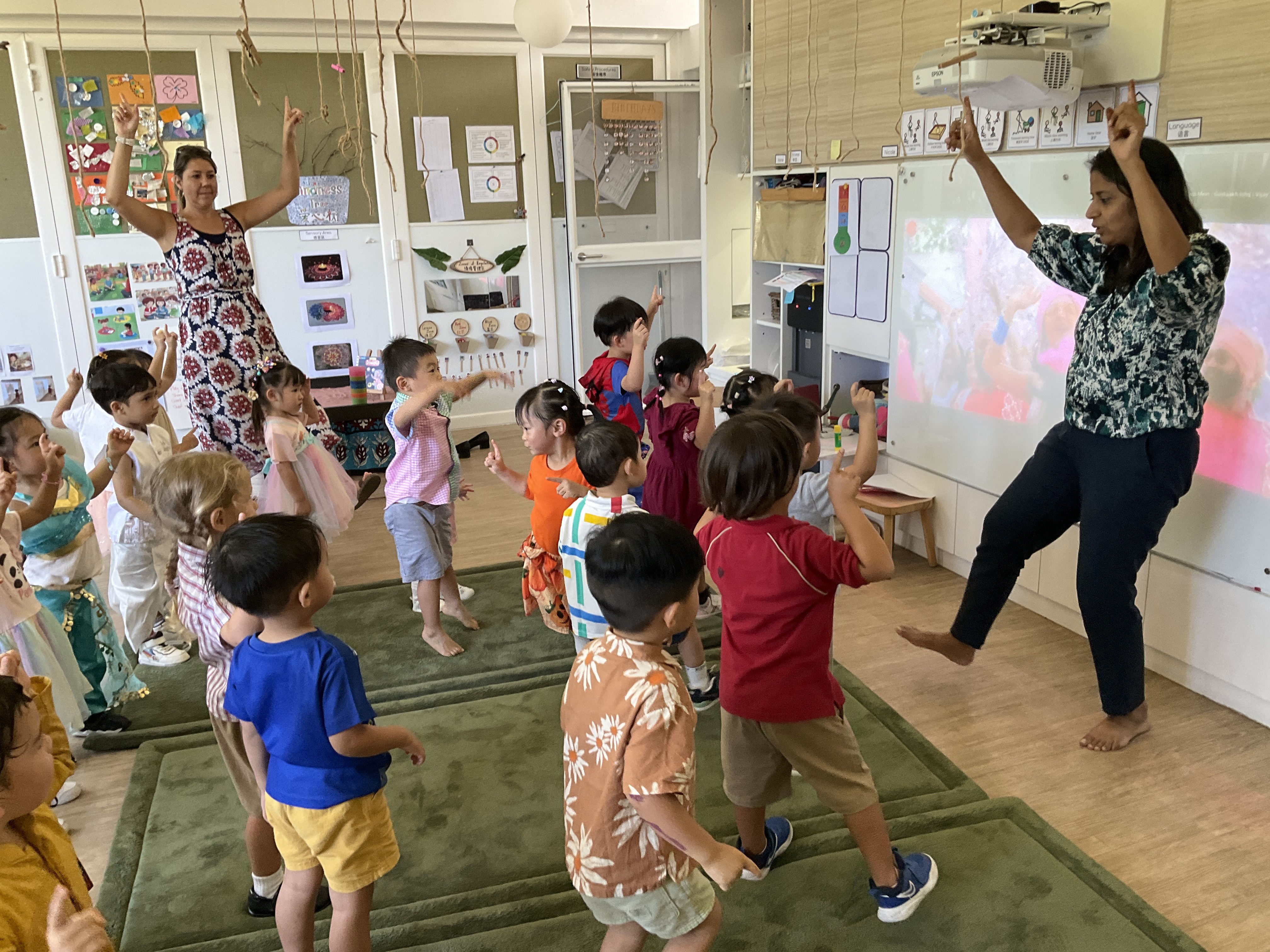
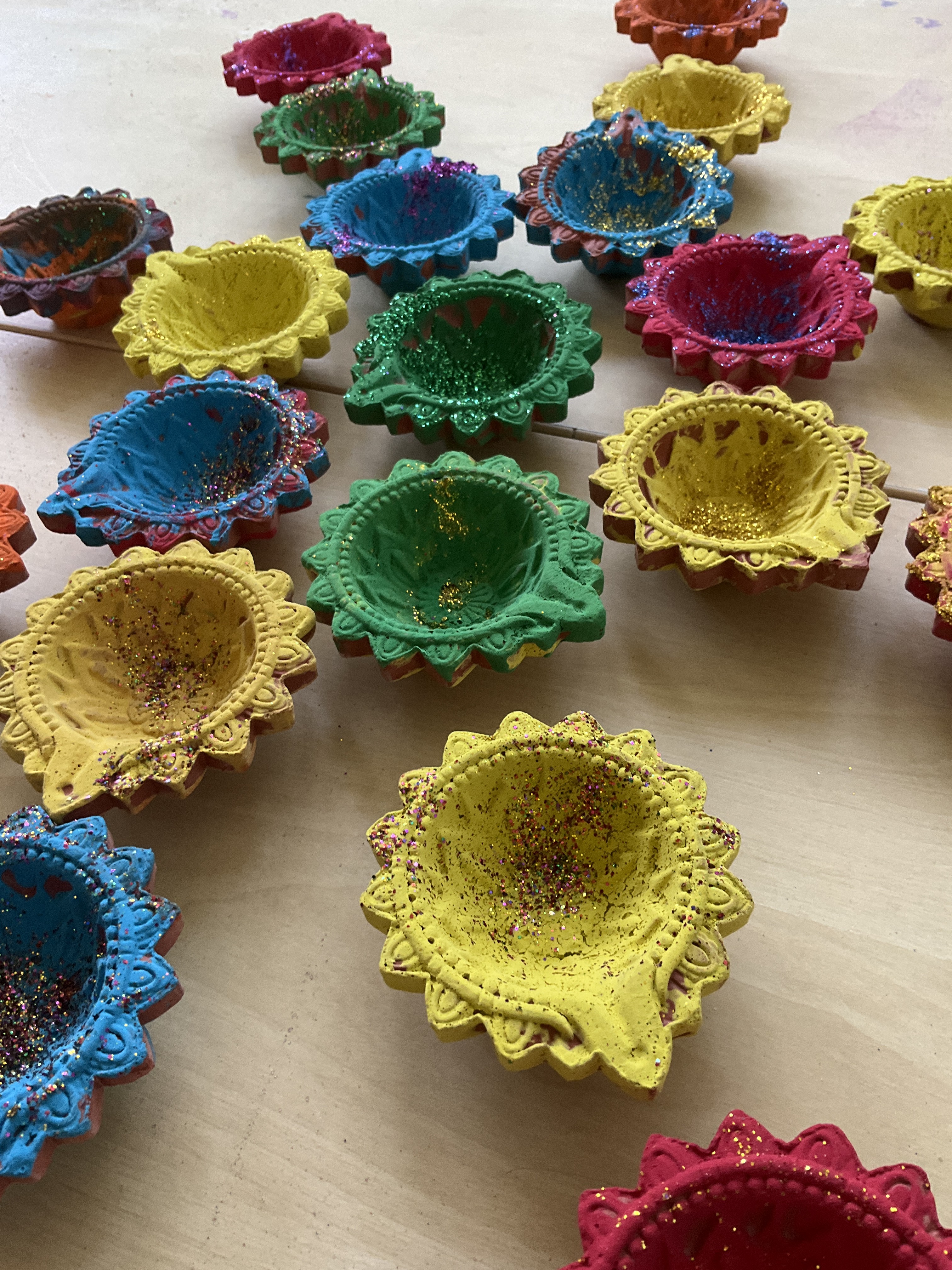
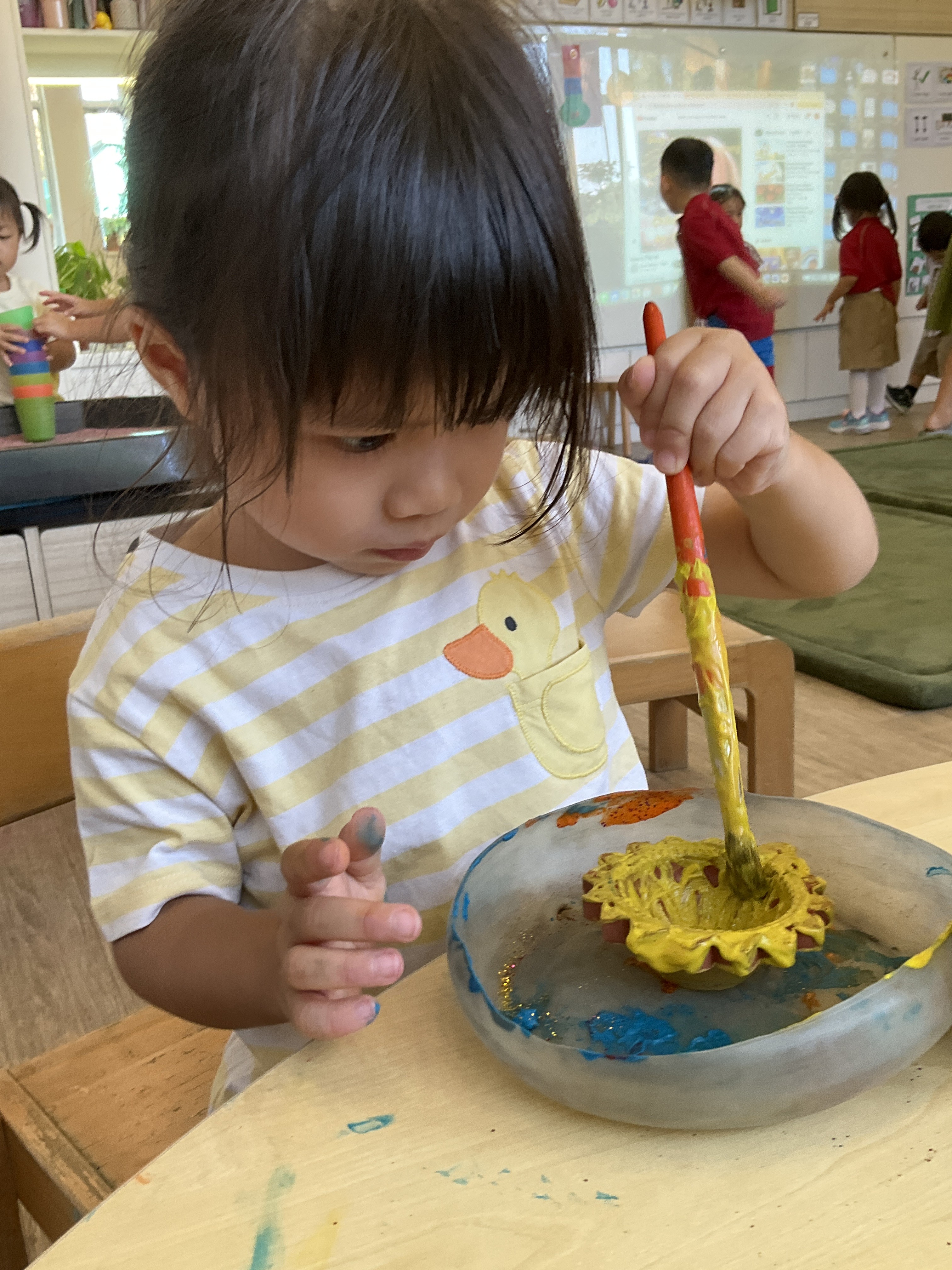
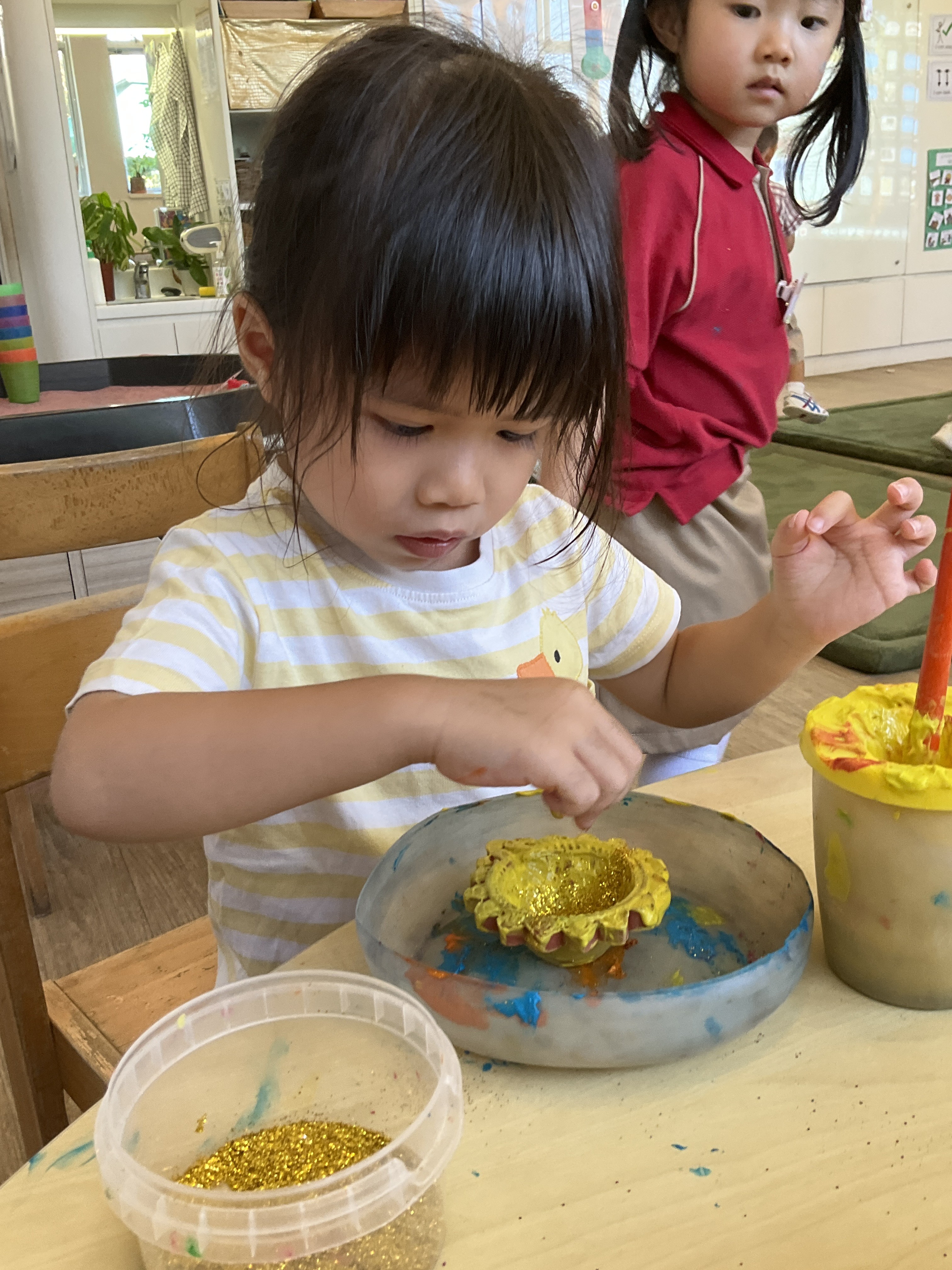
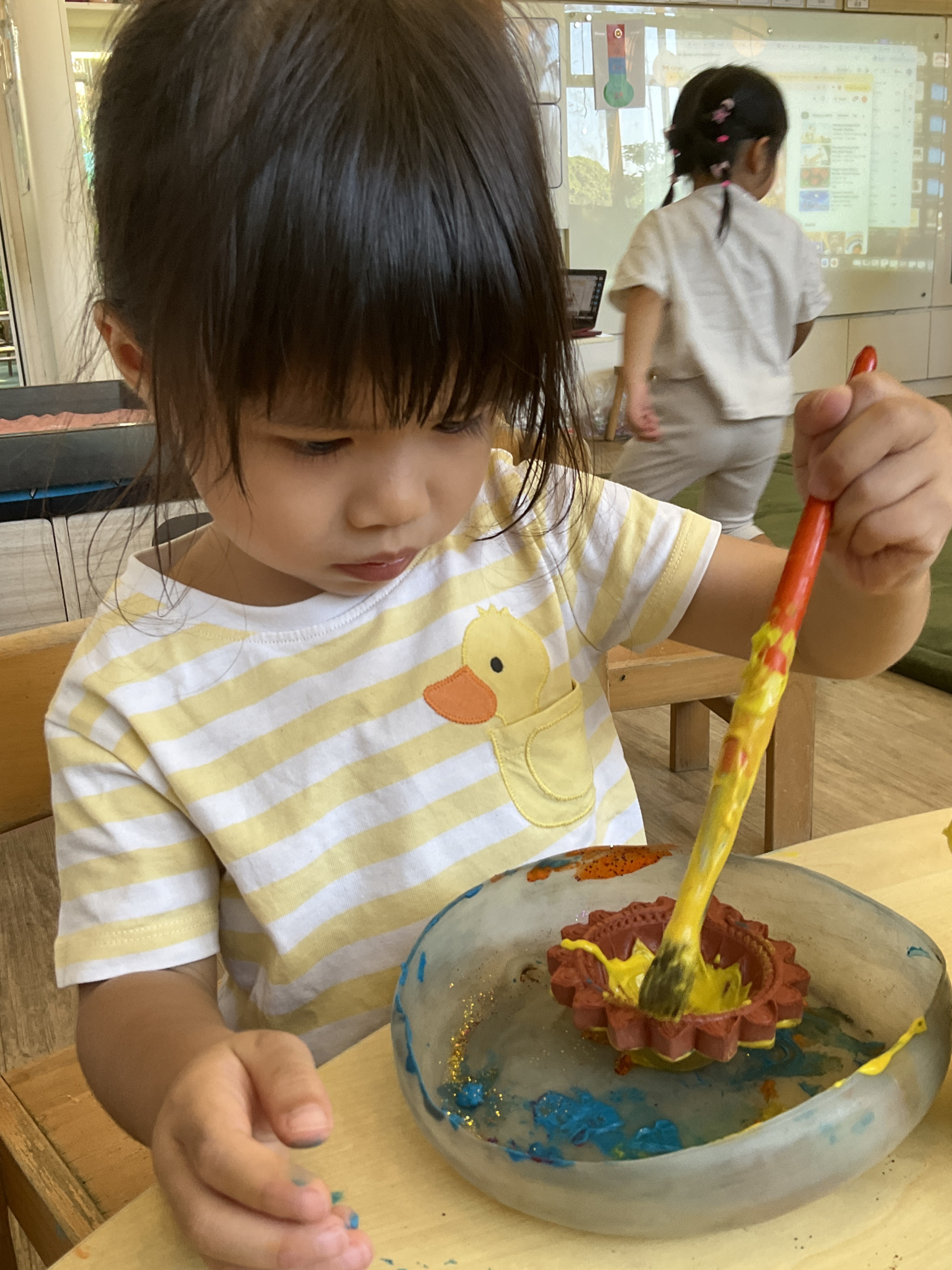
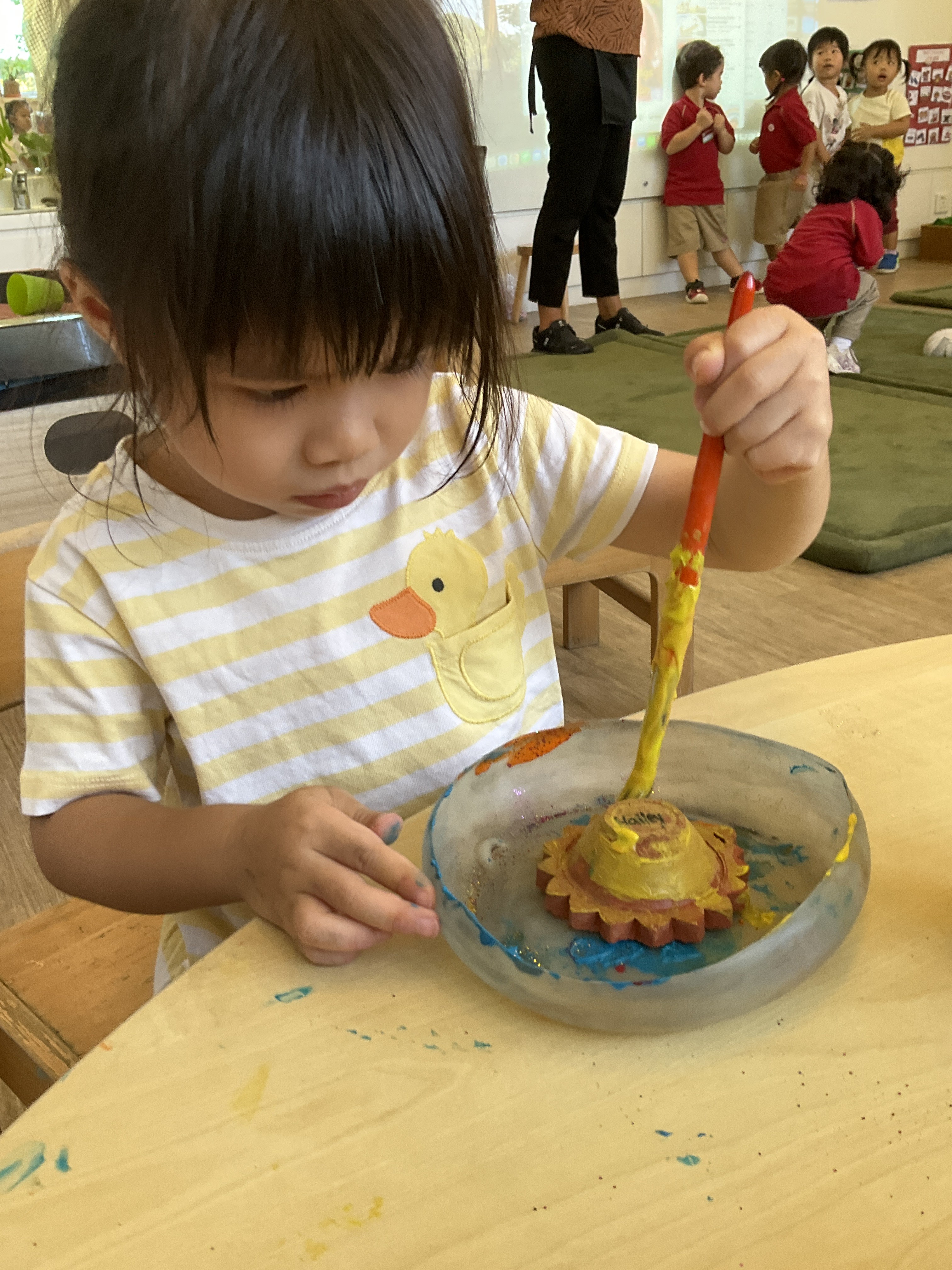
Last week, we learnt about Diwali, the Hindu, Jain, and Sikh Festival of Lights. This wonderful festival celebrates love, kindness, and happiness. We discussed what Diwali is about and how it is celebrated. To make it even more special, Ms. Neha also joined the Firebugs Class and taught us some traditional dancing!
To understand more about Diwali, we got the chance to decorate our own diyas. Hailey was able to have a go at decorating her own diya, choosing her favorite colour to paint it, decorating it with some glitter, and bringing it home.
Happy Diwali
To understand more about Diwali, we got the chance to decorate our own diyas. Hailey was able to have a go at decorating her own diya, choosing her favorite colour to paint it, decorating it with some glitter, and bringing it home.
Happy Diwali
Posted by:
Ms Irene Ma, 23/10/2025 12:26:04
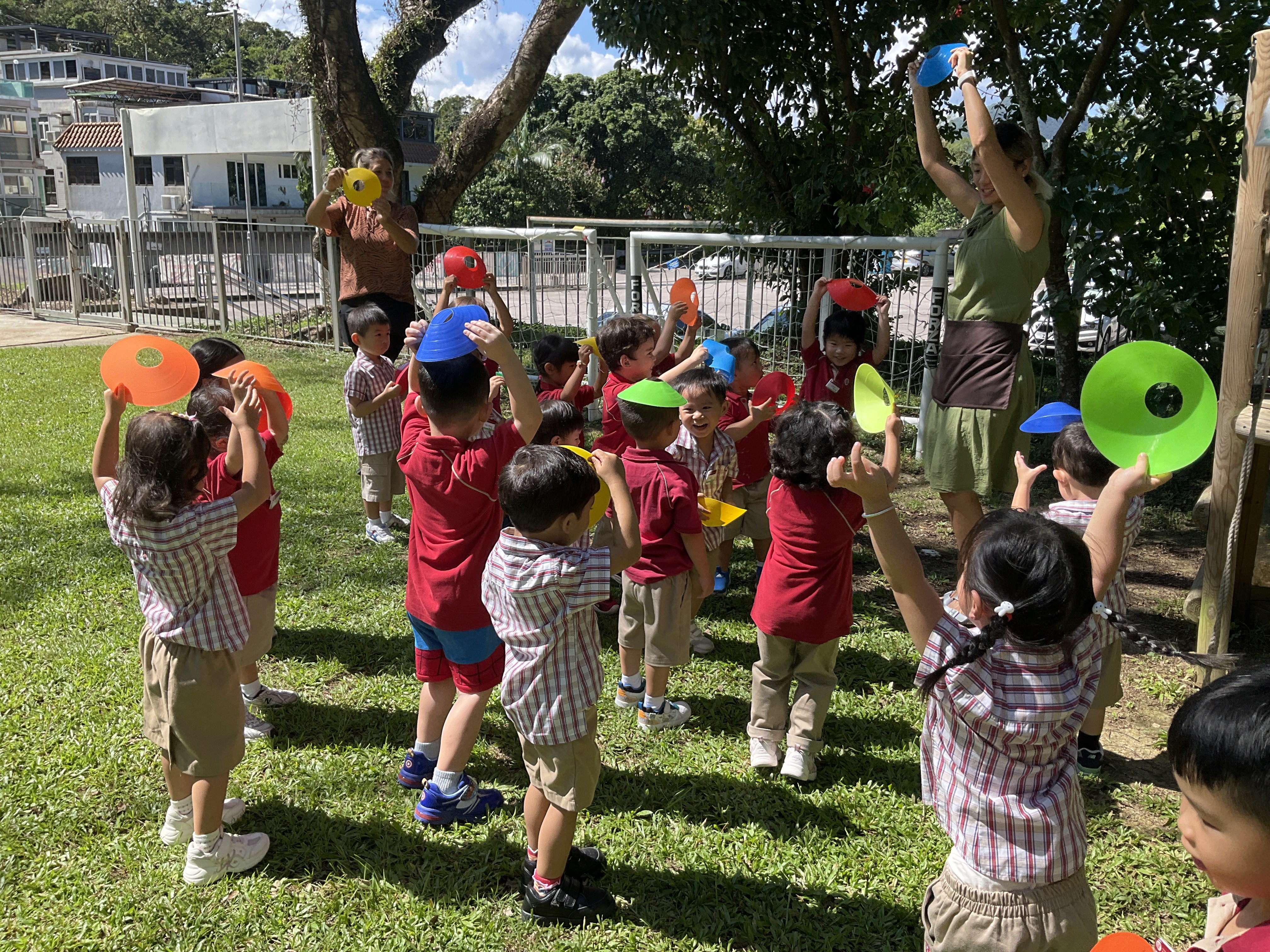
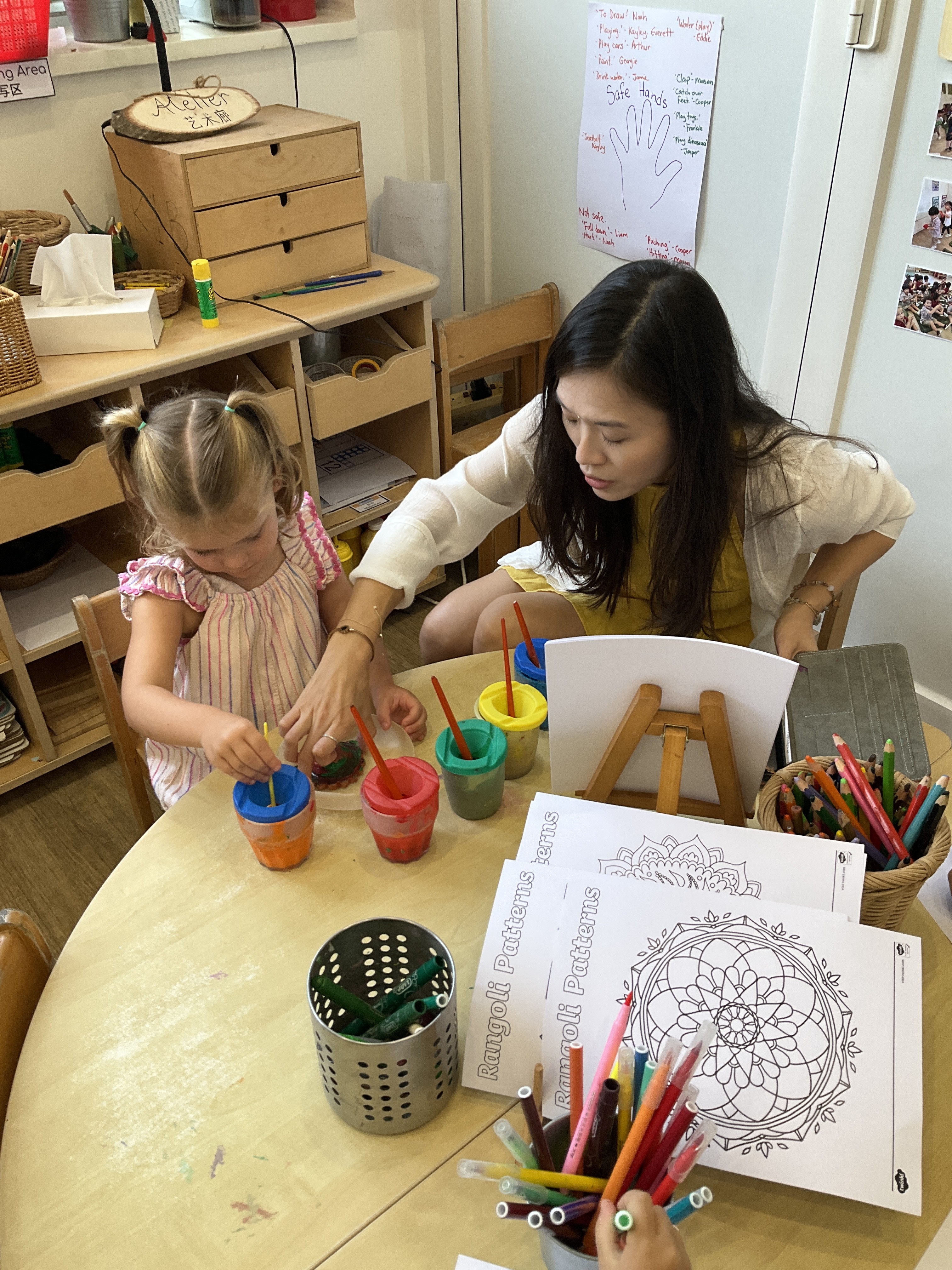
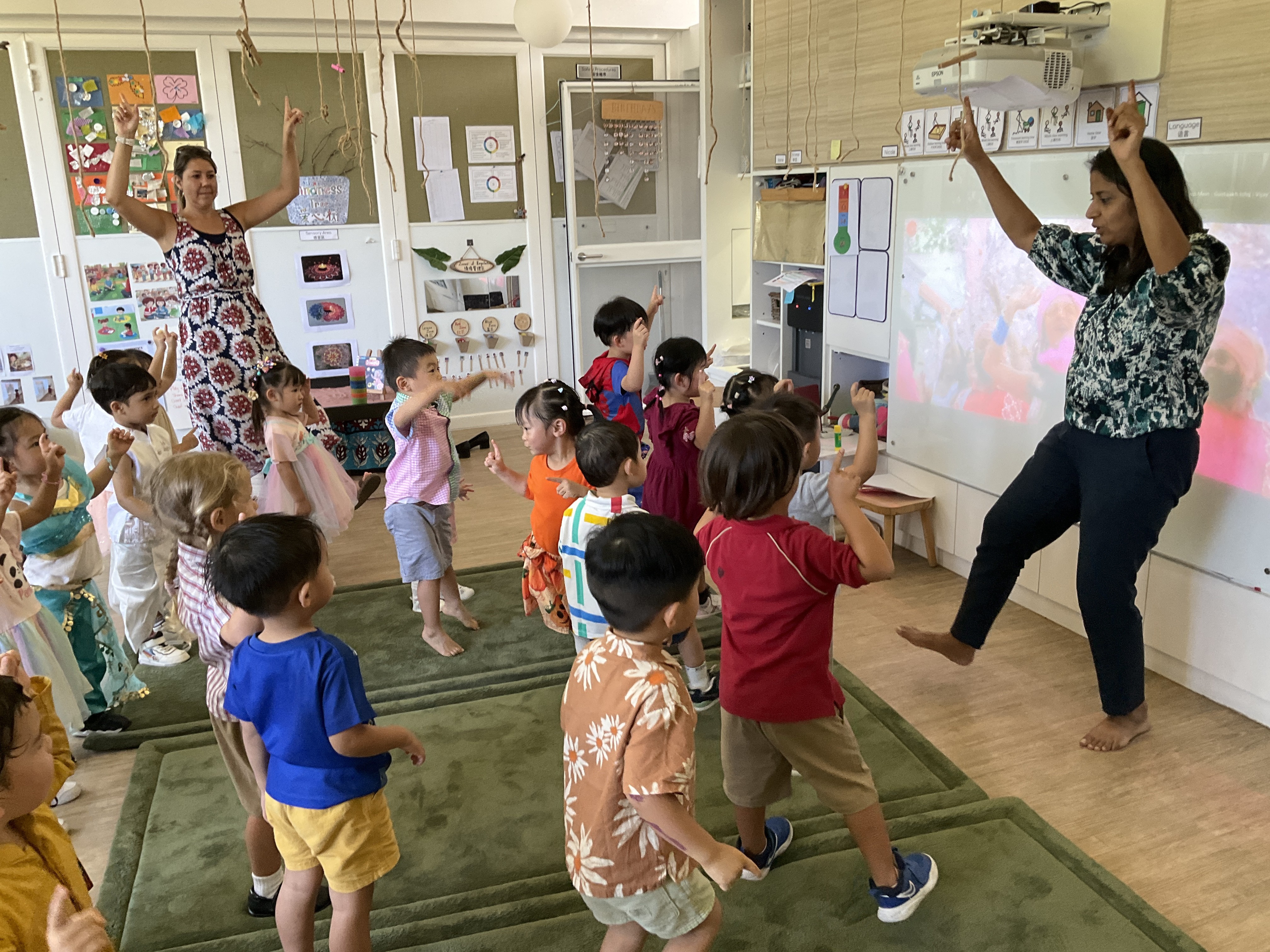
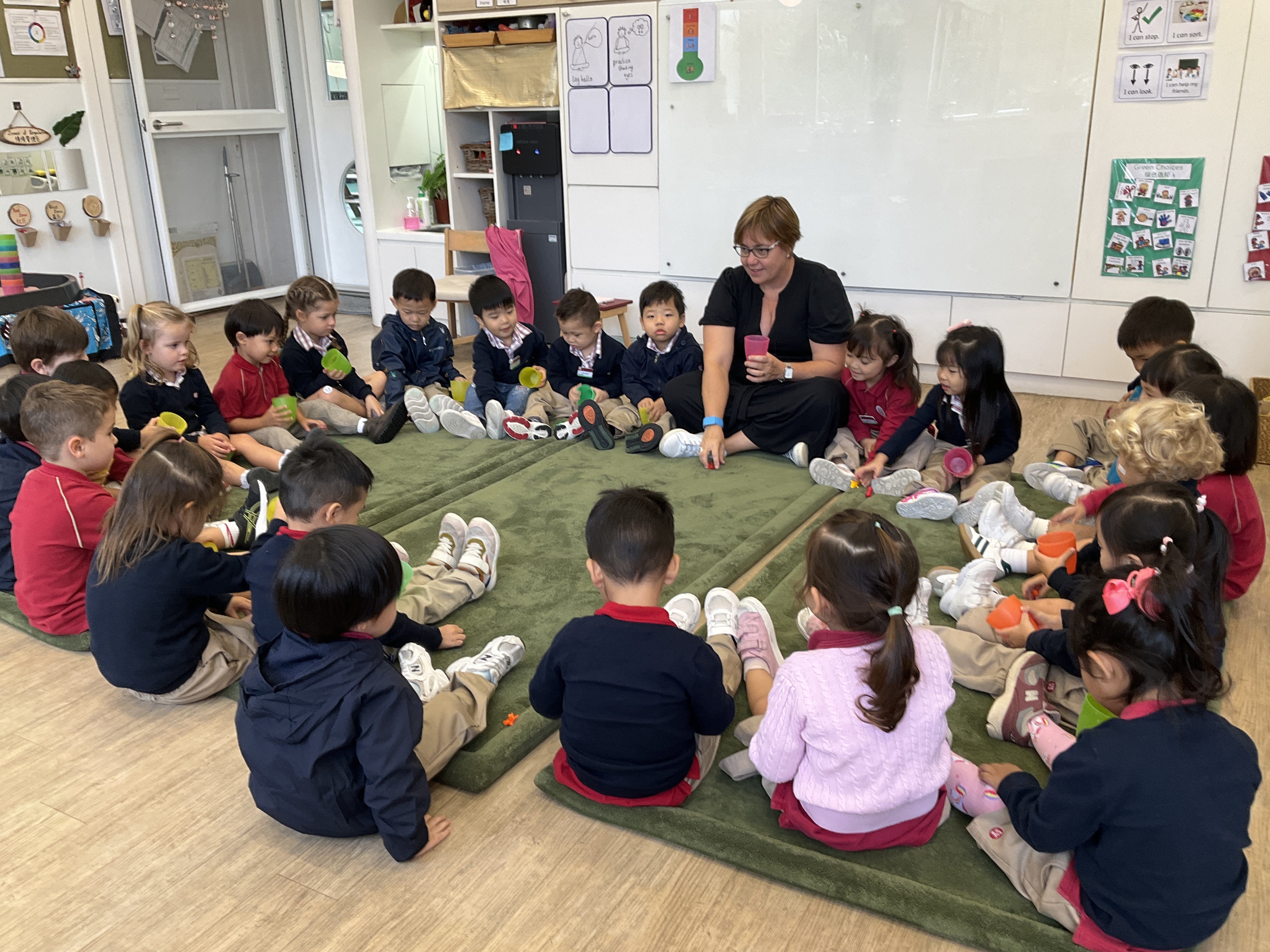
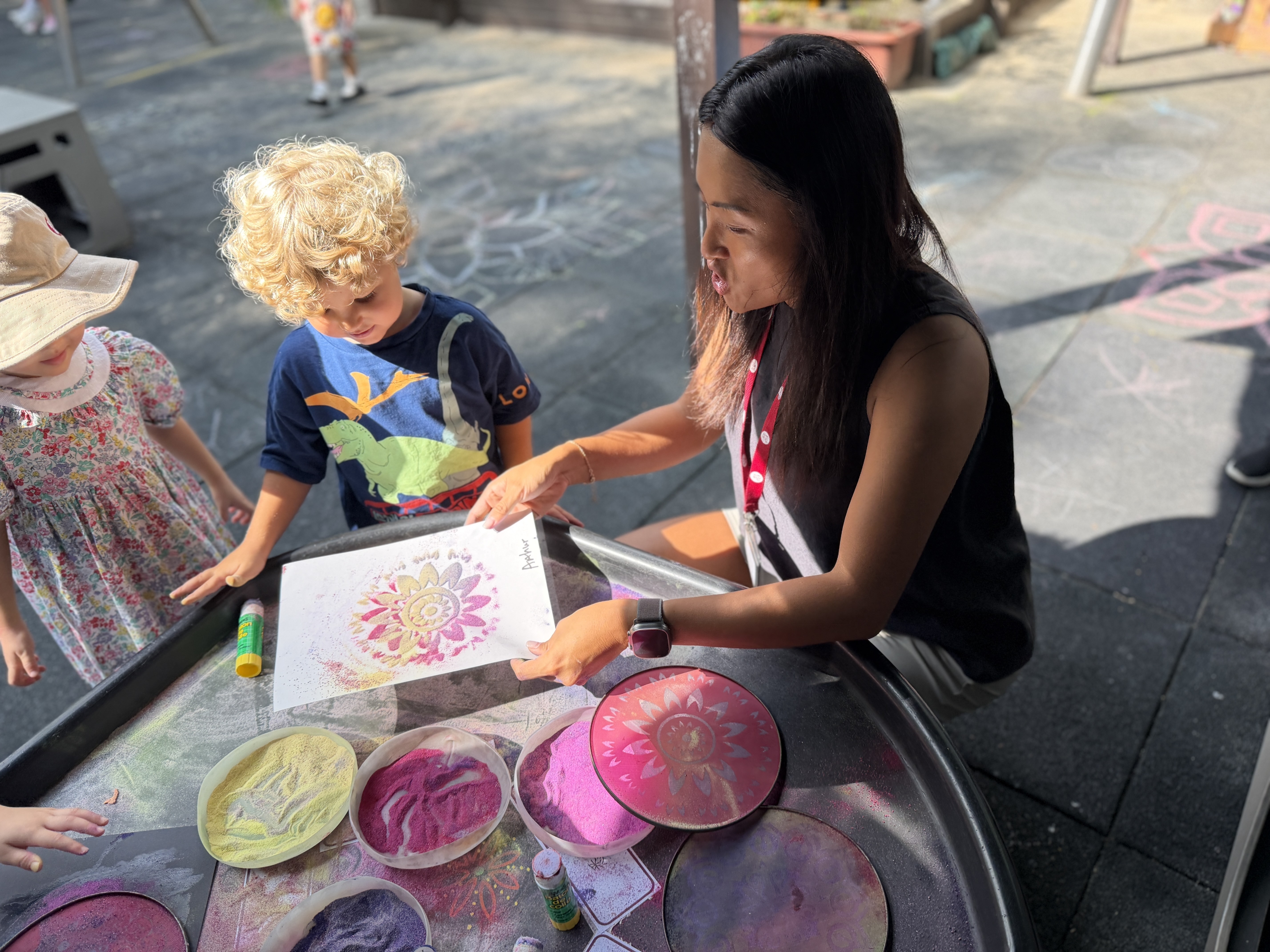
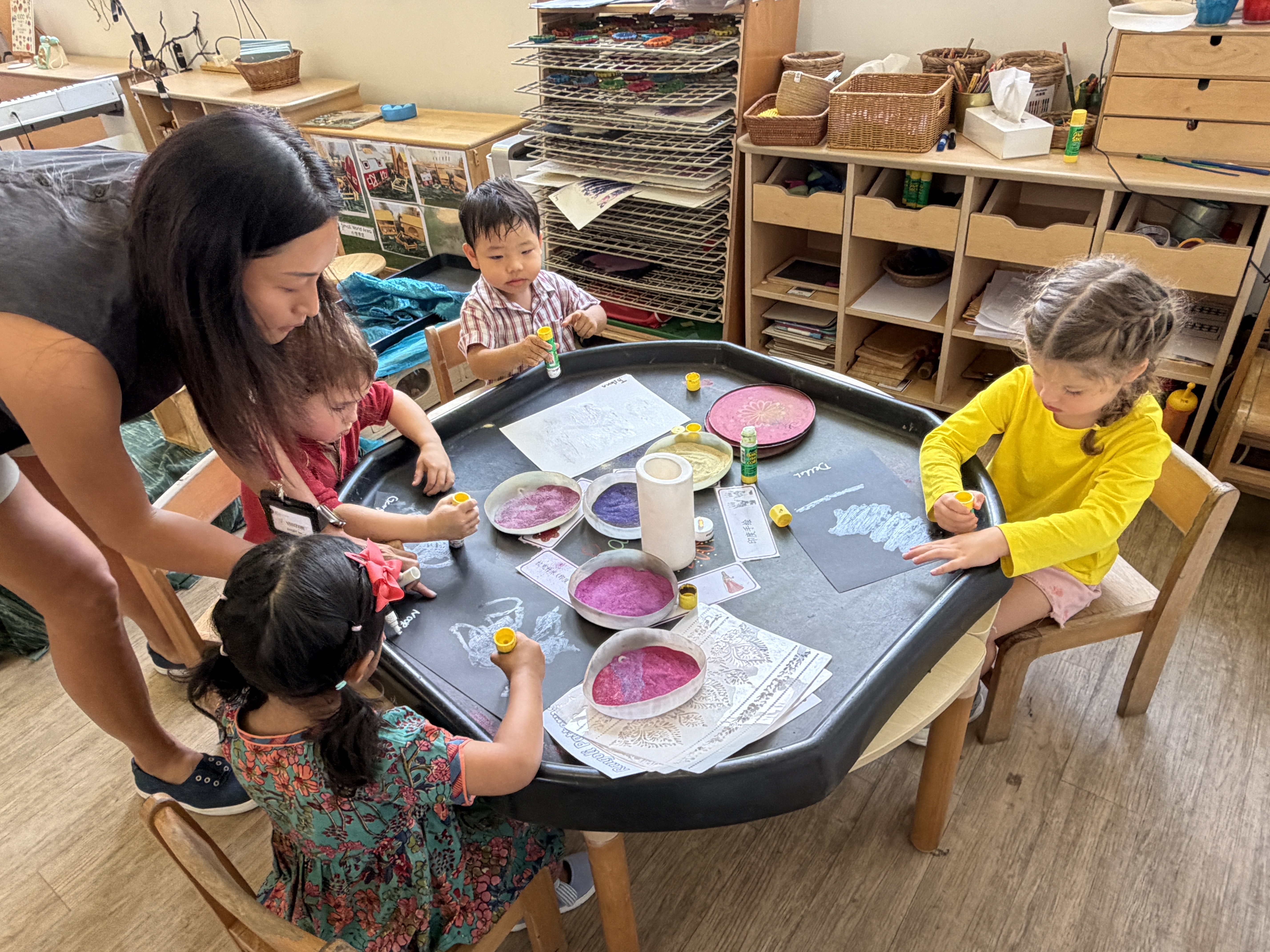
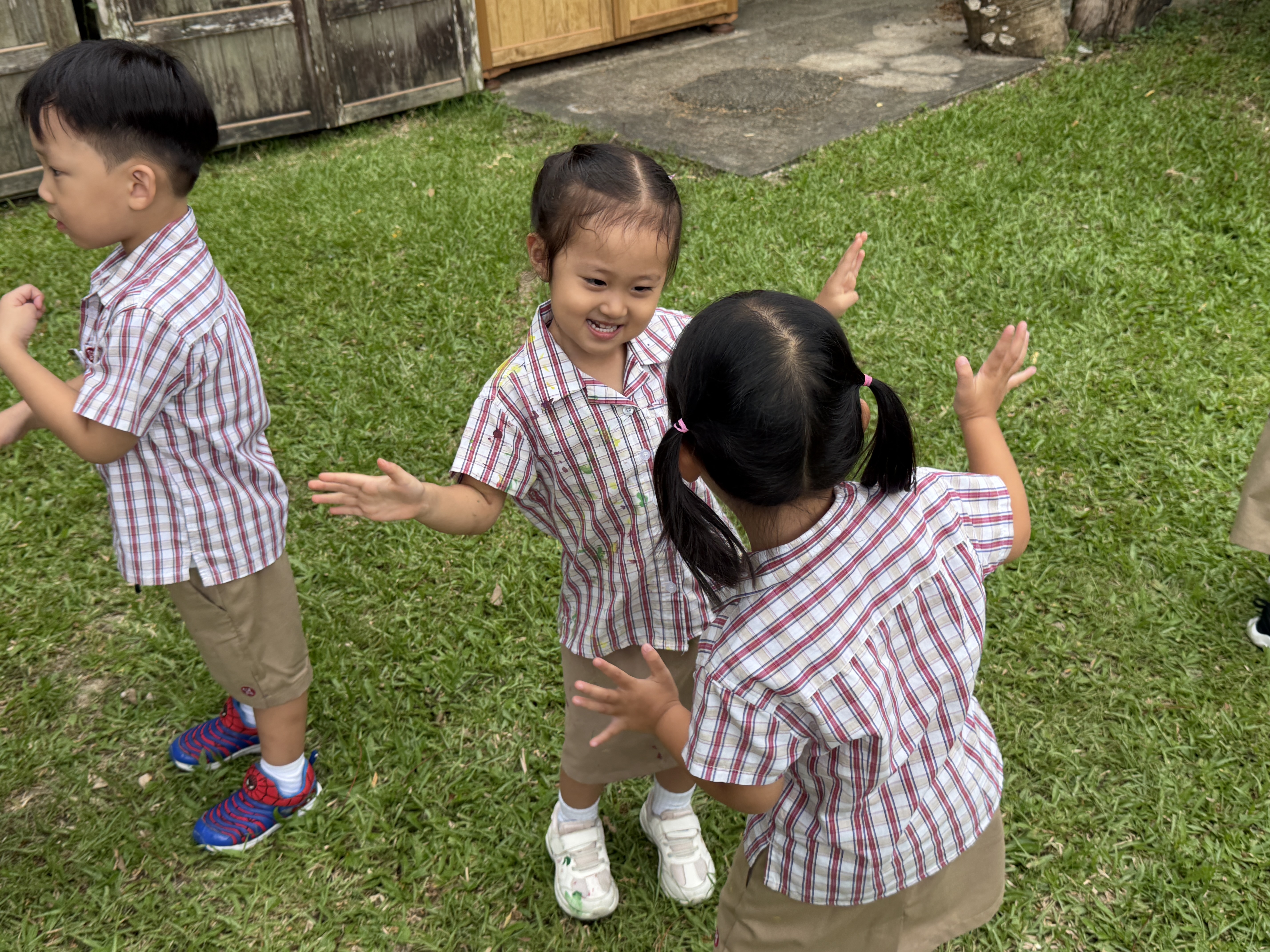
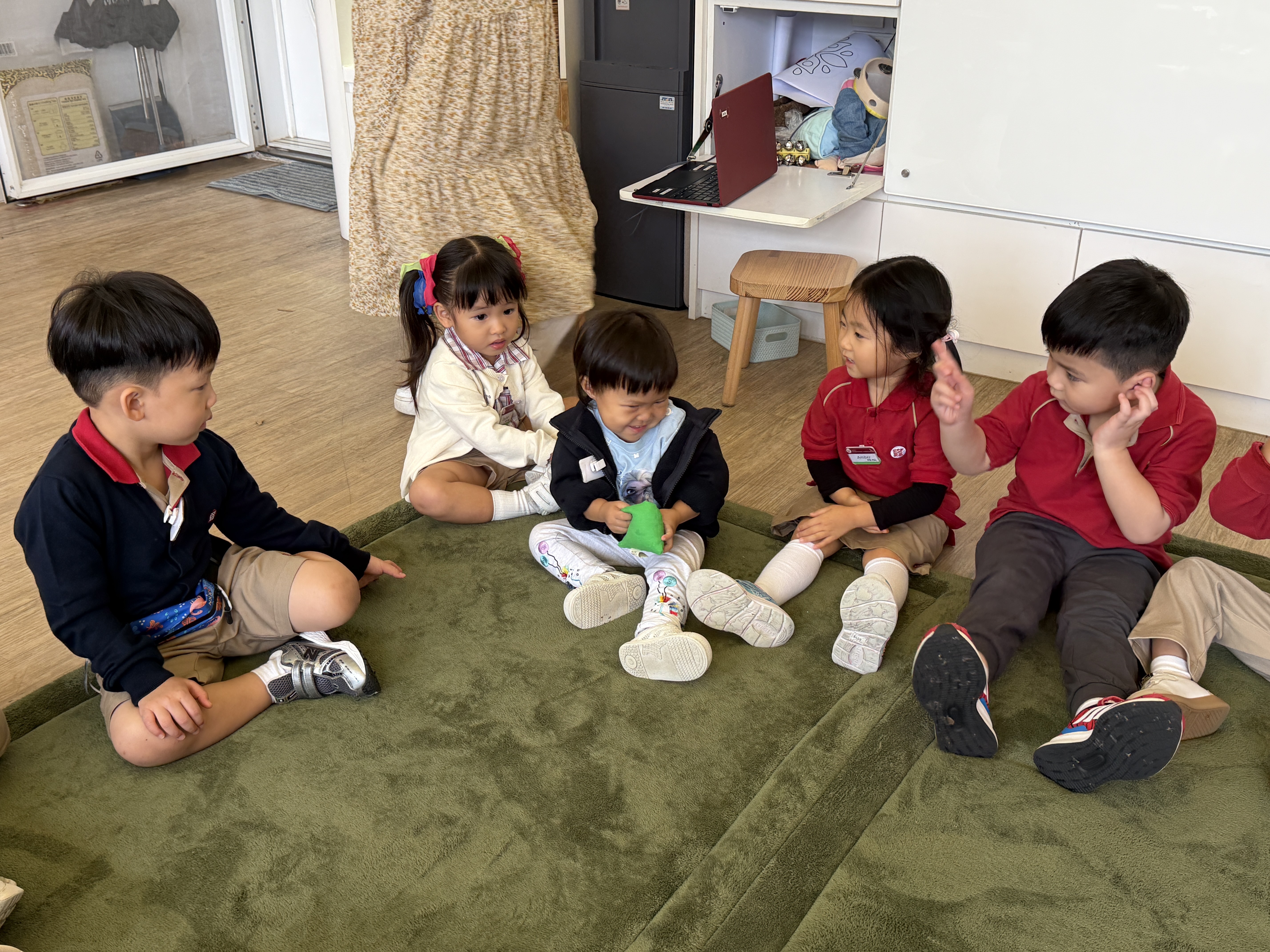
23rd October Learning Journey
Unit of Inquiry
Over the past two weeks, our little firebugs have been actively engaged in developing essential skills. We've been practising listening skills and self-regulation through activities like sound guessing and freezing games to help them manage their bodies.
To tune into our new unit, ‘Who We Are’, the little firebugs have started sharing their favourite things, which encourages them to be confident communicators and risk-takers in the classroom.
We also celebrated the diverse culture of our community by marking Diwali. The students enjoyed creating rangolis and diyas. We thank the parent volunteers who shared stories and their culture, making this a wonderful, diverse learning experience.
Language
This week, we've been focusing on developing the children's listening skills through an exciting activity centred on environmental sounds.
We played a game where the children had to listen carefully and identify the sounds happening in the world around them. This is a wonderful way to sharpen their concentration and make them aware of their environment.
We also played "Move and Freeze," a movement game that helps children practice impulse control (stopping instantly) and listening to verbal cues, both of which are essential for language and self-regulation.
Math
We focused on 1:1 correspondence and counting. Children practiced 1:1 correspondence using an ICT game, "Feeding the Teddy Bear Cupcakes," and took turns leading the class in counting the cupcakes. We started math small groups to reinforce 1:1 counting up to 5 and 10. Other groups will address goals like number recognition or math turn-taking games.
Chinese
We reviewed Chinese colour names by playing self-regulation games, which helped the children practice listening and manage their bodies. We also learned simple Chinese words related to the Diwali celebration to honor our diverse community. We have started new unit ‘Who We Are’, identity is included in one of the lines of inquiry. Since names are important to our identies, the children are beginning to practice responding to the question "What is your name?" and responding with, "My name is..." in Chinese.
The Chinese Vocabulary and questions
What is your name? 你叫什么名字? (nǐ jiào shén me míng zi?)
I am... 我叫... (wǒ jiào...)
Mouth 嘴巴 (zuǐ ba)
Ears 耳朵 (ěr duo)
Head 头 (tóu)
Hands 手 (shǒu)
Shoulders 肩膀 (jiān bǎng)
Legs: 腿 (tuǐ)
Red: 红色 (hóng sè)
Yellow 黄色 (huáng sè)
Green 绿色 (lǜ sè)
Blue 蓝色 (lán sè)
Red choices 红色选择 (hóng sè xuǎn zé)
Green choices 绿色选择 (lǜ sè xuǎn zé)
Please tidy up 请收拾 (qǐng shōu shi)
Wash hands 洗手 (xǐ shǒu)
Go to toilet 去洗手间 (qù xǐ shǒu jiān)
The Chinese song:
你叫什么名字?What is your name?
https://www.youtube.com/watch?v=uhmjwL3Xpt0
Unit of Inquiry
Over the past two weeks, our little firebugs have been actively engaged in developing essential skills. We've been practising listening skills and self-regulation through activities like sound guessing and freezing games to help them manage their bodies.
To tune into our new unit, ‘Who We Are’, the little firebugs have started sharing their favourite things, which encourages them to be confident communicators and risk-takers in the classroom.
We also celebrated the diverse culture of our community by marking Diwali. The students enjoyed creating rangolis and diyas. We thank the parent volunteers who shared stories and their culture, making this a wonderful, diverse learning experience.
Language
This week, we've been focusing on developing the children's listening skills through an exciting activity centred on environmental sounds.
We played a game where the children had to listen carefully and identify the sounds happening in the world around them. This is a wonderful way to sharpen their concentration and make them aware of their environment.
We also played "Move and Freeze," a movement game that helps children practice impulse control (stopping instantly) and listening to verbal cues, both of which are essential for language and self-regulation.
Math
We focused on 1:1 correspondence and counting. Children practiced 1:1 correspondence using an ICT game, "Feeding the Teddy Bear Cupcakes," and took turns leading the class in counting the cupcakes. We started math small groups to reinforce 1:1 counting up to 5 and 10. Other groups will address goals like number recognition or math turn-taking games.
Chinese
We reviewed Chinese colour names by playing self-regulation games, which helped the children practice listening and manage their bodies. We also learned simple Chinese words related to the Diwali celebration to honor our diverse community. We have started new unit ‘Who We Are’, identity is included in one of the lines of inquiry. Since names are important to our identies, the children are beginning to practice responding to the question "What is your name?" and responding with, "My name is..." in Chinese.
The Chinese Vocabulary and questions
What is your name? 你叫什么名字? (nǐ jiào shén me míng zi?)
I am... 我叫... (wǒ jiào...)
Mouth 嘴巴 (zuǐ ba)
Ears 耳朵 (ěr duo)
Head 头 (tóu)
Hands 手 (shǒu)
Shoulders 肩膀 (jiān bǎng)
Legs: 腿 (tuǐ)
Red: 红色 (hóng sè)
Yellow 黄色 (huáng sè)
Green 绿色 (lǜ sè)
Blue 蓝色 (lán sè)
Red choices 红色选择 (hóng sè xuǎn zé)
Green choices 绿色选择 (lǜ sè xuǎn zé)
Please tidy up 请收拾 (qǐng shōu shi)
Wash hands 洗手 (xǐ shǒu)
Go to toilet 去洗手间 (qù xǐ shǒu jiān)
The Chinese song:
你叫什么名字?What is your name?
https://www.youtube.com/watch?v=uhmjwL3Xpt0
Posted by:
Nicole Pattison, 03/10/2025 11:56:17
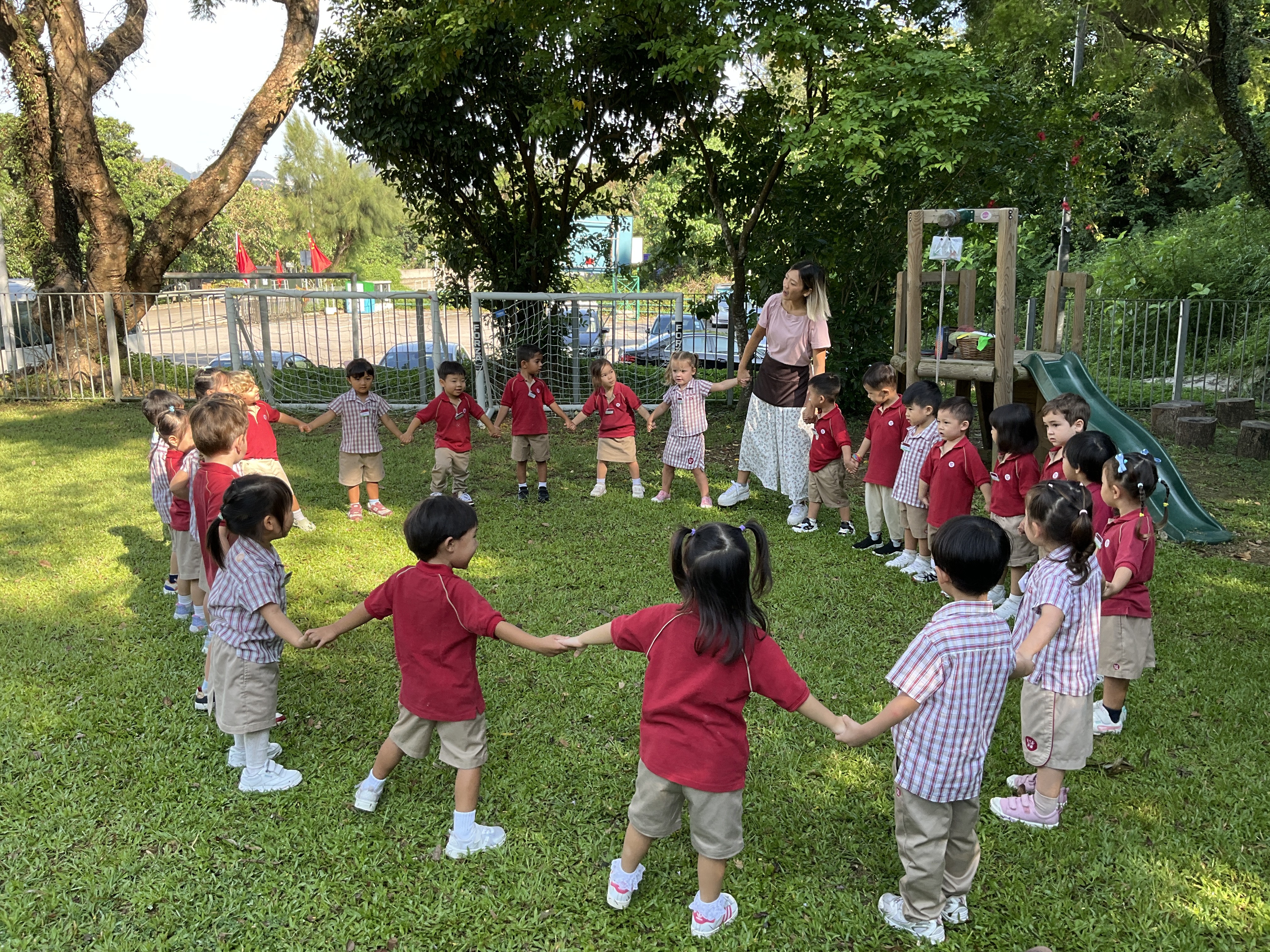
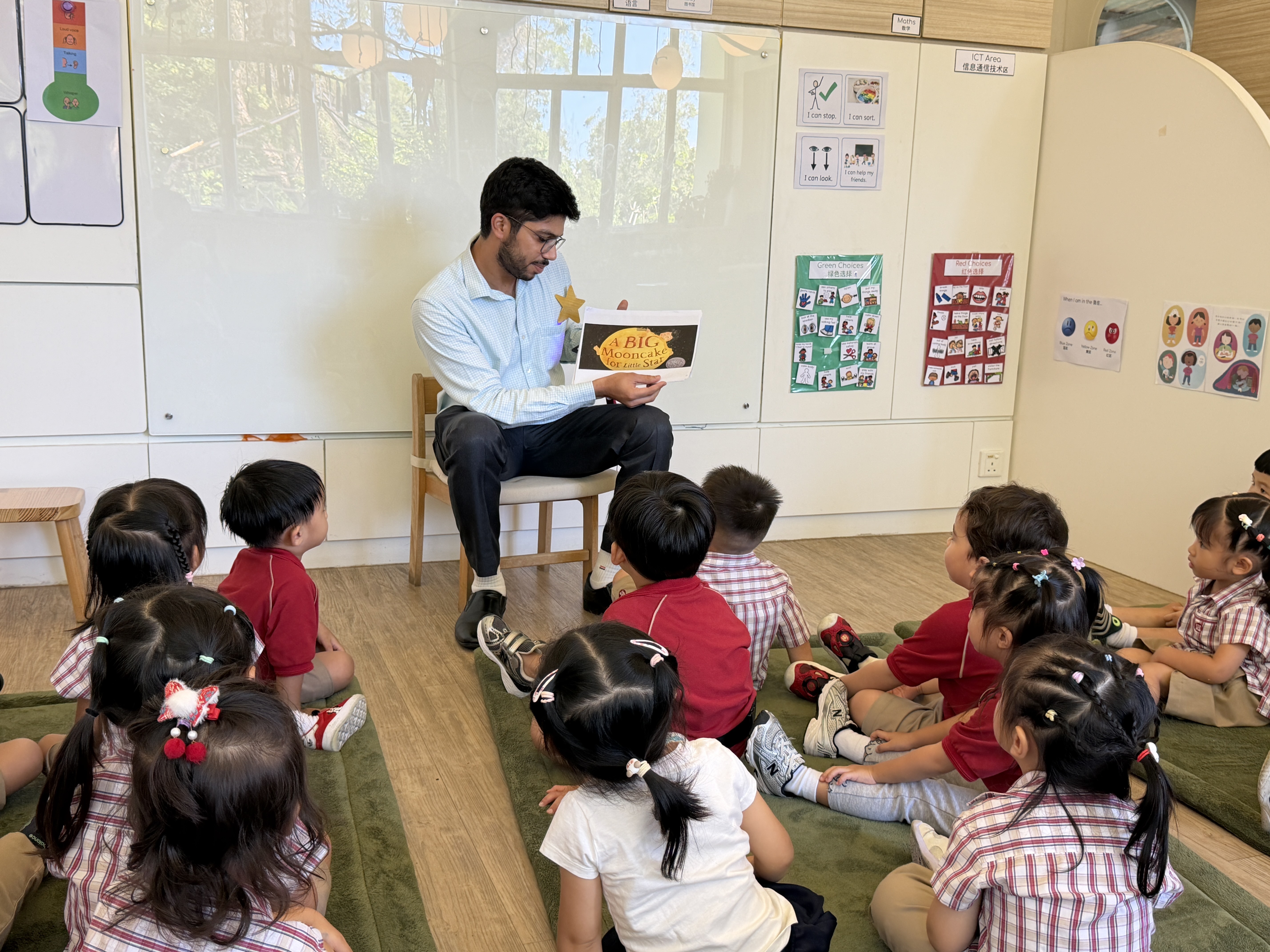
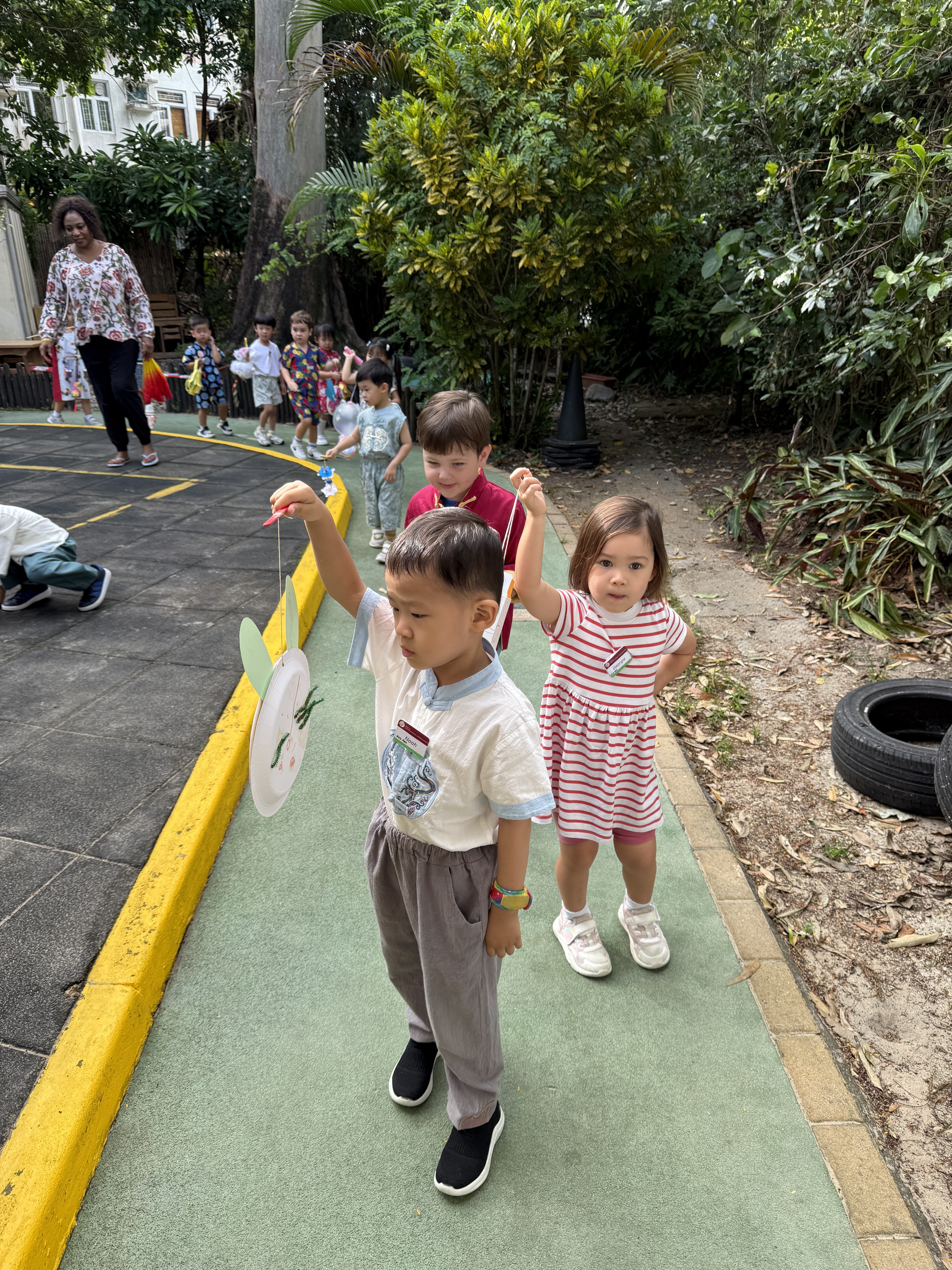
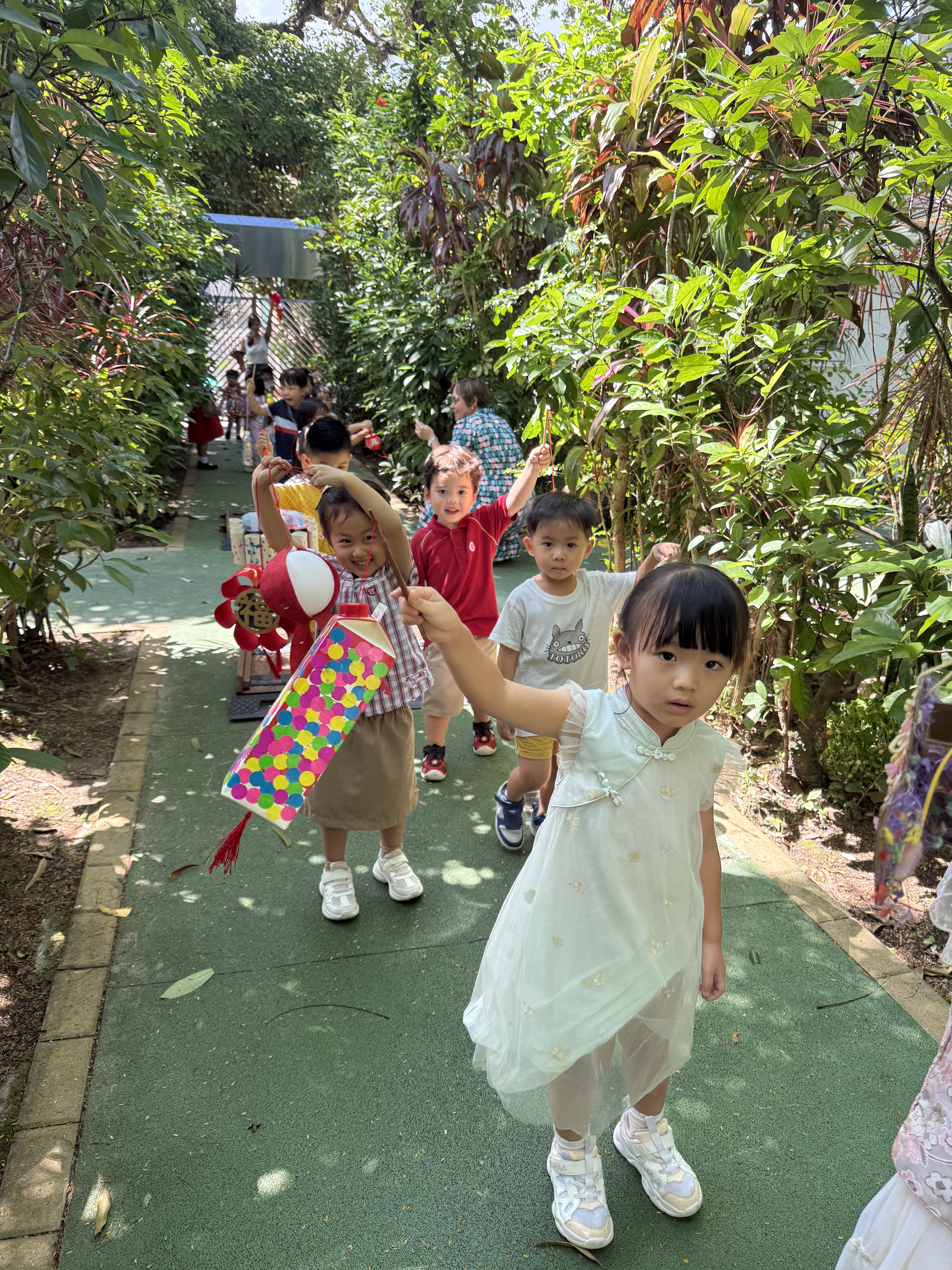
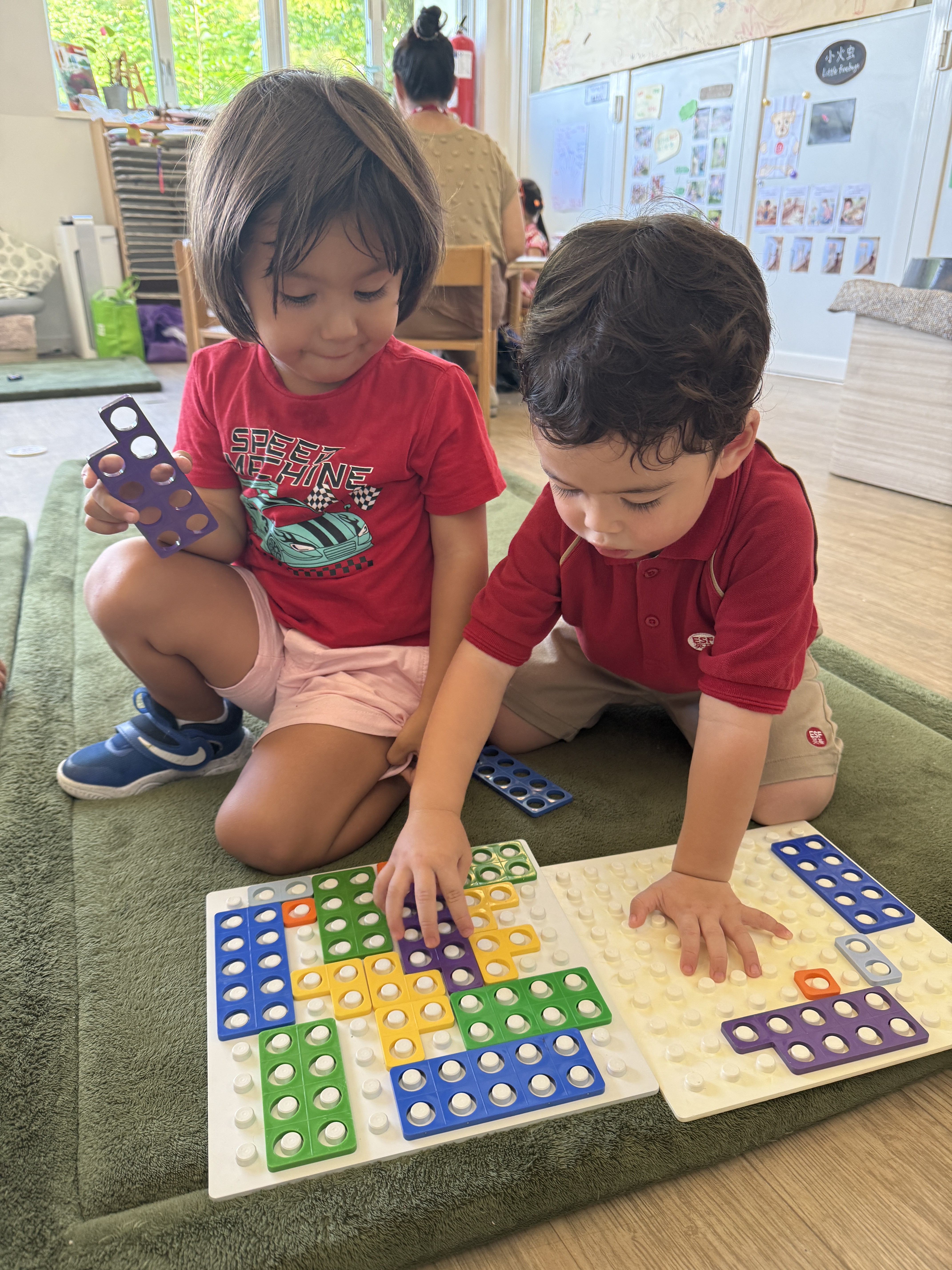
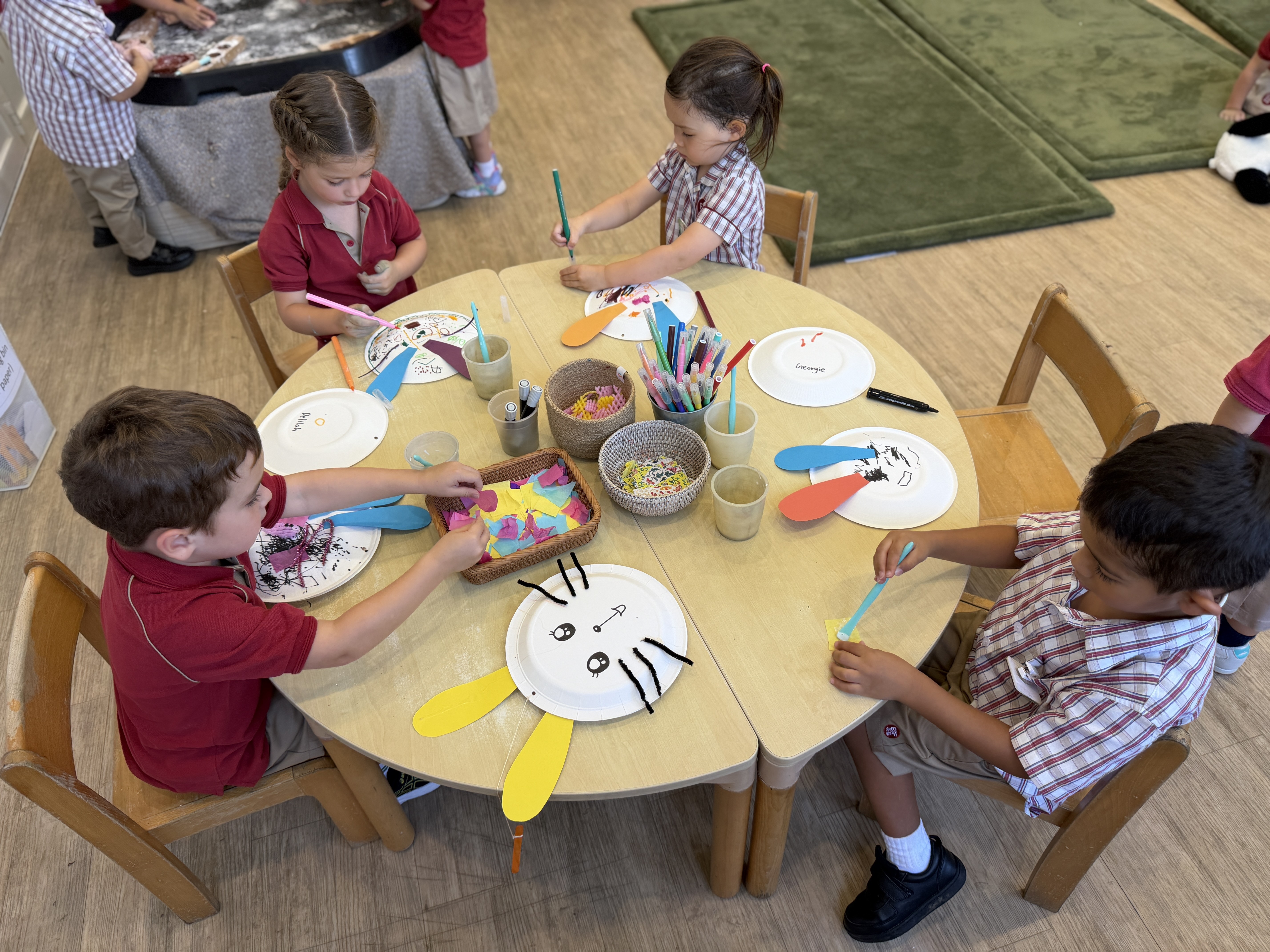
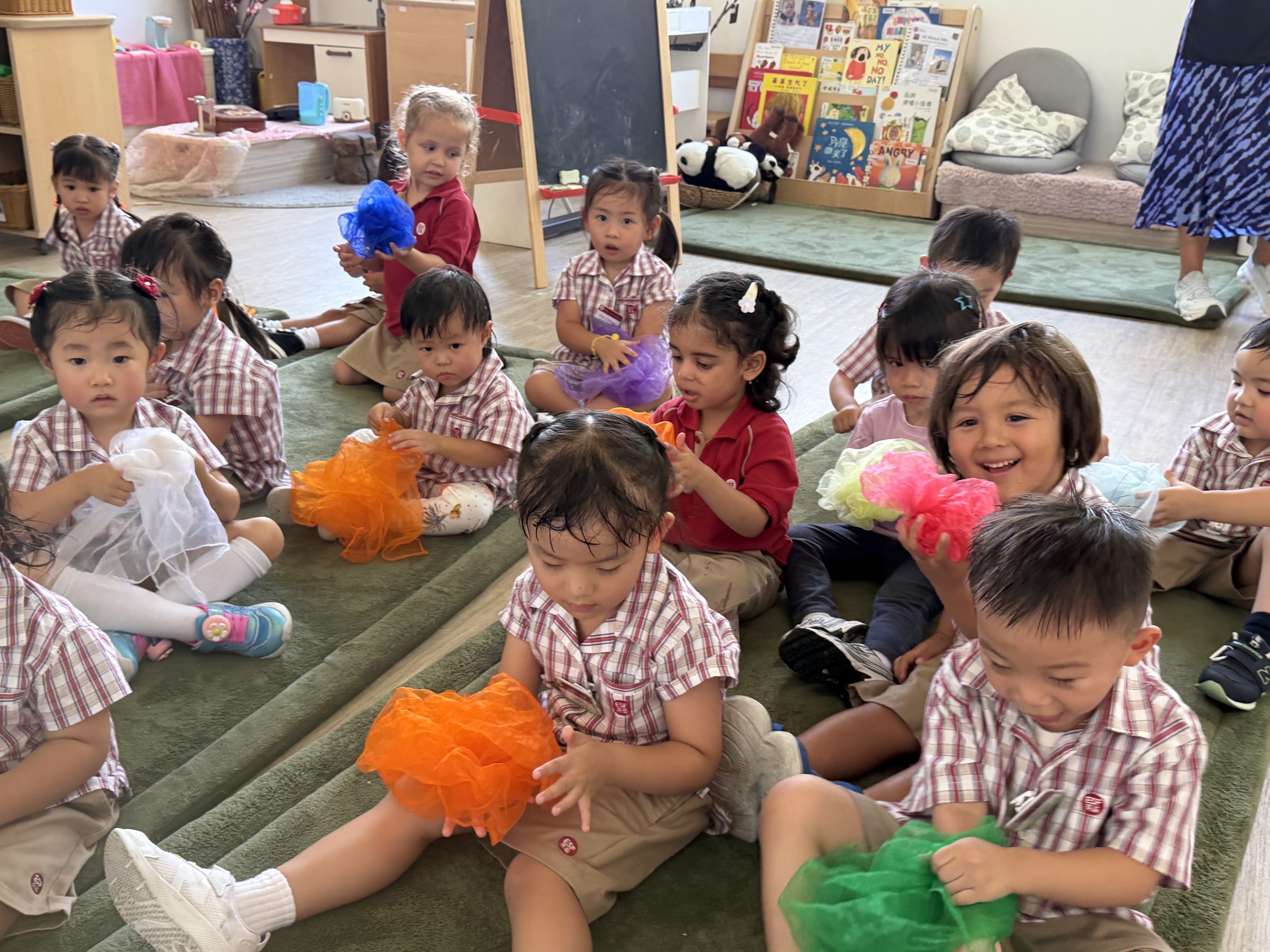
3rd Oct. Learning Journey
This week, we have wrapped up our unit of inquiry, How We Organise Ourselves. This was a fantastic unit focused on establishing routine, fostering independence, and learning that we grow together by taking responsibility for ourselves and our community.
Over the last few weeks, the students have used their understanding of positive choices to collaboratively create our five Essential Agreements (our class rules). Because they decided on these together, the children have a strong sense of ownership over our community.
Our agreements are: We play and take turns; we use gentle hands; we use kind words; we help each other; and we listen to each other.
We reinforced these concepts with the story, "Hands are Not for Hitting," which sparked a great discussion about all the positive things our hands can do, like building and helping. We continue to use Green Choices (expected behaviours) and Red Choices (unexpected behaviours) to discuss how we can affect those around us.
After the mid-term break, we will begin tuning into our new UOI, Who We Are.
Maths: We continue to build our math skills through songs and hands-on tools.
Counting with Numicon: We continue to work with Numicon (the coloured shapes) to help children see and feel the value of numbers 1 through 10, which is essential for understanding what numbers represent.
The "Bubble Bubble Pop" Song: We introduced this fun counting song, where we count fish up to 10. This song reinforces rote counting and helps children practice knowing the name of the numbers in order.
Phonics & Listening Skills:We're starting our journey into phonics by training our ears!
Environmental Sounds: We began Phase 1 Phonics by focusing on tuning into the world around us. We played a game called "Welcome to the Zoo," where the children listened to and guessed various animal sounds. This activity is crucial because it teaches them to listen carefully and tell the difference between sounds, which is the foundational skill needed for hearing the individual sounds in words later on.
Chinese
The Mid-Autumn Festival is one of China's most significant traditional holidays, symbolising reunion and togetherness.
To celebrate this festival, we engaged in a variety of enriching activities. We read the origin stories of Hou Yi and Chang'e, and also sang the Mid-Autumn Festival song. The children had hands-on experience making rabbit lanterns and mooncakes, allowing them to participate in traditional customs.
We were also fortunate to have parent volunteers join us for the celebration. They read stories about the festival and even enriched our learning by sharing how the Moon Festival (Jugoya) is celebrated in Japan, bringing in rice dumplings (Otsukimi Dango) for the children to try. This cultural exchange provided a wonderful opportunity to observe the diverse ways the autumn moon is celebrated around the world.
The Chinese Vocabulary:
Mid-Autumn Festival 中秋节 (zhōng qiū jié)
Mooncakes 月饼 (yuè bǐng)
Rabbits 兔子 (tù zi)
Moon 月亮 (yuè liang)
Nose: 鼻子 (bí zi)
Mouth: 嘴巴 (zuǐ ba)
Ears: 耳朵 (ěr duo)
Head: 头 (tóu)
Hands: 手 (shǒu)
Shoulders: 肩膀 (jiān bǎng)
Legs: 腿 (tuǐ)
Red: 红色 (hóng sè)
Yellow: 黄色 (huáng sè)
Green: 绿色 (lǜ sè)
Blue: 蓝色 (lán sè)
Happy: 快乐 (kuài lè)
Sad: 伤心 (shāng xīn)
Angry: 生气 (shēng qì)
Silly: 傻傻的 (shǎ shǎ de)
Red choices 红色选择 (hóng sè xuǎn zé)
Green choices 绿色选择 (lǜ sè xuǎn zé)
Please tidy up 请收拾 (qǐng shōu shi)
Wash hands 洗手 (xǐ shǒu)
Go to toilet 去洗手间 (qù xǐ shǒu jiān)
The Chinese song:
一根小手指 One Little Finger
https://www.youtube.com/watch?v=usCputd1Wu0
拍拍手 Clap your hands
https://www.youtube.com/watch?v=naHTzvKRB0s&t=8s
This week, we have wrapped up our unit of inquiry, How We Organise Ourselves. This was a fantastic unit focused on establishing routine, fostering independence, and learning that we grow together by taking responsibility for ourselves and our community.
Over the last few weeks, the students have used their understanding of positive choices to collaboratively create our five Essential Agreements (our class rules). Because they decided on these together, the children have a strong sense of ownership over our community.
Our agreements are: We play and take turns; we use gentle hands; we use kind words; we help each other; and we listen to each other.
We reinforced these concepts with the story, "Hands are Not for Hitting," which sparked a great discussion about all the positive things our hands can do, like building and helping. We continue to use Green Choices (expected behaviours) and Red Choices (unexpected behaviours) to discuss how we can affect those around us.
After the mid-term break, we will begin tuning into our new UOI, Who We Are.
Maths: We continue to build our math skills through songs and hands-on tools.
Counting with Numicon: We continue to work with Numicon (the coloured shapes) to help children see and feel the value of numbers 1 through 10, which is essential for understanding what numbers represent.
The "Bubble Bubble Pop" Song: We introduced this fun counting song, where we count fish up to 10. This song reinforces rote counting and helps children practice knowing the name of the numbers in order.
Phonics & Listening Skills:We're starting our journey into phonics by training our ears!
Environmental Sounds: We began Phase 1 Phonics by focusing on tuning into the world around us. We played a game called "Welcome to the Zoo," where the children listened to and guessed various animal sounds. This activity is crucial because it teaches them to listen carefully and tell the difference between sounds, which is the foundational skill needed for hearing the individual sounds in words later on.
Chinese
The Mid-Autumn Festival is one of China's most significant traditional holidays, symbolising reunion and togetherness.
To celebrate this festival, we engaged in a variety of enriching activities. We read the origin stories of Hou Yi and Chang'e, and also sang the Mid-Autumn Festival song. The children had hands-on experience making rabbit lanterns and mooncakes, allowing them to participate in traditional customs.
We were also fortunate to have parent volunteers join us for the celebration. They read stories about the festival and even enriched our learning by sharing how the Moon Festival (Jugoya) is celebrated in Japan, bringing in rice dumplings (Otsukimi Dango) for the children to try. This cultural exchange provided a wonderful opportunity to observe the diverse ways the autumn moon is celebrated around the world.
The Chinese Vocabulary:
Mid-Autumn Festival 中秋节 (zhōng qiū jié)
Mooncakes 月饼 (yuè bǐng)
Rabbits 兔子 (tù zi)
Moon 月亮 (yuè liang)
Nose: 鼻子 (bí zi)
Mouth: 嘴巴 (zuǐ ba)
Ears: 耳朵 (ěr duo)
Head: 头 (tóu)
Hands: 手 (shǒu)
Shoulders: 肩膀 (jiān bǎng)
Legs: 腿 (tuǐ)
Red: 红色 (hóng sè)
Yellow: 黄色 (huáng sè)
Green: 绿色 (lǜ sè)
Blue: 蓝色 (lán sè)
Happy: 快乐 (kuài lè)
Sad: 伤心 (shāng xīn)
Angry: 生气 (shēng qì)
Silly: 傻傻的 (shǎ shǎ de)
Red choices 红色选择 (hóng sè xuǎn zé)
Green choices 绿色选择 (lǜ sè xuǎn zé)
Please tidy up 请收拾 (qǐng shōu shi)
Wash hands 洗手 (xǐ shǒu)
Go to toilet 去洗手间 (qù xǐ shǒu jiān)
The Chinese song:
一根小手指 One Little Finger
https://www.youtube.com/watch?v=usCputd1Wu0
拍拍手 Clap your hands
https://www.youtube.com/watch?v=naHTzvKRB0s&t=8s
Posted by:
Ms Irene Ma, 02/10/2025 21:37:03
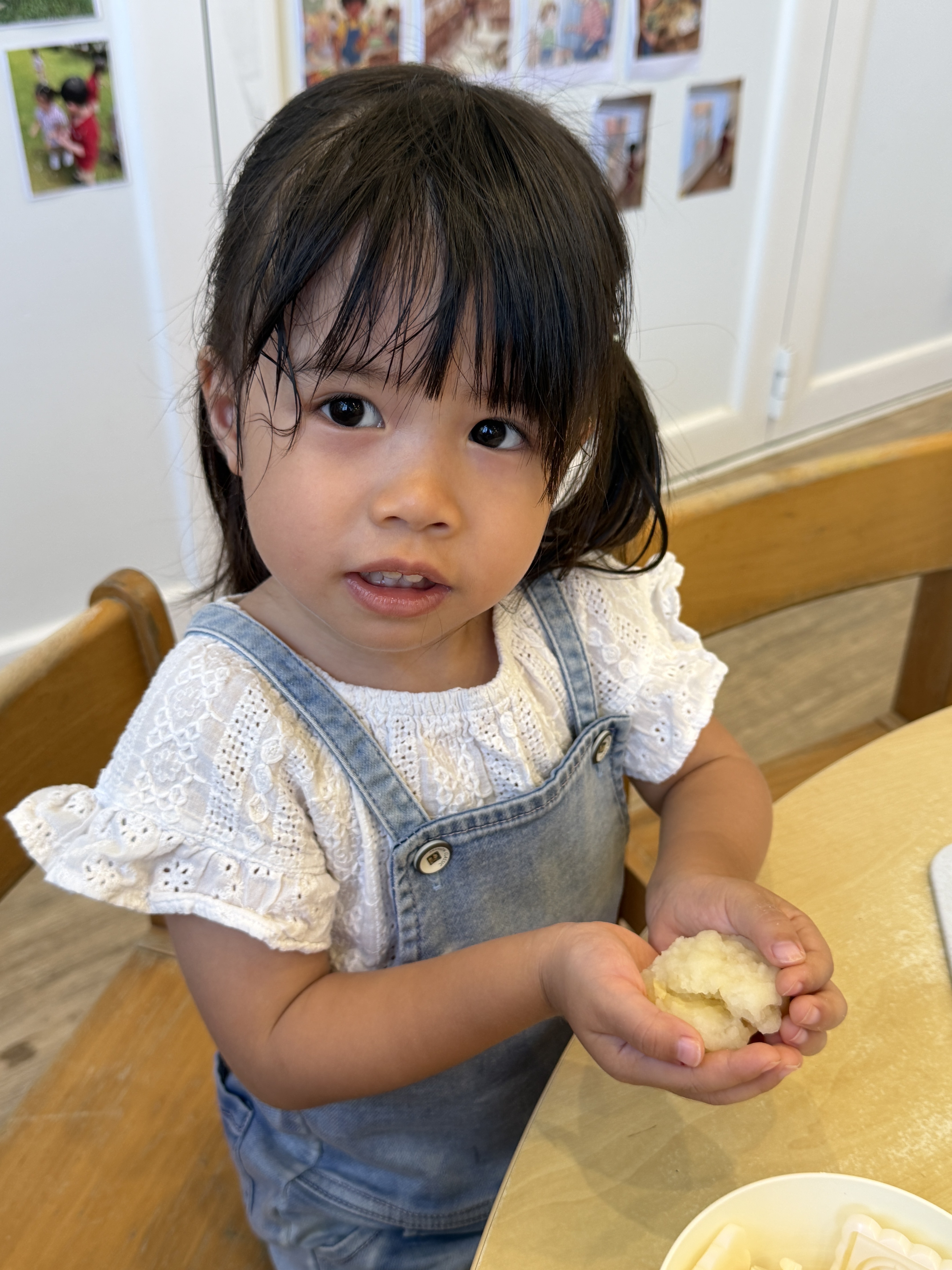
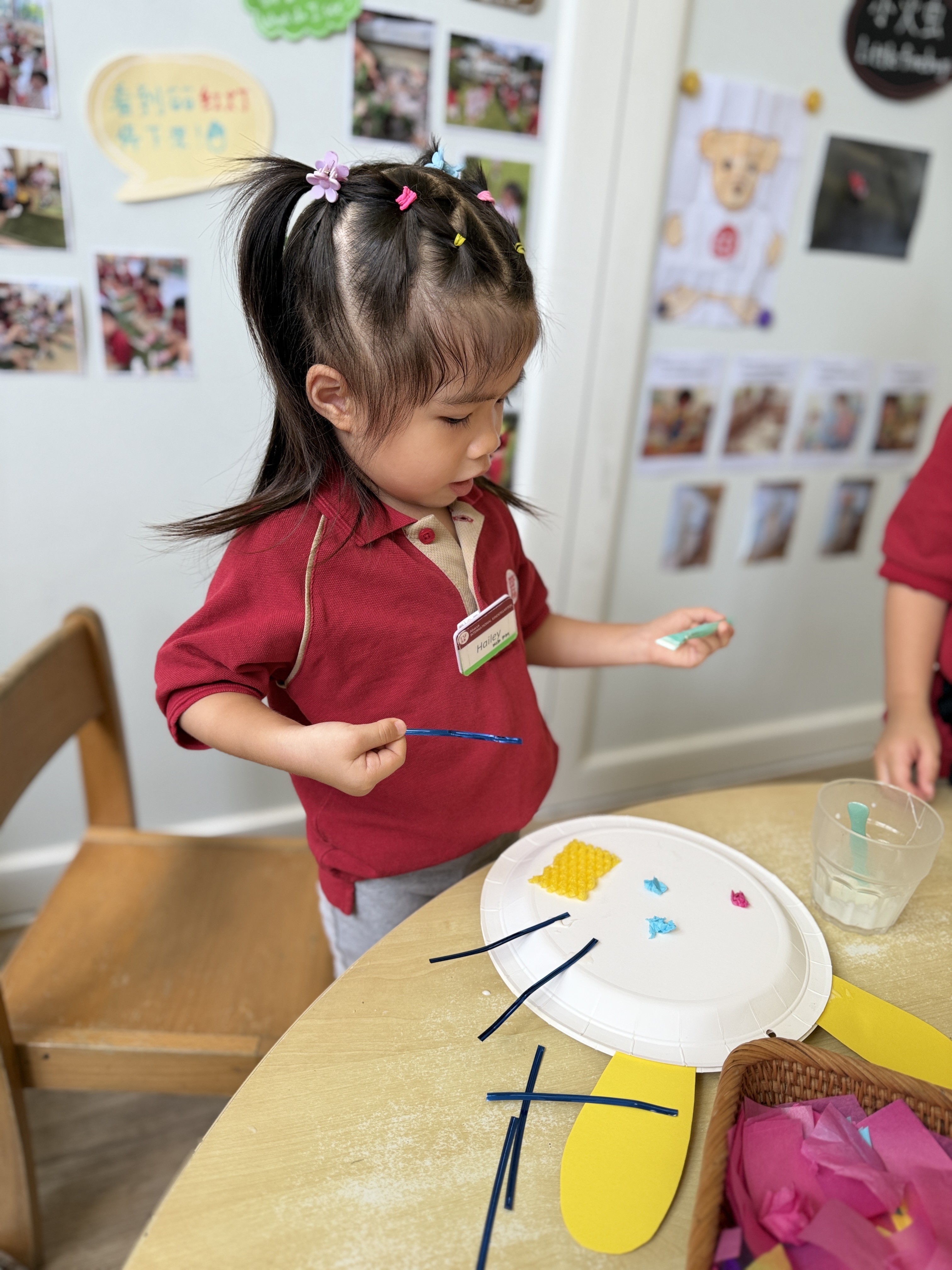
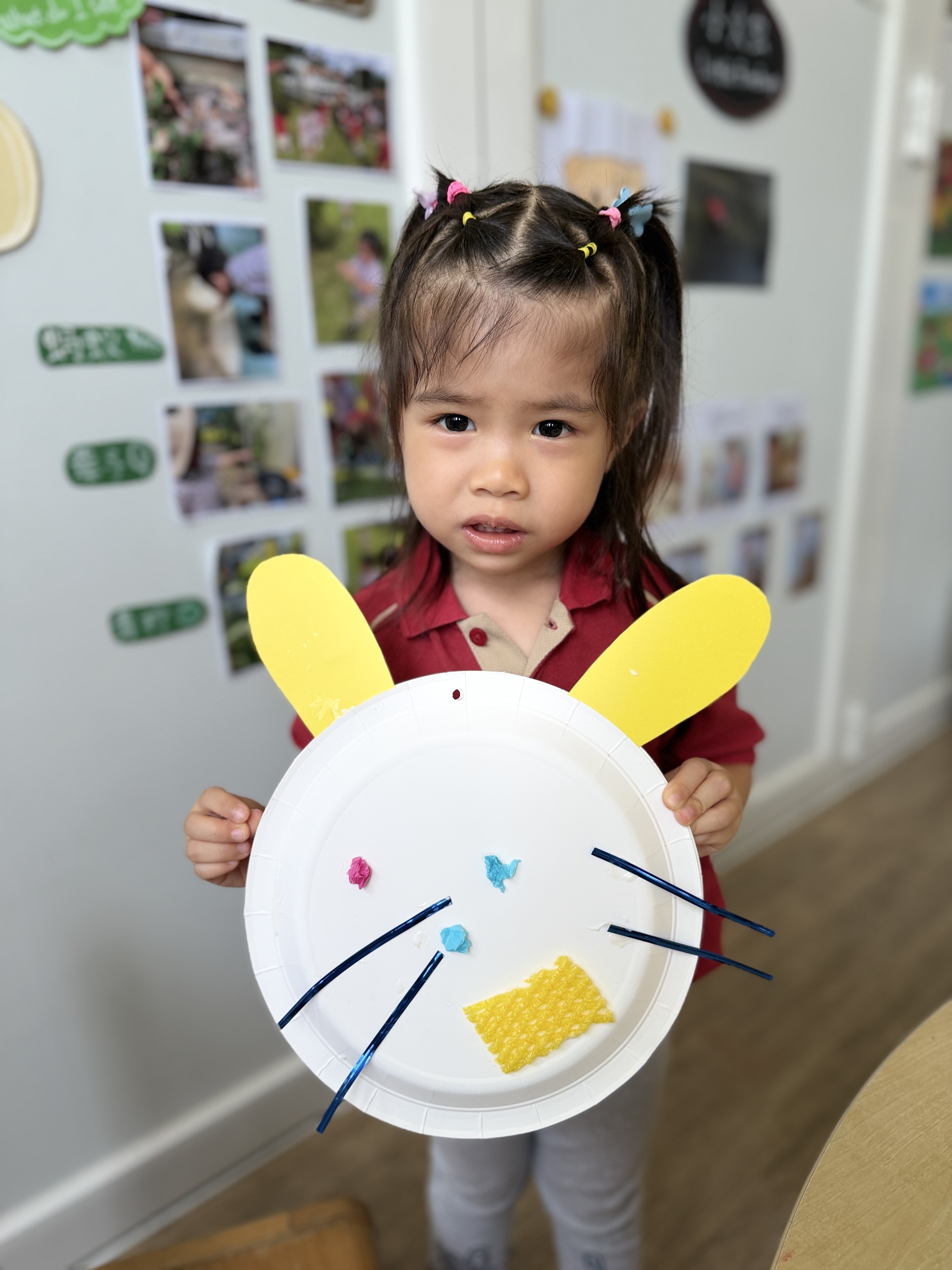
Mid-Autumn Festival 中秋节 is a traditional Chinese festival held on the 15th day of the eighth lunar calendar month.
Hailey made the signature food, which is Mooncake 月饼!She mixed the ingredients- flour 面粉, water 水 , oil 油 to make a dough. Then Hailey chose her favourite pattern of the mooncake, put the dough in the mould and squeezed out her mooncake!
Hailey also explored different materials to create her special lantern 灯笼!
You did so well in the activities Hailey, I hope you have a wonderful time during Mid-Autumn festival with your friends and family. Happy Mid-Autumn Festival 中秋节快乐!
Hailey made the signature food, which is Mooncake 月饼!She mixed the ingredients- flour 面粉, water 水 , oil 油 to make a dough. Then Hailey chose her favourite pattern of the mooncake, put the dough in the mould and squeezed out her mooncake!
Hailey also explored different materials to create her special lantern 灯笼!
You did so well in the activities Hailey, I hope you have a wonderful time during Mid-Autumn festival with your friends and family. Happy Mid-Autumn Festival 中秋节快乐!
Posted by:
Ms Irene Ma, 02/10/2025 19:40:35
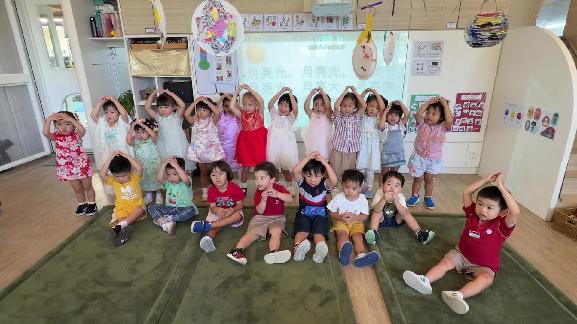
Hailey was singing the Mid Autumn festival 中秋节 song. Happy Mid Autumn Festival!中秋节快乐
Posted by:
Ms Irene Ma, 18/09/2025 14:44:15
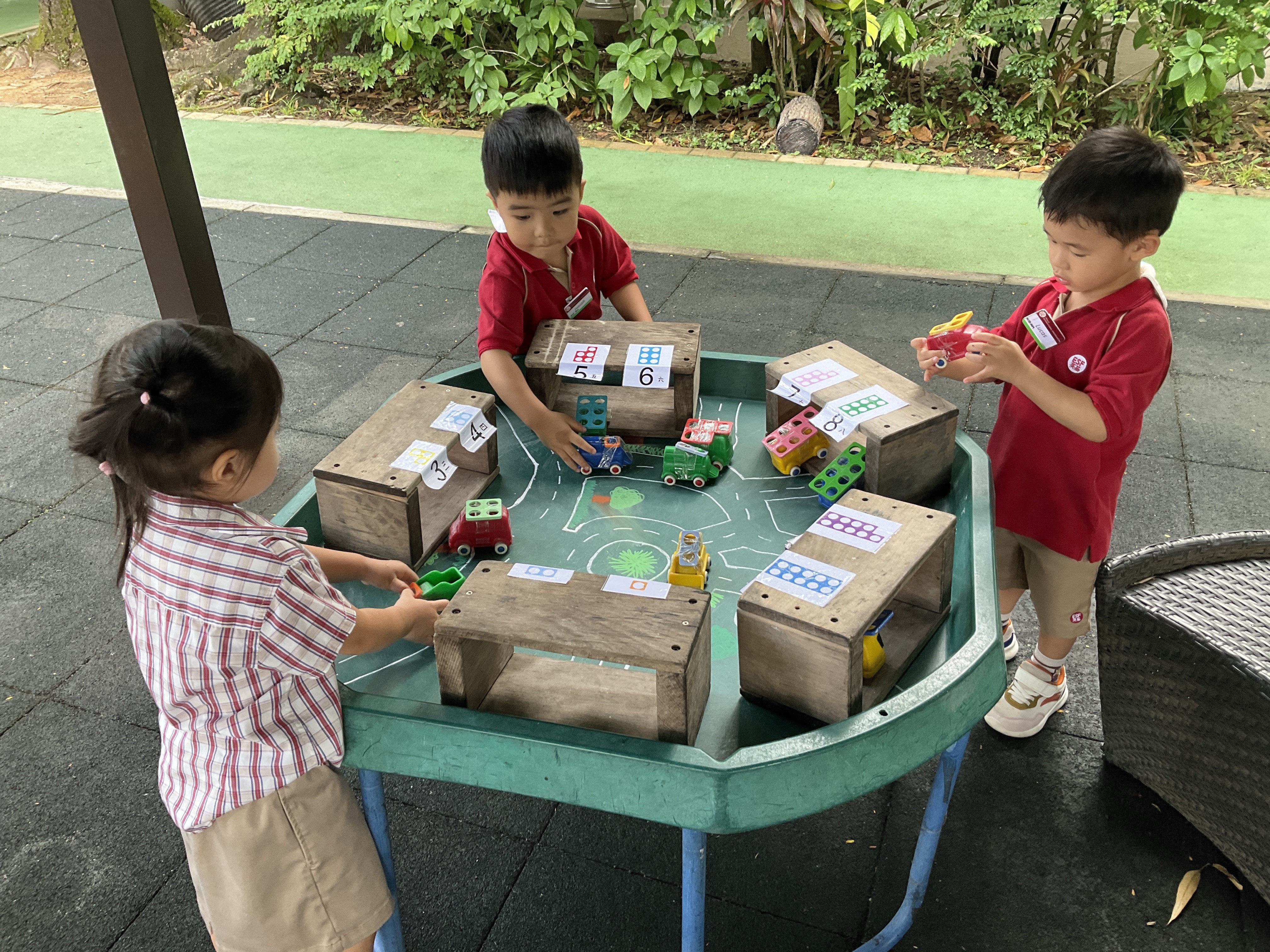
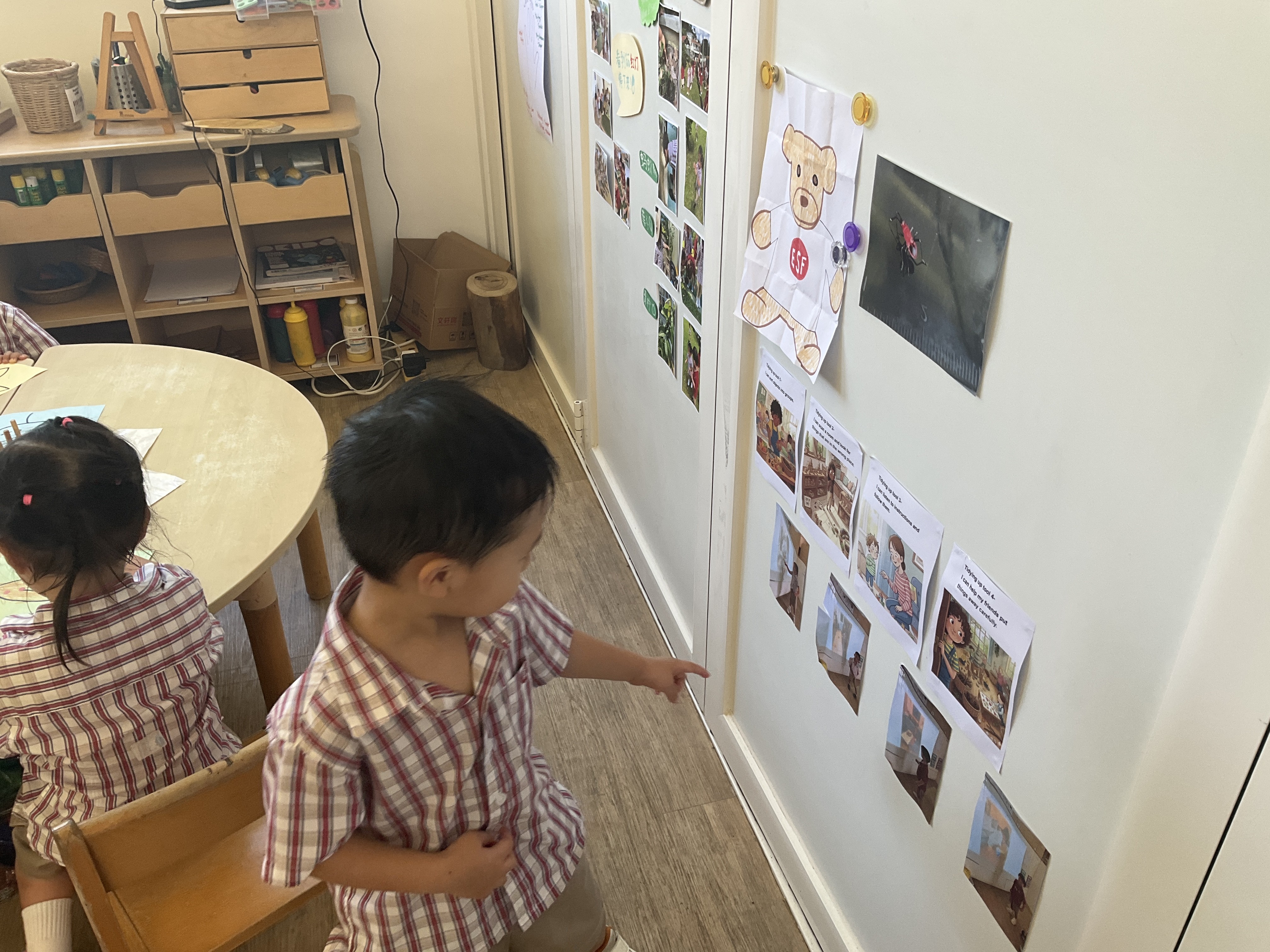
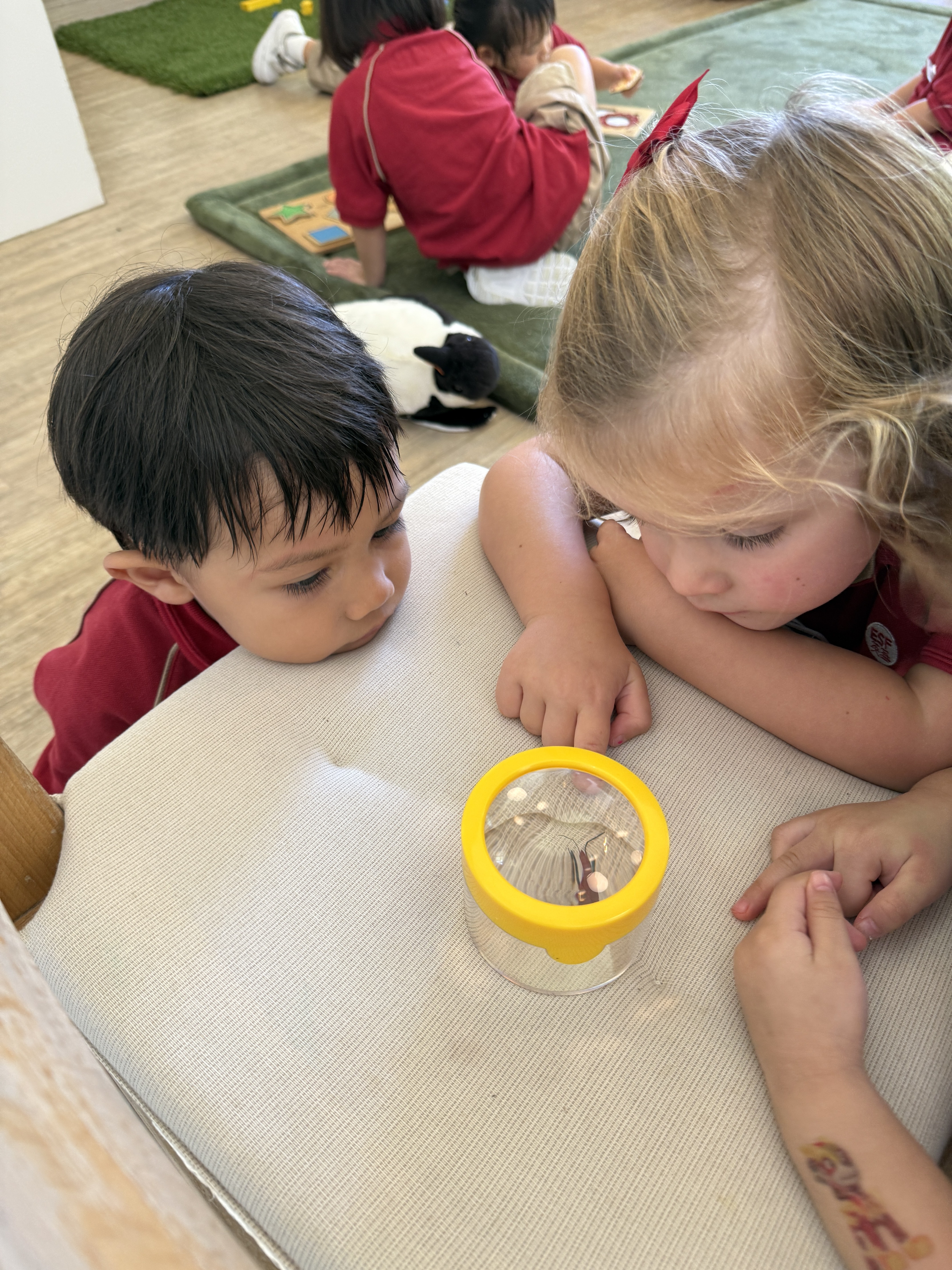
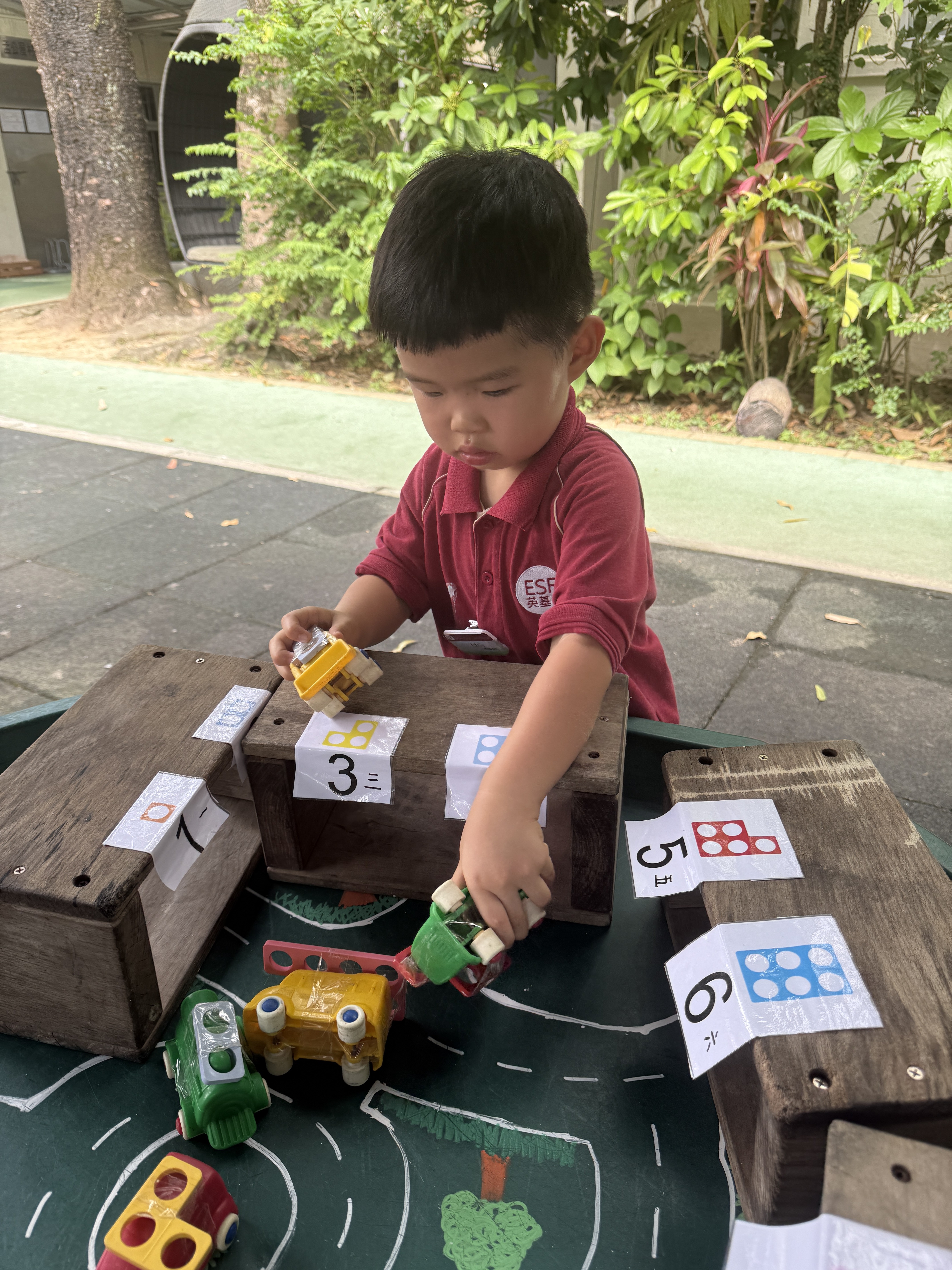
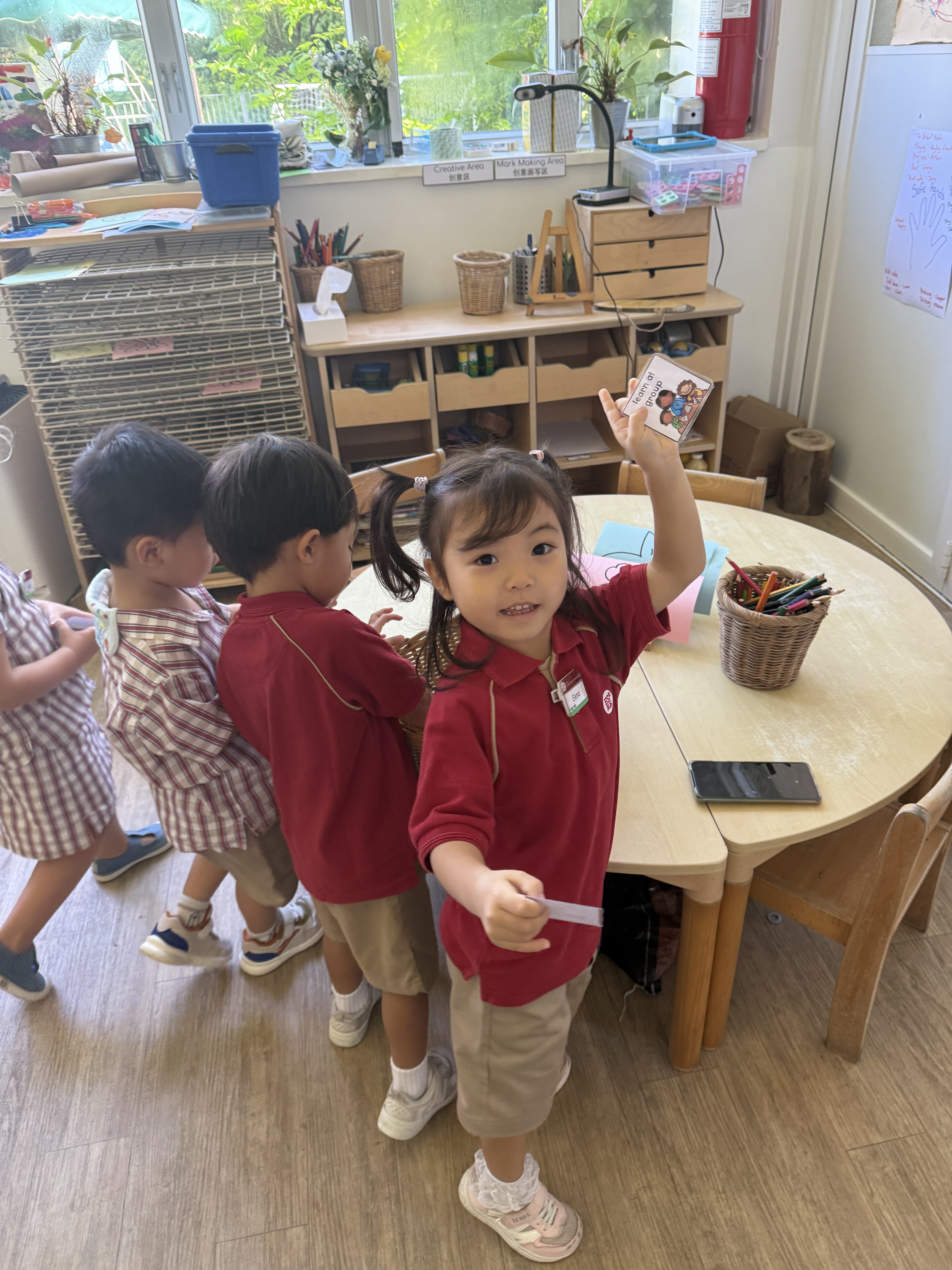
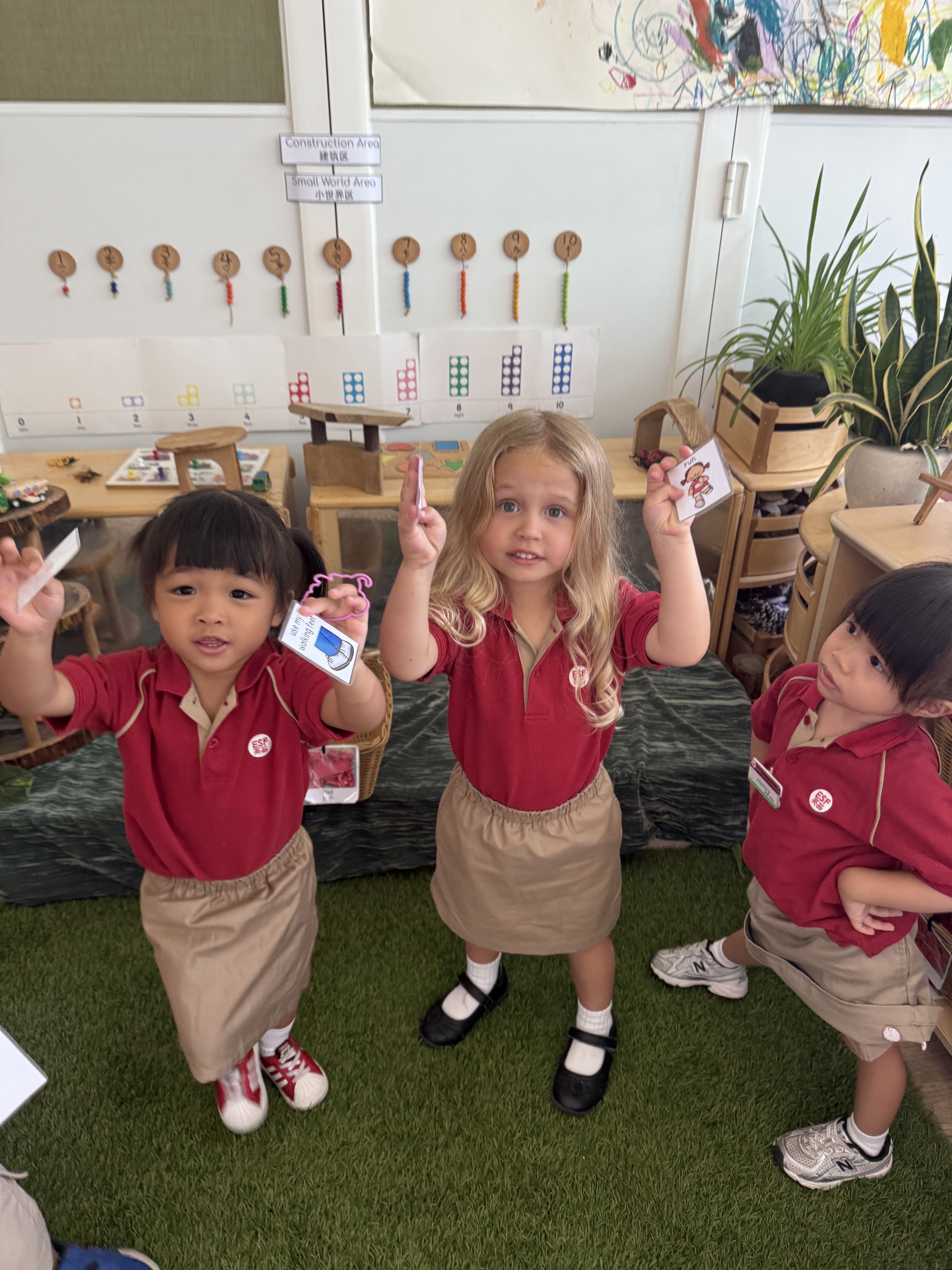
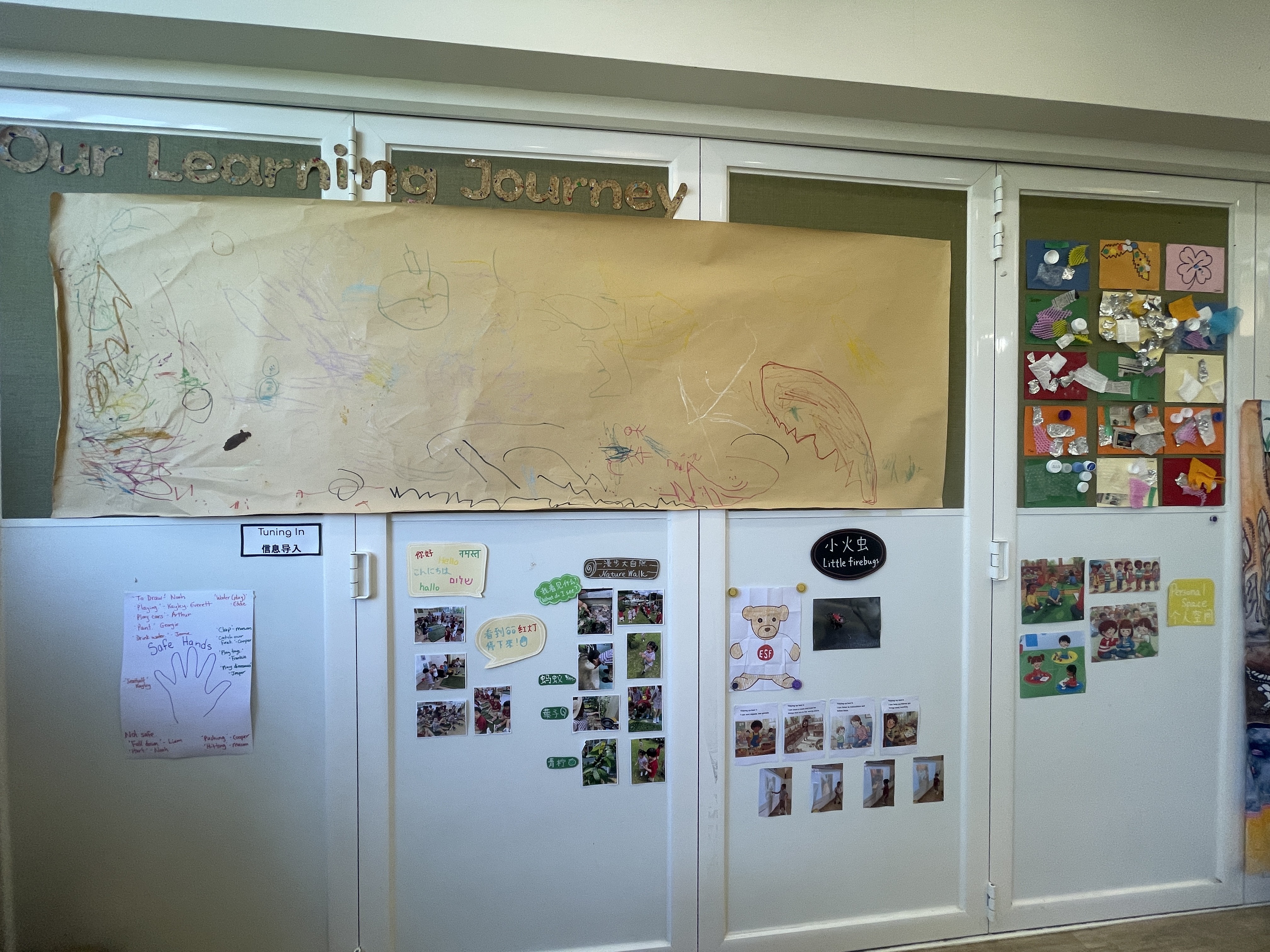
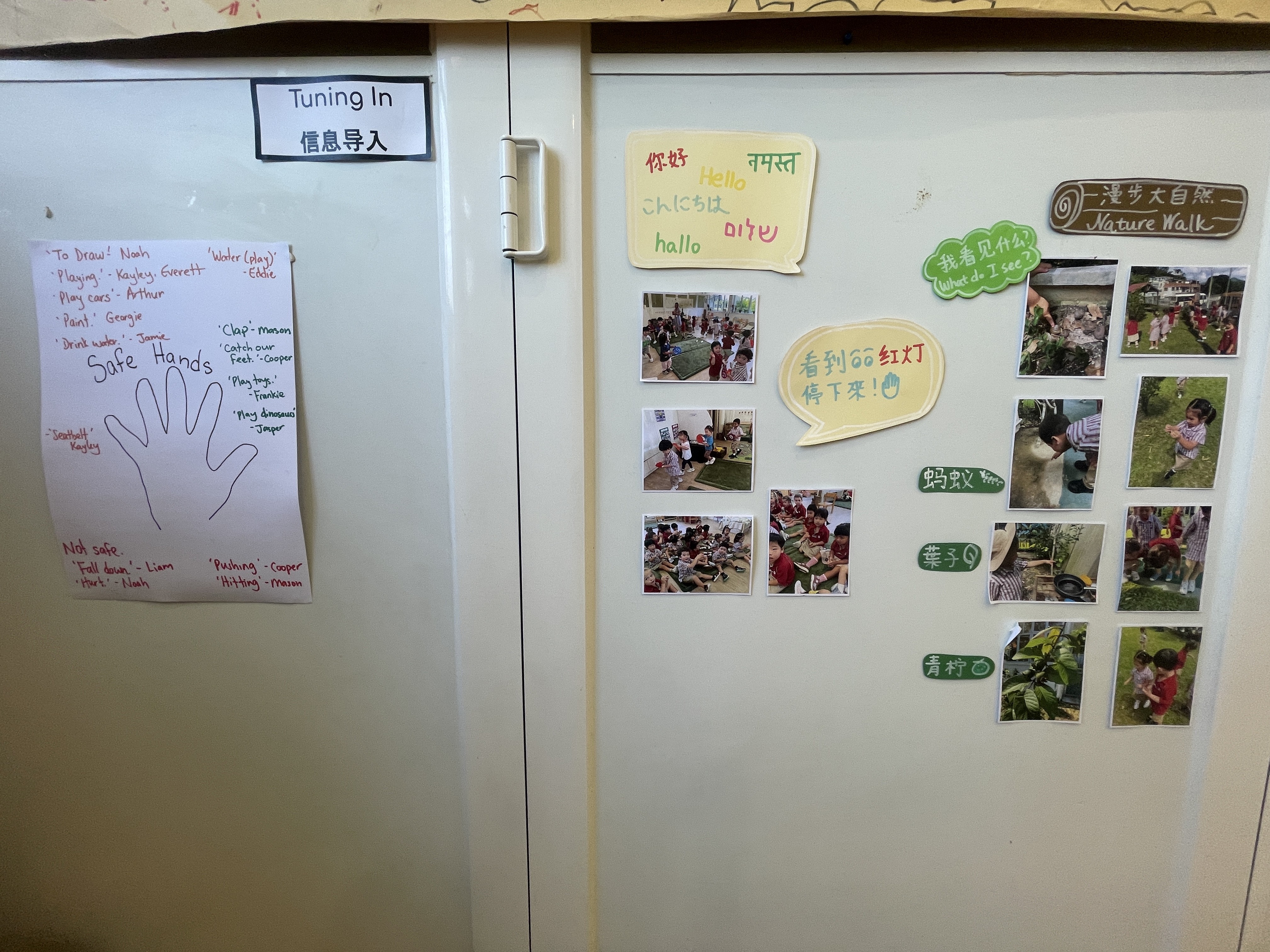
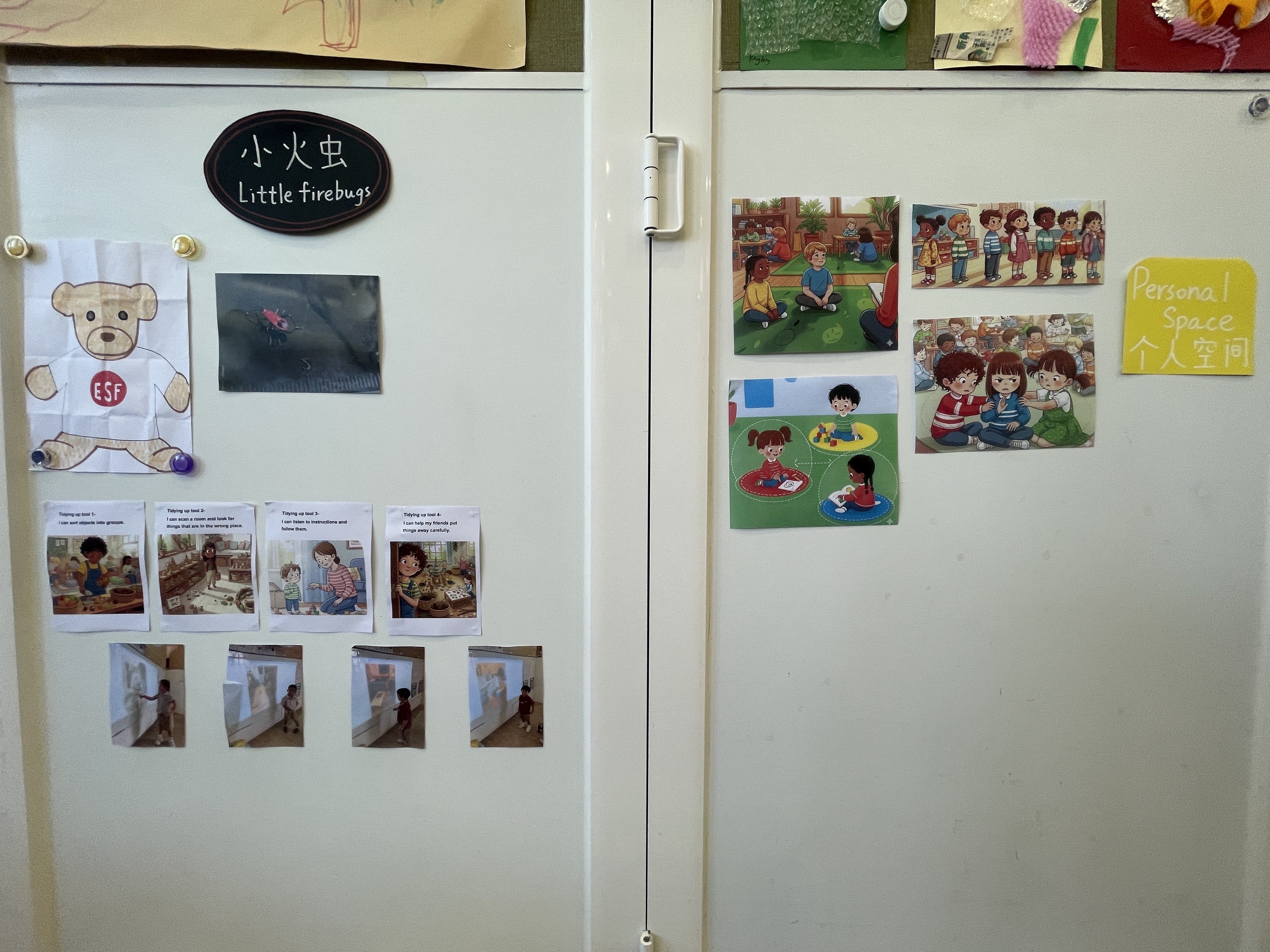
Unit of Inquiry
As part of our personal, social, physical and emotional (PSPE) development, we've been learning about Green and Red Choices to help children understand how their actions affect themselves and others. We talked about how to make good choices and what to do when they feel upset.
We introduced several ways for children to calm down when they're in the "red or blue zone," which are feelings like anger or sadness.
These tools include:
-Taking deep breaths
-Looking at a book
-Cuddling a soft toy
-Movement activities
-Using the calm corner
-Talking to a teacher
We are currently focusing on the importance of personal space. The purpose is to ensure all children feel safe and comfortable while playing and learning, helping them stay in the "green zone." We have introduced a Personal Space song and are learning to identify the difference between "green choices" (respecting space) and "red choices" (not respecting space). This helps children understand how their actions affect others and promotes a positive environment for everyone.
Math
We introduced Numicon, a learning tool that uses coloured shapes for numbers 1 through 10. These shapes help children see and feel the value of each number.
The children have been exploring Numicon during both indoor and outdoor play. They are learning to:
Match Numicon cars to the correct numbers in our math area.
Identify Numicon shapes while we sing a counting song.
We have also been enjoying the "Beehive Song" to practice counting to 5 by acting out the movements of bees.
Chinese
The children are actively learning to follow simple Chinese instructions related to our daily routines. They are also practising how to understand and respond to the "red and green choices" in Chinese. To build their vocabulary, we are reviewing the words for basic colours and body parts.
The Chinese Vocabulary:
Nose: 鼻子 (bí zi)
Mouth: 嘴巴 (zuǐ ba)
Ears: 耳朵 (ěr duo)
Head: 头 (tóu)
Hands: 手 (shǒu)
Shoulders: 肩膀 (jiān bǎng)
Legs: 腿 (tuǐ)
Red: 红色 (hóng sè)
Yellow: 黄色 (huáng sè)
Green: 绿色 (lǜ sè)
Blue: 蓝色 (lán sè)
Happy: 快乐 (kuài lè)
Sad: 伤心 (shāng xīn)
Angry: 生气 (shēng qì)
Silly: 傻傻的 (shǎ shǎ de)
Red choices 红色选择 (hóng sè xuǎn zé)
Green choices 绿色选择 (lǜ sè xuǎn zé)
Please tidy up 请收拾 (qǐng shōu shi)
Wash hands 洗手 (xǐ shǒu)
Go to toilet 去洗手间 (qù xǐ shǒu jiān)
The Chinese song:
一根小手指 One Little Finger
https://www.youtube.com/watch?v=usCputd1Wu0
拍拍手 Clap your hands
https://www.youtube.com/watch?v=naHTzvKRB0s&t=8s
As part of our personal, social, physical and emotional (PSPE) development, we've been learning about Green and Red Choices to help children understand how their actions affect themselves and others. We talked about how to make good choices and what to do when they feel upset.
We introduced several ways for children to calm down when they're in the "red or blue zone," which are feelings like anger or sadness.
These tools include:
-Taking deep breaths
-Looking at a book
-Cuddling a soft toy
-Movement activities
-Using the calm corner
-Talking to a teacher
We are currently focusing on the importance of personal space. The purpose is to ensure all children feel safe and comfortable while playing and learning, helping them stay in the "green zone." We have introduced a Personal Space song and are learning to identify the difference between "green choices" (respecting space) and "red choices" (not respecting space). This helps children understand how their actions affect others and promotes a positive environment for everyone.
Math
We introduced Numicon, a learning tool that uses coloured shapes for numbers 1 through 10. These shapes help children see and feel the value of each number.
The children have been exploring Numicon during both indoor and outdoor play. They are learning to:
Match Numicon cars to the correct numbers in our math area.
Identify Numicon shapes while we sing a counting song.
We have also been enjoying the "Beehive Song" to practice counting to 5 by acting out the movements of bees.
Chinese
The children are actively learning to follow simple Chinese instructions related to our daily routines. They are also practising how to understand and respond to the "red and green choices" in Chinese. To build their vocabulary, we are reviewing the words for basic colours and body parts.
The Chinese Vocabulary:
Nose: 鼻子 (bí zi)
Mouth: 嘴巴 (zuǐ ba)
Ears: 耳朵 (ěr duo)
Head: 头 (tóu)
Hands: 手 (shǒu)
Shoulders: 肩膀 (jiān bǎng)
Legs: 腿 (tuǐ)
Red: 红色 (hóng sè)
Yellow: 黄色 (huáng sè)
Green: 绿色 (lǜ sè)
Blue: 蓝色 (lán sè)
Happy: 快乐 (kuài lè)
Sad: 伤心 (shāng xīn)
Angry: 生气 (shēng qì)
Silly: 傻傻的 (shǎ shǎ de)
Red choices 红色选择 (hóng sè xuǎn zé)
Green choices 绿色选择 (lǜ sè xuǎn zé)
Please tidy up 请收拾 (qǐng shōu shi)
Wash hands 洗手 (xǐ shǒu)
Go to toilet 去洗手间 (qù xǐ shǒu jiān)
The Chinese song:
一根小手指 One Little Finger
https://www.youtube.com/watch?v=usCputd1Wu0
拍拍手 Clap your hands
https://www.youtube.com/watch?v=naHTzvKRB0s&t=8s
Posted by:
Ms Maria Lee, 16/09/2025 11:19:05
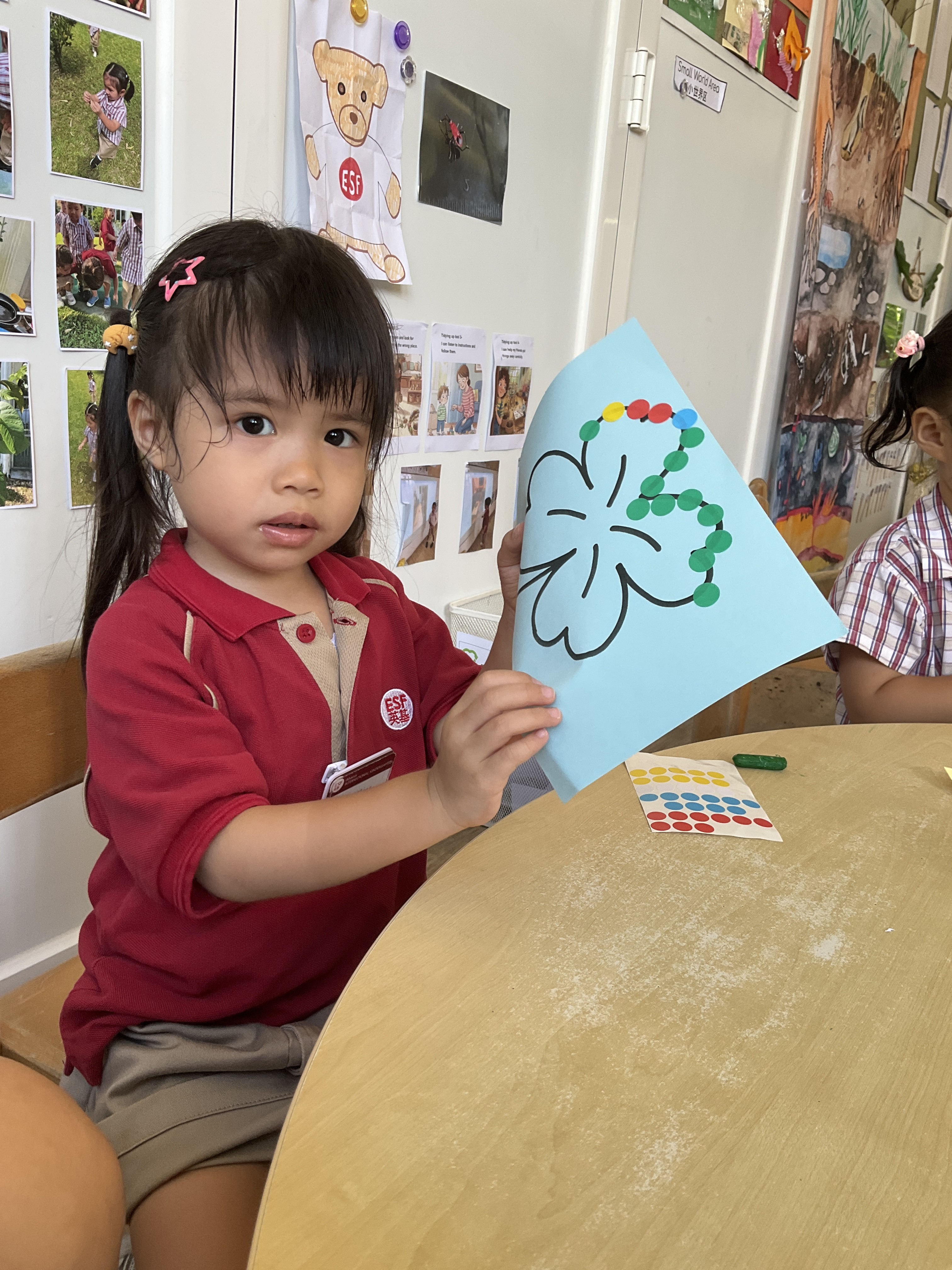
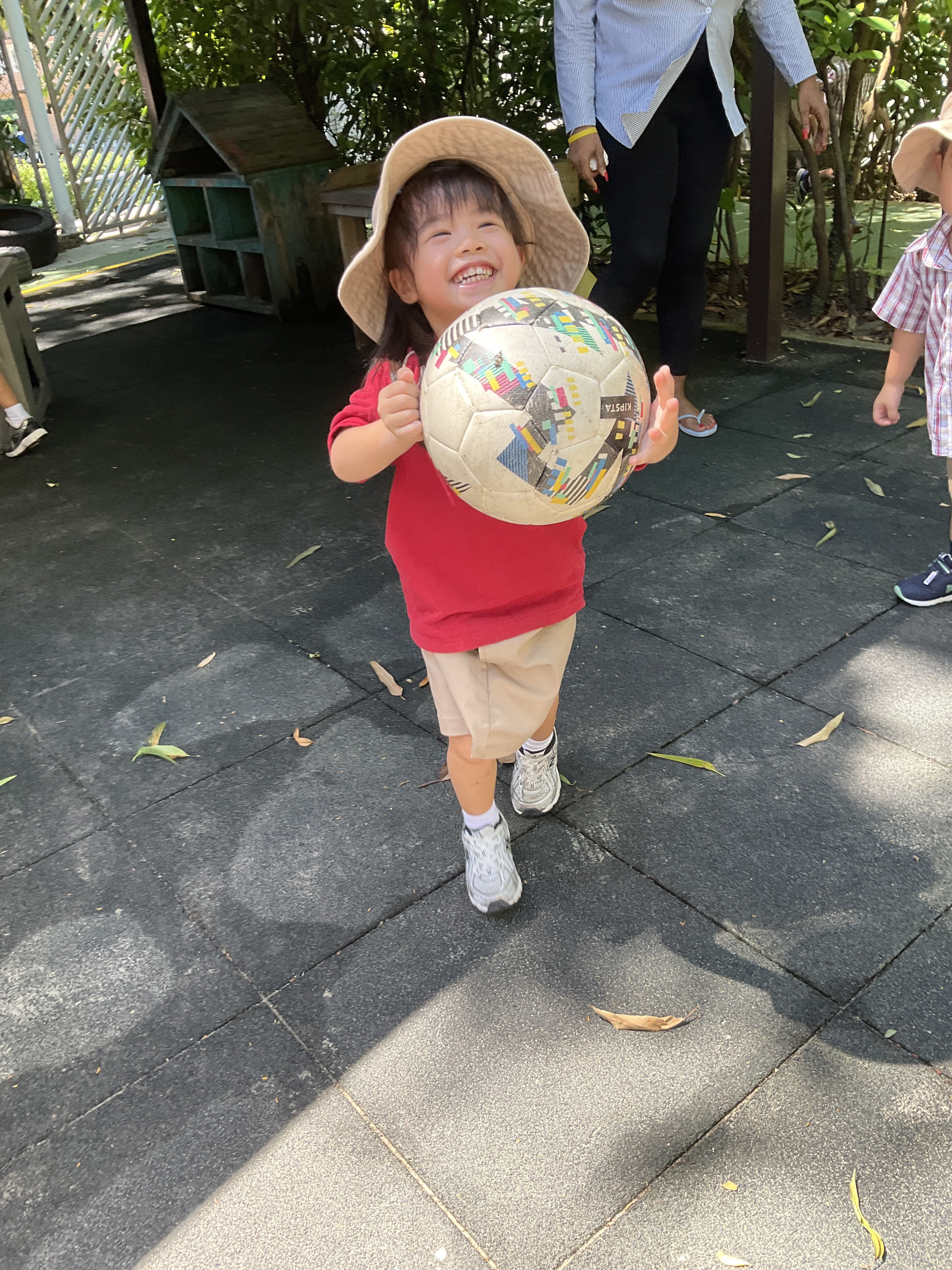
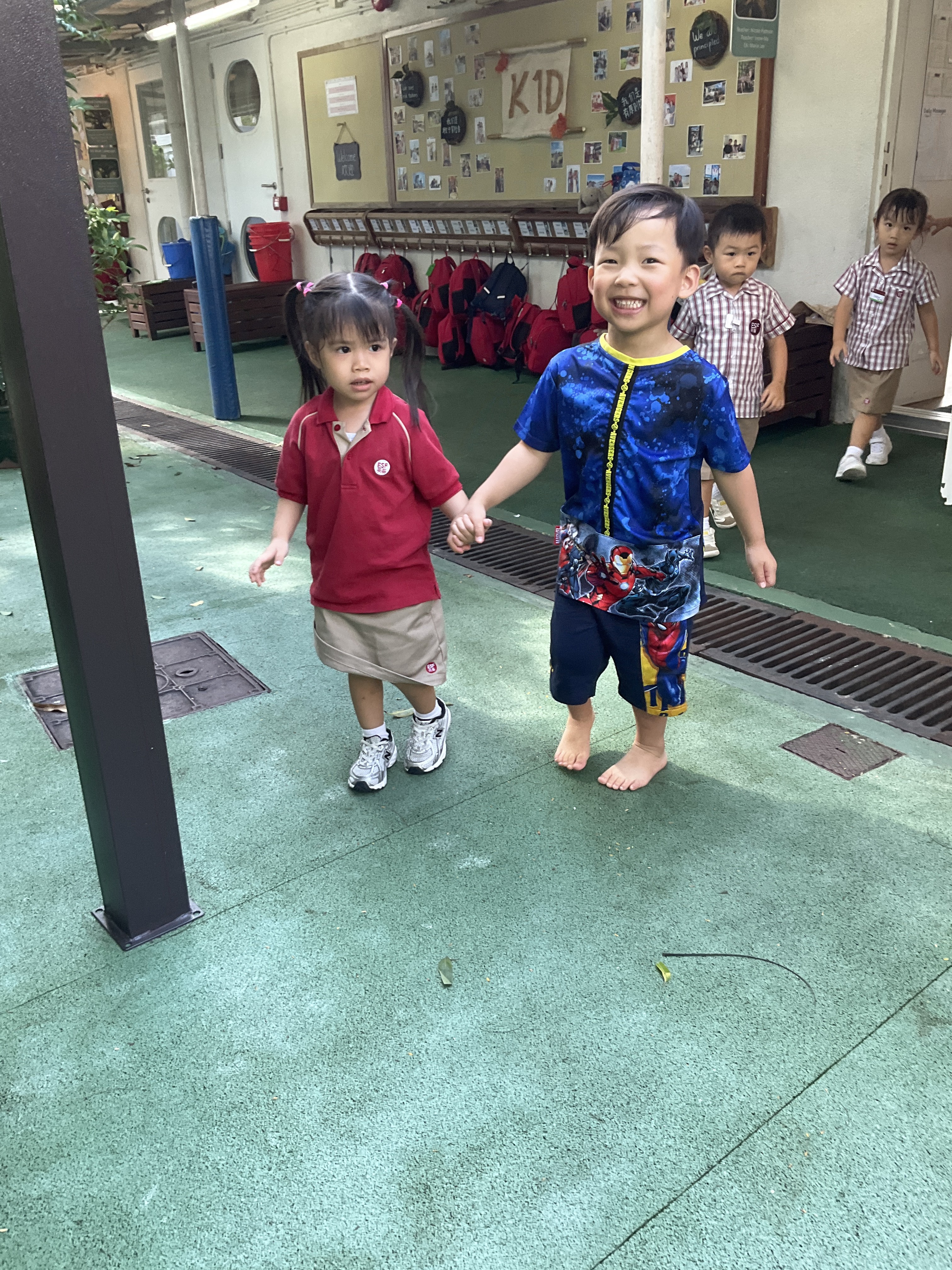
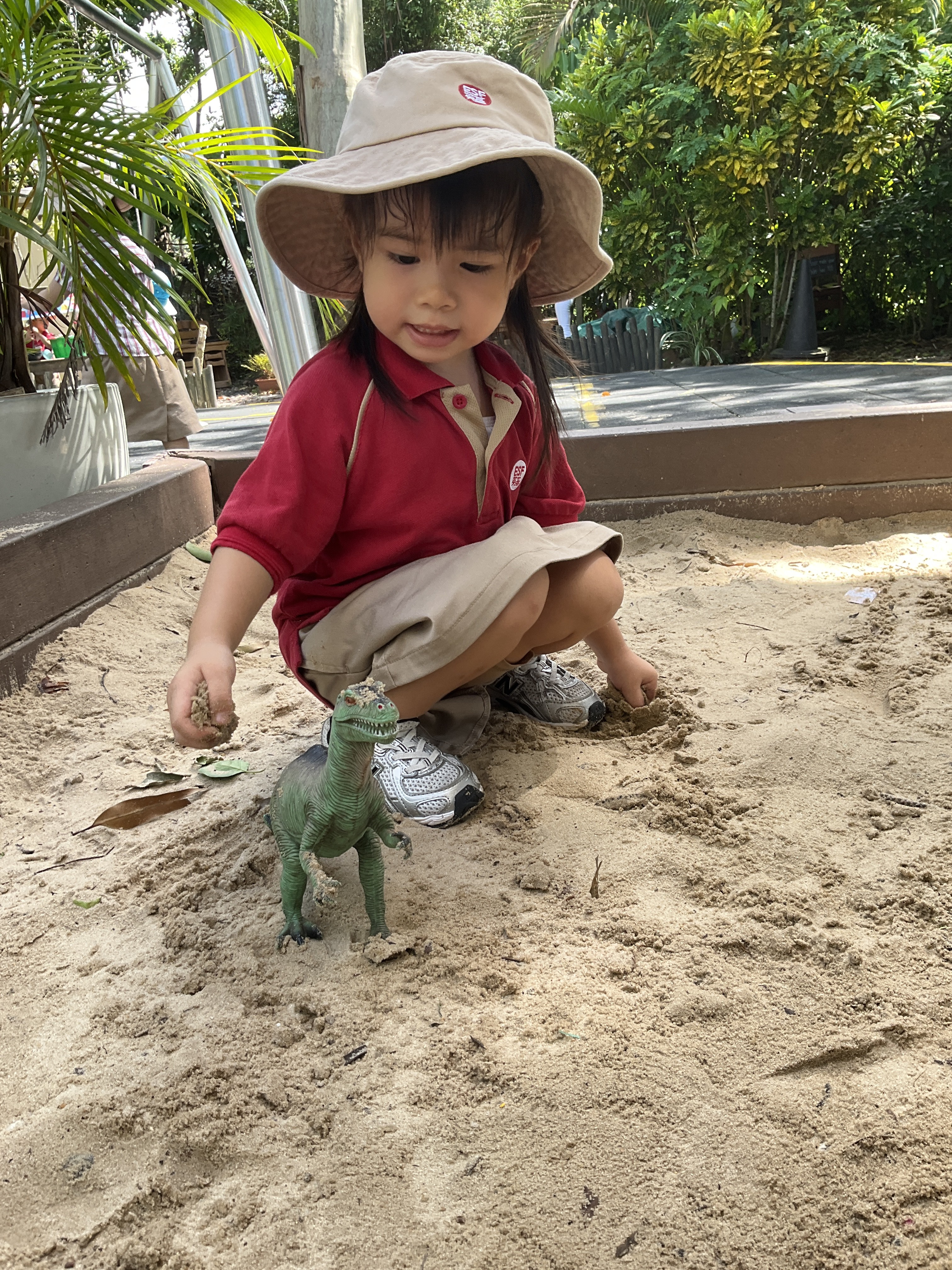
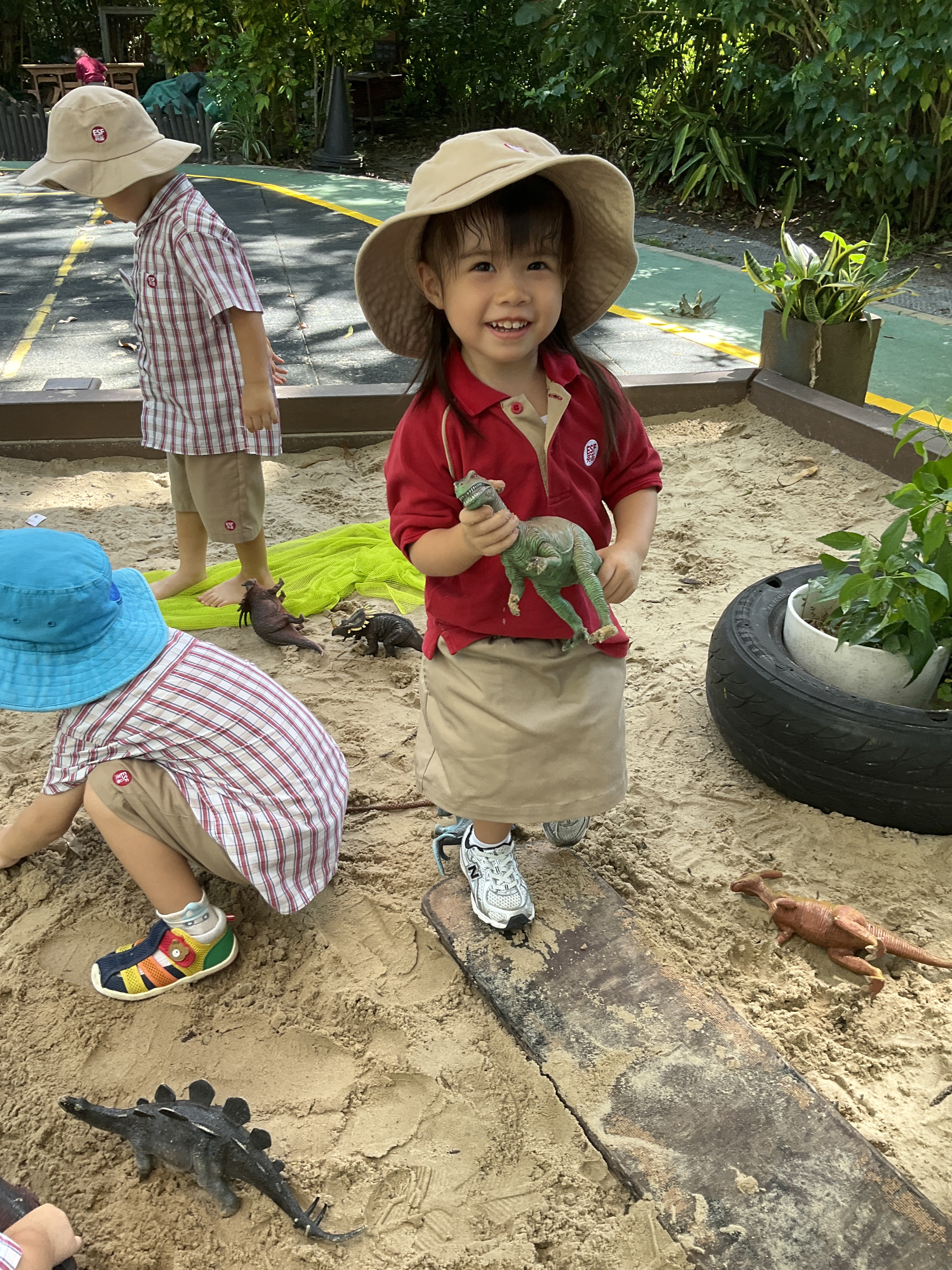
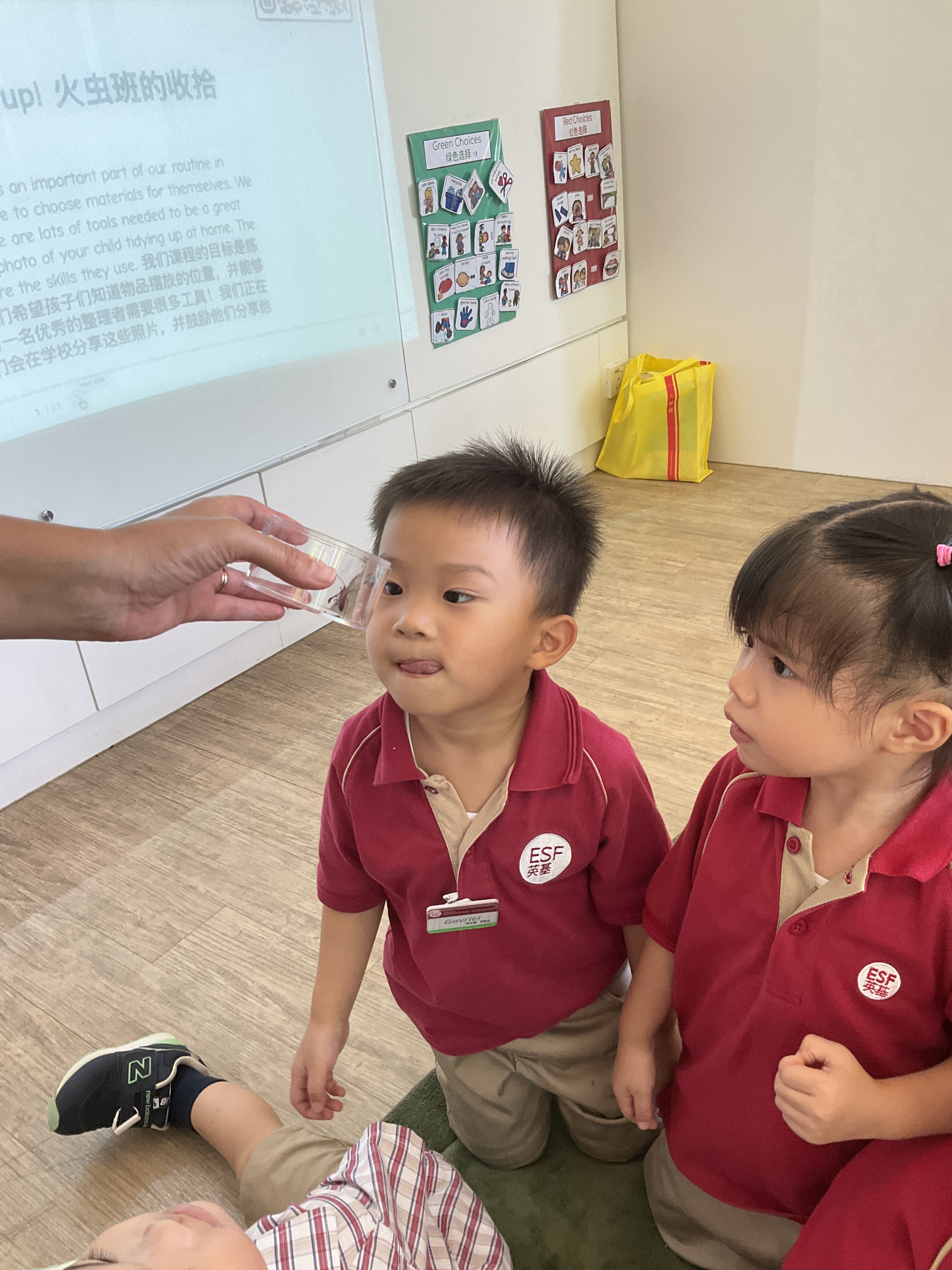
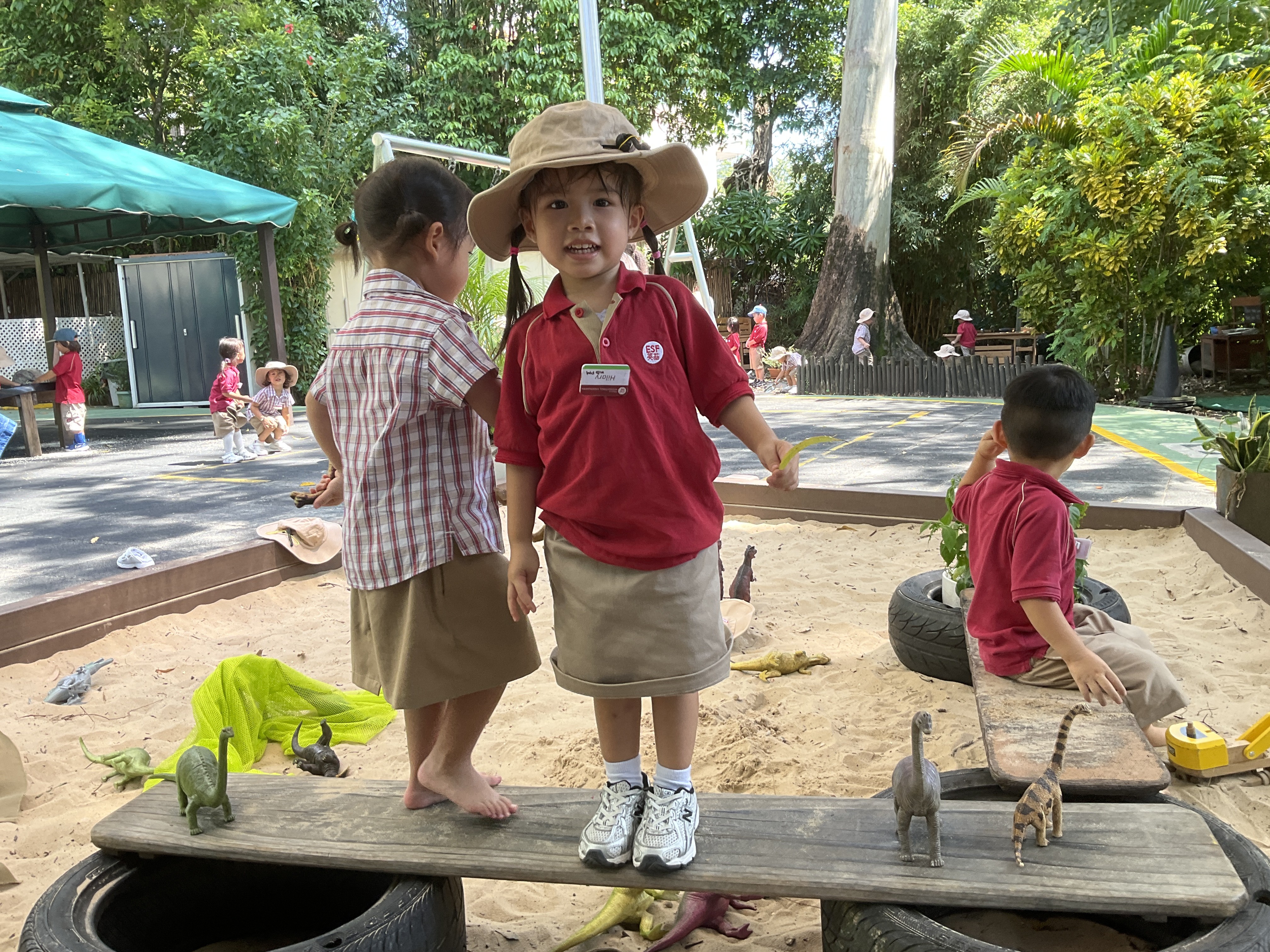
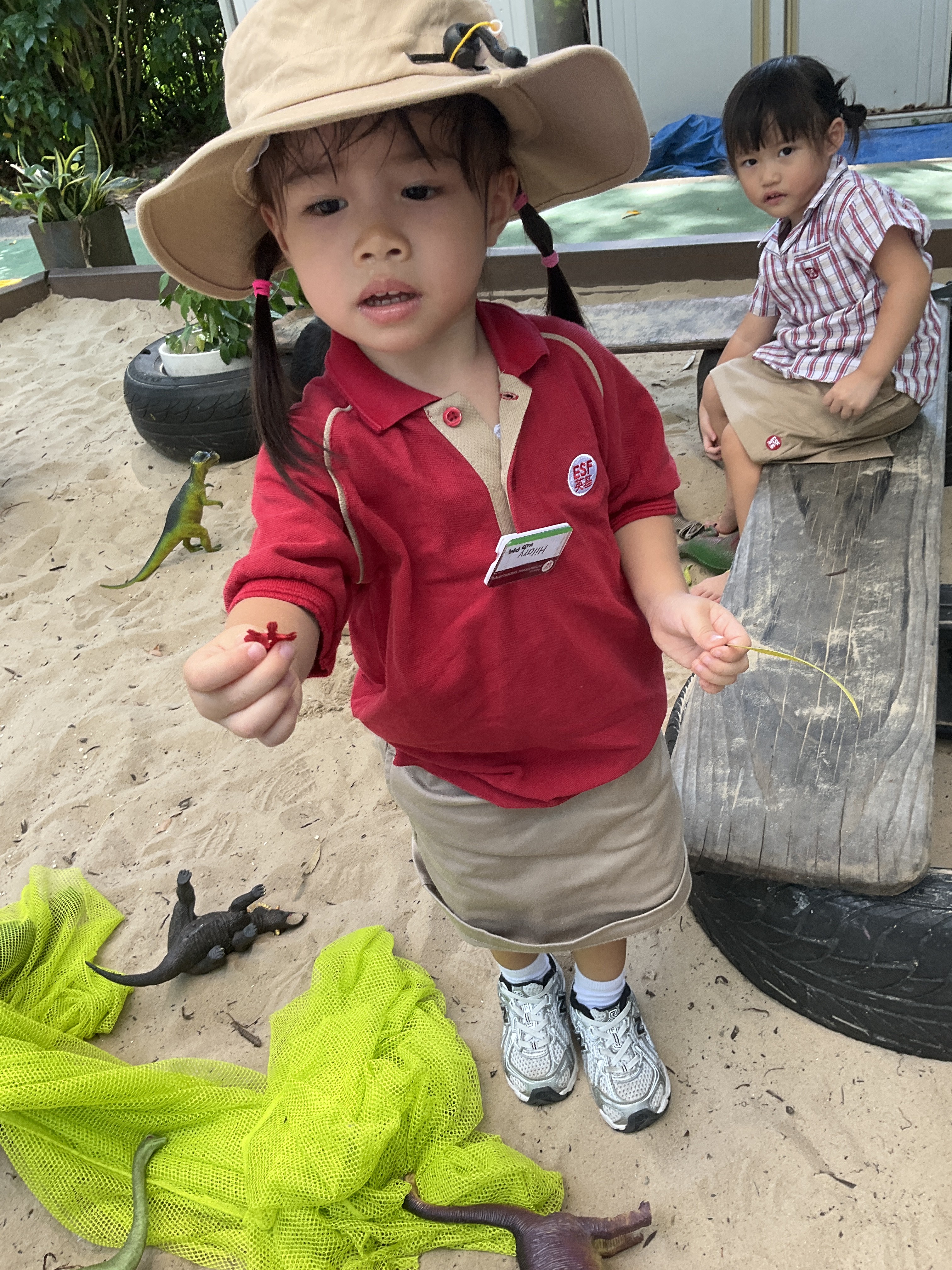
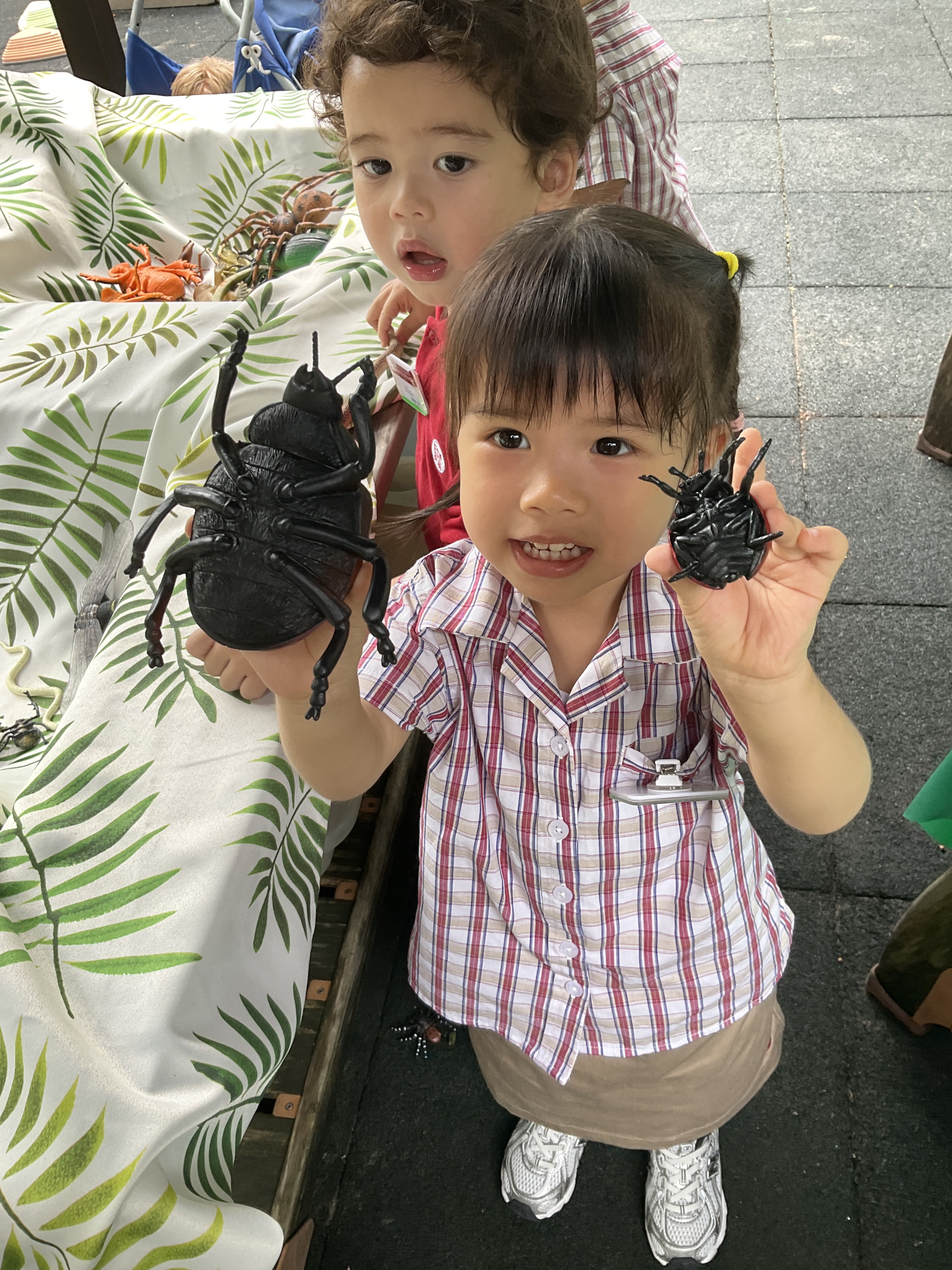
Hailey is settling in nicely at Abacus, she has been arriving cheerfully at school, and following our routines. During outdoor learning, Hailey has particularly enjoyed imaginative play and digging in the sandpit, she loves finding treasures there. She also enjoyed playing on the swing, slides, and football. Hailey loves exploring different areas in the classroom too, she particularly likes painting and mark making.
Posted by:
Nicole Pattison, 04/09/2025 14:38:15
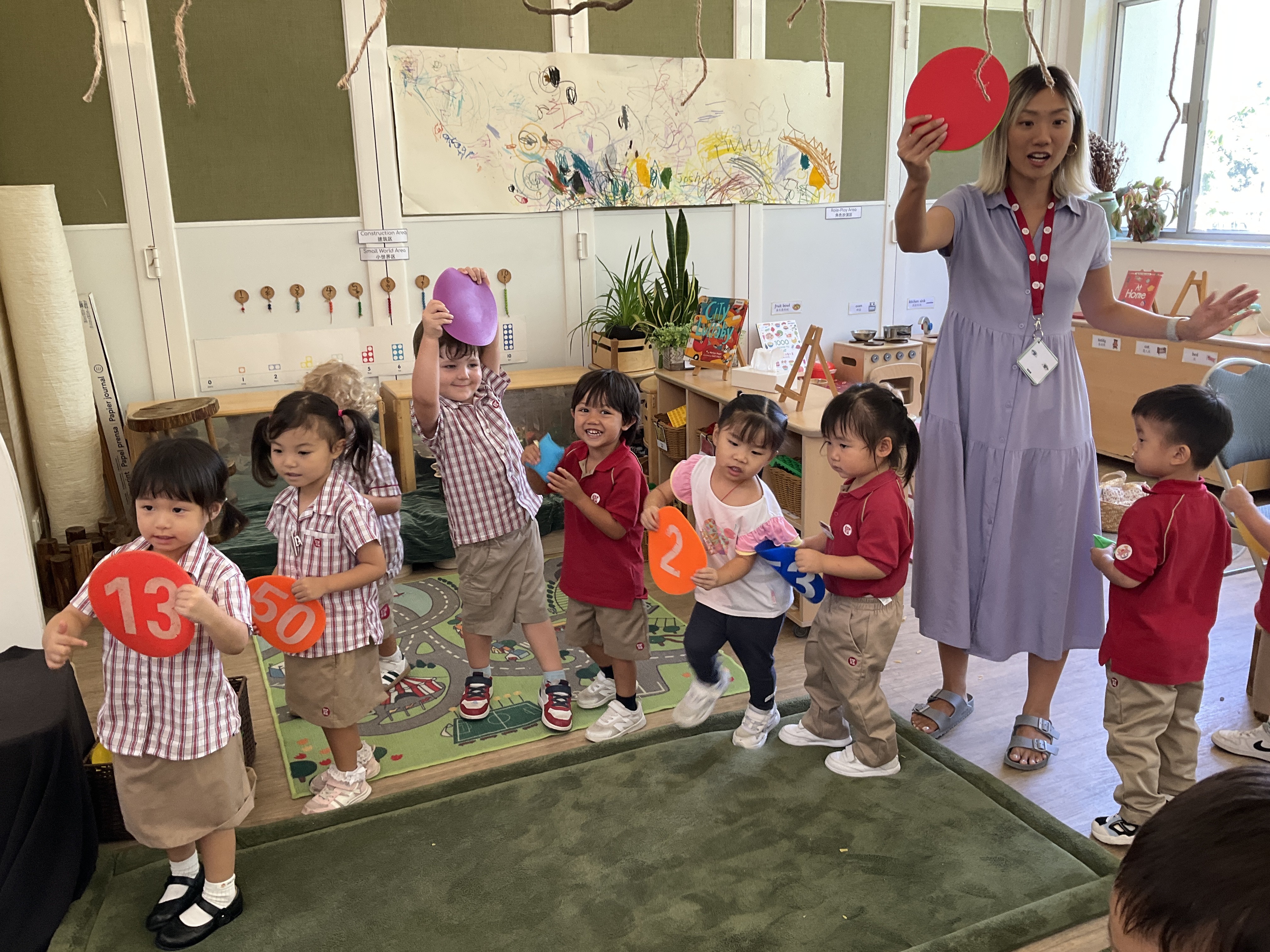
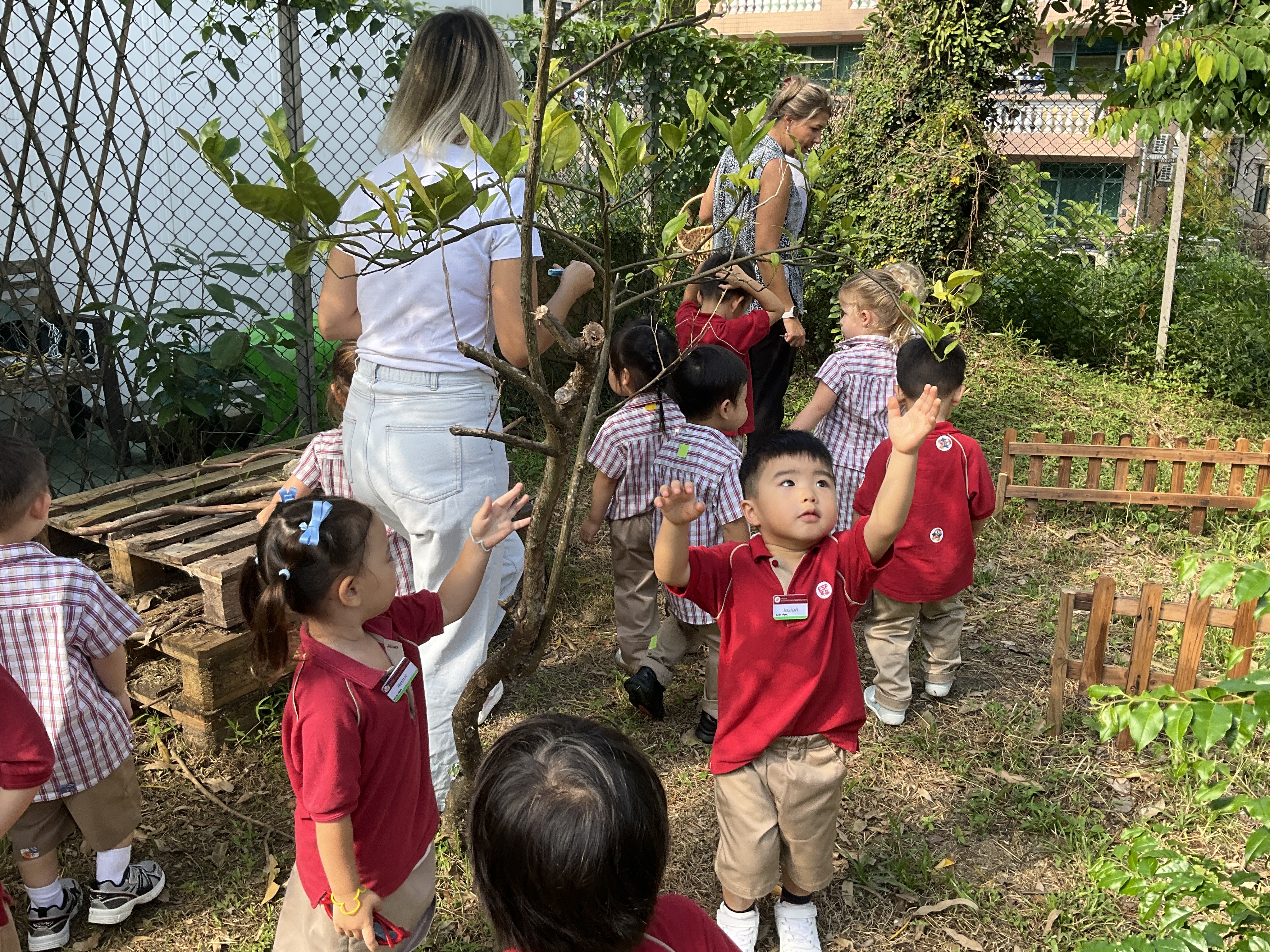
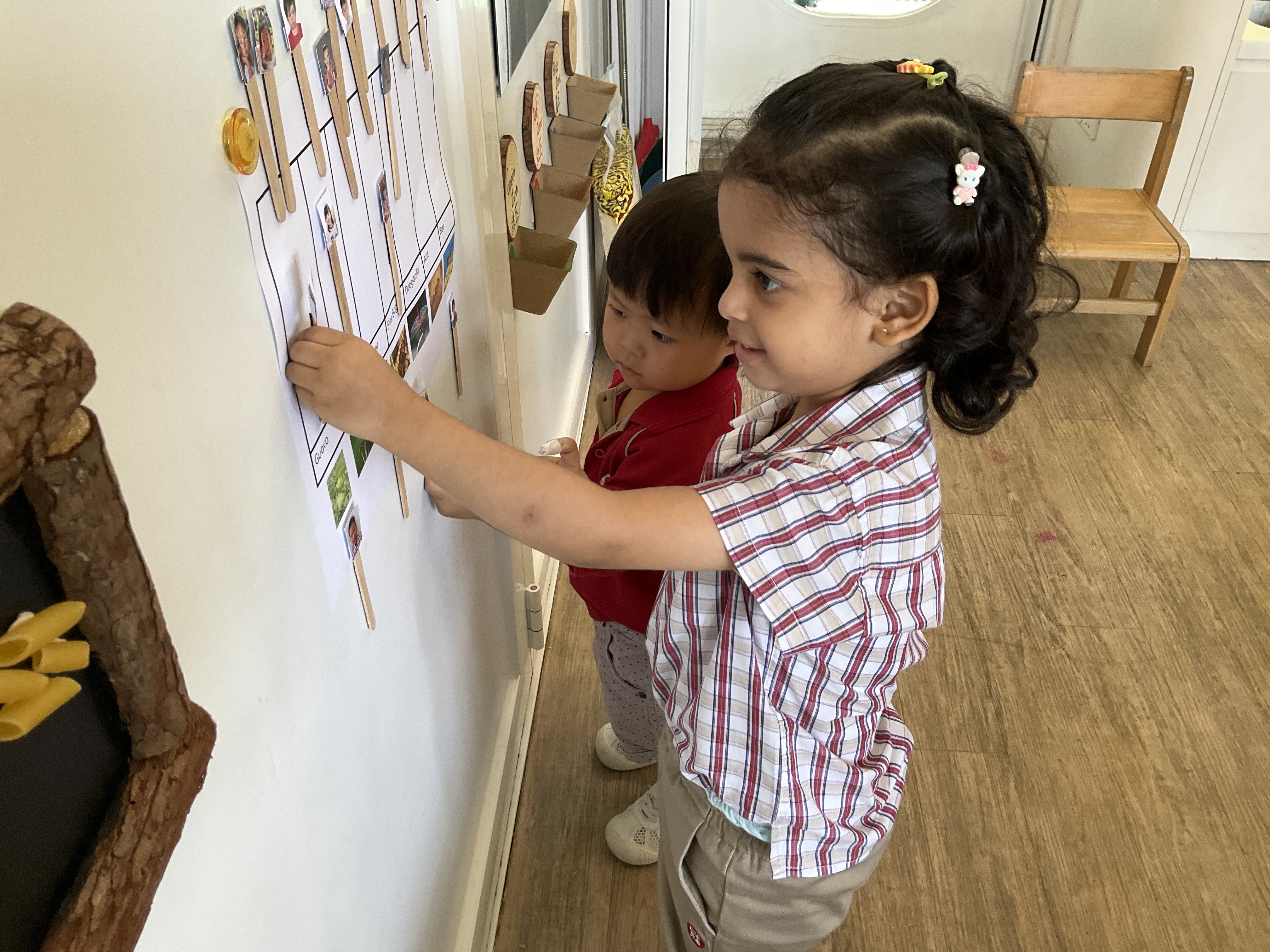
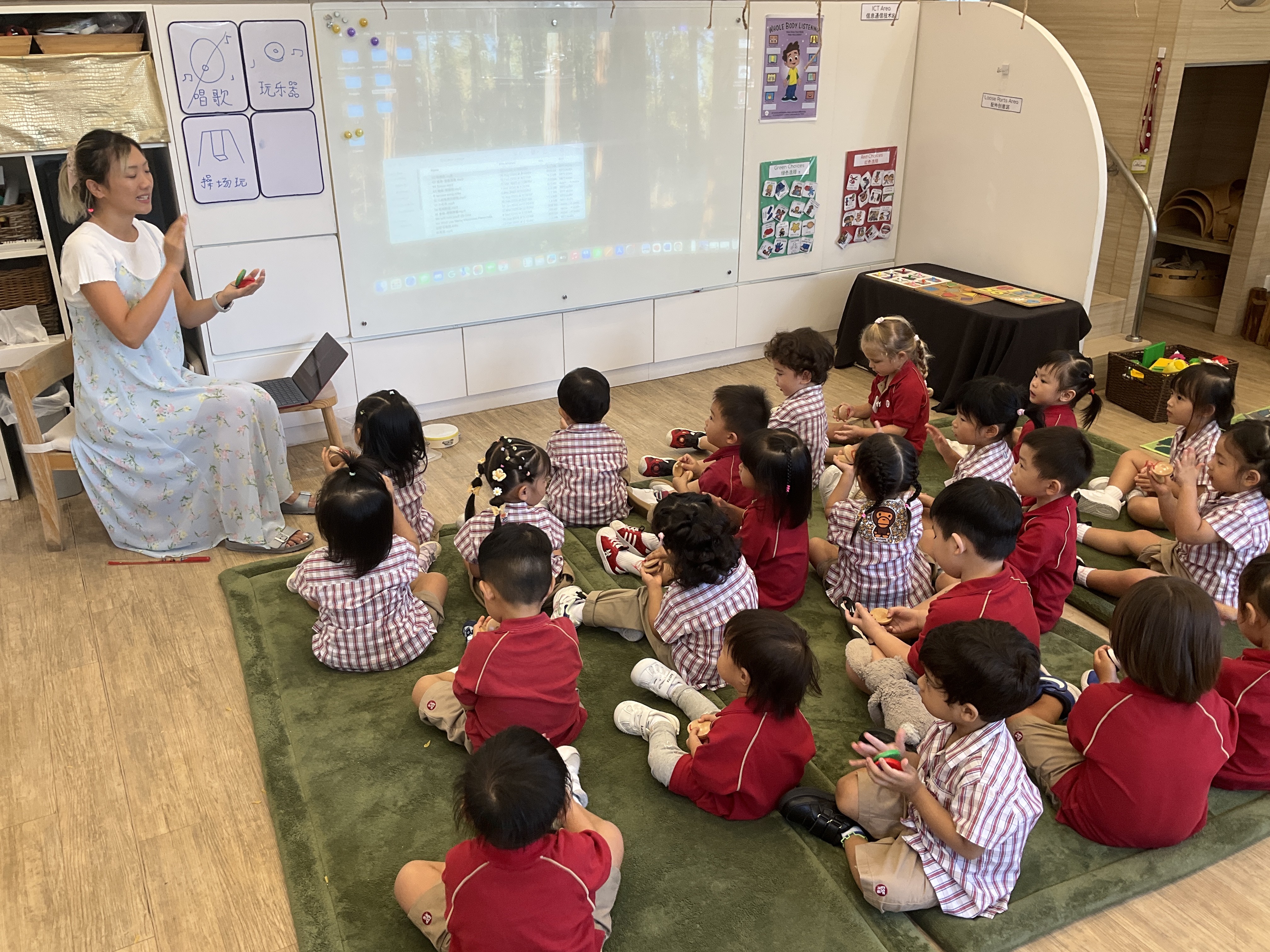
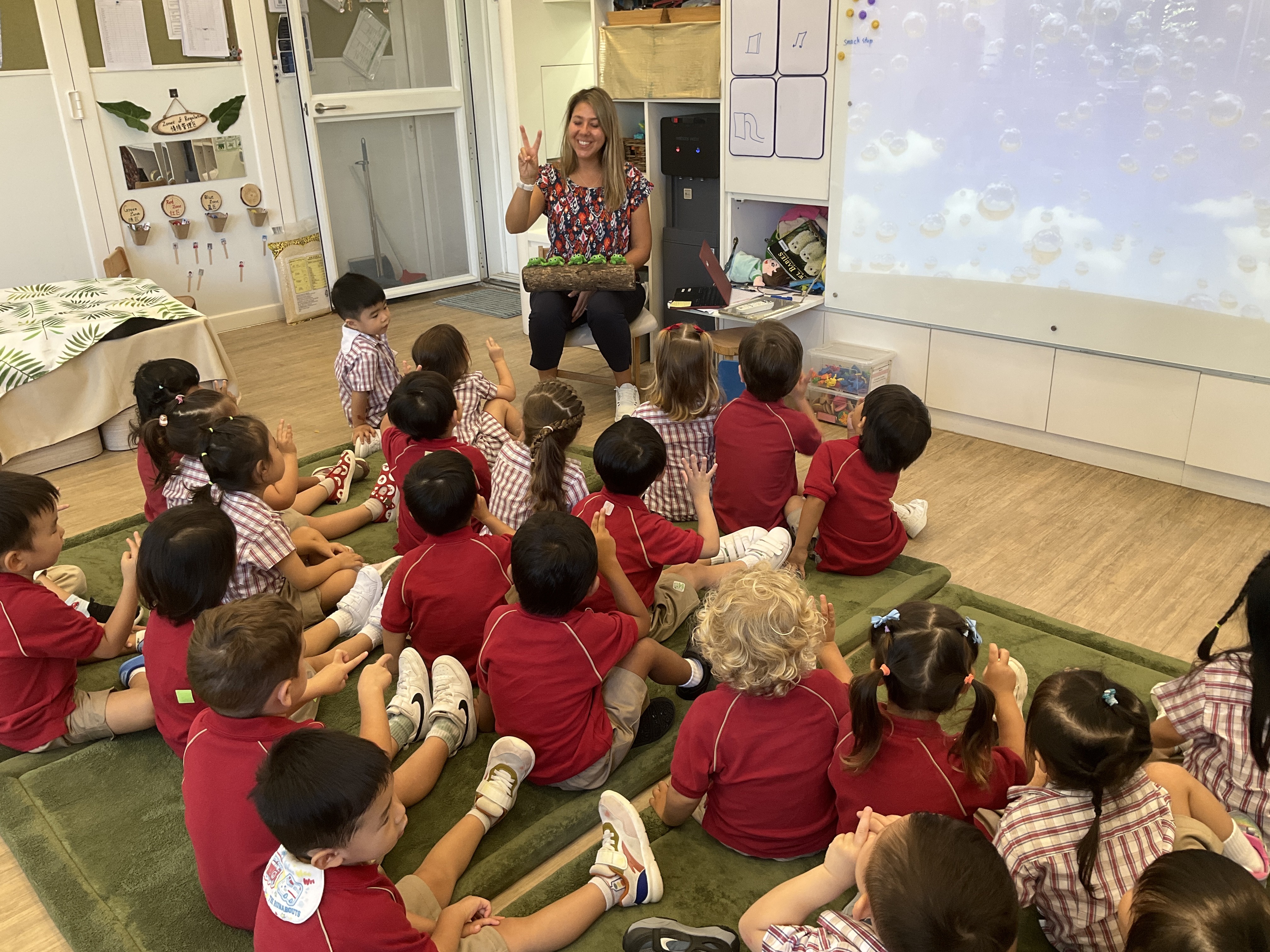
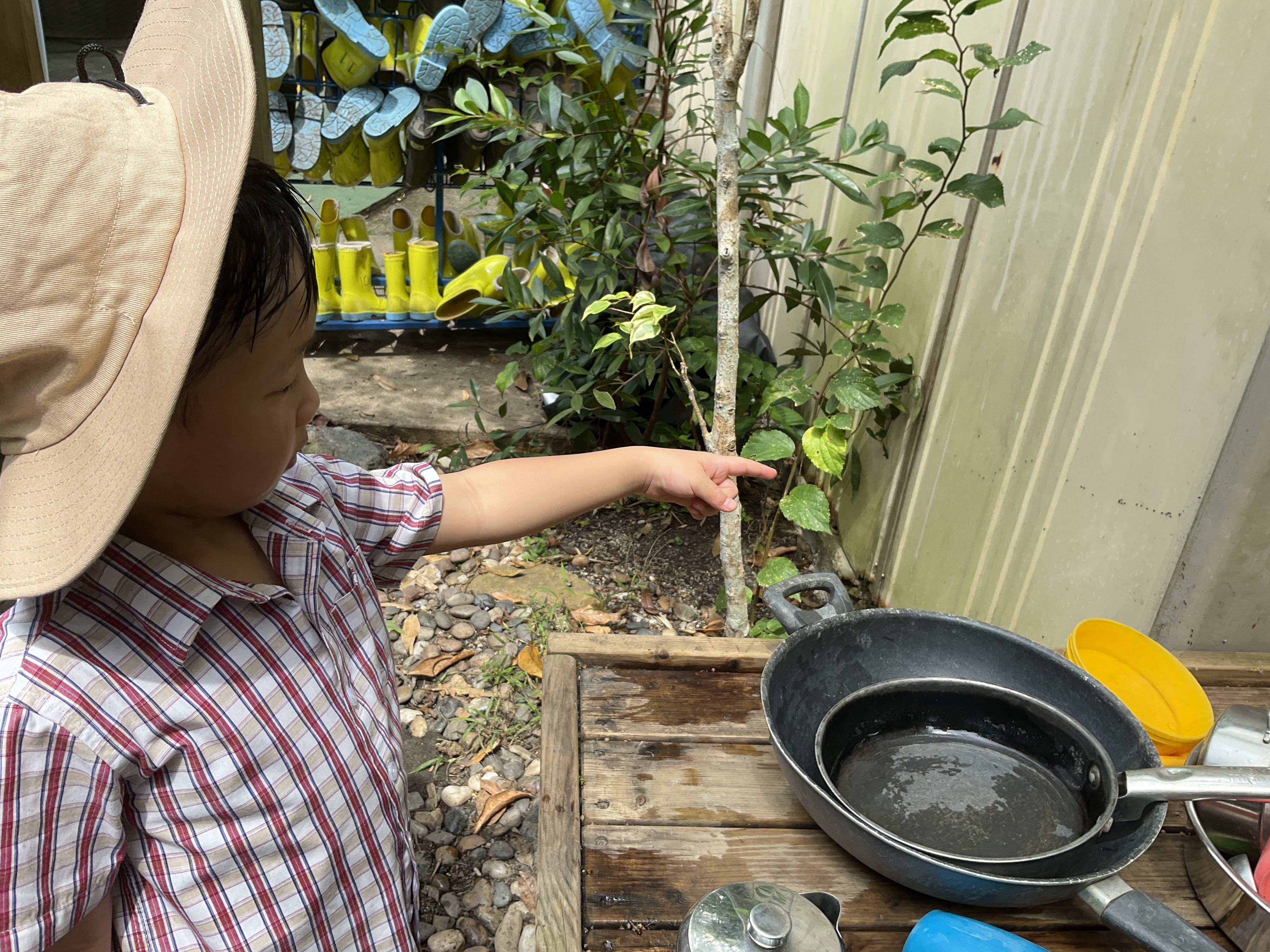
HWOO Learning Journey: K1D Firebugs
The children have settled in wonderfully and are now in the full swing of things! Our first unit, "How We Organise Ourselves," helps us explore how we work together as a class and a community.
To choose our class name, we went on a nature hunt in the garden. The children were effective inquirers, finding everything from leaves and sticks to butterflies. The standout discovery was a brightly coloured firebug, which inspired the class to choose to be the K1D Firebugs!
Key Learning & Routines
We've focused on helping the children develop independence. They are doing great with our routines ie. getting ready for snack time, caring for their belongings, and using the toilet independently.
We've also introduced "Whole Body Listening" with our puppet, Penny, to teach them how to use their eyes, ears, and quiet feet to focus. The children are also learning to use their "Thinking brains" by placing a thumb on their chest when they have an idea to share. They've enthusiastically joined in on our class songs like "5 Little Monkeys," "5 Little Monkeys Swinging in a Tree," and "5 Green and Speckled Frogs."
Social-Emotional Development
To support their emotional growth, we've introduced the Zones of Regulation. The children are learning to recognise the four coloured zones to understand their feelings. Each day, they place their picture in the corresponding zone, a simple way for them to practise recognising and managing their emotions.
We've also been thinking about Safe Hands, listening to a story about Barnaby Bear. He showed us how to use our hands for kind actions, like taking turns and playing gently with our friends instead of pushing or grabbing.
Next, we are introducing the importance of Personal Space. During our whole class learning, we’ve been talking about having a 'bubble around us' and how to respect each other's space.
Also, one of our class goals is to help tidy up in class. Please upload a photo of your child helping to clean up at home to our Padlet (link will be sent out in separate email). The children will share their photos at school and talk about the skills they use.
Chinese
The children have been exploring the Zones of Regulation and Whole Body Listening, focusing on basic body parts, colours, and feelings in Chinese through engaging games and songs.
Chinese Vocabulary:
Nose: 鼻子 (bí zi)
Mouth: 嘴巴 (zuǐ ba)
Ears: 耳朵 (ěr duo)
Head: 头 (tóu)
Hands: 手 (shǒu)
Shoulders: 肩膀 (jiān bǎng)
Legs: 腿 (tuǐ)
Red: 红色 (hóng sè)
Yellow: 黄色 (huáng sè)
Green: 绿色 (lǜ sè)
Blue: 蓝色 (lán sè)
Happy: 快乐 (kuài lè)
Sad: 伤心 (shāng xīn)
Angry: 生气 (shēng qì)
Silly: 傻傻的 (shǎ shǎ de)
The Chinese song:
一根小手指 One Little Finger
https://www.youtube.com/watch?v=usCputd1Wu0
The children have settled in wonderfully and are now in the full swing of things! Our first unit, "How We Organise Ourselves," helps us explore how we work together as a class and a community.
To choose our class name, we went on a nature hunt in the garden. The children were effective inquirers, finding everything from leaves and sticks to butterflies. The standout discovery was a brightly coloured firebug, which inspired the class to choose to be the K1D Firebugs!
Key Learning & Routines
We've focused on helping the children develop independence. They are doing great with our routines ie. getting ready for snack time, caring for their belongings, and using the toilet independently.
We've also introduced "Whole Body Listening" with our puppet, Penny, to teach them how to use their eyes, ears, and quiet feet to focus. The children are also learning to use their "Thinking brains" by placing a thumb on their chest when they have an idea to share. They've enthusiastically joined in on our class songs like "5 Little Monkeys," "5 Little Monkeys Swinging in a Tree," and "5 Green and Speckled Frogs."
Social-Emotional Development
To support their emotional growth, we've introduced the Zones of Regulation. The children are learning to recognise the four coloured zones to understand their feelings. Each day, they place their picture in the corresponding zone, a simple way for them to practise recognising and managing their emotions.
We've also been thinking about Safe Hands, listening to a story about Barnaby Bear. He showed us how to use our hands for kind actions, like taking turns and playing gently with our friends instead of pushing or grabbing.
Next, we are introducing the importance of Personal Space. During our whole class learning, we’ve been talking about having a 'bubble around us' and how to respect each other's space.
Also, one of our class goals is to help tidy up in class. Please upload a photo of your child helping to clean up at home to our Padlet (link will be sent out in separate email). The children will share their photos at school and talk about the skills they use.
Chinese
The children have been exploring the Zones of Regulation and Whole Body Listening, focusing on basic body parts, colours, and feelings in Chinese through engaging games and songs.
Chinese Vocabulary:
Nose: 鼻子 (bí zi)
Mouth: 嘴巴 (zuǐ ba)
Ears: 耳朵 (ěr duo)
Head: 头 (tóu)
Hands: 手 (shǒu)
Shoulders: 肩膀 (jiān bǎng)
Legs: 腿 (tuǐ)
Red: 红色 (hóng sè)
Yellow: 黄色 (huáng sè)
Green: 绿色 (lǜ sè)
Blue: 蓝色 (lán sè)
Happy: 快乐 (kuài lè)
Sad: 伤心 (shāng xīn)
Angry: 生气 (shēng qì)
Silly: 傻傻的 (shǎ shǎ de)
The Chinese song:
一根小手指 One Little Finger
https://www.youtube.com/watch?v=usCputd1Wu0
×
As we wrap up the final two weeks of K1, the Little Firebugs have officially reached the end of their wonderful learning journey!
To celebrate, we held a fantastic Shared Learning Day, where the children proudly showcased everything they explored during our "How We Express Ourselves" unit of inquiry. During our reflection time, we also looked back at our favourite K1 memories and discussed how these different experiences made us feel.
We are incredibly proud of all that the Little Firebugs have achieved this year. We wish them all the very best as they fly off to their exciting new adventures in K2!